
This is a sad, yet interesting irony about Reformation history- many want to either claim Luther, or disown Luther. For a man so despised by so many groups, it’s ironic how those with a particular viewpoint think if they appeal to Luther, somehow or another the large majority of Protestant Christendom will take them seriously. On the other hand, those wishing to distance themselves from historic Protestantism appeal to Luther as well; they argue that Luther was immoral and therefore Protestantism is fraudulent. Both approaches are futile.
The last blog entry documented the alleged Pentecostal Luther who spoke in tongues. Then of course, there’s the Roman Catholic Luther who was “quite devoted” to the Virgin Mary. There’s the anti-Semite Luther used by Neo-Nazi’s. There’s even a polygamist Luther, precursor to the Mormons. This just scratches the surface- there’s a lot more Luther’s out there.
Let’s take a look at another Luther: The Seventh Day Adventist Luther who advocated ‘soul sleep.’
For those of you who aren’t quite sure what this is- ‘soul sleep’ is the idea that after death the soul ‘sleeps’ until the final resurrection. In other words, after dying the soul doesn’t go consciously into the direct presence of God. Rather, it hibernates until the resurrection- when it is then awakened and reunited with its body.
I was sent a link to this discussion thread. The Seventh Day Adventist who started this discussion quoted this from a pro-SDA website :
“Archdeacon Francis Blackbume states in his Short Historical View of the Controversy Concerning an Intermediate State, of 1765: Luther espoused the doctrine of the sleep of the soul, upon a Scripture foundation, and then he made use of it as a confutation of purgatory and saint worship, and continued in that belief to the last moment of his life.”
Before actually delving into Luther’s understanding of ‘soul sleep’ - it’s interesting to look at the facts above carefully. While Luther did affirm 'soul sleep', it would be incorrect to think that his view on this topic was the reason he denied purgatory and saint worship.
I don’t recall ever reading Luther use ‘soul sleep’ to refute purgatory or saint worship. Most often Luther pointed out that Purgatory was not taught in Scripture, and also that it served as an income generating doctrine for the Papacy. Both of these were strong enough arguments to refute Purgatory. I haven’t read Luther anywhere using ‘soul sleep’ to refute saint worship either- this may exist, but I haven’t read it. Luther knew that prayers to, and faith in the saints violated the First Commandment. If Luther ever did apply ‘soul sleep’ to “confute purgatory and saint worship”, it must have been sparsely. So right from the beginning, it’s obvious that Luther’s view on ‘soul sleep’ is being mishandled by the Adventists.
According to the Seventh Day Adventists, once the soul awakes it is either sent off to eternity or annihilated- thus they deny the immortality of the soul. Interestingly, they try and grab Luther for this one as well. The Adventist gentleman who gave this quote also linked to an article by an Adventist. The article wants one to believe that Luther was part of a growing group"of those who denied the natural immortality of the soul, and avowed the conditional immortality of man." The article notes, "On December 19, 1513, in connection with the eighth session of the fifth Lateran Council, Pope Leo X issued a Bull (Apostolici regimis) declaring, "We do condemn and reprobate all who assert that the intelligent soul is mortal."
Here was a fascinating quote found in the link:
"Then, on October 31, 1517, Luther posted his famous Theses on the church door in Wittenberg. In his 1520 published Defence [sic] of 41 of his propositions, Luther cited the pope's immortality declaration, as among "those monstrous opinions to be found in the Roman dunghill of decretals" (proposition 27). In the twenty-seventh proposition of his Defence[sic] Luther said:
'However, I permit the Pope to establish articles of faith for himself and for his own faithful—such are: That the bread and wine are transubstantiated in the sacrament; that the essence of God neither generates nor is generated; that the soul is the substantial form of the human body that he [the pope] is emperor of the world and king of heaven, and earthly god; that the soul is immortal; and all these endless monstrosities in the Roman dunghill of decretals—in order that such as his faith is, such may be his gospel, such also his faithful, and such his church, and that the lips may have suitable lettuce and the lid may be worthy of the dish.—Martin Luther, Assertio Omnium Articulorum M. Lutheri per Bullam Leonis X. Novissimam Damnatorum (Assertion of all the articles of M. Luther condemned by the latest Bull of Leo X), article 27, Weimar edition of Luther's Works, vol. 7, pp. 131, 132 (a point-by-point exposition of his position, written Dec. 1, 1520, in response to requests for a fuller treatment than that given in his Adversus execrabilem Antichristi Bullam, and Wider die Bulle des Endchrists).'
Note what’s being perpetrated: Luther denies the immortality of the soul. How can this be? It can’t. Imagine, a Christian who didn’t believe at least some souls are immortal. Now a Seventh Day Adventist is trying to use this to prove Luther believed in the annihilation of souls that won’t be saved after they awake from ‘soul sleep’- hence the soul is not necessarily immortal.
But Luther hasn’t said this at all, nor was he part of a growing group"of those who denied the natural immortality of the soul, and avowed the conditional immortality of man." . In LW 32:77 in his expounded defense of the 95 Theses, Luther says:
“Hence the experts in Rome have recently pronounced a holy decree[At the Fifth Lateran Council, 1512–1517] which establishes that the soul of man is immortal, acting as if we did not all say in our common Creed, “I believe in the life everlasting.” And, with the assistance of the mastermind Aristotle, they decreed further that the soul is “essentially the form of the human body,” and many other splendid articles of a similar nature. These decrees are, indeed, most appropriate to the papal church, for they make it possible for them to hold fast to human dreams and the doctrines of devils while they trample upon and destroy faith and the teaching of Christ.”
A helpful footnote explains, “ Luther objects to the substitution of philosophical ideas concerning the immortality of the soul for the biblical teaching of the resurrection and the life everlasting. Cf. Carl Stange, Studien zur Theologte Luthers (Gütersloh, 1928– ), pp. 287–344.” So, Luther is condemning philosophical speculation in the guise of infallible church pronouncements- he’s not denying the immortality of the soul. Elsewhere Luther explains, “When the last Lateran council was to be concluded in Rome under Pope Leo, among other articles it was decreed that one must believe the soul to be immortal. From this one may gather that they make eternal life an object of sheer mockery and contempt. In this way they confess that it is a common belief among them that there is no eternal life, but that they now wish to proclaim this by means of a bull.” (LW 47:37)
Luther repeatedly affirmed the immortality of the soul, and often made it a point to note it is not to be believed because of philosophical speculation. It is to be believed because God has spoken in his Word:
“Although some of the philosophers, like Socrates and others, maintain the immortality of the soul, they were ridiculed by the rest of the philosophers and all but scorned. But isn’t it folly for human reason to be so offended, since it sees that even now the procreation of man is full of wonder? Does it not seem contrary to reason that man, who is to live forever, is born, as it were, from one single droplet of semen in the loins of the father? This is even more absurd than when Moses says that man was formed from a clod by the fingers of God. But reason shows in this way that it knows practically nothing about God, who, merely by a thought, makes out of a clod, not the semen of a human being but the human being itself, and, as Moses states later, makes the woman out of the rib of the man. Such was the origin of man.” (LW 1:84)
“The philosophers have indeed disputed about the immortality of the soul, but so coldly that they seem to be setting forth mere fables. Aristotle above all argues about the soul in such a way that he diligently and shrewdly avoids discussing its immortality anywhere; nor did he want to express what he thought about it. Plato related what he had heard rather than his own opinion. Nor can its immortality be proved by any human reason, for it is not a thing “under the sun” to believe that the soul is immortal. In the world it is neither seen nor understood as certain that souls are immortal.” (LW 15:59)
Further reading:
The Seventh Day Adventist Luther: Soul Sleep and the Immortality of the Soul(Part two)
The Seventh Day Adventist Luther: Soul Sleep and the Immortality of the Soul(Part three)
Thursday, April 06, 2006


Tuesday, April 04, 2006
Pentecostal Luther who 'Spoke in Tongues'
Luther allegedly spoke in tongues?
Lutheran scholar Heinrich Boehmer once made the statement, "There are as many Luthers as there are books about Luther." Indeed, the theological landscape is overgrown with Luthers. There is actually a Pentecostal Luther who ‘spoke in tongues’ floating around cyber-space. This quote has been used in many charismatic web pages:
“According to the German church historian Theodor Sauer, Luther spoke in tongues: "Luther was easily the greatest evangelical man after the apostles, full of inner love to the Lord like John, hasty in deed like Peter, deep in thinking like Paul, cunning and powerful in speech like Elijah, uncompromising against God's enemies like David; PROPHET and evangelist, speaker-in-tongues and interpreter in one person, equipped with all the gifts of grace, a light and pillar of the church..." (Ibid, 1889 ed., vol. 4, p. 73 19 Translated from the German work, Geschichte der Chrislichen Kirche fur Schule und Haus (Dresden; R. Kuntzes, 1859), 3rd book, p. 400); http://www.azstarnet.com/~jsbarta/ch_hist.html 1/1/99 Whether this refers to the actual gift of tongues (I Cor 12) or the romance languages (i.e. Latin, French, etc.) is not certain. That Luther believed in miracles is certain. In 1541 when Myconius lay speechless in the final stages of consumption, Luther prayed and he was restored to health. He also prayed for Melanchthon who was near death and God healed him also. Melanchthon said: "I should have been a dead man, had I not been recalled from death itself by the coming of Luther." (A.J. Gordon, The Ministry of Healing, pp. 93-95)Luther was also involved in deliverance of a young girl, (Suppressed Evidences, --Thomas Boys p. 162, Jewish Expositor, May, 1831, pp. 145-153) and also involved in healing (Suppressed Evidence, --Boys, pp. 192-193)”
Source: Martin Luther (1483-1546); Pentecost in Church History; Controversy in the Baptism of the Holy Spirit
The actual evidence though from Luther’s writings suggests that Luther did not speak in tongues:
“The Holy Spirit is sent forth in two ways. In the primitive church He was sent forth in a manifest and visible form. Thus He descended upon Christ at the Jordan in the form of a dove (Matt. 3:16), and upon the apostles and other believers in the form of fire (Acts 2:3). This was the first sending forth of the Holy Spirit; it was necessary in the primitive church, which had to be established with visible signs on account of the unbelievers, as Paul testifies. 1 Cor. 14:22: “Tongues are a sign, not for believers but for unbelievers.” But later on, when the church had been gathered and confirmed by these signs, it was not necessary for this visible sending forth of the Holy Spirit to continue."
Source:LW 26:374
Luther held "speaking in tongues" means simply the public reading of Scripture:
"And note that this is the proper and fruitful way to deal with Scripture, as Paul (1 Cor. 14:6) also exalts four such points that he would treat in Scripture: “Now, brethren, if I come to you speaking in tongues, how shall I benefit you unless I bring you some revelation or knowledge or prophecy or teaching?” He refers to “speaking in tongues,” which is nothing else than reading Scripture orally."
Source: LW 14:36
Lutheran scholar Heinrich Boehmer once made the statement, "There are as many Luthers as there are books about Luther." Indeed, the theological landscape is overgrown with Luthers. There is actually a Pentecostal Luther who ‘spoke in tongues’ floating around cyber-space. This quote has been used in many charismatic web pages:
“According to the German church historian Theodor Sauer, Luther spoke in tongues: "Luther was easily the greatest evangelical man after the apostles, full of inner love to the Lord like John, hasty in deed like Peter, deep in thinking like Paul, cunning and powerful in speech like Elijah, uncompromising against God's enemies like David; PROPHET and evangelist, speaker-in-tongues and interpreter in one person, equipped with all the gifts of grace, a light and pillar of the church..." (Ibid, 1889 ed., vol. 4, p. 73 19 Translated from the German work, Geschichte der Chrislichen Kirche fur Schule und Haus (Dresden; R. Kuntzes, 1859), 3rd book, p. 400); http://www.azstarnet.com/~jsbarta/ch_hist.html 1/1/99 Whether this refers to the actual gift of tongues (I Cor 12) or the romance languages (i.e. Latin, French, etc.) is not certain. That Luther believed in miracles is certain. In 1541 when Myconius lay speechless in the final stages of consumption, Luther prayed and he was restored to health. He also prayed for Melanchthon who was near death and God healed him also. Melanchthon said: "I should have been a dead man, had I not been recalled from death itself by the coming of Luther." (A.J. Gordon, The Ministry of Healing, pp. 93-95)Luther was also involved in deliverance of a young girl, (Suppressed Evidences, --Thomas Boys p. 162, Jewish Expositor, May, 1831, pp. 145-153) and also involved in healing (Suppressed Evidence, --Boys, pp. 192-193)”
Source: Martin Luther (1483-1546); Pentecost in Church History; Controversy in the Baptism of the Holy Spirit
The actual evidence though from Luther’s writings suggests that Luther did not speak in tongues:
“The Holy Spirit is sent forth in two ways. In the primitive church He was sent forth in a manifest and visible form. Thus He descended upon Christ at the Jordan in the form of a dove (Matt. 3:16), and upon the apostles and other believers in the form of fire (Acts 2:3). This was the first sending forth of the Holy Spirit; it was necessary in the primitive church, which had to be established with visible signs on account of the unbelievers, as Paul testifies. 1 Cor. 14:22: “Tongues are a sign, not for believers but for unbelievers.” But later on, when the church had been gathered and confirmed by these signs, it was not necessary for this visible sending forth of the Holy Spirit to continue."
Source:LW 26:374
Luther held "speaking in tongues" means simply the public reading of Scripture:
"And note that this is the proper and fruitful way to deal with Scripture, as Paul (1 Cor. 14:6) also exalts four such points that he would treat in Scripture: “Now, brethren, if I come to you speaking in tongues, how shall I benefit you unless I bring you some revelation or knowledge or prophecy or teaching?” He refers to “speaking in tongues,” which is nothing else than reading Scripture orally."
Source: LW 14:36
Monday, April 03, 2006
Calvin on Tradition

Recently, in my discussion with Fr. Joseph, he said:
"St. Paul saw both the oral and the written tradition as equal in veracity and authority. Calvin saw only the written Tradition as reliable as a rule of faith and practice.”
How would Calvin answer this? Calvin addresses the question, “Tradition Subordinate to Scripture?” in the Institutes IV.8.14. Keep an eye out for Calvin's dreaded pagan philosophy influencing his response and comments- If you find it, let me know. I was never any good at "Where's Waldo Now?"
"Here again they mutter that the church needed to add some things to the writings of the apostles, or that the apostles themselves afterward properly supplied through a living voice what they had not clearly enough taught. For, of course, Christ said to the apostles, “I have many things to say to you which you cannot bear now” [John 16:12]. These, they explain, are decrees which, apart from Scripture, have been accepted only by use and custom. But what effrontery is this? I confess that the disciples were as yet untutored and well-nigh unteachable when they heard this from the Lord. But when they committed their doctrine to writing, were they even then beset with such dullness that they afterward needed to supply with a living voice what they had omitted from their writings through the fault of ignorance? Now, if they had already been led into all truth by the Spirit of truth [cf. John 16:13] when they put forth their writings, what hindered them from embracing and leaving in written form a perfect and distinct knowledge of gospel doctrine? But come now, let us grant them what they seek: only let them point out what ought to have been revealed apart from writing. If they dare attempt it, I shall counter with Augustine’s words, that is, “When the Lord said nothing, who of us may say, ‘These things are or those things are’? Or if one dare say so, what proof does he provide”? But why do I quarrel over something superfluous? For every schoolboy knows that in the writings of the apostles, which these fellows, as it were, maim and halve, there abides the fruit of that revelation which the Lord then promised to the apostles."
Summary:
a. Claim: The church needed to add some things to the writings of the apostles; or the apostles later supplied through a living voice what they had not clearly enough taught.
b. Reply: Were they so dull that they needed afterward to supply what they had omitted through ignorance?
c. Augustine: “When the Lord said nothing, who of us may say, ‘These things are or those things are’? Or if one dare say so, what proof does he provide?” [Augustine (354-430): But when He Himself was silent about such things, which of us could say, It is this or that? Or if he venture to say it, how will he prove it? NPNF1: Vol. VII, Tractates on John, Tractate 96, John 16:12, 13].
Source: Ford Lewis Battles, Analysis of the Institutes of the Christian Religion of John Calvin (New Jersey: P&R Publishing, 1980). 324
What about Paul's exhortation in 2 Thessalonians 2:15?
“So then brothers, stand firm and hold to the teachings we passed on to you, whether by word of mouth or by letter.” (NIV)
Calvin’s comments on this verse:
“Some restrict this to precepts of external polity; but this does not please me, for he points out the manner of standing firm. Now, to be furnished with invincible strength is a much higher thing than external discipline. Hence, in my opinion, he includes all doctrine under this term, as though he had said that they have ground on which they may stand firm, provided they persevere in sound doctrine, according as they had been instructed by him. I do not deny that the term parado>seiv is fitly applied to the ordinances which are appointed by the Churches, with a view to the promoting of peace and the maintaining of order, and I admit that it is taken in this sense when human traditions are treated of, ( Matthew 15:6.)
Paul, however, will be found in the next chapter making use of the term tradition, as meaning the rule that he had laid down, and the very signification of the term is general. The context, however, as I have said, requires that it be taken here to mean the whole of that doctrine in which they had been instructed. For the matter treated of is the most important of all—that their faith may remain secure in the midst of a dreadful agitation of the Church. Papists, however, act a foolish part in gathering from this that their traditions ought to be observed. They reason, indeed, in this manner—that if it was allowable for Paul to enjoin traditions, it was allowable also for other teachers; and that, if it was a pious thing to observe the former, the latter also ought not less to be observed. Granting them, however, that Paul speaks of precepts belonging to the external government of the Church, I say that they were, nevertheless, not contrived by him, but divinely communicated. For he declares elsewhere, (1 Corinthians 7:35,) that it was not his intention to ensnare consciences, as it was not lawful, either for himself, or for all the Apostles together. They act a still more ridiculous part in making it their aim to pass off, under this, the abominable sink of their own superstitions, as though they were the traditions of Paul. But farewell to these trifles, when we are in possession of Paul’s true meaning.
And we may judge in part from this Epistle what traditions he here recommends, for he says—whether by word, that is, discourse, or by epistle. Now, what do these Epistles contain but pure doctrine, which overturns to the very foundation the whole of the Papacy, and every invention that is at variance with the simplicity of the Gospel?"
Saturday, April 01, 2006
Continuation of the Dialog with Fr. Joseph on Calvin's Pagan Philosophy (Part 4)
Fr. Joseph over on the CARM Catholic board continued his defense of the negative influence of “pagan philosophers” on the theology of John Calvin. This will be part four in my responses to Fr. Joseph.
Previous entries can be found here:
On John Calvin and Humanism: Did Calvin Blend Pagan Philosophy With Christianity?
Fr. Joseph Revisted: Calvin's Beloved Pagan Philosophy :
Continuation of the Dialog with Fr. Joseph on Calvin's Pagan Philosophy
Here are my responses to Fr. Joseph’s most recent points:
1. Fr. Joseph continues to make points without documentation
I was pleased that Fr. Joseph finally attempted to present some evidence from Calvin’s writings to substantiate his claims. Unfortunately, the evidence lacked what I think is crucial to any historical discussion: actual references. Perhaps Fr. Joseph is working from memory on his previous studies. Perhaps he’s too busy to pull out Calvin’s Institutes and provide the necessary references.
Somehow or another, I always get myself in situations like this: it’s up to me to do the work necessary to find out where Calvin or Luther said “x or y.” Some of you may think this is nitpicking, but my time is important to me. I shouldn’t have to be the one that finds the reference for the point made by someone I’m dialoging with. This is actually a very good debate tactic (in a bad sort of way): present material that forces your opponent to do the work you should have been doing (i.e. providing references). In this, he will get discouraged by the time it takes and give up.
2. Calvin’s “accommodation” was not based on pagan philosophy
In response to my continued badgering for Fr. Joseph to substantiate his claim that pagan philosophy negatively influenced Calvin’s Biblical theology, Joseph finally provided this bit of evidence:
“In reading Calvin’s “Institutes” it is evident that there is a doctrinal theme to his catechism. This is sometimes referred to as Calvin’s “accommodation doctrine”. Calvin suggests that God does not represent himself to man as He really is but instead presents himself as a kind of caricature of Himself rather than to burden man’s finite intellect with a completely true revelation of God.”
First, let’s give Fr. Joseph credit. Calvin scholars do point out there is indeed a doctrinal theme of “accommodation” in the Institutes. Ironically though, it is Fr. Joseph that presents the “caricature”. According to Calvin, it is in the Scripture in which we learn about God, where God “accommodates.” Let’s take an elementary look at this, as provided in the simplistic book, Calvin for Armchair Theologians:
“Calvin thought that educated readers of the Bible in his time, who came to the text expecting its eloquence to reflect the literary values of the Renaissance, would be disappointed. The Bible is not, in his view, sophisticated philosophical discourse. Its stories, poems, chronicles, legal codes, and letters reflect the world and worldviews out of which these particular texts emerged. According to Calvin, God made use of the idioms of ancient language and culture and in so doing ‘stooped down’ to the level of the audience, accommodating their limited ability in order to communicate with them. You might say (and Calvin does say) that Scripture is God’s baby talk. Just as adults will alter their speech when talking to a baby in order to suit the infant’s capacity to understand, God puts things in terms chosen to suit the capacity of the hearers of the biblical text.”
Source: Christopher Elwood, Calvin for Armchair Theologians (Louisville: Westminster John Know Press, 2002), 52.
Fr. Joseph suggests Calvin held God presents Himself as a “caricature” rather than “a completely true revelation of God.” But this is incorrect, because the revelation of God presented in accommodation is “completely true.” Calvin does not hold God is presenting Himself falsely. He’s presenting Himself in a way that finite minds can understand, that is via the pages of sacred Scripture. One has to stop and ask if Fr. Joseph is arguing the contrary: that finite minds can completely grasp the infinite. Such though is logically impossible. Only the infinite can completely understand the infinite.
Fr. Joseph continues:
“I believe that this is an incorporation of Pagan Greek philosophy whether intentional or accidental. To Greek philosophical thought the god’s are presented without complexity and in human form representing a metaphorical personification of human desires to aid man in understanding or accepting the awesome creation. In Calvin’s philosophy, he believes that God by His very creation is accommodating to mankind. Creation is for mankind that it may understand Him. This parallels Greek thought in that, they saw their god’s and goddesses as aids to mankind. Their structure of god’s and goddesses were for the purpose of serving mankind instead of mankind serving god. Therefore, Calvin perceives the incarnation as God revealing Himself in accommodation to man rather than God preparing the harvest in preparation for the parousia.”
One has to immediately stop and ask how it was those who followed Calvin and wrote the Westminster Confession were able to pen the words, “What is the chief end of man?
Answer: Man's chief end is to glorify God, and to enjoy Him for ever (I Cor. 10:31; Psa. 73:25-26).” Calvin’s actual lifelong concern was to proclaim the power, grace, and glory of God, who has revealed himself to man in Christ. Calvin’s entire doctrine was intended to affirm the sovereignty of God and to vindicate His honor.
The fallacy put forth above by Fr. Joseph is an example of post hoc ergo proctor hoc. The fallacious argument goes like this “X occurred, therefore it is the direct cause of Y”. In other words, Fr. Joseph is fallaciously arguing:
Pagan philosophy held to a “structure of god’s and goddesses.. for the purpose of serving mankind instead of mankind serving god”
…this was the direct cause of Calvin’s view that the infinite God has presented Himself in finite terms so that finite creatures can truly comprehend Him.
Such though does not follow. Calvin’s view of accommodation maintains the holiness and splendor of God, as well as God’s mercy. In His infinite perfection, He has mercifully made Himself known to His creation.
In order to fully grasp the non-relatedness of the point Fr. Joseph raises, it would be helpful to consider the contrary. Is Fr. Joseph suggesting it is possible to grasp the infinite attributes of God without any type of accommodation? Has Fr. Joseph perhaps been granted a special extra-biblical revelation of God’s infinite attributes apart from God accommodating himself through the Scriptures, Nature, or even (for sake of argument) His church? Is Fr. Joseph therefore, denying God accommodates Himself in any way? I suggest Joseph is out of synch not only with Calvin, but Aquinas and Augustine as well.
Fr. Joseph then presents this curious argument:
“Calvin perceives the incarnation as God revealing Himself in accommodation to man rather than God preparing the harvest in preparation for the parousia.”
Quite frankly, I have no idea what Fr. Joseph is saying here. It appears to be an either/or fallacy. Either God presents Himself for the preparing of the harvest of the parousia (whatever that means), or God accommodates Himself via Scripture so man can comprehend Him. Fr. Joseph will need to clarify his point.
3. Tangent: the revisions of Calvin’s Institutes
Fr. Joseph then went on to make some unrelated tangential points. He first commented on the revisions of the Institutes:
"We know that Calvin’s Institutes’ went through countless revisions and expansions of the catechism. This would be expected of one creating a new Gospel that would be viable in a systematic way, as well as creating a new church and a new way to worship under different authority than that which was created by Christ and the Apostles. It also shows that Calvin’s theological doctrines developed over time as changes in authority and practice conflicted with orthodoxy.”
How is this at all relevant to the discussion? It’s not. Regardless, Calvin published the 1st edition of the Institutes (which was about 1/5 the size of the final 1559 edition) in March 1536. He wrote it in about 18 months from his conversion (at age 25). It was hailed as a major achievement as an apology / introduction to the Protestant faith. The word “Institutes” was intended to mean, “How one is educated or introduced to Christian religion.” It was thus, intended to be an introduction. Here the interesting fact for Joseph to come to terms with: most of the major themes of Calvin’s theology are included in 1st edition. While he expanded his points, he rarely changed them. Fr. Joseph would do well to provide evidence that crucial elements of Calvin’s theology presented in the Institutes changed in a contradictory way from that which was first penned. Joseph should then explain why is this relevant to this discussion.
4. Tangent: Anticlericalism
"Calvin was certainly a proponent of the Humanist presupposition of anticlericalism. While there are conflicting biographies as to whether Calvin was ever ordained, there is no real evidence that he was ever ordained that I have ever seen. It would seem that by not being ordained he was not convinced of the necessity of validly ordained clergy in the Church departing from the teachings of Christ who selected the twelve as the foundation of the Church who ordained their successors and the Church fathers that maintained Apostolic succession.”
How is this at all relevant to the discussion? It’s not. It is yet another tangent. Does anticlericalism stem from pagan philosophy? Did Calvin formulate his view on church authority from reading Cicero? What was Calvin’s view of Church authority? What texts of Scripture did he use to explain his view? Did he use pagan philosophy to interpret the proof texts he used for his opinion? Why does it matter to this discussion if Calvin was “ordained”?
Ironically, Luther was an ordained Catholic priest, yet when I mention this to Catholics that the Papacy gave Luther the authority to study the Bible, instant balking occurs. Why would Calvin being ordained by the Roman Catholic Church matter to this discussion?
5. Calvin and the Eucharist
“Since the Clergy was necessary for the deliverance of the Sacraments, especially the Eucharist, Calvin first had to redefine the Eucharist as something less than a miracle from God where Christ is made present at the one sacrifice for mankind making the faithful present and sharing in that sacrifice at the foot of the cross. Calvin defined the Eucharist as not being the corporeal presence of Christ but a Spiritual presence only, which essentially forbids Christ in a corporeal sense from Calvin’s version of Reformed worship. From a Humanist point of view reason would dictate that there is not a miracle as it defies science and the natural law. Calvin ignores Scriptural instructions from Jesus that His miracle is to be Spiritually discerned instead of carnally discerned and puts his faith in the natural law rather than Jesus’ words. Calvin then in need of a replacement for the focus of worship emphasized “sola Scriptura” or the worship of the written Word of God rather than the corporeal Christ.”
I knew this was coming. I believe that this will be Fr. Joseph’s main assault against Calvin- and that this is what really interests him. First, note that no actual exposition of Calvin’s understanding of the Eucharist is presented.
Secondly, one wonders if Fr. Joseph even understands Calvin’s notion of “reason”. According to Calvin, it is the Bible, not “reason” that is the ultimate authority for Christians. Calvin though, is not a despiser of reason. He felt the human mind was a gift from God, Christians were called upon to use their minds to the best they could. But ultimately Christians must realize their reason cannot penetrate into the deepest and highest truths, the spiritual realities of life. Reason needs to be submissive to the Bible. For Calvin, it is not the Bible that contains errors, but human reason which does. Therefore, “reason” must submit to the Bible. For Joseph to substantiate his charge here, he must provide references to Calvin’s writings. I have no desire to meander from one vague complaint to another. Joseph: find Calvin’s writings on the Lord’s Supper, provide references, and document your complaints.
One other point basic point needs to be made. One can quibble that those who disagree with one’s particular interpretation of the Bible is because they are using human “reason” rather than simply obeying the text of Scripture. But, really, everyone uses “reason”. Those who say “I simply listen to the plain teaching of Scripture rather than human “reason” have used human reason to arrive at this interpretive paradigm! Again, what Fr. Joseph needs to do here is cite Calvin on particular biblical passages related to the Eucharist. Has Calvin done damage to the text? Has Calvin ignored context? Has Calvin brought in Cicero to help him interpret?
6. A moment of clarity from Fr. Joseph
"Now, one may say, but what does this have to do with humanist influence.”
Indeed!
7. Tangent: What was Calvin’s view of “Tradition” and how is this relevant?
This is really a point similar to that I covered in #1. Fr. Joseph says:
“We know from reading the works of the Greek philosophers, especially Plato that, mans ideal is to serve the Greek city state by improving life for man in his earthly existence. The focus of pursuit should be in discovery and pursuit of the arts and sciences. The Christian ideal is man serving God and doing His will. We see in Calvin’s catechism a Humanist confidence in mans ability to understand God through His accommodation to man with the written Word. It is interesting to note that this is an area that Calvin disagrees with Plato and with St. Paul’s teaching about Tradition. Plato taught that the oral tradition was the only reliable tradition because the written tradition required a prepared or predisposed intellect for understanding where the oral teaching can be questioned and developed into more complete and veracious learning and understanding. In Plato’s teaching the oral tradition was far superior to the written. St. Paul saw both the oral and the written tradition as equal in veracity and authority. Calvin saw only the written Tradition as reliable as a rule of faith and practice.”
Interestingly, here Fr. Jospeh points out Calvin disagreed with Pagan philosophy!
Well- how did Calvin understand tradition? What arguments did he give for concluding one infallible source of truth? Secondly, how did Calvin understand Paul’s comments on scripture and tradition? Third, how does man understand Scripture according to Calvin (hint: see book one of the Institutes)?
8. Tangent: Calvin’s theocracy
“Calvin in setting up his theocracy modeled Geneva after a Greek city state with himself as the undeniable monarch having unquestionable authority over all aspects of life.”
And the proof is…………? Calvin s tried to prevent the government from interfering in spiritual concerns by moving toward a structure of church government that could function independent of the state. Morals, usually the jurisdiction of the state, Calvin felt should be the legislation of the church.
That Calvin was a tyrant in Geneva is a myth. He never held a real civic office, was not even a citizen until late in the 1550’s. His position in Geneva was not really secure until 1555, when his enemies were clearly not going to be elected to the city council. His only authority was based on his moral authority and teaching. The city council many times goes against him and his recommendations. Example: Calvin wants weekly communion, council decides to go with only 4 times a year.
“He prepared the way for an authoritarian structure within the church after his departure based loosely on his version of Biblical instructions of church structure, ignoring traditional structure, organization and authority as put into practice by the first century Church.”
And the proof is…………? Calvin admired Bucer, and was greatly influenced by his model for church structure:
-Office of doctor (or teacher)
-Office of pastor
-Office of elder
-Office of deacon
“So, already Calvin is departing from the mantra “ad fontes”, ignoring the historical reality and the writings of the fathers. In particular he ignores St. Ignatius who describes in undeniable detail the Episcopacy at the end of the first century as the authority of the Church and legacy from the Apostles.”
And the proof is…………? Have you done any research into Calvin’s understanding of Ignatius, or if Calvin was even in possesion of writings from this Church father?
"In a real sense Calvin sets up a authoritarian structure of his own design to replace the authority instituted by Christ and the apostles and maintained in Apostolic succession. In doing so Calvin usurps the authority of Christ and of the Apostles as the cornerstone and the foundation of the Church to create his own authority that recognizes his monarchical reign. Part III to follow with a study of Calvin’s doctrines and their relationship with Humanist precepts.”
And the proof is…………?
-to be continued, depending on Fr. Jospeh-
Project Wittenberg Lives

A week or so back I posted a blog entry wondering if Project Wittenberg was finished. Project Wittenberg is a website dedicated to presenting the writings of Martin Luther. I was disheartened to find that the site was down, and I half-heartedly made a comment that I was going to take charge of the site. I have neither the time nor resources for such an endeavor!
I was somewhat stunned last week when the man directly responsible for the Project Wittenberg web site responded to this blog entry on the fate of Project Wittenberg. Perhaps someone sent him my comment that a Calvinist was going to take over the site. Well, I was kidding, obviously. Now, I never know who’s reading the blog. I always think it’s probably up near five people. So, one of you five must have e-mailed my comments to Reverend Bob Smith who runs Project Wittenberg.
Reverend Smith made this happy announcement in a blogback comment:
You will be happy (or at least I am happy to announce that Project Wittenberg is not dead, it is just sleeping. ;-)The organization that was kind enough to host Project Wittenberg (and several Reformed projects, too) has gone the way of all flesh. In this internet world, made to survive a nuclear explosion, that does not mean the documents -- or Project itself -- are dead. Concordia Theological Seminary's Walther Library, the unofficial home of PW since its advent in 1994, has stepped up to the plate. The site is now online again (www.projectwittenberg.org), this time to stay. All of the old URLs still work; all you need do is substitute the www.ICLNet.org with www.ProjectWittenberg.org and you're there.
In the Peace of Christ Crucified,
Rev. Bob Smith
Project Wittenberg Coordinator and
Electronic Resources Librarian
Concordia Theological Seminary
Fort Wayne, Indiana
Friday, March 31, 2006
Perspectives of Luther: Luther a Polygamist?
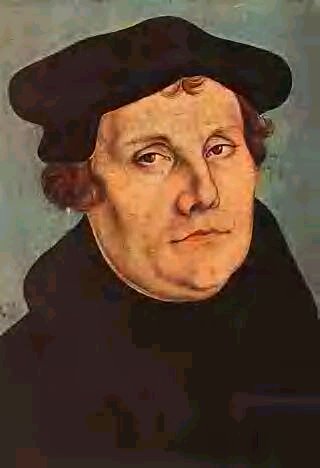
This will be the fifth installment of a response to a person calling himself “St. Thomas More” on the CARM discussion boards. His comments were made in the thread, Perspectives of Luther (no longer available). Previously I looked at these topics:
Perspectives of Luther:The Influence of Occam on Luther and Sola Scriptura:
Perspectives on Luther: Did he join the Monastery Selfishly?
Perspectives on Luther: Was Luther a Womanizer and a Lush?
Perspectives on Luther: Did Luther Veer Toward Rebellion and the Destruction of the Church?
Let’s take a look at More’s fifth charge:
“He was so bound and determined to take down the Church of Rome that he guaranteed the right of investiture (gave the crown the right to appoint bishops, etc) to the princes of the many small city-states in Germany at the time if they made his religion the official religion of the principality and sanctioned abuses, such as polygamy, to further his political cause.”
This is a compound argument, which will require a few responses. The most outrageous aspect of the argument is Luther’s supposed sanctioning of polygamy for political purposes. The ironic thing about this charge, is that it could be applied to many medieval political situations in the Roman Catholic Church over the years. W.H.T. Dau's, Luther Examined and Reexamined: A Review of Catholic Criticism and a Plea for Reevaluation gives a helpful picture of Luther on this topic:
In a letter addressed to Joseph Levin Metzsch of December 9, 1526, Luther says: "Your first question: Whether person may have more than one wife? I answer thus: Let unbelievers do what they please; Christian liberty, however, is regulated by love (charity), so that all that a Christian does is done to serve his fellow-man, provided only that he can render such service without jeopardy and damage to his faith and conscience. Nowadays, however, everybody is striving for a liberty that profits and pleases him, without regard for the profit and improvement which his neighbor might derive from his action. This is contrary to the teaching of St. Paul, who says: 'All things are lawful unto me, but all things are not expedient' (1 Cor. 6, 12). Only see that your liberty does not become an occasion to the flesh. . . . Moreover, although the patriarchs had many wives, Christians may not follow their example, because there is no necessity for doing this, no improvement is obtained thereby, and, especially, there is no word of God to justify this practise, while great offense and trouble may come from it. Accordingly, I do not believe that Christians any longer have this liberty. God would have to publish a command that would declare such a liberty." (21a, 901 f.) To Clemens Ursinus, pastor at Bruck, Luther writes under date of March 21, 1527: "Polygamy, which in former times was permitted to the Jews and Gentiles, cannot be honestly approved of among Christians, and cannot be engaged in with a good conscience, unless in an extreme case of necessity, as, for instance, when one of the spouses is separated from the other by leprosy or for a similar cause. Accordingly, you may say to the carnal people (with whom you have to do), if they want to be Christians, they must keep married fidelity and bridle their flesh, not give it license. If they want to be heathen, let them do what they please, at their own risk." (21a, 928.)
In his comment on the question of the Pharisees regarding divorce (Matt. 19, 3-6), Luther says: "Many divorces occur still among the Turks. If a wife does not yield to the husband, nor act according to his whim and fancy, he forthwith drives her out of the house, and takes one, two, three, or four additional wives, and defends his action by appealing to Moses. They have taken out of Moses such things as please them and pander to their lust. In Turkey they are very cruel to women; any woman that will not submit is cast aside. They toy with their women like a dog with a rag. When they are weary of one woman, they quickly put her beneath the turf and take another. Moses has said nothing to justify this practise. My opinion is that there is no real married life among the Turks; theirs is a whorish life. It is a terrible tyranny, all the more to be regretted because God does not withhold the common blessing from their intercourse: children are procreated thereby, and yet the mother is sent away by the husband. For this reason there is no true matrimony among the Turks. In my opinion, all the Turks at the present time are bastards." (7, 965.)
All this is plain enough and should suffice to secure Luther against the charge of favoring polygamy. The seeming admission that polygamy might be permissible relates to cases for which the laws of all civilized nations make provisions. How a Christian must conduct himself in such a case must be decided on the evidence in each case. Likewise, the reference to the Christian's liberty from the law does not mean that the Christian has the potential right to polygamy, but it means that he must maintain his monogamous relation from a free and willing choice to obey God's commandments in the power of God's grace. Polygamy, this is the firm conviction of Luther, could only be sanctioned if there were a plain command of God to that effect. Luther's remarks about matrimony among the Turks should be remembered when Catholics cite Luther's remarks about King Ahasuerus dismissing Vashti and summoning Esther, and the right of the husband to take to himself his maid-servant when his wife refuses him. By all divine and human laws the matter to which Luther refers is a just ground for divorce, and that is all that Luther declares."It is true that there were times Luther allowed for polygamy, but it was only in a very narrow sense. Luther scholar Heinrich Boehmer points out that it was only to be in cases of “severe necessity, for instance, if the wife develops leprosy or becomes otherwise unfit to live with her husband… But this permission is always to be restricted to such cases as severe necessity. The idea of legalizing general polygamy was far from the reformers mind. Monogamy was always to him the regular form of matrimony…” (Luther And The Reformation in Light of Modern Research, (London: G. Bell and Sons LTD) 213-214).
Most often, detractors point out Luther’s involvement in the bigamy of Phillip of Hesse. Yes, Luther got himself into a mess, and there were political factors at play, however, not to the extent that "St. Thomas More" suggests. Roland Bainton explains:
There are several incidents over which one would rather draw the veil, but precisely because they are so often exploited to his discredit they are not to be left unrecorded. The most notorious was his attitude toward the bigamy of the landgrave, Philip of Hesse. This prince had been given in marriage with no regard to his own affections—that is, for purely political reasons—at the age of nineteen to the daughter of Duke George. Philip, unable to combine romance with marriage, found his satisfaction promiscuously on the outside. After his conversion his conscience so troubled him that he dared not present himself at the Lord s Table. He believed that if he could have one partner to whom he was genuinely attached he would be able to keep himself within the bounds of matrimony. There were several ways in which his difficulty could have been solved. If he had remained a Catholic, he might have been able to secure an annulment on the grounds of some defect in the marriage; but since he had become a Lutheran, he could expect no consideration from the pope. Nor would Luther permit recourse to the Catholic device. A second solution would have been divorce and re-marriage. A great many Protestant bodies in the present day would countenance this method, particularly since Philip had been subjected in his youth to a loveless match. But Luther at this point interpreted the Gospels rigidly and held to the word of Christ as reported by Matthew that divorce is permissible only for adultery. But Luther did feel that there should be some remedy, and he discovered it by a reversion to the mores of the Old Testament patriarchs, who had practiced bigamy and even polygamy without any manifestation of divine displeasure. Philip was given the assurance that he might in good conscience take a second wife. Since, however, to do so would be against the law of the land, he should keep the union a secret. This the new bride's mother declined to do; and then Luther counseled a lie on the ground that his advice had been given as in the confessional, and to guard the secrete of the confessional a lie is justified. But the secret was out, and the disavowal was ineffective. Luther's final comment was that if anyone thereafter should practice bigamy, let the Devil give him a bath in the abyss of hell. (Here I Stand, 373-374).Note Luther’s final thought (summarized by Bainton, based on WA 53: 195-196), “that if anyone thereafter should practice bigamy, let the Devil give him a bath in the abyss of hell” (Brecht translates it as, "Anyone who follows this fellow and his book and takes more than one wife, and thinks that this is right, the devil will prepare for him a bath in the depths of hell. Amen") See also Martin E. Marty).
A profound aspect of the Bible is its commitment to telling us about the sins of the human condition; even in those characters considered the greatest of God’s people. David was described as “a man after God’s own heart,” yet within his life one finds adultery and murder. Jesus called Peter “blessed,” yet not long after, Peter denied that he even knew him. Examples could be multiplied, and could go beyond the pages of Scripture into the halls of church history. God’s people struggle with sin, and sometimes take great falls. Such is the case of Martin Luther and his involvement with Hesses' bigamy. Luther's life shows many high peaks and some deep valleys: profound success for God’s kingdom, along with human failure. With Luther’s attitude on Bigamy, and his involvement with Phillip of Hesse, we see one of the warts of Luther. Luther had to learn the hard way with his attitude on Bigamy.
W.H.T Dau points out some interesting facts on the bigamy of Phillip of Hesse:
Catholics fail to mention that Luther repelled bigamous thoughts in Philip of Hesse fourteen years before the Landgrave took Margaret von der Saal. The evidence was found in the state archives at Kassel, now at Marburg, in a fragment of a letter which Niedner published in the Zeitschrift fuer historische Theologie, 1852, No. 2, p. 265. The letter is dated November 28, 1526; Philip's bigamous marriage took place March 9, 1540. In this letter Luther says to Philip: "As regards the other matter, my faithful warning and advice is that no man, Christians in particular, should have more than one wife, not only for the reason that offense would be given, and Christians must not needlessly give, but most diligently avoid giving, offense, but also for the reason that we have no word of God regarding this matter on which we might base a belief that such action would be well-pleasing to God and to Christians. Let heathen and Turks do what they please. Some of the ancient fathers had many wives, but they were urged to this by necessity, as Abraham and Jacob, and later many kings, who according to the law of Moses obtained the wives of their friends, on the death of the latter, as an inheritance. The example of the fathers is not a sufficient argument to convince a Christian: he must have, in addition, a divine word that makes him sure, just as they had a word of that kind from God. For where there was no need or cause, the ancient fathers did not have more than one wife, as Isaac, Joseph, Moses, and many others. For this reason I cannot advise for, but must advise against, your intention, particularly since you are a Christian, unless there were an extreme necessity, as, for instance, if the wife were leprous or the husband were deprived of her for some other reason. On what grounds to forbid other people such marriages I know not" (21a, 900 f.) This letter effected that the Landgrave did not carry out his intention, but failing, nevertheless, to lead a chaste life, he did not commune, except once in extreme illness, because of his accusing conscience.Dau also points out that Roman Catholics should use caution in this charge against Luther. Note the double standards in Roman Catholic argumentation:
Ought not this remark of the Landgrave caution Luther's Catholic critics to be very careful in what they say about the heinousness of Luther's offense in granting a dispensation from a moral precept? Have they really no such thing as a "dispensation" at Rome? Has not the married relationship come up for "dispensation" in the chancelleries of the Vatican innumerable times? Has not one of the canonized saints of Rome, St. Augustine, declared that bigamy might be permitted if a wife was sterile? Was not concubinage still recognized by law in the sixteenth century in Ireland? Did not King Diarmid have two legitimate wives and two concubines? Andhe was a Catholic. What have Catholics to say in rejoinder to Sir Henry Maine's assertion that the Canon Law of their Church brought about numerous sexual inequalities? Or to Joseph MacCabe's statement that not until 1060 was there any authoritative mandate of the Church against polygamy, and that even after this prohibition there were numerous instances of concubinage and polygamic marriages in Christian communities? Or to Hallam in his Middle Ages, where he reports concubinage in Europe? Or to Lea, who proves that this evil wasnot confined to the laity?
Addendum (2018)
This blog entry is a revision of an entry I posted back in 2006. The original can be found here. Because so many sources are now available online, I'm revising older entries by adding additional materials and commentary, and also fixing or deleting dead hyperlinks. Nothing of any significant substance has changed in this entry from that presented in the former.
Thursday, March 30, 2006
Perspectives on Luther: Did Luther Veer Toward Rebellion and the Destruction of the Church?
This will be the fourth installment of a response to a man who calls himself “St. Thomas More” over on the CARM Catholic board. His comments came in the thread, Perspectives of Luther which I began responding to here and also on the CARM Catholic board.
Previously I looked at these topics:
Perspectives of Luther:The Influence of Occam on Luther and Sola Scriptura:
Perspectives on Luther: Did he join the Monastery Selfishly?
Perspectives on Luther: Was Luther a Womanizer and a Lush?
Let’s take a look at More’s fourth charge:
“However, you need to keep in mind also that the religious revolt in Germany was as much political as religious. Regarding his motives, in my opinion, Luther proved his stripes because he veered so quickly toward rebellion and destruction of the Church rather than internal reform.”
Actually, Rome "proved their stripes." A simple look at the facts shows that Rome was unwilling to be corrected from the Bible, and thus plunged Western culture into a situation in which the paradigm of church/state would (fortunately) need to be reevaluated.
The Pope received the report of Luther’s 95 theses from Archbishop Albert of Mainz (who was quite fond of the revenue collected from the indulgence, and quite upset by diminishing revenue from them due to Luther’s Theses). The Pope thought Luther’s theses to be trivial, and told Albert to keep him quiet.
The Dominicans immediately thought of Luther as a heretic, and they realized quickly that the only way to prove the truth of the indulgence was to prove that Luther was a heretic because he questioned and assailed Papal power.
Luther did appear before (Dominican) Cardinal Cajetan October 12-14, 1518. Let it not be forgotten that Cajetan was given the case of Luther by the Pope. Cajetan was unwilling to discuss the Indulgence with Luther. He simply wanted Luther to admit the Pope’s authority and his own rebellion against him. Luther was ordered to retract or suffer the consequences.
The Cardinal was well versed in Roman Catholic doctrine, and realized quickly the dilemma the Pope had: there was no adequate foundation to condemn Luther as a heretic. Why? there was not an official teaching on indulgences when Luther posted the 95 Theses. There was no official doctrine as to the effect of the indulgence upon Purgatory. So Cajetan knew that in order to put Luther down as a heretic, he must first be declared one according to some sort of doctrinal standard. Cajetan quickly drafted a declaration of dogma on the subject of indulgences. Pope Leo X found this to be a good idea. Thus came the decretal Cum postquam. The dogma of indulgences was defined as Cajetan outlined them. The Pope also threatened any of his representatives that may have held a divergent view on the subject.
On October 28, 1518 Luther asked for a General Council of the Christian Church to resolve the matter. None came, though Luther penned the letter to the Pope, submissive in tone to the Pope, but retracting nothing about the indulgence controversy. He was forced into the corner by Rome to either admit the Pope was wrong, or vow allegiance to his divine right.
Had Luther not been protected by Frederick the Wise of Saxony, he would have been burnt or hanged by Rome. Because the Papacy would not even discuss indulgences, but rather sought to prove him a heretic denying Papal power, he was declared an outlaw. At Worms, the argument was:
Rome: Are these your books?
Luther: Yes.
Rome: Will you recant?
Luther: No.
Rome: Then get out!
(The above dialog courtesy of Owen Chadwick)
It was the Roman Catholic Church who went out of their way to destroy the church, not Luther. They went as far as they could to not address the initial situation. Hey, if my source of income was going to be challenged, I’d probably fight it too. It's sinful human nature.
Wednesday, March 29, 2006
Perspectives on Luther: Was Luther a Womanizer and a Lush?
This will be the third installment of a response to a man who calls himself “St. Thomas More” over on the CARM board. His comments came in the thread, Perspectives of Luther which I began responding to here and also on CARM. Previously I looked at these topics:
Perspectives of Luther:The Influence of Occam on Luther and Sola Scriptura:
Perspectives on Luther: Did he join the Monastery Selfishly?
Let’s take a look at More’s third charge: “[Luther] was a womanizer and a lush.”
After reading this charge, I replied, “Mr. More, I'm going to give you an opportunity to retract these words- particularly the nonsense about "womanizer" and "lush". I suggest checking accurate historical sources before putting forth fiction as truth.” He replied, “OK, I'll back off the "womanizer and a lush" comment, though my sources I believe to be accurate (while protestants want to put him on a pedestal, I'll recognize his actions for what they were).” Now, how one “backs off” while at the same time still affirming falsehoods is a unique form of sophistry.
These charges against Luther have a long history. They date back to one of Luther’s earliest Catholic biographers, Johannes Cochlaeus. The Catholic Encyclopedia gives this description of the man: “Naturally of a quiet and studious disposition he was drawn into the arena of polemics by the religious schism. There he developed a productivity and zeal unparalleled by any other Catholic theologian of his time.” This is a kind way to describe Cochlaeus. Actually, he was consumed in a desire to destroy Luther. He wrote incessantly against Luther. Even after Luther died, Cochlaeus kept writing against him. The Catholic Encyclopedia goes on to state “Almost all of these publications [against Luther] however, were written in haste and bad temper, without the necessary revision and theological thoroughness, consequently they produced no effect on the masses.” This is yet another kind way to describe Cochlaeus. In actuality, the charges put forth by Cochlaeus had a profound impact on Catholic approaches to Luther for hundreds of years to follow. The comments by this Sir Thomas on the CARM board about Luther being a “womanizer and a lush” find their origin in the work of Cochlaeus.
Here are a few summary statements from a modern Catholic and protestant scholar of the content of Cochlaeus’s image of Luther:
“Luther is a child of the devil, possessed by the devil, full of falsehood and vainglory. His revolt was caused by monkish envy of the Dominican, Tetzel; he lusts after wine and women, is without conscience, and approves any means to gain his end. He thinks only of himself. He perpetrated the act of nailing up the theses for forty two gulden- the sum he required to buy a new cowl. He is a liar and a hypocrite, cowardly and quarrelsome. There is no drop of German blood in him…” (Joseph Lortz, The Reformation in Germany, trans. Ronald Walls (London: Darton, Longman & Todd 1968), 1:296.)
“He refers to Luther as a child of the devil, the fruit of a union of Satan with Luther's mother who later regretted not having murdered him in the cradle. His fellow monks knew him as a demon-possessed quarreler who lusted after drink and sex, without conscience, ready to use any means to further his own plans. Demonic monstrosities boiled out of his powerful but perverted mind. At Luther's death, this "father" appears to drag him off to hell.” (Fred W. Meuser and Stanley D. Schneider (eds.) Interpreting Luther’s Legacy, (Minneapolis: Augsburg Publishing House, 1969), 41)
In actuality, Cochlaeus’s work on Luther was some of the worst ever put forth. He took up a number of false rumors of Luther circulating and incorporated them into his work. Two such rumors were Luther being a “womanizer and a lush.”
The first charge is pure folly. Luther lived the first part of his life as a celibate monk. He then lived the remainder of his life as a devoted husband. There is no historical record that exists that substantiates Luther being a womanizer. On the other hand, there are countless sermons and writings of Luther exhorting his congregation and readers to moral purity. Cochlaeus had simply lied, or either printed hearsay as fact.
The second charge about Luther being a “lush” has a similar response. To my knowledge, no historical source document from Luther’s lifetime exists that says he was ever drunk. On the other hand, there are countless sermons and writings of Luther exhorting his congregation and readers to be not drunk with alcohol. Cochlaeus had simply lied, or either printed hearsay as fact.
W.H.T. Dau in his book, Luther Examined and Reexamined: A Review of Catholic Criticism and a Plea for Reevaluation (St Louis: Concordia Publishing House, 1917, 7) gives a helpful picture of Luther on this topic:
“Luther is said to have been a glutton and a drunkard. "Let us examine the facts... I do not deny that Luther drank freely both beer and wine. So did everybody else. People drank beer as we do coffee. . . . Moreover, in the sixteenth century alcoholic beverages were prescribed for the maladies from which Luther suffered much--kidneys and nervous trouble. We now know that in such cases alcohol proves a very poison; but this Luther could not know. But intemperate . . . in his use of strong drink Luther was not. Neither was he a glutton. Before he married, he ate very irregularly, and often completely forgot his meals. When he could not get meat and wine, he contented himself with bread and water. . . . Melanchthon tells us that Luther loved the coarse food as he did the coarse speech of the peasantry, and even of that food ate little, so little that Melanchthon marveled how Luther could maintain strength upon such a diet.--It is further a noteworthy fact that, when we read the sermons of the day, we find nobody who so frequently and so earnestly attacks the prevailing vice of drunkenness as does Luther. Now, whatever Luther may or may not have been, hypocrite he was not. Had he himself been intemperate, he would not have preached against it in such a manner. Furthermore, Luther was under constant espionage. His every move was noted. People knew how many patches there were on his undergarments. Think you, think you for a moment, that the Wittenbergians would have listened meekly to Luther's repeated assaults upon the wide-spread sin of intemperance, had they known him for a confirmed tippler? It is too absurd.--But the best evidence for the defense comes from a mute witness--Luther's industry. He wrote more than four hundred books, brochures, sermons, and so forth, filling more than one hundred volumes of the Erlangen edition. There are extant more than three thousand of his letters, which represent only a small proportion of all that he wrote. Thus we know, for example, that one evening in 1544 Luther wrote ten letters, of which only two have been preserved. He was, furthermore, in frequent conference with leaders in both Church and State. He preached on Sundays and lectured on week-days. Now, a man may, it is true, perform a considerable amount of manual labor even after overeating and overdrinking, but every physician will admit the correctness of my assertion, it is a physiological impossibility that a man could habitually overindulge in food or liquor, or both, and still get over the enormous amount of intellectual work that Luther performed day to day" (Boehmer, The Man Luther, p. 16 f.)
Tuesday, March 28, 2006
Perspectives of Luther:The Influence of Occam on Luther and Sola Scriptura:

This will be the second installment of a response to a man who calls himself “St. Thomas More” over on the CARM board. His comments came in the thread, "Perspectives of Luther" which I began responding to here and also on CARM.
Let’s take a look at More’s second charge: The influence of Occam on Luther and sola scriptura:
"This is also very evident in Luther’s philosophy. He was an Ockhamist. That is to say, he was an adherent to the philosophy of William of Ockham. William of Ockham advanced the philosophy of the self, that there are no universals, that Man does not exist, only individuals. This could be said to have lead Luther to his conclusions regarding his heretical doctrine of Sola Scriptura, there being no need for a religious authority if it is the individual that reigns supreme. And because he was a pervert, he needed some sense of security regarding his own salvation. Hence, Sola Fida."
Let’s begin with the ridiculous and work backwards: Luther was not a pervert. I'm not sure exactly where "Sir Thomas" pulled this tidbit of silliness from, though many earlier Roman Catholic critiques of Luther wrongly put forth this negative rhetoric. Modern Roman Catholic historians do not put forth this type of fiction anymore.
It is true that it is possible Luther first came to acknowledge the sole authority of the canonical books as the basis of the Christian faith from the Occamist perspective, but as Lutheran scholar Willem Kooiman points out, “…for Occam’s followers the church still stands above the Scriptures, since she alone decided their interpretation” [Kooiman, Luther and the Bible (Philadelphia: Muhlenberg Press, 1961), 14]. Therefore, the Occamists that influenced Luther were very devoted to the authority of the Papacy, as was Luther until the indulgence controversy, and also during the beginning of the indulgence controversy. Luther gradually came to see the folly of Sola Ecclesia as he studied the Bible and compared it to the teachings of the Roman church. It was the response, or rather non-response of the Roman Church to Luther that was a factor which provoked sola scriptura.
But Occamism did play a crucial role in Luther’s understanding of the Gospel. The following is from my notes based on Luther lectures given by Robert Kolb:
There were two distinct groups of medieval theologians, Realists and Nominalists. The Realists held that reality lies in the universals (ideas, abstract concepts) in the mind of God (a Platonic idea). The Nominalists held that reality exists in particulars. Hence for the nominalists, an idea has no reality of its own. The Realists thus tended to glorify “reason”- reason would be an abstract universal (Aquinas was a Realist that emphasized the primacy of reason). But the Nominalists did not- Scotus and Occam emphasized rather the primacy of the human will. It was the particular will that “reasoned.”
These two distinct groups also differed also on the relationship between God and the law. The Realist view encompassed the Greek (Aristotelian) view of an eternal existing law coexistent with God. For the Realists, the will of God and the law of God correspond necessarily, because the law is good and God is good. On the other hand, the Nominalist view held that that God created the law and human creatures. God determines what is acceptable to him. It is not a universal abstract outside of Him. Hence, there is no eternal prescription outside of God which human performance can carry out to make themselves acceptable to God.
These differences were important to the Reformation in that a number of theological systems developed from the Nominalist perspective. Luther was trained in a Nominalist type of system Luther received his scholastic orientation through the Occamist Gabriel Biel.
Biel’s doctrine was a mixture of grace and works, and this mixture confused Luther. Biel is said to have believed that salvation was by grace alone because God was under no compulsion to save anyone. By grace alone, Biel meant that God had set up a system by which we might be saved from our sinfulness. It was god’s “gracious” decision to make salvation available. In this system for salvation, works provide the key to access to God. Biel held that God would grant his grace to those who did their best. Those who did their best were given God’s grace to help them continue to do their best in a God pleasing way, and if they continued in this, they would be saved.
Biel had four stages in this salvation schema. First, the sinner does ‘good” out of “purely natural powers.” When he has done this, the sinner has done what is “in him,” he has responded to the conscience that God has planted in the human creature. This is summarized in Biel’s statement, “To do what is in one” (to do our best). One can never be sure that one has done their best. We know what God demands, and we know what we have done, but we can never know for sure if our best has been done to make one eligible for God’s grace. The works in this first stage are of congruent merit; they are unworthy works that do not merit Heaven. Secondly, stage two is God’s gift of his grace (or the power to be able to perform those same works in a worthy manner). Grace comes through our doing of the sacraments, and thus our works are enough to merit heaven. Stage three focuses on human works are that are combined with God’s grace that earn condign merit. In stage four God gives salvation.
This theology of Biel’s impacted Luther because he was never sure if he had done his best, or if the sacraments were working in his life.
Luther wrestled with this type of Occamist theology, particularly Biel’s concept that “God would give His grace to those who do their best,” and also Biel’s “what is in them by natural powers.” Luther knew the best of his works were filthy rags. He was sure he did not have initial grace necessary to do the good works needed for the assurance of God’s favor. In 1515 – 1516, Luther finally rejected Biel’s theological concept of “doing the best that one can.” Luther had placed his whole weight on the scholastic Occamist concept of salvation. That weight forced the system to collapse under him. In other words, it was by abandoning Occamist theology that was a factor in Luther’s evangelical breakthrough.
These differences were important to the Reformation in that a number of theological systems developed from the Nominalist perspective. Luther was trained in a Nominalist type of system Luther received his scholastic orientation through the Occamist Gabriel Biel.
Biel’s doctrine was a mixture of grace and works, and this mixture confused Luther. Biel is said to have believed that salvation was by grace alone because God was under no compulsion to save anyone. By grace alone, Biel meant that God had set up a system by which we might be saved from our sinfulness. It was god’s “gracious” decision to make salvation available. In this system for salvation, works provide the key to access to God. Biel held that God would grant his grace to those who did their best. Those who did their best were given God’s grace to help them continue to do their best in a God pleasing way, and if they continued in this, they would be saved.
Biel had four stages in this salvation schema. First, the sinner does ‘good” out of “purely natural powers.” When he has done this, the sinner has done what is “in him,” he has responded to the conscience that God has planted in the human creature. This is summarized in Biel’s statement, “To do what is in one” (to do our best). One can never be sure that one has done their best. We know what God demands, and we know what we have done, but we can never know for sure if our best has been done to make one eligible for God’s grace. The works in this first stage are of congruent merit; they are unworthy works that do not merit Heaven. Secondly, stage two is God’s gift of his grace (or the power to be able to perform those same works in a worthy manner). Grace comes through our doing of the sacraments, and thus our works are enough to merit heaven. Stage three focuses on human works are that are combined with God’s grace that earn condign merit. In stage four God gives salvation.
This theology of Biel’s impacted Luther because he was never sure if he had done his best, or if the sacraments were working in his life.
Luther wrestled with this type of Occamist theology, particularly Biel’s concept that “God would give His grace to those who do their best,” and also Biel’s “what is in them by natural powers.” Luther knew the best of his works were filthy rags. He was sure he did not have initial grace necessary to do the good works needed for the assurance of God’s favor. In 1515 – 1516, Luther finally rejected Biel’s theological concept of “doing the best that one can.” Luther had placed his whole weight on the scholastic Occamist concept of salvation. That weight forced the system to collapse under him. In other words, it was by abandoning Occamist theology that was a factor in Luther’s evangelical breakthrough.
Monday, March 27, 2006
Perspectives on Luther: Did he join the Monastery Selfishly?

"If the life of monks and nuns is really what they claim that it is: the highest and most perfect form of Christianity, they should consistently give any person credit for making the effort to lead that life. In fact, they ought all to turn monks and nuns to honor their own principles."-W.H.T. Dau
This will be the beginning of a response to a man who calls himself “St. Thomas More” over on the CARM board. His comments came in the thread, Perspectives of Luther which I began responding to here and also on CARM.
Let’s take a look at More’s first charge: Luther’s joining of a monastery was inappropriate. More says,
“The problem with Luther starts with his motivation for joining a religious order in the first place. He was training to be a lawyer and following a couple of incidents that awakened his sense of his own mortality (friend’s death in a duel and close call in a violent storm), he made a commitment to God to become a religious. First off, to become a religious to save your own hide is a little selfish.”
This charge is very similar to that put forth by the dreadful Facts About Luther by Patrick O'Hare (see chapter 2). As with O'Hare, I’m convinced More's understanding of Luther’s early life is muddled, and similarly I wonder how familiar he is with the aspects of medieval monkery and the implications it had during Luther’s early life.
W.H.T. Dau in his book, Luther Examined and Reexamined: A Review of Catholic Criticism and a Plea for Reevaluation (St Louis: Concordia Publishing House, 1917, 20-21) gives a helpful picture of the young Luther. More would have you believe that one day Luther simply had a notion to join the monestary selfishly out of the blue. Such was not the case. Dau explains:
“The holy life of the saints had been held up to him as far back as he could remember as the marvel of Christian perfection. Home and Church had cooperated in deepening the impressions of the sanctity of the monkish life in him. When he saw the emaciated Duke of Anhalt in monk's garb with his beggar's wallet on his back tottering through the streets of Magdeburg, and everybody held his breath at this magnificent spectacle of advanced Christianity, and then broke forth in profuse eulogies of the princely pilgrim to the glories of monkish sainthood, that left an indelible impression on the fifteen-year-old boy. When he observed the Carthusians at Eisenach, weary and wan with many a vigil, somber and taciturn, toiling up the rugged steps to a heaven beyond the common heaven; when he talked with the young priests at the towns where he studied, and all praised the life of a monk to this young seeker after perfect righteousness; when in cloister-ridden Erfurt he observed that the monks were outwardly, at least, treated with peculiar reverence, can any one wonder that in a mind longing for peace with God the resolve silently ripened into the act: I will be a monk?
We, too, would call this an act of despair. We would say with Luther: Despair makes monks. But the despair which we mean, and which Luther meant, is genuine spiritual despair. What Catholics call Luther's despair is really desperation, a reckless, dare-devil plunging of a criminal into a splendid Catholic sanctuary. That Luther's act decidedly was not. By Rome's own teaching Luther belonged in the cloister. That mode of life was originally designed to meet the needs of just such minds as his. His entering the monastery was the logical sequence of his previous Catholic tutelage. Rome has this monk on its conscience, and a good many more besides. As piety went in those days, Luther had been raised a pious young man. He was morally clean. He was a consistent, yea, a scrupulous member of his Church, regular in his daily devotions, reverencing every ordinance of the Church.”
“His was an introspective nature. He had wrestled daily with the sin that ever besets us. He knew that with all his conventional religiousness he could not pass muster before God. Over his wash-basin he was overheard moaning: "The more we wash, the more unclean we become." He felt like Paul when he groaned: "O wretched man that I am, who shall deliver me from the body of this death?" (Rom. 7, 24.) He was sorrowing for his poor soul. He was hungering and thirsting for righteousness. "When will I ever attain to that state of mind that I am sure God is pleased with me?" he mused distractedly. What he could not find while engaged in his secular pursuits, that, he was told, the cloister could give him. To obtain that he entered the monastery. If ever Rome had an honest applicant for monkery, Luther is that man. Nor did he act precipitately. As shown, the thought of this act had been quietly forming in him for years. When he made his rash vow to St. Anna, he still allowed two weeks to pass before he put his resolution into action. Try and picture to yourself his state of mind during those fourteen days! Moving about in his customary surroundings, he was daily probing the correctness of his contemplated change of life. He fought a soul-battle in those days, and the remembrance of his father made that battle none the easier. From the Catholic standpoint Luther deserves an aureole for that struggle. After entering the cloister, he was still at liberty for a year and a half to retrace his fatal step. But his first impressions were favorable; monkery really seemed to bring him heart's ease and peace, and there was no one to disabuse his mind of the delusion. After nearly two years in the monastery, while sitting with his father at the cloister board on the event of his ordination to the priesthood, he declares to his father that he enjoys the quiet, contemplative life that he has chosen. Surely, he made a mistake by becoming monk, but Catholics cannot fault him for that mistake. If the life of monks and nuns is really what they claim that it is: the highest and most perfect form of Christianity, they should consistently give any person credit for making the effort to lead that life. In fact, they ought all to turn monks and nuns to honor their own principles."
Saturday, March 25, 2006
Theological Forcast: Luther brawl on the CARM Catholic Board Brewing
I'm somewhat of a one (or two) trick pony. Actually, let me qualify, I’m a self-imposed one (or two) trick pony. On Internet discussion boards, I used to join into a lot of discussions. Due to time constraints, I try to limit myself to one or two discussions at most. These, I try to pursue with vigor, rather than engaging in multiple discussions half-heartedly. As far as I can tell, the discussion with Fr. Joseph on Calvin’s alleged Pagan Philosophy is at a standstill; however he’s more than welcome to continue when he wishes to. I’m still monitoring the CARM thread.
On the CARM Catholic board the latest topic I’m going to devote some energy to is called, Perspectives on Luther. One of the CARM Roman Catholics asks,
“Most posts I've seen that refer to Luther seem to regard him as either completely right or completely wrong. Is it not possible that he could have been partly right? Could he not have been a Saul-like character who began by doing the will of God, which was greatly beneficial to the whole church, but then ended up pursuing his own goals, which resulted in the division of the Church? There were others who were dissatisfied with conditions in the Church who remained a part of it and helped to end many of the abuses that were taking place. It's a pity Luther didn't too. The Catholics (I'm one of them) need to appreciate that Luther did in fact do a lot of good, and the Protestants need to realize that he was not perfect, and he inadvertently did a lot of damage to the Christian community. Any thoughts?”
I appreciate the tenor of these remarks, even if I disagree with some of them. I have a special interest in Catholic interpretations of Luther. I find it somewhat of an irony that Roman Catholics are all over board on this one. Some say he’s a minion of Satan, others say he’s a Christian. This is nothing new. Catholic scholarship has no unified take on Luther. Here again, we find disunity among those perpetually claiming unity.
Now below I’ve listed many of the key Roman Catholic scholars who have opinions on Luther. What makes these opinions of Luther more important than the usual zealous Roman Catholic boldly pounding forth anti-Luther sentiment from his or her computer keyboard, is that most of the people mentioned below have actually read Luther’s writings. By and large, this is not the case of the current internet defenders of Rome.
Lets start with the pre-1900 Catholic approaches to Luther:
I. Johannes Cochlaeus:
The first Catholic apologist to critique Luther: Luther was a child of the devil, the fruit of a union between Satan and Luther's mother (who later regretted not having murdered him in the cradle). Luther lusts after wine and women, is without conscience, and approves any means to gain his end. Luther is a liar and a hypocrite, cowardly and quarrelsome. Demonic monstrosities boiled out of Luther’s powerful perverted mind. At Luther's death, Satan came to drag him off to hell.
II. Heinrich Denifle:
The Nineteenth Century Catholic scholar who held Luther was a fallen-away monk with unbridled lust, a theological ignoramus, an evil man, and used immorality to begin the the Reformation. Denifle accuses Luther of buffoonery, hypocrisy, pride, ignorance, forgery, slander, pornography, vice, debauchery, drunkenness, seduction, corruption, and more: he is a lecher, knave, liar, blackguard, sot, and worse: he was infected with the venereal disease syphilis.
III. Hartmann Grisar:
The Jesuit historian who used Freudian psychology to arrive at the assessment that Luther was a monk obsessed with the lust of the flesh and a pathological manic-depressive personality. Luther’s view of justification by faith alone came from his own immorality—that in order to justify his loose life and to excuse his renunciation of the monastic ideal, Luther denied salvation with works. Luther was a neurasthenic and a psychopath. He sees him as the victim of bad heredity, a maladjusted misfit entering the monastic life because of some traumatic experience during a thunderstorm. Grisar argues that Luther was simply a neurotic man who spent his entire life unhappy and guilt-ridden.
IV. Catholic Encyclopedia:
Catholic historian George Ganss presents a a wild tempered Luther, depressed and mentally ill. Luther was the victim of lust seeking unbrideled sexual liscence through his teaching. Luther ended up abandoned by most of his friends and colleagues, dejected and despairing, tortured in body and spirit.
V. Patrick O'Hare:
The Facts About Luther: Father O’Hare presents a Luther who is not only mad, but morally depraved and corrupt. He asserts that Luther in the Wartburg was in close touch with Satan. Luther lived indecently, decried celibacy and virginity, sanctioned adultery, dishonored marriage, authorized prostitution and polygamy, and was a drunkard and frequenter of taverns who preached his theology in the fumes of alcohol in the midst of his fellow revolutionaries. He attributes to Luther a fickle and cunning character, an inordinate impudence, an unbridled presumption, a titanic pride, a despotic nature, and a spirit of blasphemy; Luther was a blasphemer, a libertine, a revolutionary, a hater of religious vows, a disgrace to the religious calling, an enemy of domestic felicity, the father of divorce, the advocate of polygamy, and the propagator of immorality and open licentiousness.
And now, the post 1900 Catholic approaches to Luther:
I. Franz Xaver Kiefl: German Roman Catholic Historian. Luther never denied good works or holy living. Rather good works are the way in which faith expresses itself.
II. Sebastian Merkle: German Roman Catholic Historian. Luther’s motives were religious, not revolutionary or psychological.
III. Anton Fischer: German Roman Catholic Historian. Luther was a man of prayer.
IV. Hubert Jedin: German Roman Catholic Historian. Catholicism never condemned Luther by name at Trent. No official judgment on Luther exists by which a loyal Catholic is bound.
V. Joseph Lortz: German Roman Catholic Historian. Luther was a theologian of the highest rank. Luther was a profoundly religious man, a true Christian, who lived by a deep faith in Jesus Christ.
VI. Adolf Herte: German Roman Catholic Historian. Proved that all Catholic biographies of Luther simply echoed the vilification of the Sixteenth Century Catholic author Cochlaeus.
VII. Johannes Hessen : German Roman Catholic Theologian. Luther’s theology is not based on subjectivism.
VIII. Karl Adam: German Roman Catholic Theologian. Credits Luther with an original understanding of the essence of Christianity and a passionate desire to reject whatever is not holy or of God.
IX. Yves M.-J. Congar: Catholic French Scholar. The Reformation was a religious movement, an attempt to renew religion at its source. He considers Luther a profoundly religious man who had a deeply sensitive conscience and was obsessed by the longing to find peace of heart and a warm, living, consoling contact with God.
X. Father Thomas Sartory: German Benedictine Monk. Love inspired Luther. In spite of his mistakes and weaknesses, Luther was a genuine religious personality.
XI. George Tavard: American Catholic Scholar. There is no real contradiction between Roman Catholic theology and Luther's gospel; the gospel had been eclipsed in Luther's day.
XII. Father Thomas M. McDonough : Catholic American Scholar. Luther had a true experience with the living God. His experience was the effect and Fruit of God's objective, external Word.
XIII. Leonard Swidler : Catholic American Scholar. The Reformation was needed.
XIV. John M. Todd: Catholic American Lay Historian. Luther was an honest theologian with important insights.
XV. Harry J. McSorley:Catholic American Scholar. Luther’s protest was not attempt to divide Christianity.
XVI. Jared Wicks: Catholic American Scholar. Luther is a forceful teacher of lived religion. He is a resource for the enrichment of personal spirituality for members of all Christian confessions.
But as I mentioned, the storm is brewing in this thread. Someone calling himself "St. Thomas. More" has a post that is truly silly, Found here. I will be responding to this one, time allowing.
Friday, March 24, 2006
What are you currently reading and why?
What are you currently reading and why?
I’m reading one the few biographies of Philip Melanchthon- Clyde Leonard Manschreck, "Melanchthon The Quiet Reformer."
I’m reading this book because I realized that I don’t really know a lot about Melanchthon. Very few biographies exist, and very little of his written corpus is available in English. I had been searching for a context to Melanchthon’s alleged letter to John Calvin in which he said, “All the waters of the Elbe would not yield me tears sufficient to weep for the miseries caused by the Reformation.” I haven’t found the context yet, and I’m tempted to say this quote might not even be from Melanchthon’s letter to Calvin. I recently purchased a book of Catholic apologetics from the early 1800’s that uses this quote, but Calvin isn’t mentioned at all.
Melanchthon is a fairly controversial historical figure. He lived his life in constant battle- against his fellow Lutherans, with Roman Catholics, with the Reformed, and a host of others. The Lutherans accused him of being too much like a Calvinist, while the Reformed accused him of not being Calvinist enough.
What about you? What are you reading? Why are you reading it?
I’m reading one the few biographies of Philip Melanchthon- Clyde Leonard Manschreck, "Melanchthon The Quiet Reformer."
I’m reading this book because I realized that I don’t really know a lot about Melanchthon. Very few biographies exist, and very little of his written corpus is available in English. I had been searching for a context to Melanchthon’s alleged letter to John Calvin in which he said, “All the waters of the Elbe would not yield me tears sufficient to weep for the miseries caused by the Reformation.” I haven’t found the context yet, and I’m tempted to say this quote might not even be from Melanchthon’s letter to Calvin. I recently purchased a book of Catholic apologetics from the early 1800’s that uses this quote, but Calvin isn’t mentioned at all.
Melanchthon is a fairly controversial historical figure. He lived his life in constant battle- against his fellow Lutherans, with Roman Catholics, with the Reformed, and a host of others. The Lutherans accused him of being too much like a Calvinist, while the Reformed accused him of not being Calvinist enough.
What about you? What are you reading? Why are you reading it?
Calvin in Dialog With Catholic Apologists
Ever wonder if John Calvin had a face to face debate with Catholic apologists? Did Calvin simply sit locked up in his study engaging in written debate?
This is an excerpt from the introduction of David King's book Holy Scripture, Vol. 1 An Historical Defense of the Reformation Principle of Sola Scriptura. Everyone should get this book. David King's work on the Reformed understanding of sola scriptura is the clearest, most articulate exposistion of this crucial subject .
On one occasion, Peter Viret, Farel and Calvin participated in a formal disputation 'between Roman and Reformed churchmen, for the purpose of facilitating the entrance of the canton of Vaud into the evangelical alliance at Lausanne in October of 1536, the same year that saw the publication of Calvin's first edition of The Institutes of the Christian Religion. It was organized by the Bernese, a Protestant constituency.
Farel and Viret were invited to present the case for the cause of reform. Viret was already in Lausanne, and Farel brought with him from Geneva a young rector, John Calvin. Farel offered ten articles (now referred to as the Lausanne Articles) in a sermon which laid out the substance and structure of the discussion. Exchange and debate ensued, and for some three days,
both Farel and Viret found the proceedings very difficult. In his biographicalsketch of Calvin, Emanuel Stickelberger writes of the event:
"For three days Calvin was silent. As often as Farel nodded to him he shook his head. And in the evening he answered the reproaches by saying, 'You and Viret know well how to answer all questions. Why should I interfere? Farel wrung his hands, 'It is a shame that you have so much insight andknowledge and at the same time so much shyness.'"
However, on day four (October 5th), the opposition made a carefully prepared speech in which they charged the Reformers of holding Augustine and other ancient Church fathers in contempt, particularly with respect to the real presence in the Lord's Supper. Farel glanced at Viret, and Viret back at Farel. Farel was about to reply, but before he could speak, the young rector was on his feet, his gaze fixed on the face of the accuser and said:
"Honor to the Holy Church Fathers: he among us who does not know them better than you, let him beware lest he mention their names. Too bad that you are not more thoroughly read in them, otherwise certain references could be of benefit to you."
Taking command of the debate, Calvin continued:
"But the reproach which you have made concerning the holy doctors of antiquity constrains me to say one word to remonstrate briefly how wrongly and groundlessly you accuse us in this connection! You charge us with condemning and wholly rejecting them, adding the reason that it is because we feel them contrary and hostile to our cause. As for condemning, we should not at
all refuse to be judged by the whole world as not only audacious but beyond measure arrogant, if we held such servants of God in so great contempt, as you allege, as to deem them fools. If it be so, we should not at all take the trouble to read them and to use the help of their teaching when it serves and as occasion offers. So that those who make parade of according them great
reverence often do not hold them in such great honour as we; nor do they eign to occupy their time reading their writings as we willingly do. This could be proved, not to you, but to anyone willing to take a little more trouble.
But we have always held them to belong to the number of those to whom such obedience is not due, and whose authority we will not exalt, as in any way to debase the dignity of the Word of our Lord, to which alone is due complete obedience in the Church of Jesus Christ."
Alister McGrath notes that it was at this point that Calvin 'turned the tide of the debate.'Without the aid of notes or manuscripts, Calvin quoted from memory the Scripture and the early Church fathers, complete with references. On this momentous occasion, he succeeded in devastating the
opposition. He quoted Cyprian, that Christ should be obeyed before all. He expounded the views of Tertullian, and added the testimony of Chrysostom (or the anonymous author) from the unfinished treatment of Matthew, the 11th homily 'about the middle,' referencing as well Augustine's 23rd epistle 'near the end.' He advanced the testimony of Augustine from his book against Adimantus the Manichean 'about the middle,' from his comments on the 98th Psalm, and from one of his homilies on the Gospel of John, around the 8th or 9th section, I cannot recall exactly which,' etc. Thus he argued, and all by heart! He challenged with:
"The whole world is easily able to understand with what audacity you reproach us with being contrary to the ancient doctors. Certainly if you had seen some of their pages, you would not have been so foolhardy as to pass judgment as you have done, not having seen the evidence, as the above witnesses present it. And one could cite others besides. But I content myself with
those that can be reached readily without using great subtlety in citing them..."
He concluded by saying:
"If I have satisfied you about the falseness of your objections, and in my view you ought to be manifestly content, I advise and beseech you to charge us no longer with contradicting the ancient doctors in this matter with whom we are in fact in such accord; nor with corrupting Scripture at our pleasure, when constrained by such vital reasons we interpret it on the true analogy of faith; nor with glossing it on our own testimony, when we suggest no gloss
which is not itself expressed in it."
Having completed his extemporaneous discourse, Calvin sat down, and a hushed silence fell on all present. Even those who understood very little of what had been said sensed that the direction of the debate had shifted.
There was not a single word of rebuttal. 'No one wanted to expose himself, not even Mimard [who made the charge] or Blancherose, the spokesman.' History records that in the moments following, a Franciscan friar, Jean Tandy—noted as a capable preacher who had denounced the Reformers from his pulpit—spoke, his words filled with emotion:
"It seems to me that the sin against the Spirit which the Scriptures speak of is the stubbornness which rebels against manifest truth. In accordance with that which I have heard, I confess to be guilty, because of ignorance I have lived in error and I have spread the wrong teaching. I ask God's pardon for everything I have said and done against His honor; and ask the pardon of all
of you people for the offense which I gave with my preaching up until now. I defrock myself henceforth to follow Christ and His pure doctrine alone...''
Subscribe to:
Posts (Atom)

 Posts
Posts


