
I recently re-listened to the first White / Staples debate on Sola Scriptura: Is The Bible the Only Infallible Rule of Faith? This debate is from 1996. If you listen to this debate, you'll hear references to an earlier discussion between James and Tim on the Bible Answer Man show. I had never heard this before, so I tracked it down: The Roman Catholicism Debate on BAM (White vs Staples - I). This is a lively discussion as well. It's an inexpensive downloadable mp3. Since it's an old recording, for best sound results, lower the bass frequencies and raise the highs.
I mention this old discussion because it serves as a reminder that Dr. White was interacting with Roman apologists long before many of us even cared. His argumentation back in 1996 (probably a lot of it compiled without the Internet or "e books" or gizmos) was excellent, both in this discussion, and in his debate with Tim.
Addendum #1
In the BAM discussion, you'll hear a basic outline of the White vs. Staples Purgatory debate, many years before the debate actually happened. This is the 2010 debate Catholic Answers has no interest making available.
Addendum #2
During this 1996 BAM show, Iron Sharpens Iron host Chris Arnzen called in to explain to Tim Staples how to beat the "old" James White in debate. Click to hear the answer.
Showing posts with label Audio Clips. Show all posts
Showing posts with label Audio Clips. Show all posts
Wednesday, May 08, 2013


Friday, November 02, 2012
R.C. Sproul’s Luther and the Reformation, Free Downloads
I missed a lot this past week due to Hurricane Sandy. Nathan Bingham has posted free downloads to audio and video of R.C. Sproul's Luther and the Reformation. Thanks Nathan! I've probably mentioned this before, but I was more or less introduced to the importance of the Reformation through Dr. Sproul's materials many years ago now. I would assume such is the case for many folks that came out of broad Arminian evangelicalism into a confessional church.
Dr. Sproul is Reformed, but this doesn't mean my Lutheran and Roman Catholic friends wouldn't benefit from these free lectures. Even if you don't agree with Dr. Sproul on everything, learn how to sift. That is, interact with the materials by sifting the stuff out you think is helpful as opposed to the stuff you disagree with. I do this all the time with Reformation materials.
Dr. Sproul is Reformed, but this doesn't mean my Lutheran and Roman Catholic friends wouldn't benefit from these free lectures. Even if you don't agree with Dr. Sproul on everything, learn how to sift. That is, interact with the materials by sifting the stuff out you think is helpful as opposed to the stuff you disagree with. I do this all the time with Reformation materials.
Friday, March 23, 2012
Audio Catechisms and Confessions: Heidelberg and Westminster
From time to time I make attempts to memorize sections of the Heidelberg Catechism. I found a few free audio versions available below, as well as some files of the Westminster Confession of Faith.
Audio readings are often a great idea... poorly executed. That is, I've found many audio readings droning on and on, which leads to... boredom. Such is probably the case of some of the links below. Some may wonder how a catechism could be read in an exciting manner: "It's a catechism, not a dramatic presentation"! I would argue that something like Lord's Day 1 of the Heidelberg is filled with strong emotion, and could be read aloud with vigor for a recording. When I think about Lord's Day 1, I can hear someone like Alistair Begg reading it aloud with force.
I've not listened to all the links below, but my suspicion is the readings are flat. This means, it's the listeners responsibility to be as attentive and focused as possible to get the most out of it. Then again, some of you will probably listen to this sort of thing while driving, and I would rather you focus on the road.
URC Learning, The Three forms of Unity (includes the Belgic Confession and the Canons of Dort)
Audio Heidelberg Catechism
Heidelberg Catechism Audio Recording, Internet Archive
LibriVox recording of The Heidelberg Catechism
Heidelberg Catechism, Grace Reformed Church
And for you Presbyterians-
Reformed Audio Presents: The Westminster Confession of Faith
Sermon audio, Westminster Confession of Faith (1647) & the Solemn League and Covenant (1643)
The Westminster Confession of Faith, StillwaterRPC
Audio readings are often a great idea... poorly executed. That is, I've found many audio readings droning on and on, which leads to... boredom. Such is probably the case of some of the links below. Some may wonder how a catechism could be read in an exciting manner: "It's a catechism, not a dramatic presentation"! I would argue that something like Lord's Day 1 of the Heidelberg is filled with strong emotion, and could be read aloud with vigor for a recording. When I think about Lord's Day 1, I can hear someone like Alistair Begg reading it aloud with force.
I've not listened to all the links below, but my suspicion is the readings are flat. This means, it's the listeners responsibility to be as attentive and focused as possible to get the most out of it. Then again, some of you will probably listen to this sort of thing while driving, and I would rather you focus on the road.
URC Learning, The Three forms of Unity (includes the Belgic Confession and the Canons of Dort)
Audio Heidelberg Catechism
Heidelberg Catechism Audio Recording, Internet Archive
LibriVox recording of The Heidelberg Catechism
Heidelberg Catechism, Grace Reformed Church
And for you Presbyterians-
Reformed Audio Presents: The Westminster Confession of Faith
Sermon audio, Westminster Confession of Faith (1647) & the Solemn League and Covenant (1643)
The Westminster Confession of Faith, StillwaterRPC
Thursday, March 22, 2012
Audio Books of Martin Luther and John Calvin
Commentary on St. Paul's Epistle to the Galatians by Martin Luther
The Large Catechism by Martin Luther
The Small Catechism by Martin Luther
The Smalcald Articles by Martin Luther
Before the Diet of Worms by Martin Luther – 00:07:34
Source: E-text
[mp3@64kbps - 3.6MB]
[mp3@128kbps - 7.2MB]
[ogg vorbis - 4.0MB]
Read by: T. Wellington
The Large Catechism by Martin Luther
The Small Catechism by Martin Luther
The Smalcald Articles by Martin Luther
Before the Diet of Worms by Martin Luther – 00:07:34
Source: E-text
[mp3@64kbps - 3.6MB]
[mp3@128kbps - 7.2MB]
[ogg vorbis - 4.0MB]
Read by: T. Wellington
From Heaven Above To Earth I Come by Martin Luther (1483-1546)(Trans. Catherine Winkworth (1827-1878)) – 00:03:45
[mp3@64kbps - 1.8MB]
[mp3@128kbps - 3.6MB]
[ogg vorbis - 2.1MB]
[mp3@64kbps - 1.8MB]
[mp3@128kbps - 3.6MB]
[ogg vorbis - 2.1MB]
Christmas Carol For Children by Martin Luther (1483-1546) – 00:02:02
[mp3@64kbps - 0.9MB]
[mp3@128kbps - 1.9MB]
[ogg vorbis - 1.1MB]
Ninety-Five Theses by Martin Luther; translated by R. S. Grignon – 00:35:12
Source: E-text
[mp3@64kbps - 16.8MB]
[mp3@128kbps - 33.7MB]
[ogg vorbis - 18.1MB]
[mp3@64kbps - 0.9MB]
[mp3@128kbps - 1.9MB]
[ogg vorbis - 1.1MB]
Ninety-Five Theses by Martin Luther; translated by R. S. Grignon – 00:35:12
Source: E-text
[mp3@64kbps - 16.8MB]
[mp3@128kbps - 33.7MB]
[ogg vorbis - 18.1MB]
John Calvin Completed works
- Calvin, John. "Dedication of The Institutes of the Christian Religion" (in "Prefaces and Prologues to Famous Books") · (readers)
- Calvin, John. "General Syllabus" (in "Prefaces and Prologues to Famous Books") · (readers)
- Calvin, John. "Institutes of the Christian Religion, Book 1" · (readers)
- Calvin, John. "Institutes of the Christian Religion, Book 2" · (readers)
- Calvin, John. "Institutes of the Christian Religion, Book 3" · (readers)
- Calvin, John. "Institutes of the Christian Religion, Book 4" · (readers)
Thursday, March 04, 2010
The Dogmatic Closing of the Roman Catholic Canon

When did the Roman Catholic Church dogmatically settle the contents of the canon? Here's a quick mp3 clip from Dr. White on the Bible Answer Man show with Catholic apologist Tim Staples:
Tim Staples Dogmatically Closes the Canon.
Staples dogmatically closes the canon in 1442, while Dr. White says Rome closed it in 1546. Most of the Roman Catholics I've interacted with dogmatically close the canon in the 4th century.
Anyone interested in this entire discussion can purchase the mp3 here for a few bucks.
Saturday, January 23, 2010
Roman Catholic Tradition: It's Roots and Evolution - By: William Webster
William Webster has revised his website, and has a page dedicated to mp3 audio lectures:
Part 1 » 8 Lectures Dealing with the subjects of
- 1 - Introduction, Overview of the Issues
- 2 - Sola Scriptura: What does Scripture say?
- 3 - The Canon
- 4 - Sola Scriptura: The Fathers Say Yes
- 5 - Tradition: It's Meaning in the Early Church
- 6 - The Papacy: Matthew 16 - Peter and the Rock
- 7 - The Papacy: Papal Primacy - Fact or Fiction?
- 8 - The Papacy: Fallible Infallibility
Part 2 » 8 Lectures Dealing with the subjects of
Tuesday, November 10, 2009
Jimmy Akin Delivers The Good News

Here a short mp3 clip from Catholic Answers: Jimmy Akin Delivers The Good News. I highlighted this clip just to point out that I consider this a different gospel (Galatians 1:8-9).
Akin's not saying anything new.
Cardinal Cajetan: "Everyone remains in doubt in this life, in accord with the ordinary norm that one does not know whether he is in God's grace or not. Nor is anyone certain he is sufficiently disposed through the grace of God granted through absolution." [Jared Wicks, ed. and trans., Cajetan Responds: A Reader in Reformation Controversy (Washington D.C.: Catholic University of America Press, 1978), p. 52].
Luther responds: "I have indicated in a variety of ways that the Christian man must believe for a certainty that he is in a state of divine grace, and that he has the cry of the Holy Spirit in his heart, especially when he is performing his proper function, which is to confess or to suffer for confessing. I did this in order that you might utterly repudiate the wicked idea of the entire kingdom of the pope, the teaching that a Christian man must be uncertain about the grace of God toward him. If this opinion stands, then Christ is completely useless. For whoever doubts the grace of God toward him this way must necessarily doubt the promises of God and therefore the will of God, as well as the birth, suffering, death, and resurrection of Christ. There is no greater blasphemy against God than to deny the promises of God and God Himself, Christ, etc" [LW 26:385].
"Let us thank God, therefore, that we have been delivered from this monster of uncertainty and that now we can believe for a certainty that the Holy Spirit is crying and issuing that sigh too deep for words in our hearts. And this is our foundation: The Gospel commands us to look, not at our own good deeds or perfection but at God Himself as He promises, and at Christ Himself, the Mediator. By contrast the pope commands us to look, not at God as He promises, not at Christ our High Priest, but at our own works and merits. From the latter course, doubt and despair necessarily follow; but from the former, certainty and the joy of the Spirit. For I am clinging to God, who cannot lie. He says: “I am giving My own Son into death, so that by His blood He might redeem you from sin and death.” Here I cannot have any doubts, unless I want to deny God altogether. And this is the reason why our theology is certain: it snatches us away from ourselves and places us outside ourselves, so that we do not depend on our own strength, conscience, experience, person, or works but depend on that which is outside ourselves, that is, on the promise and truth of God, which cannot deceive. The pope does not know this; therefore he and his furies have the wicked notion that no one, not even those who are righteous and wise, can know whether he is worthy of love. But if they are righteous and wise, they surely know that they are loved by God; otherwise they are not righteous and wise" [LW 26:386].
Saturday, November 07, 2009
Catholic Answers on Luther and the Real Presence

Over the years I've come across some Roman Catholics using Luther's views on the sacrament of the Lord's Supper in two similar ways:
1.Luther's view is proof for the legitimacy the Roman Catholic view: Roman Catholics believe in the real presence of Christ in the Eucharist, so did Luther.
2.Many Protestants don't believe in the real presence of Christ in the Eucharist, but Luther did.
The goal is to show Protestants that it's reasonable, biblical, and Roman to believe in the the real presence. If the most famous Reformer believed in it, so should all Protestants.
The problem though with Roman Catholics using Luther's view is that it typically ignores the differences with the Roman view. Luther came to reject transubstantiation as well as the sacrifice of the mass. Rejecting these is no little difference.
I was very pleased to hear the following explanation of this from Catholic apologist Tim Staples:
Tim Staples on Luther and the Real Presence
Staples doesn't try to place Luther on the Roman Catholic side. He points out the differences between Rome and Luther are essential and radical differences. Staples also declares "Lutherans" aren't actually a church.
I'm so used to Luther being used as a propaganda tool, that I almost couldn't believe what I was hearing while listening to Staples.
"The body and blood of Christ are distributed under the bread and wine in the Sacrament, that is, bread and wine are present as well as body and blood. The bread and wine are not changed into body and blood- as the Roman Catholic Church teaches- but are in a mysterious way united with the body and blood. In other words, we receive both bread and wine and the body and blood of Christ in the Sacrament" [An Explanation of Dr. Martin Luther's Small Catechism (Columbus: The Wartburg Press, 1947), pp. 180-181].
Monday, October 26, 2009
ISI Interview
Today at 3PM I will be on Chris Arnzen's Iron Sharpens Iron show. The show can be heard live over the Internet, and the MP3 will be available for download around 4:30 PM.
 James Swan, who is involved in teaching ministry at the Pompton Plains Reformed Bible Church in New Jersey, will address "Did Martin Luther Believe in the Reformed Tulip?"

James has a hobby of tracking down obscure Luther facts. Today we'll examine some of the recent claims about Martin Luther, as well as address the similarities between Calvinism and Luther's theology.
Because of the emphasis James places on the Reformation, his writing tends to attract defenders of the Roman Catholic Church. He spends considerable time interacting with the arguments and materials they produce, calling them to embrace the sole authority of the Scriptures, and salvation by faith alone through grace alone, because of Christ alone.
James is also a member of "Team Apologian", contributing articles to the blog on the web site of renowned Bible scholar Dr. James R. White's Alpha and Omega Ministries , contributes Reformation articles for Christian apologist Dr. Eric Svendsen's New Testament Research Ministries' website, and has had articles published in the Reformed periodical, The Outlook . He also runs his own daily blog, Beggars All: Reformation and Apologetics , dedicated to historical and Biblical research on the Protestant Reformation.
 James Swan, who is involved in teaching ministry at the Pompton Plains Reformed Bible Church in New Jersey, will address "Did Martin Luther Believe in the Reformed Tulip?"
James has a hobby of tracking down obscure Luther facts. Today we'll examine some of the recent claims about Martin Luther, as well as address the similarities between Calvinism and Luther's theology.
Because of the emphasis James places on the Reformation, his writing tends to attract defenders of the Roman Catholic Church. He spends considerable time interacting with the arguments and materials they produce, calling them to embrace the sole authority of the Scriptures, and salvation by faith alone through grace alone, because of Christ alone.
James is also a member of "Team Apologian", contributing articles to the blog on the web site of renowned Bible scholar Dr. James R. White's Alpha and Omega Ministries , contributes Reformation articles for Christian apologist Dr. Eric Svendsen's New Testament Research Ministries' website, and has had articles published in the Reformed periodical, The Outlook . He also runs his own daily blog, Beggars All: Reformation and Apologetics , dedicated to historical and Biblical research on the Protestant Reformation.
Sunday, September 27, 2009
TurretinFan: Harold Camping's Achilles Heel: Why Family Radio's Date for the End of the World is Wrong
I forgot to mention, I had the privilege of co-interviewing Turretinfan last week on Iron Sharpens Iron. The mp3 can be found here.
Friday, May 01, 2009
JOHN CALVIN: A Heart for Devotion, Doctrine & Doxology
.
MP3 Available Here
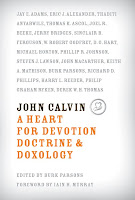 BURK PARSONS, co-pastor with Dr. R.C. Sproul at Saint Andrew’s Chapel, in Sanford, Florida, where he serves as minister of congregational life, and the editor of Tabletalk, the monthly Bible-study magazine of Ligonier Ministries (see http://www.ligonier.org/tt.php), will address the theme of the latest book he edited: "JOHN CALVIN: A Heart for Devotion, Doctrine & Doxology".
As the Ligonier Ministries web site puts it: "John Calvin is often reviled as a humorless doctrinarian who preached an austere theology that twisted Scripture. In John Calvin: A Heart for Devotion, Doctrine, and Doxology, Burk Parsons and a cadre of godly pastors and scholars seek to set the record straight in honor of the 500th observance of John Calvin’s birth in 1509. The book’s nineteen succinct chapters explore aspects of Calvin’s life, ministry, and teachings, and establish his importance even for the twenty-first-century church. Contributors, in addition to Parsons, include some of the most gifted and godly Reformed leaders alive today: Derek W. H. Thomas, Sinclair B. Ferguson, D. G. Hart, Harry L. Reeder, Steven J. Lawson, W. Robert Godfrey, Phillip R. Johnson, Eric J. Alexander, Thabiti Anyabwile, John MacArthur, Richard D. Phillips, Thomas K. Ascol, Keith A. Mathison, Jay E. Adams, Philip Graham Ryken, Michael Horton, Jerry Bridges, and Joel R. Beeke. The foreword is by Iain H. Murray. Indexes of Scripture passages, subjects and names, and theological terms make the book helpful for those who want to delve into specific topics. John Calvin: A Heart for Devotion, Doctrine, and Doxology is a winsome portrait that dashes stereotypes about Calvin and the theological system that bears his name."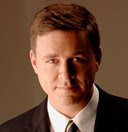
Burk Parsons holds a degree in biblical studies from Trinity College and the master of divinity degree from Reformed Theological Seminary . He is also the editor of "Assured By God: Living in the Fullness of God’s Grace" published by Presbyterian and Reformed Publishers .
MP3 Available Here
 BURK PARSONS, co-pastor with Dr. R.C. Sproul at Saint Andrew’s Chapel, in Sanford, Florida, where he serves as minister of congregational life, and the editor of Tabletalk, the monthly Bible-study magazine of Ligonier Ministries (see http://www.ligonier.org/tt.php), will address the theme of the latest book he edited: "JOHN CALVIN: A Heart for Devotion, Doctrine & Doxology".
As the Ligonier Ministries web site puts it: "John Calvin is often reviled as a humorless doctrinarian who preached an austere theology that twisted Scripture. In John Calvin: A Heart for Devotion, Doctrine, and Doxology, Burk Parsons and a cadre of godly pastors and scholars seek to set the record straight in honor of the 500th observance of John Calvin’s birth in 1509. The book’s nineteen succinct chapters explore aspects of Calvin’s life, ministry, and teachings, and establish his importance even for the twenty-first-century church. Contributors, in addition to Parsons, include some of the most gifted and godly Reformed leaders alive today: Derek W. H. Thomas, Sinclair B. Ferguson, D. G. Hart, Harry L. Reeder, Steven J. Lawson, W. Robert Godfrey, Phillip R. Johnson, Eric J. Alexander, Thabiti Anyabwile, John MacArthur, Richard D. Phillips, Thomas K. Ascol, Keith A. Mathison, Jay E. Adams, Philip Graham Ryken, Michael Horton, Jerry Bridges, and Joel R. Beeke. The foreword is by Iain H. Murray. Indexes of Scripture passages, subjects and names, and theological terms make the book helpful for those who want to delve into specific topics. John Calvin: A Heart for Devotion, Doctrine, and Doxology is a winsome portrait that dashes stereotypes about Calvin and the theological system that bears his name."

Burk Parsons holds a degree in biblical studies from Trinity College and the master of divinity degree from Reformed Theological Seminary . He is also the editor of "Assured By God: Living in the Fullness of God’s Grace" published by Presbyterian and Reformed Publishers .
Wednesday, March 18, 2009
Michael Horton on Iron Sharpens Iron, (March 19)

Do you have a question you've always wanted to ask Michael Horton from the White Horse Inn? Here's your chance, he's going to be on IRON SHARPENS IRON live, Thursday, March 19, 3-4 PM Eastern Standard Time. For details on how to call in, visit the IRON SHARPENS IRON website. The first five callers with a question will receive a free copy of Mike Horton's new book, CHRISTLESS CHRISTIANITY: The Alternative Gospel of the American Church.
MIKE HORTON, author and co-host of "THE WHITE HORSE INN", will address the theme of his provocative, controversial new book: "CHRISTLESS CHRISTIANITY: The Alternative Gospel of the American Church".
According to the "Christless Christianity" web site: "Christians have always had their differences, but never in church history have there been so many statistics indicating that many Christians today are practicing what can only be described as "Christless Christianity."
Christless Christianity guides the reader to a greater understanding of a big problem within the American religious setting, namely the creeping fog of countless sermons in churches across the country that focus on moralistic concerns and personal transformation rather than the theology of the cross.
Michael Horton's analysis of the contemporary church points believers back to the power of a gospel that should never be assumed.
"Horton has ably helped us see the train wreck that is some much of popular Christianity...A more important and timely volume could not have been written."-Thabiti M. Anyabwile, Senior Pastor, First Baptist Church of Grand Cayman
"His wide ranging carefully researched examples show how our churches and megachurches have pandered to the culture with...moralistic and self-help heresies bereft of the saving action of Jesus Christ." -Rt.Rev. Christopher FitzSimons Allison, Episcopal Bishop

The Rev. Dr. Michael S. Horton is the J. Gresham Machen professor of systematic theology at Westminster Seminary California . He is the main host of " The White Horse Inn" radio broadcast and editor-in-chief of Modern Reformation magazine . He received his M.A. from Westminster Seminary California, his Ph.D. from Wycliffe Hall, Oxford and the University of Coventry , and also completed a research fellowship at Yale University Divinity School .
Dr. Horton is author of more than 20 books, including Putting Amazing Back Into Grace, A Better Way: Rediscovering the Drama of God-Centered Worship, The Law of Perfect Freedom, Made in America, Where in the World is the Church, We Believe: Recovering the Essentials of the Apostle's Creed, Covenant and Eschatology, Lord and Servant, Covenant and Salvation, People and Place (forthcoming September 2008), God of Promise: Introducing Covenant Theology, Too Good to be True: Finding Hope in a World of Hype and many others (see a list of Dr. Horton's books here).
Dr. Horton is a minister in the United Reformed Churches of North America . He has served two churches in southern California and currently resides with his wife, Lisa and four children in Escondido, California.
Thursday, December 25, 2008
Revelation 12:1-6 Who is the Woman?
I have been blessed (or perhaps "spoiled") to have Rev. Richard Kuiken as my senior pastor for the last 10 years. He has been senior pastor of the Pompton Plains Reformed Bible Church for over twenty years.
Today we had a full church for our Christmas service. Rev. Kuiken selected Revelation 12:1-6 as his text to preach on. I found the sermon quite appropriate to post on this blog, as Revelation 12 serves as one of the primary Marian prooftexts for Roman Catholic apologetics. The MP3 of the sermon can be found here. Just who is the woman in Revelation 12? Is it Mary? Is it the church? Listen in to Reverend Kuiken's sermon to find out.
Revelation 12: 1-6 The Woman and the Dragon
1 A great and wondrous sign appeared in heaven: a woman clothed with the sun, with the moon under her feet and a crown of twelve stars on her head. 2 She was pregnant and cried out in pain as she was about to give birth. 3 Then another sign appeared in heaven: an enormous red dragon with seven heads and ten horns and seven crowns on his heads. 4 His tail swept a third of the stars out of the sky and flung them to the earth. The dragon stood in front of the woman who was about to give birth, so that he might devour her child the moment it was born. 5 She gave birth to a son, a male child, who will rule all the nations with an iron scepter. And her child was snatched up to God and to his throne. 6 The woman fled into the desert to a place prepared for her by God, where she might be taken care of for 1,260 days.
Today we had a full church for our Christmas service. Rev. Kuiken selected Revelation 12:1-6 as his text to preach on. I found the sermon quite appropriate to post on this blog, as Revelation 12 serves as one of the primary Marian prooftexts for Roman Catholic apologetics. The MP3 of the sermon can be found here. Just who is the woman in Revelation 12? Is it Mary? Is it the church? Listen in to Reverend Kuiken's sermon to find out.
Revelation 12: 1-6 The Woman and the Dragon
1 A great and wondrous sign appeared in heaven: a woman clothed with the sun, with the moon under her feet and a crown of twelve stars on her head. 2 She was pregnant and cried out in pain as she was about to give birth. 3 Then another sign appeared in heaven: an enormous red dragon with seven heads and ten horns and seven crowns on his heads. 4 His tail swept a third of the stars out of the sky and flung them to the earth. The dragon stood in front of the woman who was about to give birth, so that he might devour her child the moment it was born. 5 She gave birth to a son, a male child, who will rule all the nations with an iron scepter. And her child was snatched up to God and to his throne. 6 The woman fled into the desert to a place prepared for her by God, where she might be taken care of for 1,260 days.
Tuesday, November 04, 2008
RC's Sproul's "Renewing Your Mind" radio show recently did two broadcasts entitled "Profiles of the Reformation." The shows featured discussion on some of the lesser known Protestant Reformers, like Beza, Bullinger, Bucer, Farel, etc.:
MP3 for Part one [Backup MP3 link]
MP3 for Part two [Backup MP3 link]
Neither broadcast has Dr. Sproul, but his guests do an excellent job giving basic overviews of some of the less known Protestant Reformers.
"We all know about Reformers Martin Luther and John Calvin, but who else do you know? What other brothers in the faith do know you who passed on to us our Protestant tradition?
This special series is dedicated to some of the lesser known reformers and liberating contributions of the Protestant Reformation.
Joining moderator John Duncan, vice president of ministry outreach and executive producer at Ligonier Ministries, are Drs. J. Ligon Duncan III and Derek Thomas. Among their many roles and accomplishments, both Drs. Duncan and Thomas serve together at the historic First Presbyterian Church, in Jackson, Mississippi, and have joined Dr. Sproul during our Ligonier conferences."
MP3 for Part one [Backup MP3 link]
MP3 for Part two [Backup MP3 link]
Neither broadcast has Dr. Sproul, but his guests do an excellent job giving basic overviews of some of the less known Protestant Reformers.
"We all know about Reformers Martin Luther and John Calvin, but who else do you know? What other brothers in the faith do know you who passed on to us our Protestant tradition?
This special series is dedicated to some of the lesser known reformers and liberating contributions of the Protestant Reformation.
Joining moderator John Duncan, vice president of ministry outreach and executive producer at Ligonier Ministries, are Drs. J. Ligon Duncan III and Derek Thomas. Among their many roles and accomplishments, both Drs. Duncan and Thomas serve together at the historic First Presbyterian Church, in Jackson, Mississippi, and have joined Dr. Sproul during our Ligonier conferences."
Thursday, October 30, 2008
MARTIN LUTHER: MADMAN, HERETIC, PROPHET, OR REFORMER?
Today at 3PM I will be on Chris Arnzen's Iron Sharpens Iron show. The show can be heard live over the Internet, and the MP3 will be available for download around 4:30 PM.
MP3 Available Here
JAMES SWAN, who is involved in teaching ministry at the Pompton Plains Reformed Bible Church in New Jersey, will address "MARTIN LUTHER: MADMAN, HERETIC, PROPHET, OR REFORMER?"
October 31 marks the 491st anniversary of Martin Luther nailing the 95 Theses to the castle church door in Wittenberg Germany. Protestants all over the world mark this as the birth of the Protestant Reformation. Martin Luther is celebrated as a hero who stood alone against the tyranny of the Roman Catholic Church. Luther is heralded as a mighty voice proclaiming salvation by faith alone and scripture alone!
But who exactly was Martin Luther? A Madman? Modern-day psychologists speculate he was a man with mental disorders. They speculate Luther’s psychosis was inherent lust, secret vices, an overpowering sex drive, and an opposition to celibacy. These were Luther’s psychological reasons to abandon the Roman Church in his “attempt” to destroy her. Some see him as manic-depressive a product of an alcoholic parent, or a sufferer of the Oedipus complex that unknowingly pushed the reform movement forward.
Many Roman Catholics still view him as the great heretic who split the church, not only in half, but by his heresy created thousands of Protestant denominations. In his proclamation of sola fide and sola scriptura, Luther has lead countless lives away from the Roman Catholic Church. They claim God would never use such a sinful man to "reform" the Church which the gates of Hell can never prevail against.
On the opposite end of the spectrum, others have claimed Luther was a prophet. Some of the later generation Lutherans looked to him as an infallible authority in spiritual matters. Some like the Seventh Day Adventists insist Luther claimed himself to be a prophet. If Luther can claim to be a prophet, and be treated as a hero by Protestants, why can't Adventist founder Ellen White be a prophet of similar respect?
Was Luther a Reformer? Are Protestants correct when they extol the importance of his work in the 16th Century? How does one decide who exactly Luther was? Today James Swan will attempt to look at the many historical "Luthers", and give an overview of how worldviews effect historical analysis.
James is also a member of "Team Apologian", contributing articles to the blog on the web site of renowned Bible scholar Dr. James R. White's Alpha and Omega Ministries , contributes Reformation articles for Christian apologist Dr. Eric Svendsen's New Testament Research Ministries' website, and has had articles published in the Reformed periodical, The Outlook . He also runs his own daily blog, Beggars All: Reformation and Apologetics , dedicated to historical and Biblical research on the Protestant Reformation.
MP3 Available Here
JAMES SWAN, who is involved in teaching ministry at the Pompton Plains Reformed Bible Church in New Jersey, will address "MARTIN LUTHER: MADMAN, HERETIC, PROPHET, OR REFORMER?"October 31 marks the 491st anniversary of Martin Luther nailing the 95 Theses to the castle church door in Wittenberg Germany. Protestants all over the world mark this as the birth of the Protestant Reformation. Martin Luther is celebrated as a hero who stood alone against the tyranny of the Roman Catholic Church. Luther is heralded as a mighty voice proclaiming salvation by faith alone and scripture alone!
But who exactly was Martin Luther? A Madman? Modern-day psychologists speculate he was a man with mental disorders. They speculate Luther’s psychosis was inherent lust, secret vices, an overpowering sex drive, and an opposition to celibacy. These were Luther’s psychological reasons to abandon the Roman Church in his “attempt” to destroy her. Some see him as manic-depressive a product of an alcoholic parent, or a sufferer of the Oedipus complex that unknowingly pushed the reform movement forward.
Many Roman Catholics still view him as the great heretic who split the church, not only in half, but by his heresy created thousands of Protestant denominations. In his proclamation of sola fide and sola scriptura, Luther has lead countless lives away from the Roman Catholic Church. They claim God would never use such a sinful man to "reform" the Church which the gates of Hell can never prevail against.
On the opposite end of the spectrum, others have claimed Luther was a prophet. Some of the later generation Lutherans looked to him as an infallible authority in spiritual matters. Some like the Seventh Day Adventists insist Luther claimed himself to be a prophet. If Luther can claim to be a prophet, and be treated as a hero by Protestants, why can't Adventist founder Ellen White be a prophet of similar respect?
Was Luther a Reformer? Are Protestants correct when they extol the importance of his work in the 16th Century? How does one decide who exactly Luther was? Today James Swan will attempt to look at the many historical "Luthers", and give an overview of how worldviews effect historical analysis.
James is also a member of "Team Apologian", contributing articles to the blog on the web site of renowned Bible scholar Dr. James R. White's Alpha and Omega Ministries , contributes Reformation articles for Christian apologist Dr. Eric Svendsen's New Testament Research Ministries' website, and has had articles published in the Reformed periodical, The Outlook . He also runs his own daily blog, Beggars All: Reformation and Apologetics , dedicated to historical and Biblical research on the Protestant Reformation.
Wednesday, October 29, 2008
WAS MARTIN LUTHER AN ANTI-SEMITE?
Today at 3PM I will be on Chris Arnzen's Iron Sharpens Iron show. The show can be heard live over the Internet, and the MP3 will be available for download around 4:30 PM.
MP3 Available Here
JAMES SWAN, who is involved in teaching ministry at the Pompton Plains Reformed Bible Church in New Jersey, will address "WAS MARTIN LUTHER AN ANTI-SEMITE?"
October 31 marks the 491st anniversary of Martin Luther nailing the 95 Theses to the castle church door in Wittenberg Germany. Protestants all over the world mark this as the birth of the Protestant Reformation. Martin Luther is celebrated as a hero who stood alone against the tyranny of the Roman Catholic Church. Luther is heralded as a mighty voice proclaiming salvation by faith alone and scripture alone!
But did Martin Luther have a dark side? Many who oppose the Reformation today say that Martin Luther was not the "great Reformer" but actually a "great anti-Semite." Far from being a champion of human freedom, Luther preached hate against the Jewish people. Luther stated:
“Let their houses also be shattered and destroyed . . . Let their prayer books and Talmuds be taken from them, and their whole Bible too; let their rabbis be forbidden, on pain of death, to teach henceforth any more. Let the streets and highways be closed against them. Let them be forbidden to practice usury, and let all their money, and all their treasures of silver and gold be taken from them and put away in safety. And if all this be not enough, let them be driven like mad dogs out of the land.”
Those who oppose the Reformation wonder how Protestants can claim Luther was a hero of freedom and human dignity and neglect to mention such blatant hatred for an entire group of people! They question whether or not the Reformation Luther started against the Roman Catholic Church was a movement really interested in freedom and human dignity. They posit that perhaps Luther has been overly romanticized: the Church he fought against really wasn’t as bad as portrayed. Luther’s anti-Semitic statements prove unhesitatingly he could not have been a “Reformer” in any sense of the word. A true man of God could never say such awful things.
Today, James Swan tackles this controversial subject head on, as he discusses his paper Luther and the Jews, hosted on Christian apologist Dr. Eric Svendsen's New Testament Research Ministries' website. Luther and the Jews is one of the most in-depth treatments of this subject available on the Internet.
James is also a member of "Team Apologian", contributing articles to the blog on the web site of renowned Bible scholar Dr. James R. White's Alpha and Omega Ministries , contributes Reformation articles for Christian apologist Dr. Eric Svendsen's New Testament Research Ministries' website, and has had articles published in the Reformed periodical, The Outlook . He also runs his own daily blog, Beggars All: Reformation and Apologetics , dedicated to historical and Biblical research on the Protestant Reformation.
MP3 Available Here
JAMES SWAN, who is involved in teaching ministry at the Pompton Plains Reformed Bible Church in New Jersey, will address "WAS MARTIN LUTHER AN ANTI-SEMITE?"October 31 marks the 491st anniversary of Martin Luther nailing the 95 Theses to the castle church door in Wittenberg Germany. Protestants all over the world mark this as the birth of the Protestant Reformation. Martin Luther is celebrated as a hero who stood alone against the tyranny of the Roman Catholic Church. Luther is heralded as a mighty voice proclaiming salvation by faith alone and scripture alone!
But did Martin Luther have a dark side? Many who oppose the Reformation today say that Martin Luther was not the "great Reformer" but actually a "great anti-Semite." Far from being a champion of human freedom, Luther preached hate against the Jewish people. Luther stated:
“Let their houses also be shattered and destroyed . . . Let their prayer books and Talmuds be taken from them, and their whole Bible too; let their rabbis be forbidden, on pain of death, to teach henceforth any more. Let the streets and highways be closed against them. Let them be forbidden to practice usury, and let all their money, and all their treasures of silver and gold be taken from them and put away in safety. And if all this be not enough, let them be driven like mad dogs out of the land.”
Those who oppose the Reformation wonder how Protestants can claim Luther was a hero of freedom and human dignity and neglect to mention such blatant hatred for an entire group of people! They question whether or not the Reformation Luther started against the Roman Catholic Church was a movement really interested in freedom and human dignity. They posit that perhaps Luther has been overly romanticized: the Church he fought against really wasn’t as bad as portrayed. Luther’s anti-Semitic statements prove unhesitatingly he could not have been a “Reformer” in any sense of the word. A true man of God could never say such awful things.
Today, James Swan tackles this controversial subject head on, as he discusses his paper Luther and the Jews, hosted on Christian apologist Dr. Eric Svendsen's New Testament Research Ministries' website. Luther and the Jews is one of the most in-depth treatments of this subject available on the Internet.
James is also a member of "Team Apologian", contributing articles to the blog on the web site of renowned Bible scholar Dr. James R. White's Alpha and Omega Ministries , contributes Reformation articles for Christian apologist Dr. Eric Svendsen's New Testament Research Ministries' website, and has had articles published in the Reformed periodical, The Outlook . He also runs his own daily blog, Beggars All: Reformation and Apologetics , dedicated to historical and Biblical research on the Protestant Reformation.
Tuesday, September 23, 2008
One of the pastors at the church I attend recently did two sermons from the book of Job on suffering and God's providence. I found these sermons very encouraging:
To hear other sermons from the Pompton Plains Reformed Bible Church, see our page here.
Friday, November 23, 2007
MySpace Music Page

James Swan: MySpace Music Page
I never thought I'd do something like this, but my dear friend Alice was up from Nashville and "inspired" (for lack of a better word) me to set up a music page. She's an extremely gifted songwriter and singer. My friend Alice is the real deal when it comes to music. Please visit her webpage and listen to some of her songs. In order for me to access certain features of her MySpace music page, I had to have an account. Alice was the last person I performed with. We had a 3 piece (guitar, violin, stick) doing her songs. I never thought I'd really share any of the musical things I did, because I no longer feel like that person.
I played guitar as a kid. In my 20's I switched back and forth between guitar and bass. In my 30's I bought a Chapman Stick as a joke, and fell in love with the instrument. I played it fairly regularly for a few years. I play all the instruments on the MySpace page, except drums. I was typically interested in Rock, Jazz, Progressive Rock, New Age, and Avant Garde type of stuff.
I lost interest in practicing and playing in the late 90's. This of course, was around the time God's grace really was poured out on me, and my realization of my stubborn rebellious heart against the Lord. I began really delving into understanding God's Word, and trying to live my life corum deo. I'm not one who is good at multitasking. It's either practicing music, or studying the Word of God and theology. It was a simple decision to make as to which would fill up my time.
I never really considered myself a musician anyway. I never really felt I had any natural talent for it (and some of you listening will most likely agree). I would practice for hours, and then feel as if I haven't gotten anywhere. Then I would stop playing for 6 months, only to start up again with zeal and fervor.
Music could become a real idol for me, even to this day. It's one of the reasons I can't go to churches with worship bands. I'm too busy during the service critiquing the guy playing guitar and bass, or actually worshipping the guy playing if he's really good. In my church, we have an organ and piano, and the pastor leads a hymn sing. It's perfect, at least for me. The emphasis is on worship.
On the tracks posted on the MySpace page, I played everything except the drums. I even sing on one of the tracks (my German Shepherd used to howl when he heard me singing). For the guitar tracks, I used a left-handed Gibson Les Paul, and a late 50's Gibson L-4 acoustic. For the bass tracks I used a Fender right-handed Fender P-Bass strung up left handed. The Chapman Stick I play right handed, because I couldn't figure out how to reverse the strings to make the instrument function for a left-handed person.
I played guitar as a kid. In my 20's I switched back and forth between guitar and bass. In my 30's I bought a Chapman Stick as a joke, and fell in love with the instrument. I played it fairly regularly for a few years. I play all the instruments on the MySpace page, except drums. I was typically interested in Rock, Jazz, Progressive Rock, New Age, and Avant Garde type of stuff.
I lost interest in practicing and playing in the late 90's. This of course, was around the time God's grace really was poured out on me, and my realization of my stubborn rebellious heart against the Lord. I began really delving into understanding God's Word, and trying to live my life corum deo. I'm not one who is good at multitasking. It's either practicing music, or studying the Word of God and theology. It was a simple decision to make as to which would fill up my time.
I never really considered myself a musician anyway. I never really felt I had any natural talent for it (and some of you listening will most likely agree). I would practice for hours, and then feel as if I haven't gotten anywhere. Then I would stop playing for 6 months, only to start up again with zeal and fervor.
Music could become a real idol for me, even to this day. It's one of the reasons I can't go to churches with worship bands. I'm too busy during the service critiquing the guy playing guitar and bass, or actually worshipping the guy playing if he's really good. In my church, we have an organ and piano, and the pastor leads a hymn sing. It's perfect, at least for me. The emphasis is on worship.
On the tracks posted on the MySpace page, I played everything except the drums. I even sing on one of the tracks (my German Shepherd used to howl when he heard me singing). For the guitar tracks, I used a left-handed Gibson Les Paul, and a late 50's Gibson L-4 acoustic. For the bass tracks I used a Fender right-handed Fender P-Bass strung up left handed. The Chapman Stick I play right handed, because I couldn't figure out how to reverse the strings to make the instrument function for a left-handed person.
2. "Possible Worlds" is actually an edited version of a 13 minute acoustic track I put together. I had planned on doing a bass line to it, but never got around to it. I used my Gibson L-4, which gives it a different sound than say, your typical Martin acoustic.
3. "Choirs and See What I See" is three songs combined. The track begins with an instrumental new age stick thing featuring a sample of the late Walter Martin (author of "Kingdom of the Cults), called "A Miracle Could Happen". Don't ask me why I picked him- it was actually an improv'd thing I did on a Tascam 4 track recorder one night. If I recall, the Martin tape just happened to be within reach. The second song "Choirs" is kind of like a Yes meets U2 instrumental. I recorded all the bass parts, and then recorded the guitar parts. The third song, "See What I See" is my only attempt at doing something very "hard rock". I wrote the lyrics while going through the Philosophy program at college. The lyrics speak of my worldview confusion at the time. Now, by God's grace, I look back at the person I was, and praise God for His salvation in Christ. Feel free to howl along like my German Shepherd did.
4. "Leaving All the Angels" was also done around the same time, and features multiple guitar tracks, and some odd time signatures. This track is probably 3 minutes too long, but I still enjoy listening back to all the parts working together as a tight package. I had lyrics for it, but never recorded them.
5. "Happy Trauma" is a live basement 4 track recording of a Stick and Drums, with a sax (I did not play the saxaphone). While it is a bit sloppy at times. It kind of flip flops between country and jazz. I also overdubed some keyboards in the far background.
6. "Then Get Out" is a 4 track Stick recording that I improv'd one night with a drum machine. The sampled vocal is an avant garde Jazz musician being interview on the radio. I always found it funny how the avant garde crowd takes their noise so seriously. They have such a contradicting worldview. They play (allegedly) without rules, while when they discuss their music, they do so with much logic and thought. Kinda like how John Cage would've never applied his musical standards to collecting mushrooms.
Tuesday, October 30, 2007
The Iron Sharpens Iron interview went well. The MP3 can be found here. The topic was "MARTIN LUTHER: FACTS AND FICTION." I addressed the indulgence controversy, the historical understanding of sola fide in church history, and other facts and fiction surrounding Luther's life.
Special thanks to John Mark for calling in!
Special thanks to John Mark for calling in!
Radio Interview
 I will be on Iron Sharpens Iron Tuesday, October 30, 3-4 PM. You can listen in live, or wait for the MP3 later in the day. The Iron Sharpens Iron website has information about the show, as well as some great archives of previous shows.
The topic will be "Luther and The Reformation Facts and Fiction." I'm going to talk about indulgences, justification, sola fide, the way Catholics and Protestants understand Luther, and maybe, if there is time to look at some other Luther myths & facts.
Subscribe to:
Posts (Atom)

 Posts
Posts


