
Showing posts with label missions. Show all posts
Showing posts with label missions. Show all posts
Wednesday, December 14, 2016
Dr. White's correct rebuke of Dr. Robert Morey (with update - part 2)
Dr. White's correct rebuke of Dr. Robert Morey on the first 26 minutes of the Dividing Line on December 13, 2016.
Also, I included Dr. White's Facebook response.
This was very needed as clear communication and needed rebuke of Dr. Morey. He lost his credibility a long time ago.
I hope many Muslims will see the proper Christian attitude come through here; and that other Christians will learn to pray for Muslims and learn to witness and reach out to Muslims and stop being afraid of them.
https://apologeticsandagape.wordpress.com/2016/12/14/dr-whites-correct-rebuke-of-robert-morey/
_______________________
Update:
Part 2 of Dr. White's rebuke of Robert Morey.


Sunday, February 28, 2016
In an age of Jihad and political fear-mongering, Jesus said, "I will build My Church" - "among all peoples" - sermon by John Piper
This an excellent missions sermon from Matthew 16:13-26, that is very applicable and timely to today's American Christians and the threat of Islamic terrorism and Jihad and the comments that the Jihadism and terrorism of Islam will cause the true believers to live for His kingdom and stop putting their trust in economic strength and military power and politics. (in light of the current political circus.)
Please listen to Piper's sermon; he says some convicting things that are not all written out in the print version. Here is an excerpt from the print version:
I listened to Oscar's message last Sunday by tape as soon as I got home from England. It was, as I knew it would be, a powerful call to make disciples and prepare elders for new churches in the age of Jihad, by avoiding unnecessary controversy, being saturated with the Bible, and throwing yourself into difficult ministry where boldness in the Word is necessary. He said the outrageous truth that Jihad is a gift to the American church. Why?
- Because it forces the nominal Christian bluff; either we get make disciples and plant churches or we will be converted. Islam is out to take the world.
- It produces economic instability so we are pressed toward the wartime lifestyle we should have been living all along.
- It helps us identify with the church in the rest of the world, which has known this threat and instability all along. Now we can learn how to prepare elders for the real church.
- It presses us to center the discipling of our children in the home, because the church building and Pastor John may be blown up anyway. You can't lean on the building or the preacher.
- It wakes us up to the glorious truth that in the end what matters is the resurrection with Christ. To live is Christ and to die is gain.
Some of my own general comments, inspired by Piper's sermon:
Jesus said, "I will build My Church, and the gates of hades will not prevail against it." Matthew 16:18
The "Church" is not a building, as buildings can be blown up by Jihadists. Jesus' Church is not local churches, although Jesus Church is made up of true believers who are members of local churches. Christ gave Himself for the Church and purchased the Church with His blood (Ephesians 5:25; Acts 20:28; Revelation 5:9), so though the first church in Jerusalem was local and visible (Acts 2:37-46) and local visible churches were started and built all over the Roman Empire and all through history, Jesus' statement about His Church has to be interpreted in the light of those three key passages. The apostle Paul described "the Church' in very cosmic and universal terms. (Ephesians 1:22-23; 2:19-22; 3:8-10; 3:20-21)
This has been proven in history by the fact that many local and visible churches have disappeared from history - especially by the advance of Islam in North Africa and the Middle East and Turkey; and the advance of liberal theology in western Europe and USA. Liberal churches are not true churches anymore. The Roman Catholic Church is not a true church anymore, since it condemned the Biblical doctrine of Justification by Faith Alone at the Council of Trent in 1545-1563. Part of the "rock" of the message is that one must repent and trust in Christ alone for salvation, apart from the merit of good works. (Romans 1:17; 3:28; 4:1-16; 5:1; 10:9-10; Galatians 2:16; Acts 15:9; 16:31; John 5:24; 3:16; 11:25; 20:30-31; Ephesians 2:8-9; Philippians 3:9; Acts 13:38-39) Christ Himself is the rock and foundation (1 Corinthians 10:4; 3:11); and the apostolic doctrine about Christ (Ephesians 2:19-20).
The Church is all the true believers from all nations and cultures who have been purchased by the blood of Christ, those who are truly born again. (Revelation 5:9; Ephesians 5:25-27, 32; Acts 20:28)
Hades means death. Hades does not mean the devil or demons or heresies or false doctrines. Local churches disappeared in history. (Revelation 2:1-7) But the one who perseveres and overcomes, that one will be saved. (verse 7)
Jesus enters the gates of hades and rescues people out of death, because He has the keys of death and hades. (Revelation 1:18; 20:14-15)
Jesus promised eternal life out from death to true believers. John 5:24; 11:25 Spiritual Death in hell (the lake of fire) will not overtake true believers - Revelation 20:14-15.
The rock that Jesus builds His church upon is the firm foundational truth of the doctrinal statement that Peter spoke: "You are the Messiah, the Son of the Living God." (Matthew 16:16) That was the apostolic message that was also given to the other apostles and they preached this, and the doctrine of the Deity of Christ and Trinity are natural truths that are implied by the phrase "the Son of the Living God", along with the explanation of more details of many other verses.
Addendum (Monday, Feb. 29, 2016): To trust in the Messiah, the Son of the Living God alone, means by necessity, not trusting in one's own good works, and not trusting in Mary or prayers to Mary or other saints also. It carries with it an implicit confirmation of the doctrine of justification by faith alone. No wonder Luther said statements that were close to this sentiment, "justification by faith alone is the doctrine by which the church stands or falls.". It means that Roman Catholicism, with it's emphasis on external rituals and the doctrine of faith plus the merit of works in order to be finally saved out of the possibility of committing mortal sin and winding up in hell and out of purgatory after a "good" RC has to have his/her venial sins purged, and the doctrines of the Papacy, is impossible with a full and genuine trust in Christ alone, as the Messiah, the Son of the Living God.
Addendum (Monday, Feb. 29, 2016): To trust in the Messiah, the Son of the Living God alone, means by necessity, not trusting in one's own good works, and not trusting in Mary or prayers to Mary or other saints also. It carries with it an implicit confirmation of the doctrine of justification by faith alone. No wonder Luther said statements that were close to this sentiment, "justification by faith alone is the doctrine by which the church stands or falls.". It means that Roman Catholicism, with it's emphasis on external rituals and the doctrine of faith plus the merit of works in order to be finally saved out of the possibility of committing mortal sin and winding up in hell and out of purgatory after a "good" RC has to have his/her venial sins purged, and the doctrines of the Papacy, is impossible with a full and genuine trust in Christ alone, as the Messiah, the Son of the Living God.
Wednesday, December 04, 2013
The Cross Conference, December 27-30, 2013
In a missions conference in the 1960s, John Piper tells of when he heard someone ask a veteran missionary this question, "If you believe in Predestination, why would you want to be a missionary?" The veteran missionary answered, something like this,"I would not persevere as a missionary for 20 years in minsitry without the Biblical doctrine of predestination!"
For some answers to that question, see 1. here; and 2. here; and 3. here.
The Cross Conference website.
Scroll down to see Speakers, Schedule, Registration, Pray, Blog articles
Frequently asked questions.
_________________________________
About the Conference: Many college aged and young adult Christians are seeking guidance as to what God's purpose/vocation/career for their life will be. A great way to explore possibilities in missions is to go to the Cross Conference. (December 27-30) It will be in Louisville, Kentucky. It is especially designed for young people/ college and University Students, who are wrestling with the questions of what kind of career and purpose and vocation should they pursue and asking the question, "what are my gifts and how does my personality and giftedness fit into God purpose to glorify Himself in this world?" Even if you are not going to be a missionary who goes oversees or to another culture; the Biblical and spiritual atmosphere will be equipping you to glorify God better and walk with Him no matter what vocation or career God leads you to. The whole conference would also be very helpful for missions pastors and missions committee members and elders and pastors of local churches, in building their missions vision and motivation for their church. There will be many key missions speakers and pastors and workshops/break-out sessions. All of the "break-out" sessions explore issues that people, churches, and missionaries face, and some issues that non-missionaries are facing in our modern world, for example, issues of Islam, Islamic terrorism; and contextualization and how to understand those issues from a Biblical point of view.
http://crosscon.com
See some of the key speakers: D. A. Carson; Conrad Mbewe; John Piper; Thabiti Anyabwile; Mark Dever; Al Mohler; Missionaries and nationals from the field; Kevin DeYoung; Mack Stiles http://crosscon.com/speakers/
Pray for workers/laborers for the field: (Matthew 9:36-38)
http://crosscon.com/prayforworkers/
Praying for God to raise up more laborers for His harvest -
Please be praying for these students who come to the conference to keep on abiding in Jesus (John 15:1-16) and go and serve in their local home church, just as Paul and Barnabas did (Acts 11:26) for an extended period of time; and then as they were submissive to the elders/leaders/teachers as they worshiped the Lord and fasted and prayed, the Holy Spirit spoke and said, "Set apart for Me Barnabas and Saul to the work for which I have called them". See Acts 13:1-4 As they followed the Lord and the local church authority, when the church sent them out (verse 3), the Holy Spirit was sending them out. (verse 4) When a Biblical church sends out workers, the Holy Spirit sends out workers.
For some answers to that question, see 1. here; and 2. here; and 3. here.
The Cross Conference website.
Scroll down to see Speakers, Schedule, Registration, Pray, Blog articles
Frequently asked questions.
_________________________________
I know some of my friends are upset with Dr. Piper for inviting Rick Warren (and Mark Driscoll earlier) [I agree that those were unwise decisions.] to speak at one of his "Desiring God" conferences (and never directly dealing with the problems and red-flags that Warren generates by his pragmatism, etc.); and also Piper's continualism of the miracle-sign gifts seems out of place with Reformed theology and there are a few other issues that we would disgree him on; but his passion for God and sound doctrine and missions is just so good, and so right; that I forgive him for his other mistakes.
About the Conference: Many college aged and young adult Christians are seeking guidance as to what God's purpose/vocation/career for their life will be. A great way to explore possibilities in missions is to go to the Cross Conference. (December 27-30) It will be in Louisville, Kentucky. It is especially designed for young people/ college and University Students, who are wrestling with the questions of what kind of career and purpose and vocation should they pursue and asking the question, "what are my gifts and how does my personality and giftedness fit into God purpose to glorify Himself in this world?" Even if you are not going to be a missionary who goes oversees or to another culture; the Biblical and spiritual atmosphere will be equipping you to glorify God better and walk with Him no matter what vocation or career God leads you to. The whole conference would also be very helpful for missions pastors and missions committee members and elders and pastors of local churches, in building their missions vision and motivation for their church. There will be many key missions speakers and pastors and workshops/break-out sessions. All of the "break-out" sessions explore issues that people, churches, and missionaries face, and some issues that non-missionaries are facing in our modern world, for example, issues of Islam, Islamic terrorism; and contextualization and how to understand those issues from a Biblical point of view.
http://crosscon.com
See some of the key speakers: D. A. Carson; Conrad Mbewe; John Piper; Thabiti Anyabwile; Mark Dever; Al Mohler; Missionaries and nationals from the field; Kevin DeYoung; Mack Stiles http://crosscon.com/speakers/
Pray for workers/laborers for the field: (Matthew 9:36-38)
http://crosscon.com/prayforworkers/
Praying for God to raise up more laborers for His harvest -
Please be praying for these students who come to the conference to keep on abiding in Jesus (John 15:1-16) and go and serve in their local home church, just as Paul and Barnabas did (Acts 11:26) for an extended period of time; and then as they were submissive to the elders/leaders/teachers as they worshiped the Lord and fasted and prayed, the Holy Spirit spoke and said, "Set apart for Me Barnabas and Saul to the work for which I have called them". See Acts 13:1-4 As they followed the Lord and the local church authority, when the church sent them out (verse 3), the Holy Spirit was sending them out. (verse 4) When a Biblical church sends out workers, the Holy Spirit sends out workers.
Thursday, November 15, 2012
Rise Up O Men of God !
Words originally written by William P. Merrill, 1911. (* see comments at the end)
Music by Phil Keaggy
Have done with lesser things.
Give heart and soul and mind and strength,
To serve the King of Kings,
To serve the King of Kings.
Rise up O men of God,
His Kingdom tarries long,
Bring in the day of brotherhood,
And end the night of wrong,
And end the night of wrong.
Rise up O men of God,
The Church for you doth wait.
Send forth to serve the needs of men
In Christ our strength is great,
In Christ our strength is great.
Lift high the Cross of Christ,
Tread where His feet have trod,
As brothers of the Son of Man,
Rise up O men of God,
Rise up O men of God.
Rise up O men of God,
Have done with lesser things.
Give heart and soul and mind and strength,
To serve the King of Kings,
To serve the King of Kings.
Comments:
I honestly don't know the background of this hymn, but it appears to have written at a time (right before World War 1) when Liberal Christianity was making headways and a liberal post-millennialism and "bringing in the kingdom" was an influential force in western culture. Hence, the phrases about "His Kingdom tarries long" and "bring in the day of brotherhood" and "the church . . . sent forth to serve the needs of men". If the author's intended meaning of those phrases were some kind of liberal "bring in the kingdom" through good works, social gospel, and political action, then I disagree with that of course; and repudiate that message. I did a minimum amount of searching on the internet, and it does seem like the author was a liberal theologian and pastor and was part of a pacifist peace movement. Beyond that, I don't know how liberal or orthodox he was.
But I think that the phrases and words by themselves can also have a more Evangelical Biblical meaning, by seeking to glorify God by abiding in the true vine, Jesus Christ (John 15:1-16); walking with the Lord; by the preaching of the Biblical gospel and for men to stand up and be committed and love their wives and children and be committed in a local, Biblical church; reach out to neighbor; be men of prayer and engage our culture and support or go in missions; then that is the meaning and spirit with which I post this.
And it is really good music also!
"Father in heaven, Your name is already Holy; You are already Holy!
May Your name be treated as holy in my heart and life and in Your people's hearts and lives in the Biblical churches; May Your kingdom come and be spread on this earth through the gospel being preached and lived out; and may Your moral will be done, as it is done in heaven . . . May Your Word spread and run rapidly and be honored (see 2 Thess. 3:1-3) We need Your grace and power and a fresh filling of Your Holy Spirit (Ephesians 5:18; Galatians 5:13-25) Help us guard our hearts against sin, pride, lust, jealousy, anger, selfishness; Let us not into temptation; deliver us from evil; for Yours is the kingdom and the power and the glory, forever, in the name and authority of Jesus Christ, Your only Son, Amen! "
Wednesday, August 22, 2012
Just one small correction for Carl Trueman
No Co Ever: Episode 1 from No Compromise Radio on Vimeo.
This was a very good video discussion, regarding the problems with modern Evangelicalism and "The Elephant Room 2" and compromises with T. D. Jakes and his modalism and anti-Trinitarian doctrines and his word of faith/prosperity theology, two very dangerous heresies. And, as Phil Johnson says, "damnable heresies".
I agree with everything these gentleman said on the issues of doctrine and the problems with the Elephant Room 2
. . . except for one small side comment that Carl Trueman made that I think is important for Christians to understand.
The one small comment was one that Carl Trueman made and I am very surprised that he said it. I really appreciate Carl Trueman, and I enjoy his blog at Reformation 21; and I tried to find his email at the Westminster Seminary Website, but I could not. I respect him greatly, and his work in church history and historical theology is very important. So nothing personal is meant here, and I know he is very mature and will take this for the merit of the issue.
When talking about the Christians at the Council of Nicea in 325 AD, Professor Trueman said they were Turks. [around the 31 minute mark] Professor Trueman was right that the men at the Council of Nicea were not "white men", but they were not Turkish either. They were Greeks and Egyptians and Syrians (The Syrians before the Arabs conquered them in the 600s AD.) That is an amazing mistake by a church history professor, in my opinion. They were mostly Greeks, Syrians, 2 Latins from Rome, and Egyptians (Athanasius, for one) and others from around the Roman Empire. The Turks did not live in what is today called Turkey at the time of the Council of Nicea. The Turks (Seljuk and Ottomans) did not come to that land until before the Crusades (1071 AD) and they did not completely conquer the area known as Anatolia and Constantinople until 1453 AD. No Turks lived in these areas in the New Testament days nor in early church history until the 900s AD! It is possible that there were some Turkic peoples there from the time of Attila the Hun in the 400s, but not that many, and not any in 325 AD.
It is amazing to me that people don't take the time to study what happened to the Greeks and the Byzantine Empire. The Arabs first attacked after they conquered Syria/Palestine and Persia and N. Africa. (632-722 AD) They tried to take Constantinople in the 600s and 700s but failed.
The Arab Muslims converted the Persians by force (Jihad, Qatal, Harb) from the 630s into the 900s. Jihad جهاد (struggle/effort/striving) and Qatal قتل (the word for "slay" or "fight" = "fighting to the death" in battle - Surah 9:5, 9:29) and Harb حرب (War) are integral aspects of Islam from the time Muhammad conquered Medina in 622 AD.
Then the Arab Muslims converted the Turkic peoples of Central Asia, starting in the 600s, and by the 900s AD, the animist Turks had become Muslim. (Today these areas are called Turkmenistan, Azerbaijan, Uzbekistan, Kazakhstan, Kirghestan, etc. Tajikistan is mostly a Persian speaking area - ethnically the Tajiks and southern areas of Uzbekistan are Tajik-Persian (Bukhara and Samarqand) ethnically and were part of the old Persian Empire. The Arab Muslims also converted the Kurds to Islam by force. Saladin ("Salah e din" = صلاح دین = "genuine religion"), the famous Muslim leader against the Crusaders, was Kurdish. Today the Kurds are spread throughout western Iran, Northern Iraq, Eastern Turkey, and the top corner of Syria.
The Seljuk Turks were hired as the palace guards and military force for the Arabs in Baghdad. The Turkic peoples became the dominant fighting force. the Seljuk Turks attacked the Greek Byzantine Empire in 1071 AD at the Battle of Manzikurt near Van in the east (was part of Armenia). The Byzantines were defeated by the Seljuk Turks.
This caused the emperor in Constantinople to call for help from the Pope in France. The Crusades were launched. (1095-1299)
After the Crusades, the Ottoman Turks became the dominant Turkish people and eventually conquered all of Anatolia and then Constantinople fell in 1453 and it was renamed Istanbul.
So, today, the area known as Nicea (The Turks call it Iznik today, and it is about one hour outside of Istanbul), where the Council of Nicea was held in 325 AD is in the same area as the country of Turkey; but at the time of Nicea there were no Turks there.
The Turks never heard the gospel. The Crusades are still major stumbling block to Muslims, especially the Turks. The Crusades were somewhat understandable in the sense of a "just war" and self-defense, but the horrible mistakes, and the slaughter of the Greek Eastern Orthodox by the Latin Crusaders is a major scandal and shame, as was the Crusading against Jews along the way to the "holy land". Today the Turks are still 99 % Muslim and there is some outreach to them, but not much. The Arab Muslims have not been evangelized much either in history. The Persians were not much either. The ancient Persian church before Islam was mostly the ethnic Assyrians in Mesopotamia (today's Iraq); not the ethnic Persians farther east. Henry Martyn translated the first complete copy of the Persian NT in the 1800s. He died in 1812.
Let us reach out with the gospel to Muslims.
Why make such a big deal about a minor comment not related to the main topic?
The reason why this so important to get right is that the Great Commission (Matthew 28:19; Luke 24:46-47) is to peoples, nations, ethnic people groups, not "countries" or "political boundaries". The Greek word for "nation" is ethna (εθνη) and carries with it the idea of a cultural-ethnic people group that is unified by language and culture. So even though the land of Turkey (and Egypt and N. Africa and Syria and Mesopotamia) had the gospel in earlier centuries, it was snuffed out by Islam in most of these areas, and eclipsed in places where there is some small evangelical witness left.
This is important because God is saving people from all the nations, peoples, tribes, and tongues, as the gospel goes out. (see Revelation 5:9 and 7:9) Some "nations" are spread over several political boundaries (countries) and some peoples/nations are within political boundaries and don't have their own country. A classic example of this is the Kurdish people, who have never had their own political country and are spread over 4 countries. (Iran, Iraq, Turkey, Syria)
The OT background of the Great Commission in Matthew 28:19 and Luke 24:46-47 is in Genesis 12:1-3; 18:18; 22:18; 26:4; 28:14; Psalm 2:8, 67:1-7, 96:3-6, 87:4-6, Isaiah 49:6 and many other passages that use the word "families" (Mishpakha = משפחה ) and "nations" = "goyeem" גוימ and peoples עמימ ("ameem") .
A good book that explains the Biblical idea of nations and peoples is John Piper's Let the Nations Be Glad! (Baker) and the articles by Ralph Winter and John R. W. Stott and others in Perspectives on the World Christian Movement. The Perspectives book is, overall, a good missions book, but there are some articles in it that I would disagree with, just in case any one wonders.
Addendum: (August 31, 2012)
I want to apologize if it seems I was being too nit-picky on Professor Trueman's statement. I think if someone reads the whole thing that I wrote above, they can see why I wrote what I wrote, and that it was not meant as a "potshot", but an honest pointing out of the importance of understanding that aspect of church history in relation to missions and the spreading of the gospel among unreached people groups. A big problem is that missions people are weak in theology and historical theology and church history; but also sometimes theologians are weak in missions. I noticed that in seminary also, they have their separate disciplines and yet there is a great need for more inter-connectedness of these disciplines because they all come together in the challenge of Islam in today's world. Islam is what should cause us who believe the Bible to also understand it and evangelize Muslims and also integrate it with church history and historical theology. (and politics, culture, just-war theory, etc.) The challenge of Islam will force us to deal with the implications of it to all of these areas of study and knowledge.
Someone (D. Waltz) pointed out an article that Professor Trueman wrote, in which he was a little more accurate on the situation:
"Still, let us go back to the fourth century and see how the `middle aged white guy' critique measures up. Well, at the Council of Nicea in 325, many of the participants were no doubt middle aged -- which Paul in the Pastorals would actually seem to think is quite a good thing in a church leader. But white? I suspect they were ethnically more akin to modern day Turks or south eastern Europeans, not that racial categories really meant anything then. The key category in the fourth century was that of Roman citizenship, not skin color."
The modern Turks are a mixture of many peoples. But they originally came from Central Asia, and they were not at Nicea in 325 AD and they were not in those lands in NT days that is now called "Turkey"; and they were never reached with the gospel in history; as I pointed out earlier. They did Islamic wars/Jihads/killing against the Byzantine and Armenian men, and probably took many of the women as wives from the original people groups that lived there. So, there is probably some Greek, Syrian, Arab, Galatian, Armenian, and other ethnicities within the modern day Turks who live in Turkey. Today, Turkey is officially 99 % Muslim and very unreached with the gospel.
This was a very good video discussion, regarding the problems with modern Evangelicalism and "The Elephant Room 2" and compromises with T. D. Jakes and his modalism and anti-Trinitarian doctrines and his word of faith/prosperity theology, two very dangerous heresies. And, as Phil Johnson says, "damnable heresies".
I agree with everything these gentleman said on the issues of doctrine and the problems with the Elephant Room 2
. . . except for one small side comment that Carl Trueman made that I think is important for Christians to understand.
The one small comment was one that Carl Trueman made and I am very surprised that he said it. I really appreciate Carl Trueman, and I enjoy his blog at Reformation 21; and I tried to find his email at the Westminster Seminary Website, but I could not. I respect him greatly, and his work in church history and historical theology is very important. So nothing personal is meant here, and I know he is very mature and will take this for the merit of the issue.
When talking about the Christians at the Council of Nicea in 325 AD, Professor Trueman said they were Turks. [around the 31 minute mark] Professor Trueman was right that the men at the Council of Nicea were not "white men", but they were not Turkish either. They were Greeks and Egyptians and Syrians (The Syrians before the Arabs conquered them in the 600s AD.) That is an amazing mistake by a church history professor, in my opinion. They were mostly Greeks, Syrians, 2 Latins from Rome, and Egyptians (Athanasius, for one) and others from around the Roman Empire. The Turks did not live in what is today called Turkey at the time of the Council of Nicea. The Turks (Seljuk and Ottomans) did not come to that land until before the Crusades (1071 AD) and they did not completely conquer the area known as Anatolia and Constantinople until 1453 AD. No Turks lived in these areas in the New Testament days nor in early church history until the 900s AD! It is possible that there were some Turkic peoples there from the time of Attila the Hun in the 400s, but not that many, and not any in 325 AD.
It is amazing to me that people don't take the time to study what happened to the Greeks and the Byzantine Empire. The Arabs first attacked after they conquered Syria/Palestine and Persia and N. Africa. (632-722 AD) They tried to take Constantinople in the 600s and 700s but failed.
The Arab Muslims converted the Persians by force (Jihad, Qatal, Harb) from the 630s into the 900s. Jihad جهاد (struggle/effort/striving) and Qatal قتل (the word for "slay" or "fight" = "fighting to the death" in battle - Surah 9:5, 9:29) and Harb حرب (War) are integral aspects of Islam from the time Muhammad conquered Medina in 622 AD.
Then the Arab Muslims converted the Turkic peoples of Central Asia, starting in the 600s, and by the 900s AD, the animist Turks had become Muslim. (Today these areas are called Turkmenistan, Azerbaijan, Uzbekistan, Kazakhstan, Kirghestan, etc. Tajikistan is mostly a Persian speaking area - ethnically the Tajiks and southern areas of Uzbekistan are Tajik-Persian (Bukhara and Samarqand) ethnically and were part of the old Persian Empire. The Arab Muslims also converted the Kurds to Islam by force. Saladin ("Salah e din" = صلاح دین = "genuine religion"), the famous Muslim leader against the Crusaders, was Kurdish. Today the Kurds are spread throughout western Iran, Northern Iraq, Eastern Turkey, and the top corner of Syria.
The Seljuk Turks were hired as the palace guards and military force for the Arabs in Baghdad. The Turkic peoples became the dominant fighting force. the Seljuk Turks attacked the Greek Byzantine Empire in 1071 AD at the Battle of Manzikurt near Van in the east (was part of Armenia). The Byzantines were defeated by the Seljuk Turks.
This caused the emperor in Constantinople to call for help from the Pope in France. The Crusades were launched. (1095-1299)
After the Crusades, the Ottoman Turks became the dominant Turkish people and eventually conquered all of Anatolia and then Constantinople fell in 1453 and it was renamed Istanbul.
So, today, the area known as Nicea (The Turks call it Iznik today, and it is about one hour outside of Istanbul), where the Council of Nicea was held in 325 AD is in the same area as the country of Turkey; but at the time of Nicea there were no Turks there.
The Turks never heard the gospel. The Crusades are still major stumbling block to Muslims, especially the Turks. The Crusades were somewhat understandable in the sense of a "just war" and self-defense, but the horrible mistakes, and the slaughter of the Greek Eastern Orthodox by the Latin Crusaders is a major scandal and shame, as was the Crusading against Jews along the way to the "holy land". Today the Turks are still 99 % Muslim and there is some outreach to them, but not much. The Arab Muslims have not been evangelized much either in history. The Persians were not much either. The ancient Persian church before Islam was mostly the ethnic Assyrians in Mesopotamia (today's Iraq); not the ethnic Persians farther east. Henry Martyn translated the first complete copy of the Persian NT in the 1800s. He died in 1812.
Let us reach out with the gospel to Muslims.
Why make such a big deal about a minor comment not related to the main topic?
The reason why this so important to get right is that the Great Commission (Matthew 28:19; Luke 24:46-47) is to peoples, nations, ethnic people groups, not "countries" or "political boundaries". The Greek word for "nation" is ethna (εθνη) and carries with it the idea of a cultural-ethnic people group that is unified by language and culture. So even though the land of Turkey (and Egypt and N. Africa and Syria and Mesopotamia) had the gospel in earlier centuries, it was snuffed out by Islam in most of these areas, and eclipsed in places where there is some small evangelical witness left.
This is important because God is saving people from all the nations, peoples, tribes, and tongues, as the gospel goes out. (see Revelation 5:9 and 7:9) Some "nations" are spread over several political boundaries (countries) and some peoples/nations are within political boundaries and don't have their own country. A classic example of this is the Kurdish people, who have never had their own political country and are spread over 4 countries. (Iran, Iraq, Turkey, Syria)
The OT background of the Great Commission in Matthew 28:19 and Luke 24:46-47 is in Genesis 12:1-3; 18:18; 22:18; 26:4; 28:14; Psalm 2:8, 67:1-7, 96:3-6, 87:4-6, Isaiah 49:6 and many other passages that use the word "families" (Mishpakha = משפחה ) and "nations" = "goyeem" גוימ and peoples עמימ ("ameem") .
A good book that explains the Biblical idea of nations and peoples is John Piper's Let the Nations Be Glad! (Baker) and the articles by Ralph Winter and John R. W. Stott and others in Perspectives on the World Christian Movement. The Perspectives book is, overall, a good missions book, but there are some articles in it that I would disagree with, just in case any one wonders.
Addendum: (August 31, 2012)
I want to apologize if it seems I was being too nit-picky on Professor Trueman's statement. I think if someone reads the whole thing that I wrote above, they can see why I wrote what I wrote, and that it was not meant as a "potshot", but an honest pointing out of the importance of understanding that aspect of church history in relation to missions and the spreading of the gospel among unreached people groups. A big problem is that missions people are weak in theology and historical theology and church history; but also sometimes theologians are weak in missions. I noticed that in seminary also, they have their separate disciplines and yet there is a great need for more inter-connectedness of these disciplines because they all come together in the challenge of Islam in today's world. Islam is what should cause us who believe the Bible to also understand it and evangelize Muslims and also integrate it with church history and historical theology. (and politics, culture, just-war theory, etc.) The challenge of Islam will force us to deal with the implications of it to all of these areas of study and knowledge.
Someone (D. Waltz) pointed out an article that Professor Trueman wrote, in which he was a little more accurate on the situation:
"Still, let us go back to the fourth century and see how the `middle aged white guy' critique measures up. Well, at the Council of Nicea in 325, many of the participants were no doubt middle aged -- which Paul in the Pastorals would actually seem to think is quite a good thing in a church leader. But white? I suspect they were ethnically more akin to modern day Turks or south eastern Europeans, not that racial categories really meant anything then. The key category in the fourth century was that of Roman citizenship, not skin color."
The modern Turks are a mixture of many peoples. But they originally came from Central Asia, and they were not at Nicea in 325 AD and they were not in those lands in NT days that is now called "Turkey"; and they were never reached with the gospel in history; as I pointed out earlier. They did Islamic wars/Jihads/killing against the Byzantine and Armenian men, and probably took many of the women as wives from the original people groups that lived there. So, there is probably some Greek, Syrian, Arab, Galatian, Armenian, and other ethnicities within the modern day Turks who live in Turkey. Today, Turkey is officially 99 % Muslim and very unreached with the gospel.
Tuesday, December 13, 2011
Speaking of Calvinism and Missions
Speaking of Calvinism and Missions, from yesterday's post, it is quite providential that Dan Philips has an excellent article on Matthew 28:19. at Pyromaniacs today.
by baptizing
by teaching
But since the "going" is Aorist, and first, and is linked directly to the command "to make disciples"; then it has that command force and nuance that Dan's article so excellently explicates.
Dan does an excellent job of showing that the Aorist participle, "going" has command force. "go and make disciples". He points us to Dan Wallace's Greek Grammar Beyond the Basics for confirmation.
The main verb in command/imperative form is "make disciples" or "disciple".
Dan's article is much better explaining how the first verbal form "Go" relates to the second verb command, "disciple". This is much more accurate than the passive sort of way that many have taught this, "as you go".
The first participle, "going" has command force, "go and disciple all nations" .
The second two participles (baptizing and teaching) are adverbial participles, seems to be, by context, modifying the main verb, "disciple", as the methods by which the nations are discipled - "by" - nations are discipled, by baptizing and by teaching.
by baptizing (which includes preaching and evangelizing; and the nations -ta ethna ( τα εθνη ) where we get the English ideas of ethnicity, ethnic, cultures (ethnities, peoples, people groups, cultures, languages - Revelation 5:9) - also includes culture and language learning as applications.
by teaching
And the nations cannot be discipled without the going part either, they are also parallel and indicate methods by which we "disciple all nations":
The first participle, "going" has command force, "go and disciple all nations" .
The second two participles (baptizing and teaching) are adverbial participles, seems to be, by context, modifying the main verb, "disciple", as the methods by which the nations are discipled - "by" - nations are discipled, by baptizing and by teaching.
by baptizing (which includes preaching and evangelizing; and the nations -ta ethna ( τα εθνη ) where we get the English ideas of ethnicity, ethnic, cultures (ethnities, peoples, people groups, cultures, languages - Revelation 5:9) - also includes culture and language learning as applications.
by teaching
And the nations cannot be discipled without the going part either, they are also parallel and indicate methods by which we "disciple all nations":
so the structure is:
"Go !" and
"Go !" and
Disciple all nations (main verb)
by baptizing
by teaching
But since the "going" is Aorist, and first, and is linked directly to the command "to make disciples"; then it has that command force and nuance that Dan's article so excellently explicates.
And part of the "going" includes "sending" by a local, Biblical church - see Acts 13:1-4 - the church sent them out (verse 3) and the Holy Spirit sent them out.(verse 4) See also Romans 10:13-15
How shall they hear without a preacher?
How shall they preach unless they are sent?
Monday, December 12, 2011
Calvinism and Missions
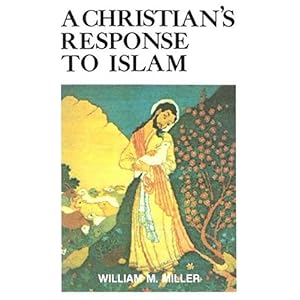
I love the combination of John Piper's commitment to sound doctrine, Reformed Theology, the glory of God, the Gospel, and evangelism and missions, especially his zeal and commitment to missions to the Muslim world.
How the offspring of Isaac Blesses the sons of Ishmael by John Piper
Samuel Zwemer, "the apostle to Islam" was a Calvinist and a missionary to Arab Muslims for many years - in Basra, (today in Iraq), Arabia, Egypt, Bahrain. (years in the Muslim world: 1891-1929) See here for a synopsis of his life and ministry and notice the external links at the end of the article. His books are still used to today to for helping understand Islam and Muslims and evangelism to Muslims.

William Carey, missionary to India, was a Calvinist and a missionary. See here for a synopsis of his life and ministry. He wrote the famous little book, "An Inquiry into the Obligation of Christians to Use Means for the Conversion of the Heathens". He went to India in 1792, and ministered mostly among Hindus. He argued for "Means" - for a mission society of several men who would band together for preparation, training, prayer, actually going and learning languages and for the local churches to support such a group/society. This was the very first denominational mission agency. He worked on several NTs being translated into several languages, the most notable was his work on the Bengali New Testament. He was a key force in making Sati (the Hindu custom of burning widows alive with their dead husbands) illegal in India and Hindu culture. He even had an Indian Postal stamp done by the India government in his honor. William Carey is called "the father of modern missions" by Evangelical Protestants. He also made the famous statement, "Expect Great Things From God, Attempt Great things for God!" See the many biographies written about William Carey.
Henry Martyn, was a Calvinist-Anglican missionary to Persia (Iran) and India, and his work on the Persian (Farsi) New Testament was the first time that the full New Testament had been translated into Farsi in history! He died in 1812 after he finished his work on the NT in Persia, on his way back from Persia to England. He died of fever/pneumonia in Tokat, Turkey at the age of 29, trying to get back to England. He is the one who said, "Let me burn out for God".
William McElwee Miller was a missionary and a Calvinist to Persia (Iran) for 40 years. (1920-1960) His books are still motivating Christians today to go to the Muslim world and preach the gospel to Muslims. He also wrote one of the first analysis of the Bahai faith done from a Christian view point.
The Bahai Faith: Its History and Teachings
David Brainard was a missionary to American Indians and a Calvinist.
Charles Spurgeon was a pastor, effective preacher, evangelist and a Calvinist for many years in England.
D. James Kennedy was a Presbyterian Calvinist and wrote a whole book on Evangelism called "Evangelism Explosion" and trained many in Evangelism.
Dr. James White is a Calvinist and has done evangelism for years with Mormons, Jehovah's Witnesses, atheists, Roman Catholics, and more recently, with Muslims, and his debates with them and others are very helpful for others to study and be equipped.
And there are many others! Don't say "Calvinism hinders evangelism and missions!"
Wednesday, October 12, 2011
My mission
I am currently raising support for the purpose of moving to France on a career basis, though my departure date is currently unknown.
The mission and goal that God has put on my heart is to share the good news of Jesus and the gift of eternal life with the many North African Muslims that live in France. They come from countries where less than 1% of the population loves Jesus, and they have come into a country where less than 2% of the population loves Jesus. Who will reach out to these precious people, Algerian and Moroccan Arabs, Kabyle and Shawiya Berbers?
My wife and I speak French fluently already, so there is no need for language training beforehand. We plan to do a mixture of the following activities as far as outreach:
-Evangelism through tract and booklet distribution
--on the street
--at seaports
--perhaps door to door
-Evangelism through open-air preaching
--I love Ray Comfort's preaching (though his apologetics, not quite as much)
-Seeking extended conversation and relationship, flowing out of these activities
--When we actually live there, we can arrange to meet people later and indeed will seek to do so, often
--We seek not to win debates, but to win people
-Pursuing relationship with the people we meet
--Meeting people and asking them to meet later over coffee/tea/meals
--Getting our families together
--Holidays like Christmas and Easter, and like iftar meals during Ramadan
-Offering free English and French classes
--Many N Africans, especially women, do not even speak French
--We have ESL teaching experience
-Discipling new believers in Jesus and planting churches
--The goal is to get them started and stable, then get out of the way
We are part of a missions agency that has been evangelising Europe for almost 60 years. We have already been appointed by them and our church's elders are 100% behind our going out, though we will of course remain under their leadership, authority, and accountability, even when on the foreign field.
I post this here to ask that any reader prayerfully consider supporting my family and me as we build up our team of partners. As you support us, you yourself join in the effort to share the Gospel with people who desperately need to hear the truth, and you sow blessing (2 Corinthians 8-9, Philippians 4:14-19). May the Lord richly bless all who read and all who are led to give.
Feel free to ask for clarification via email.
Thank you.
You can donate at my mission agency's website.
DONATE HERE
At the This box is for additional detail regarding the designation of your gift. (Name of Project or ministry you would like to support. box, please input "Rhology". That will be directed into my missions account.
Thank you, and may the Lord bless you.
-Rhology
The mission and goal that God has put on my heart is to share the good news of Jesus and the gift of eternal life with the many North African Muslims that live in France. They come from countries where less than 1% of the population loves Jesus, and they have come into a country where less than 2% of the population loves Jesus. Who will reach out to these precious people, Algerian and Moroccan Arabs, Kabyle and Shawiya Berbers?
My wife and I speak French fluently already, so there is no need for language training beforehand. We plan to do a mixture of the following activities as far as outreach:
-Evangelism through tract and booklet distribution
--on the street
--at seaports
--perhaps door to door
-Evangelism through open-air preaching
--I love Ray Comfort's preaching (though his apologetics, not quite as much)
-Seeking extended conversation and relationship, flowing out of these activities
--When we actually live there, we can arrange to meet people later and indeed will seek to do so, often
--We seek not to win debates, but to win people
-Pursuing relationship with the people we meet
--Meeting people and asking them to meet later over coffee/tea/meals
--Getting our families together
--Holidays like Christmas and Easter, and like iftar meals during Ramadan
-Offering free English and French classes
--Many N Africans, especially women, do not even speak French
--We have ESL teaching experience
-Discipling new believers in Jesus and planting churches
--The goal is to get them started and stable, then get out of the way
We are part of a missions agency that has been evangelising Europe for almost 60 years. We have already been appointed by them and our church's elders are 100% behind our going out, though we will of course remain under their leadership, authority, and accountability, even when on the foreign field.
I post this here to ask that any reader prayerfully consider supporting my family and me as we build up our team of partners. As you support us, you yourself join in the effort to share the Gospel with people who desperately need to hear the truth, and you sow blessing (2 Corinthians 8-9, Philippians 4:14-19). May the Lord richly bless all who read and all who are led to give.
Feel free to ask for clarification via email.
Thank you.
You can donate at my mission agency's website.
DONATE HERE
At the This box is for additional detail regarding the designation of your gift. (Name of Project or ministry you would like to support. box, please input "Rhology". That will be directed into my missions account.
Thank you, and may the Lord bless you.
-Rhology
Monday, June 13, 2011
Scripture Over the Church and the Devastating Results of Not Following that Rule
An Evangelical Introduction to Church History, Part 4
Part 1
Part 2
Part 3

This is an excellent summary of some of Augustine’s statements on the priority of Scripture above the church against the Donatists, from Augustine’s work, “On the Unity of the Church” ( De Unitate Ecclesiae), which has never been fully translated into English and is not part of the standard Early Church Fathers book sets.
Addendum: (Oct. 20, 2016)
Augustine's "On the Unity of the Church" has been recently fully translated into English.
see here.
So, the first reason that Kane gave was a failure to contextualize [by "contextualize" we mean the good and proper kind of contextualization of translation of the gospel into another language and culture and communication of it accurately, not the modern or post-modern extremes of it.] the gospel into the culture of the North Africans. “A second reason of the demise of the church in N. Africa was the failure to give the Scriptures to the people in their own language. They were available in Latin, but no translations were ever made into the language of the Punic people or the Berbers.”[4] The third reason was emphasizing the truth without the love and power to go with it: “Moreover, theological controversies had sapped the energies of the church. Before the time of Augustine, the church had been racked by the Donatist controversy. Theologians, instead of closing their ranks and presenting a united front to the common enemy, were pre-occupied with fratricidal warfare. They were more interested in defending the purity of the gospel than in demonstrating its power.”[5] Of course, the church must do both, defend the purity of the gospel and demonstrate its power by preaching the gospel accurately, defending the truth and being willing to suffer for it; and loving our enemies and living holy lives.
Part 1
Part 2
Part 3

The sad reality of the history of the Church in North Africa after Augustine died in 430: The effects of the Donatist Controversy and the Vandal Barbarian Invasions, who were Arian in their theology.
Addendum: (Oct. 20, 2016)
Augustine's "On the Unity of the Church" has been recently fully translated into English.
see here.
Credit goes to David T. King for putting them in a com-box a while back at “Green Baggins” blog. (scroll up to comment # 136 - I have not learned how to get it exact yet. )
They are provided here without the original Latin text, but Pastor King has the Latin text with it at his posting. I am fairly certain that all of these are in the three volume set, Holy Scripture: The Ground and Pillar of Our Faith, by David King and William Webster. (also highlighted at the side bar of this web site.) Most of these are also quoted in James White’s excellent book, Scripture Alone.
This demonstrates the truth of the often quoted statement by B. B. Warfield, “For the Reformation, inwardly considered, was just the ultimate triumph of Augustine's doctrine of grace over Augustine's doctrine of the Church. “ (Warfield, Calvin and Augustine, p. 321-322)
http://greenbaggins.wordpress.com/2010/05/26/whitaker-on-the-canon-part-1/#comment-75498
·comment # 136
D. T. King said,
Augustine (354-430): Let us not hear, You [i.e., the Donatists] say this, I say that; but let us hear Thus saith the Lord. There are the Dominical books, whose authority we both acknowledge, we both yield to, we both obey; there let us seek the Church, there let us discuss the question between us. For trans., see William Goode, The Divine Rule of Faith and Practice, 2nd ed., (London: John Henry Jackson, 1853), Vol. 3, p 164. De Unitate Ecclesiae, Caput III, §5, PL 43:394.
Augustine (354-430): Therefore let those testimonies which we mutually bring against each other, from any other quarter than the divine canonical books, be put out of sight. For trans., see William Goode, The Divine Rule of Faith and Practice, 2nd ed., (London: John Henry Jackson, 1853), Vol. 3, p. 164. De Unitate Ecclesiae, Caput III, §5, PL 43:395.
Augustine (354-430): I would not have the holy Church demonstrated by human testimonies, but by divine oracles. For trans., see William Goode, The Divine Rule of Faith and Practice, 2nd ed., (London: John Henry Jackson, 1853), Vol. 3, pp. 164-165. De Unitate Ecclesiae, Caput III, §6, PL 43:395.
Augustine (354-430): Whoever dissents from the sacred Scriptures, even if they are found in all places in which the church is designated, are not the church. De Unitate Ecclesiae, Caput IV, §7, PL 43:395-396.
For trans., See Francis Turretin, Institutes of Elenctic Theology, 3 Vols., trans. George Musgrave Giger and ed. James T. Dennison (Phillipsburg: reprinted by Presbyterian and Reformed Publishing Co., 1992), Vol. 3, pp. 109-110.
Augustine (354-430): We adhere to this Church; against those divine declarations we admit no human cavils. For trans., see William Goode, The Divine Rule of Faith and Practice, 2nd ed., (London: John Henry Jackson, 1853), Vol. 3, p. 165. De Unitate Ecclesiae, Caput XI, §28, PL 43:410.
Augustine (354-430): I have the most manifest voice of my pastor commending to me, and without any hesitation setting forth the church, I will impute it to myself, if I shall wish to be seduced by the words of men and to wander from his flock, which is the church itself, since he specially admonished me saying, “My sheep hear my voice and follow me”; listen to his voice clear and open and heard; who does not follow, how will he dare to call himself his sheep? Let no one say to me, What hath Donatus said, what hath Parmenian said, or Pontius, or any of them. For we must not allow even Catholic bishops, if at any time, perchance, they are in error, to hold any opinion contrary to the Canonical Scriptures of God. Francis Turretin, Institutes of Elenctic Theology, trans. George Musgrave Giger, ed. James T. Dennison, Jr., (Phillipsburg: P&R Publishing, 1992),Vol. 3, pp. 91-92 and William Goode, The Divine Rule of Faith and Practice, 2nd ed., (London: John Henry Jackson, 1853), Vol. 3, p. 165. De Unitate Ecclesiae, Caput XI, §28, PL 43:410-411.
Augustine (354-430): All such matters, therefore, being put out of sight, let them show their Church, if they can; not in the discourses and reports of Africans, not in the councils of their own bishops, not in the writings of any controversialists, not in fallacious signs and miracles, for even against these we are rendered by the word of the Lord prepared and cautious, but in the ordinances of the Law, in the predictions of the Prophets, in the songs of the Psalms, in the words of the very Shepherd himself, in the preachings and labours of the Evangelists, that is, in all the canonical authorities of sacred books. Nor so as to collect together and rehearse those things that are spoken obscurely, or ambiguously, or figuratively, such as each can interpret as he likes, according to his own views. For such testimonies cannot be rightly understood and expounded, unless those things that are most clearly spoken are first held by a firm faith. For trans., see William Goode, The Divine Rule of Faith and Practice, 2nd ed., (London: John Henry Jackson, 1853), Vol. 3, p. 165. De Unitate Ecclesiae, Caput XVIII, §47, PL 43:427-428.
Augustine (354-430): We ought to find the Church, as the Head of the Church, in the Holy Canonical Scriptures, not to inquire for it in the various reports, and opinions, and deeds, and words, and visions of men. For trans., see William Goode, The Divine Rule of Faith and Practice, 2nd ed., (London: John Henry Jackson, 1853), Vol. 3, p. 165. De Unitate Ecclesiae, Caput XIX, §49, PL 43:429.
Augustine (354-430): For we do not say that we ought to be believed because we are in the Church of Christ, or because that Church to which we belong, was commended to us by Optatus, Ambrose, or other innumerable Bishops of our communion; or because miracles are everywhere wrought in it. . . . These things are indeed to be approved, because they are done in the Catholic Church, but it is not thence proved to be the Catholic Church, because such things are done in it. Our Lord Jesus Christ Himself, when He rose from the dead, and offered His body to be touched as well as seen by His disciples, lest there should be any fallacy in it, thought it proper to convince them, rather by the testimony of the Law, the Prophets, and the Psalms, showing how all things were fulfilled which had been foretold; and so He commanded His Church, saying, that repentance and remission of sins should be preached in His Name, among all nations, beginning at Jerusalem. This He testified was written in the Law, the Prophets, and the Psalms; this we hold, as commended from His mouth. These are the documents, these the foundations, these the strong grounds of our cause. We read in the Acts of the Apostles (Acts 17:11), of some believers, that they daily searched the Scriptures if these things were so. What Scriptures? but the canonical books of the Law and the Prophets; to which are added the Gospels, the Apostolical Epistles, the Acts of the Apostles, and the Revelation of St. John, Search, then, all these, and bring forth something manifest, by which you may prove the Church to have remained only in Africa, or come out of Africa in order that it might be fulfilled which the Lord said, “And this gospel of the kingdom will be preached in all the world as a witness to all the nations, and then the end will come.” For translation, see Charles Hastings Collette, Saint Augustine: A Sketch of His Life and Writings, A.D. 387-430 (London: W. H. Allen & Co., 1883), pp. 48-49. De Unitate Ecclesiae, Caput XIX, §47-51, PL 43:430.
David King wrote, citing Joseph Ignaz Von Dollinger, the Roman Catholic historian who opposed the Infallibility of the Pope dogma in 1870:
“But of all the works of Augustine that have been translated, there is one work, De Unitate Ecclesiae that has never been fully translated into English; . . .
But in his controversy with the Donatists, Augustine wrote this work to refute their schism from the Church Catholic. Notice how Augustine does not lodge his argument in an appeal to apostolic succession in this particular work, in fact he bids his adversaries not to look in the direction of human testimonies. Over and over, he argues with the Donatists that the church is to be found in and defined by the Scriptures. Obviously, Augustine did not share the skeptical pessimism of our present day opponents with respect to the testimony of Holy Scripture. Of Augustine’s writings and this one in particular, Johann Joseph Ignaz von Döllinger observed:
“St. Augustine has written more on the Church, its unity and authority, than all the other Fathers put together. Yet, from all his numerous works, filling ten folios, only one sentence, in one letter, can be quoted, where he says that the principality of the Apostolic Chair has always been in Rome,—which could, of course, be said then with equal truth of Antioch, Jerusalem and Alexandria. Any reader of his Pastoral Letter to the separated Donatists on the Unity of the Church, must find it inexplicable, on the Jesuit theory, that in these seventy-five chapters there is not a single word on the necessity of communion with Rome as the centre of unity. He urges all sorts of arguments to show that the Donatists are bound to return to the Church, but of the Papal Chair, as one of them, he knows nothing. “
See Janus, The Pope and the Council, trans. from the German, 2nd ed. (London: Rivingtons, 1869), pp. 88-89.
The Islamic Invasions and conquests - wiping out Christianity in North Africa:
Age of the Caliphs
Expansion under Muhammad, 622–632/A.H. 1-11
Expansion during the Rashidun Caliphate, 632–661/A.H. 11-40
Expansion during the Umayyad Caliphate, 661–750/A.H. 40-129

A.H. = After the Hegira (Muhammad's flight to Medina from Mecca in 622 AD)
Sad Reality of Church History in North Africa: Donatist Controversy, Vandals Invade, Muslims Invade and Conquer
The sad reality of church history is that the Donatist controversy sapped the life out of the church in N. Africa (In summary, it seems that the violence and lack of flexibility of the Donatists, coupled with the Catholic church at that time labeling them not only schismatics, but eventually heretics outside of the church, Augustine's change from using debate and persuasion to sanctioning the state to use force and violence to 'compel them to come in', and the state using force, based on Augustine's statement, the false doctrine of the Vandals and their violence also; all contributed to the life of the church being gone by the time the Muslims came.) The barbarian invasions, especially the Vandals had a lasting impact upon the next generations. The Vandals were Arian in their theology – they rejected the doctrine of the doctrine of the Deity of Christ, so “a generation arose that did not know the Lord” (see book of Judges 2:10) Between 430 – 632 AD, most of N. Africa became Arians. As a result, when the Arab Muslims invaded after 632 – 732 AD, the peoples of N. Africa, a mixture of the Berbers, Punic, and Latinized Berbers on the coasts with the Vandals and other Germanic invaders, became Muslims, because they had already given up the gospel and the doctrines of the Deity of Christ and the Trinity. Only the Coptic Church in Egypt survived the Arab Muslim invasions in N. Africa. The Coptic Church was Monophysite (or as they like to call themselves, Miaphysite, “that Christ’s divine nature absorbed His human nature”, so that He had only one Divine nature.) Their holding on the doctrine of the Deity of Christ and the Trinity seems to have given them strength to survive under Islamic domination and persecution.
Failure to Contextualize the Gospel for the frontier fields
Today in North African countries such as Morocco, Tunisia, Algeria, and Libya, Muslims make up 96 to 99% of these countries populations. Turkey is 99% Muslim. What happened to Christianity that was once there? The Church in North Africa was once a thriving church, with famous church leaders such as Tertullian in the second century, Cyprian in the 3rd Century, and Augustine of Hippo, the great theologian in the fourth Century. Kane asks the question, “How shall we account for the demise of such a church?” [1] After mentioning some of the social and political factors that contributed to the fall of the North African church, he writes, “The real reason for the disappearance of the church in North Africa must be sought somewhere else. Actually, the church was not so strong as it appeared. Numerically it was large, but spiritually it was weak. To begin with, it had never become truly indigenous. It was too closely identified with Latin culture and Roman power. The congregations were composed mostly of Latin-speaking people in and around Carthage. Few of the Punic people ever embraced the Christian faith, and the Berbers were left untouched. Because of this the church never took root in the native soil. “[2]
Indeed, historian David F. Wright writes in the Eerdman’s Handbook to the History of Christianity, that Augustine “. . . was born to African parents of Romanized Berber origins in Tagaste in Numidia (modern Algeria) in 354 AD.” [3] Augustine himself was not Berber in his culture or thinking, but only ethnically tied to his people through his parents. (his father was pagan, but his mother Monica was a Christian, and she has become a very famous one because of her prayers for Augustine.) Augustine's father would be like the second generation son of a Japanese or Arab immigrant born in the U. S. , who has never been to the country of his parents and does not speak the language. This points out one of the most tragic trends in mission history, especially in the history of missions to Muslims: that converts are too often extracted from their own people and eventually take on a new foreign culture, totally separated from their own people and culture, even though many times they are near-neighbors geographically. This is called “extraction Evangelism” by many missiologists, but sometimes it is unavoidable as some believers have eventually fled persecution in Muslim lands.
It seems the church had long since "left its first love" (see Revelation 2:4-5), as it had in Asia Minor, in Ephesus especially, and Jesus warned the churches about this issue. There was false doctrine and unholy living in some of the other churches in Revelation 2-3 also. Eventually, the newly converted to Islam, the Seljuk Turks in the 900s to 1071 AD conquered the eastern areas of Anatolia known as Turkey today. Then came the Crusades (1095-1299 AD); then the Ottoman Turks conquered the rest of the Byzantine Empire. Constantinople fell in 1453 AD and was renamed Istanbul.
As we have pointed out before, Muhammad, the founder of Islam, never heard the gospel or the full truth of the Bible in his own language. The Bible was not translated into Arabic until around 900 AD. Muhammad heard that Jesus was the Messiah ( Al Masih); that He was born of the virgin Mary, and did miracles, was sinless, and had "the Gospel" (the Injeel), but he thought the Trinity was God, the Son Jesus, and the mother, Mary. (Surah 5:116; 5:72-75; 6:101). He said that Jesus the Messiah was not crucified. (Qur'an, Surah 4:157) He said Jesus was not the Son of God and was only a prophet. ( Surah 4:171) This is proof that that the Qur'an is not inspired by God, as it denies clear historical facts, doesn't get the doctrine of the Trinity right, and denies things that Christians had been teaching for around 600 years. False doctrine had corrupted the churches; they exalted Mary too much. The combination of both sound doctrine and evangelism and missions is so important.
Muslims use Surah 2:78-79 to accuse Christians and Jews of making up Scriptures. The context there in the Qur'an is the Jews at the time of Moses. It says that there are some illiterate folk who only know the Scriptures through hearsay; and then it pronounces a "woe" on them that write something and say, "this is from Allah". This is honestly what Muhammad seems to have done. They admit he was illiterate and the Bible was not in Arabic yet. Which one gives the greater historical evidence of just "making up Scriptures"? Who is the one who just "heard" about some stuff without actually knowing what the Scriptures taught?
[1] J. Herbert Kane, A Global View of Christian Missions, Baker Books, 1971, pp. 52.
[2] Ibid, p. 52.
[3] David F. Wright, “Augustine of Hippo”, in Eerdman’s Handbook to the History of Christianity, edited by Tim Dowley, Eerdman’s, 1977, p. 198.
[4] Kane, p. 52.
[5] Ibid, Kane, p. 52.
Addendum:
For an interesting read of the History of the Donatists, and perspective that they were falsely accused and unjustly persecuted, first by Constantine, then Augustine himself. It seems Augustine started with argument, debate, and persuasion, as we see in the quotes above in this post, but later justified the use of force.
http://www.reformedreader.org/history/benedict/donatists/toc.htm
Augustine's Letter 173, written in 416 AD, where he [wrongly] uses the passage in Luke 14:23, "compel them to come in" as justification for state and police force against the Donatists. This famous mis-usage of Scripture by Augustine was subsequently used a lot by many in Church history to justify the use of force against heretics, schismatics, inquisitions, crusades, etc.
http://www.newadvent.org/fathers/1102173.htm
Years ago, a pastor said to me, when I was first studying the Early Church Councils, schisms, excommunications, etc. and then the application of harshness of some of them in church history, namely against the Donatists in N. Africa, the Monosphysites in Egypt, Syria, and Armenia, and the Nestorians in Persia (Mesopotamia, today's Iraq): "The balance of mercy and love was needed with the battle for truth in "contend earnestly for the faith" (Jude 3)". See I Peter 3:15, Jude 20-23, and Ephesians 4:15.
Subscribe to:
Posts (Atom)

 Posts
Posts


