
The world at this time needs this kind of discussion and debate. We can disagree without resorting to sinful anger, ad hominem arguments, insults or violence.
Dr. White did an excellent job; and the Imam was very respectful and showed better knowledge of the issues than most Muslims. He had to be corrected on the common mistake that Muslims repeat that "The Council of Nicea and Constantine decided which books belong in the canon".
https://apologeticsandagape.wordpress.com/2015/10/15/two-respectful-and-peaceful-discussions-about-the-bible-and-the-quran/
Canon Issues have to be constantly talked about, because:
1. Liberal scholarship constantly attacks the dates of the NT books and distorts the canon process.
2. The claims of the Roman Catholic Church put the Church over the canon, and that needs to be challenged also.
Dr. White gave the Imam 2 books on the canon by Dr. Michael J. Kruger.
The Canon Revisited
The Question of Canon
These are two good blog series also by Michael J. Kruger on the canon:
http://michaeljkruger.com/the-complete-series-10-misconceptions-about-the-nt-canon/
http://michaeljkruger.com/the-complete-series-ten-basic-facts-about-the-nt-canon-that-every-christian-should-memorize/
Showing posts with label Bible is not corrupt. Show all posts
Showing posts with label Bible is not corrupt. Show all posts
Friday, October 16, 2015


Wednesday, January 25, 2012
The Qur'an never says the text of the Bible was corrupted
HT: David Wood at www.answeringMuslims.com. Others are embedding this also, I have noticed. It seemed good to me also to spread the word here.
Since by God's Providence this seems to be "Islam week"; here is another post on Islam, an excellent presentation by a former Muslim.
A good example of communication with Muslims from within their own worldview.
"Istaqfr'allah" استغفر الله = "I seek the forgiveness of God"; Iranians use it to say, "God forbid!" or "May God forgive you!"
In the first videos, notice the difference between "lafz" لفظ (word) and "Ma'ani" معنی (meaning). We have the Arabic word "lafz" لفظ in Farsi also, which indicates the "word" or text (متن = matn) has not been changed. And we have the word "ma'ani" معنی also in Farsi which means "meaning". Some Christians and Jews changed the "meanings" of the text/word, by their wrong oral interpretations ("with their tongues" - Qur'an 3:78) but the text has not been changed or corrupted or lost.
He uses the exact same main verses that I would use to show that the Qur'an does not say that the text of the Bible was corrupted. (Surah Al Ma'ida 5:47; 5:68; Yunus 10:94; 10:64 - "There is not changing the words of Allah")
Here he quotes a lot of famous and early Muslims, to confirm this truth. Ibn Abbas, the cousin and one of the companions of Muhammad, Ibn Kathir, Imam Al Razi, Al Tabari (the historian of Islam), even Ibn Taymiyya. He says that the idea that the Bible was corrupt was started by Ibn Khazem (died in 1064 AD), which is way after the foundational period of Islam.
Wednesday, June 22, 2011
The Gospel According to Mark: "The Amazing Jesus"

John MacArthur recently preached from Mark 16:8-20, , making it the last sermon in his 43 year ministry in which he has preached all the way through the New Testament, verse by verse, book by book; a great model for expository preaching. (exposing the meaning of the text, in its context, preaching through each book from beginning to end, verse by verse, chapter by chapter.) I highly recommend his other sermons, all available there at www.gty.org
He gives a good summary of the confidence we have from all the many extant Greek manuscripts that we do have about the Bible, specifically focusing on the New Testament; and by comparing all of them, we can tell where a scribe made an error or added something in (as in Mark 16:9-20; I John 5:7-8 (KJV) - "the Comma Johannine"). No textual variant affects any doctrine in the word of God, the Scriptures.
A good introductory book on the reliability on the NT is F. F. Bruce's The New Testament Documents: Are They Reliable? He answers yes.
http://www.amazon.com/New-Testament-Documents-They-Reliable/dp/0802822193
"I like Mark's ending!" John MacArthur (speaking on verse 8, where the women are amazed, trembling, astonished, and afraid at the empty tomb and the resurrection and what the angel said to them.)
Verses 5-8 are key, and include the amazement, the crucifixion, the empty tomb, and the angel's statement: "Do not be amazed; you are looking for Jesus the Nazarene, who has been crucified. He has risen; He is not here; behold, here is the place where they laid Him."
Whatever criticism Muslims and skeptics and atheists have about Mark 16:9-20, the crucifixion and the resurrection are still affirmed as true, even without verse 9-20. Chapter 15 - Crucifixion, 16:1-8 - Empty Tomb, resurrection, women who are eyewitnesses of the empty tomb. "He has been crucified." This is historical fact. The Qur'an has that embarrassing verse of 4:157 of denying historical fact.
MacArthur has a great approach to handling the long version of Mark, 16:9-20, and that this section is not in the oldest extant Greek manuscripts. He shows how verses 9-20 were cobbled together from the other 3 gospels and Acts, and added onto Mark.
v. 9 - summary from Luke 8:1-3
v. 10 - from John 20:18
v. 12 - summary from Luke 24:13-32
v. 13 - from Luke 24:36-38
v. 15 - summary from Matthew 28:19
v. 16 - different way of saying John 20:23
v. 17-18 - from Luke 10, Matthew 10, tongues in the book of Acts, and Acts 28:3-6 (God protected Paul from the harm of the snake bite; but there is no text of anyone drinking poison as in Mark 16; and there is no command to pick up snakes in a worship service context as they do in some churches in the Appalachian Mountains of USA. )
I would add this about the summary of verse 19. McArthur points out that Irenaeus quoted Mark 16:19 around 180-200 AD.
v. 19 - John 20:17; Luke 24:51; Acts chapter 1; Luke 22:69; Acts 7:55 ff; Romans 8:34; Ephesians 1:20; Colossians 3:1; Heb. 1:3; Heb. 8:1; 10:12; 12:2; I Peter 3:22; Psalm 110:1)
MacArthur focused on verse 8, the Amazement, astonishment, fear, and being astounded all through the book of Mark: (which points to the probability that that was Mark's real ending.)
Mark 1:22
Mark 1:27
Mark 2:12
Mark 4:41
Mark 5:15
Mark 5:33
Mark 5:42
Mark 6:51
Mark 9:6
Mark 9:15
Mark 9:32
Mark 10:24
Mark 10:32
Mark 11:18
Mark 12:17
Mark 15:5
Mark 16:5
Mark 16:8
MacArthur ends with joyful exuberance quoting from the hymn: (text and music by Charles H. Gabriel)
"I stand amazed in the presence of Jesus the Nazarene, and wonder how He could love me, a sinner, condemned, unclean! O How wonderful, O How marvelous, and my song shall ever be, O How wonderful, O How marvelous, is my Savior's love for me!"
Indeed, Jesus is Amazing!
Saturday, June 18, 2011
Good Evidence for Historical Reliability for 2 Peter as written by Peter Himself
2 Peter is constantly being attacked by Muslims and liberals and skeptics as not an authentic book of the NT and not written by Peter, the disciple of Jesus Christ. Shabir Ally makes this one of his main points in debates. We believe that 2 Peter was inspired by God, God-breathed ( 2 Timothy 3:16-17) and written by the apostle Peter around 64-66 AD, before his martyrdom by Nero, and we have good and reasonable evidence to back up that faith.

Dr. James White has a little article with an excellent graphic of an ancient manuscript of P-72
which has both I and 2 Peter (and Jude) in it. One of the pages of this manuscript shows the end of 1 Peter and the beginning of 2nd Peter and this manuscript called P-72 is dated at around 200 AD. That is very good early dating for a copy of one of the most attacked books of the NT by skeptics, atheists, and Muslims and others, sometimes by good scholars. (the Muslims like to use Bruce Metzger as authoritative evidence that 2 Peter was not written by the apostle Peter. But many other conservative scholars and all Christians who believe in inerrancy believe that 2 Peter is "God-breathed" and was written by Peter. ( 2 Timothy 3:16-17; 2 Peter 1:20-21)
Dan Wallace makes an excellent case for Peter himself being the author of 2 Peter, before his death at the hands of Nero sometime around 64-65 AD. Dan Wallace on 2 Peter.
-->I Peter was authored by Peter, but Silvanus actually wrote it for Peter, because Silvanus' Greek was excellent. ( I Peter 5:12) This also explains why the Greek of I Peter is so excellent and the Greek of 2 Peter is not as polished. It is reasonable, based on the evidence that Peter, a Hebrew Galilean, wrote 2 Peter, and used Silvanus as his secretary or amanuensis for I Peter.
Dr. White did us a great service by blowing up the lines of this manuscript so we can see the Granville-Sharp rule and the use of scribes in those days to save space by using a short-hand for God's name, called using the "nomina-sacra" (Sacred Name). God, (Theos) θεος is shortened. ιησου χριστου (Jesus Christ) is also shortened here.

Here is a clearer typed out Greek text line of the part that Dr. White has blown up for us:
--> λαχουσιν πειστιν εν δικεοσυνη του θυ̅ ημων και σωτηρος ιη̅υ χρ̅υ
It says, "to those who have received a faith by/in the righteousness of the God of ours and savior Jesus Christ." It is saying that Jesus Christ is both "God and Savior".
_ _ _ _
You can see the θυ and ιηυ and χρυ more clearly now. (with the lines over them indicating they are abbreviations for the "sacred name" (nomina sacra). θυ is the "nomina-sacra" short for "Theos" θεου (Theou is the genitive form of Theos) and ιηυ is short for Ιησου (easou = Jesus) and χρυ is the short form for Christ ( χριστου). (with the lines over the last letters indicate these are nomina-sacra.) [as I preview this, the lines are not coming out over the letters I want them to; so I needed to point that out. Blogger moved the lines to the far left.]
-->
Dr. White explains the Granville-Sharp rule.
This a clear teaching of the Deity of Christ, "the God of ours and Savior, namely Jesus Christ". when only the first noun has the definite article ( του = tou = "the") it points to the definite article functioning for both "God and Savior". Titus 2:13 also has this Granville Sharp construction, more evidence of the Deity of Christ - "our great God and Savior, Jesus Christ".
By the way, did you know that Granville Sharp, the man whom this Greek syntax structure was named after, not only was an excellent scholar, and studied the Greek text, but also helped William Wilberforce get the slave trade abolished in England? A true Christian, both in mind and heart and life and action. Certainly, these are fruits of the Holy Spirit!
From the Wikipedia article about Granville Sharp:
"One of Granville's letters written in 1778 (published in 1798), propounded what has come to be known as The Granville Sharp Rule (in actuality only the first of six principles involving the article that Sharp articulated):
Daniel B. Wallace says about Sharp:
Turretinfan also has an excellent article on 2 Peter showing that some ancient Christians had Bibles and how the α on the page stands for 1st Peter and the β (beta or letter B, used for 2nd) shows where 2nd Peter starts.
Here is an interesting web-site [August 8, 2013 - Addendum: I just noticed, that, unfortunately, all of those excellent clear photos of many Greek manuscripts is no longer there. ] that shows very clear photos of many of the ancient Greek manuscripts that give us more and more evidence for the reliability of the NT. It has the same photos of 1 and 2 Peter that Dr. White showed and even more extensive.
And here is an excellent lecture on the reliability of the NT from scholar Peter Williams.
And here is another lecture by Dr. White on the general reliability of the NT.
The Bible has not been hopelessly corrupted. Puny man cannot change the word of God. For Muslims: "No one can change the word of Allah"! The Injeel is reliable! The Bible is reliable. And we are honest and open about the few textual variants. And 2nd Peter was written by Peter, a disciple of Jesus the Messiah, and eye-witness of His life, miracles, teachings, death, resurrection, and ascension.

Dr. James White has a little article with an excellent graphic of an ancient manuscript of P-72
which has both I and 2 Peter (and Jude) in it. One of the pages of this manuscript shows the end of 1 Peter and the beginning of 2nd Peter and this manuscript called P-72 is dated at around 200 AD. That is very good early dating for a copy of one of the most attacked books of the NT by skeptics, atheists, and Muslims and others, sometimes by good scholars. (the Muslims like to use Bruce Metzger as authoritative evidence that 2 Peter was not written by the apostle Peter. But many other conservative scholars and all Christians who believe in inerrancy believe that 2 Peter is "God-breathed" and was written by Peter. ( 2 Timothy 3:16-17; 2 Peter 1:20-21)
Dan Wallace makes an excellent case for Peter himself being the author of 2 Peter, before his death at the hands of Nero sometime around 64-65 AD. Dan Wallace on 2 Peter.
-->I Peter was authored by Peter, but Silvanus actually wrote it for Peter, because Silvanus' Greek was excellent. ( I Peter 5:12) This also explains why the Greek of I Peter is so excellent and the Greek of 2 Peter is not as polished. It is reasonable, based on the evidence that Peter, a Hebrew Galilean, wrote 2 Peter, and used Silvanus as his secretary or amanuensis for I Peter.
Dr. White did us a great service by blowing up the lines of this manuscript so we can see the Granville-Sharp rule and the use of scribes in those days to save space by using a short-hand for God's name, called using the "nomina-sacra" (Sacred Name). God, (Theos) θεος is shortened. ιησου χριστου (Jesus Christ) is also shortened here.

Here is a clearer typed out Greek text line of the part that Dr. White has blown up for us:
--> λαχουσιν πειστιν εν δικεοσυνη του θυ̅ ημων και σωτηρος ιη̅υ χρ̅υ
It says, "to those who have received a faith by/in the righteousness of the God of ours and savior Jesus Christ." It is saying that Jesus Christ is both "God and Savior".
_ _ _ _
You can see the θυ and ιηυ and χρυ more clearly now. (with the lines over them indicating they are abbreviations for the "sacred name" (nomina sacra). θυ is the "nomina-sacra" short for "Theos" θεου (Theou is the genitive form of Theos) and ιηυ is short for Ιησου (easou = Jesus) and χρυ is the short form for Christ ( χριστου). (with the lines over the last letters indicate these are nomina-sacra.) [as I preview this, the lines are not coming out over the letters I want them to; so I needed to point that out. Blogger moved the lines to the far left.]
-->
Dr. White explains the Granville-Sharp rule.
This a clear teaching of the Deity of Christ, "the God of ours and Savior, namely Jesus Christ". when only the first noun has the definite article ( του = tou = "the") it points to the definite article functioning for both "God and Savior". Titus 2:13 also has this Granville Sharp construction, more evidence of the Deity of Christ - "our great God and Savior, Jesus Christ".
By the way, did you know that Granville Sharp, the man whom this Greek syntax structure was named after, not only was an excellent scholar, and studied the Greek text, but also helped William Wilberforce get the slave trade abolished in England? A true Christian, both in mind and heart and life and action. Certainly, these are fruits of the Holy Spirit!
From the Wikipedia article about Granville Sharp:
"One of Granville's letters written in 1778 (published in 1798), propounded what has come to be known as The Granville Sharp Rule (in actuality only the first of six principles involving the article that Sharp articulated):
- “When the copulative kai connects two nouns of the same case, if the article ho, or any of its cases, precedes the first of the said nouns or participles, and is not repeated before the second noun or participle, the latter always relates to the same person that is expressed or described by the first noun or participle ...”[4]
Daniel B. Wallace says about Sharp:
- “His strong belief in Christ’s deity led him to study the Scriptures in the original in order to defend more ably that precious truth ... As he studied the Scriptures in the original, he noticed a certain pattern, namely, when the construction article-noun-και-noun involved personal nouns which were singular and not proper names, they always referred to the same person. He noticed further that this rule applied in several texts to the deity of Jesus Christ.”[5] "
Turretinfan also has an excellent article on 2 Peter showing that some ancient Christians had Bibles and how the α on the page stands for 1st Peter and the β (beta or letter B, used for 2nd) shows where 2nd Peter starts.
Here is an interesting web-site [August 8, 2013 - Addendum: I just noticed, that, unfortunately, all of those excellent clear photos of many Greek manuscripts is no longer there. ] that shows very clear photos of many of the ancient Greek manuscripts that give us more and more evidence for the reliability of the NT. It has the same photos of 1 and 2 Peter that Dr. White showed and even more extensive.
And here is an excellent lecture on the reliability of the NT from scholar Peter Williams.
And here is another lecture by Dr. White on the general reliability of the NT.
The Bible has not been hopelessly corrupted. Puny man cannot change the word of God. For Muslims: "No one can change the word of Allah"! The Injeel is reliable! The Bible is reliable. And we are honest and open about the few textual variants. And 2nd Peter was written by Peter, a disciple of Jesus the Messiah, and eye-witness of His life, miracles, teachings, death, resurrection, and ascension.
Monday, March 21, 2011
Answering Muslim attacks on the Bible and Christianity when they use Mark 16:9-20
Recently I was interacting with some Muslims about the longer ending of Mark 16. One Muslim on his web-site says that the longer ending of Mark discredits all of Christianity itself!
Christians are honest about the manuscripts, so that is actually a very positive point about the manuscript evidence of Mark 16:9-20. We have nothing to fear from the archeological and manuscript evidence. The evidence is positive for the OT and NT.
Mark 16:1-8 includes the empty tomb, the resurrection of Jesus from the dead, which includes the crucifixion and the necessity of His death - so, this is not a strike against Christianity itself. (and solid manuscript evidence of His trial and sufferings and crucifixion and death in Mark chapters 14-15)
6 And he said to them, "Do not be amazed; you are looking for Jesus the Nazarene, who has been crucified He has risen; He is not here; behold, here is the place where they laid Him.
7"But go, tell His disciples and Peter, 'He is going ahead of you to Galilee; there you will see Him, just as He told you.'"
8 They went out and fled from the tomb, for trembling and astonishment had gripped them; and they said nothing to anyone, for they were afraid. " Mark 16:6-8
The fact that the last few verses (Mark 16:6-8), which are not disputed, contains the testimony of the crucifixion, empty tomb, and the resurrection, should stop the mouths of those who want to cast doubt on the rest of Mark and all of Christianity, just because of Mark 16:9-20.
The death and resurrection of Christ are included in the rest of Mark (1:1-16:8), including Jesus' predicting his trial and death and resurrection in chapters 8-9; so it is valid and contradicts the Qur'an denial of real history (the crucifixion and death of Jesus Al Masih) in Surah 4:157.
Islam denies real history - in Surah 4:157, (but believes the miracle of the virgin birth of Christ, which Muslims affirm in Surah 19:19-21; Surah 3:45-48), whereas even liberal and skeptic and unbelieving scholars in the west like John Dominic Crossan, the late Robert Funk, John Shelby Spong, and Bart Ehrman ALL agree that the historical Jesus of Nazareth was crucified and died in history under Pontius Pilate, the Romans, and the Jewish council (Caiaphas, Annas, chief priest, scribes, Pharisees, etc.) around 30 AD.
Furthermore, the correct doctrinal content of Mark 16:9-20 is testified to and repeated in Matthew, Luke, John, and Acts. (the resurrection appearances and the Great Commission in 16:15 are in Matthew 28, Luke 24; John 20-21; and Acts chapter 1) The only questions in the Mark passage are about
a. appearing to them in "another form" (that may be another way of talking about Luke 24:13-33 and that they did not recognize Jesus until He opened their eyes.)
b. including baptism as he does in Mark 16:16 - even so, baptism is not included in the condemnation.
c. the part about tongues and snakes. (although God did do a miracle and protected Paul from the snake bite in Acts 28)
The rest of it is all orthodox (correct) in doctrine.
I asked this Muslim, "Have you read Dr. White's discussion of the longer version of Mark (16:9-20) in his book, The King James Only Controversy??" ( pp. 225-227 in the first edition, 1995) (He has a newer edition out which is even better)
Dr. White answers the questions that arise about this passage, and shows the evidence that many manuscripts that do contain the passage.
So, the issues of the longer ending of Mark (16:9-20) in no way takes down the rest of the Scriptures of the NT or the Bible, nor Christianity itself.
There are no real contradictions in the gospels; (they have all been answered) and there is no evolution from Mark to John, etc. That idea of "evolution" of the gospels and "redaction", etc. is an anti-supernatural bias against miracles and against God being able to speak and reveal Himself through prophets and books. Since Islam agrees with the truth of God, monotheism, and that He send prophets and books; Islamic apologists should not use arguments from liberals who operate from the same anti-supernatural bias.
The telescoping and including some details that other Gospels don't; and other writers excluding details are not contradictions, they are actually stronger evidences of a real eyewitness testimony, because if it was the exact same words four times, they would know that there was collusion. (as a detective or policemen know when investigating the historical circumstances of a case.)
In 1993, on a street in Istanbul, Turkey, during the month of Ramadan, one of my Turkish neighbors asked me, "why do you have four gospels? there must only be one Injeel!" (Injeel is the word for "gospel".) As we stood there at the intersection, and he spoke his broken English and I my broken Turkish, other young men began to gather round. I asked him, "what do you think? If there is a car accident here at the intersection; then, in a Turkish court of law, what is better; one witness on one corner, or one witness on each corner, making it four witnesses?" He paused and said, "Doru!" ("that's right!") "Dort tane daha iyidir!" ("Four of them are better!") Then he explained his new understanding to the other 10-15 or so other young Turks who had gathered around in curiosity. Then he asked me, "I would like an Injeel in Turkish, can you get one for me?" Yes, and I did. He enjoyed reading it in secret for about 3 months. Then his father discovered him reading it, pulled a knife on him (threatening), ripped it up and burned most of it. (he later told me) A few days later, one page of the Turkish NT (Injeel, "Incil" (In Turkish, the letter "c" is a "j" sound) was on my doorstep. It seemed to be a warning - "don't give the Injeel to my son!". My Turkish friend later also told me he was sad, because he enjoyed reading the Injeel; and that Isa Masih (Jesus the Messiah) was the most noble and sinless character he had ever read about. He said the Injeel was very different than what the Mollahs ("Hoca" - Turkish, pronounced, "Hoja") had said that the Christian Bible was about.
"How shall they hear without a preacher?"
Christians are honest about the manuscripts, so that is actually a very positive point about the manuscript evidence of Mark 16:9-20. We have nothing to fear from the archeological and manuscript evidence. The evidence is positive for the OT and NT.
Mark 16:1-8 includes the empty tomb, the resurrection of Jesus from the dead, which includes the crucifixion and the necessity of His death - so, this is not a strike against Christianity itself. (and solid manuscript evidence of His trial and sufferings and crucifixion and death in Mark chapters 14-15)
6 And he said to them, "Do not be amazed; you are looking for Jesus the Nazarene, who has been crucified He has risen; He is not here; behold, here is the place where they laid Him.
7"But go, tell His disciples and Peter, 'He is going ahead of you to Galilee; there you will see Him, just as He told you.'"
8 They went out and fled from the tomb, for trembling and astonishment had gripped them; and they said nothing to anyone, for they were afraid. " Mark 16:6-8
The fact that the last few verses (Mark 16:6-8), which are not disputed, contains the testimony of the crucifixion, empty tomb, and the resurrection, should stop the mouths of those who want to cast doubt on the rest of Mark and all of Christianity, just because of Mark 16:9-20.
The death and resurrection of Christ are included in the rest of Mark (1:1-16:8), including Jesus' predicting his trial and death and resurrection in chapters 8-9; so it is valid and contradicts the Qur'an denial of real history (the crucifixion and death of Jesus Al Masih) in Surah 4:157.
Islam denies real history - in Surah 4:157, (but believes the miracle of the virgin birth of Christ, which Muslims affirm in Surah 19:19-21; Surah 3:45-48), whereas even liberal and skeptic and unbelieving scholars in the west like John Dominic Crossan, the late Robert Funk, John Shelby Spong, and Bart Ehrman ALL agree that the historical Jesus of Nazareth was crucified and died in history under Pontius Pilate, the Romans, and the Jewish council (Caiaphas, Annas, chief priest, scribes, Pharisees, etc.) around 30 AD.
Furthermore, the correct doctrinal content of Mark 16:9-20 is testified to and repeated in Matthew, Luke, John, and Acts. (the resurrection appearances and the Great Commission in 16:15 are in Matthew 28, Luke 24; John 20-21; and Acts chapter 1) The only questions in the Mark passage are about
a. appearing to them in "another form" (that may be another way of talking about Luke 24:13-33 and that they did not recognize Jesus until He opened their eyes.)
b. including baptism as he does in Mark 16:16 - even so, baptism is not included in the condemnation.
c. the part about tongues and snakes. (although God did do a miracle and protected Paul from the snake bite in Acts 28)
The rest of it is all orthodox (correct) in doctrine.
I asked this Muslim, "Have you read Dr. White's discussion of the longer version of Mark (16:9-20) in his book, The King James Only Controversy??" ( pp. 225-227 in the first edition, 1995) (He has a newer edition out which is even better)
Dr. White answers the questions that arise about this passage, and shows the evidence that many manuscripts that do contain the passage.
So, the issues of the longer ending of Mark (16:9-20) in no way takes down the rest of the Scriptures of the NT or the Bible, nor Christianity itself.
There are no real contradictions in the gospels; (they have all been answered) and there is no evolution from Mark to John, etc. That idea of "evolution" of the gospels and "redaction", etc. is an anti-supernatural bias against miracles and against God being able to speak and reveal Himself through prophets and books. Since Islam agrees with the truth of God, monotheism, and that He send prophets and books; Islamic apologists should not use arguments from liberals who operate from the same anti-supernatural bias.
The telescoping and including some details that other Gospels don't; and other writers excluding details are not contradictions, they are actually stronger evidences of a real eyewitness testimony, because if it was the exact same words four times, they would know that there was collusion. (as a detective or policemen know when investigating the historical circumstances of a case.)
In 1993, on a street in Istanbul, Turkey, during the month of Ramadan, one of my Turkish neighbors asked me, "why do you have four gospels? there must only be one Injeel!" (Injeel is the word for "gospel".) As we stood there at the intersection, and he spoke his broken English and I my broken Turkish, other young men began to gather round. I asked him, "what do you think? If there is a car accident here at the intersection; then, in a Turkish court of law, what is better; one witness on one corner, or one witness on each corner, making it four witnesses?" He paused and said, "Doru!" ("that's right!") "Dort tane daha iyidir!" ("Four of them are better!") Then he explained his new understanding to the other 10-15 or so other young Turks who had gathered around in curiosity. Then he asked me, "I would like an Injeel in Turkish, can you get one for me?" Yes, and I did. He enjoyed reading it in secret for about 3 months. Then his father discovered him reading it, pulled a knife on him (threatening), ripped it up and burned most of it. (he later told me) A few days later, one page of the Turkish NT (Injeel, "Incil" (In Turkish, the letter "c" is a "j" sound) was on my doorstep. It seemed to be a warning - "don't give the Injeel to my son!". My Turkish friend later also told me he was sad, because he enjoyed reading the Injeel; and that Isa Masih (Jesus the Messiah) was the most noble and sinless character he had ever read about. He said the Injeel was very different than what the Mollahs ("Hoca" - Turkish, pronounced, "Hoja") had said that the Christian Bible was about.
"How shall they hear without a preacher?"
Wednesday, July 07, 2010
No one can change the Words of God
هیچ کس نمی تواند کلام خدا را تبدیل بدهد
(Farsi for "No one is able to change the word of God")
Arabic:
وَلَا مُبَدِّلَ لِكَلِمَاتِ اللَّهِ
"And there is no changing the words of Allah" (This phrase is from Surah 6:34, and see 6:115 (116); 10:64 (65); 18:27 below)
We have this same word and various forms of "change" from Arabic (مبدل and تبدیل)in Farsi.
The Grandverbalizer19 is a Muslim, who has a blog that is full of attacks against the Bible and contains many Ad hominem arguments and seems really judgmental; and many times has very choppy and unrelated thoughts thrown together. He accusses me of dishonesty and being a liar when I write something he disagrees with on Islam.
He has a special dislike for Calvinism and Reformed Theology. He makes a lot of ad hominem and judgmental attacks against Dr. James White.
http://thegrandverbalizer19.blogspot.com/2010/07/does-quran-prove-bible-is-true.html
http://thegrandverbalizer19.blogspot.com/2010/07/does-quran-prove-bible-is-true-part-2.html
Turretinfan recently encouraged Muslims to follow Surah 10:94 and ask the people who have been reading the previous Scriptures that came before Muhammad. I wrote an article on entitled The Qur'an Proves the Bible is True
The Grandverbalizer19 attempts to refute this; but his argumentation fails. I include part of my answer at his combox here; and have added more for this article.
The Grandverbalizer19 wrote:
"Now do you people see the above verse telling Muslims to go and read the Gospel? I mean honestly? What I see is that Allah is asking the Prophet Muhammed (saw) to ask LITERATE people about information given to him IF he was had doubt. Now if this verse of the Qur'an was exorting Muslims to 'read the Gospel' why would than you need to ASK people what it says? Also where do you find the word Injeel in the Arabic text? This to me is simply a dishonest attempt by Ken and Turretinfan to have meaningful understanding of the text."
Surah 10:94 says that Muhammad should go and ask the people who have been reading the Book الکتاب before him. The Book, or Revelation from Allah “before him” is the Bible, both the OT and the NT. Surah 2:136 says that all of the Revelation given before Muhammad was revelation from God; the listing of prophets from Abraham to Moses to Jesus shows that this includes the OT and the NT; “we make no distinction” between the previous revelations and the current ones. Muhammad thought there was no contradiction. He misunderstood what the OT was and he misunderstood what the NT was. I did not write that the word “Injeel” was in the Arabic text of Surah 10:94, but it surely includes it in the meaning and intention because it came before and it clearly uses the word “before” قبل (again, we have this word in Farsi and I can see it. “From before you” = من قبلک
من = (min) = from; قبل = (qabl) = before; ک on the end = "you"
Surah 2:136:
قُولُوا آمَنَّا بِاللَّهِ وَمَا أُنزِلَ إِلَيْنَا وَمَا أُنزِلَ إِلَىٰ إِبْرَاهِيمَ وَإِسْمَاعِيلَ وَإِسْحَاقَ وَيَعْقُوبَ
وَالْأَسْبَاطِ وَمَا أُوتِيَ مُوسَىٰ وَعِيسَىٰ وَمَا أُوتِيَ النَّبِيُّونَ مِن رَّبِّهِمْ لَا نُفَرِّقُ بَيْنَ أَحَدٍ مِّنْهُمْ وَنَحْنُ لَهُ مُسْلِمُونَ
Say ye: "We believe in Allah, and the revelation given to us, and to Abraham, Isma´il, Isaac, Jacob, and the Tribes, and that given to Moses and Jesus, and that given to (all) prophets from their Lord: We make no difference between one and another of them: And we bow to Allah (in Islam)."
It is obvious that the Qur’an thought the previous revelations were not corrupt and at least 4 other times it says, “No one can change the words of Allah”. (Surah 6:34; 6:115 (116); 10:64 (65); 18:27)
Surah 6:34:
وَلَقَدْ كُذِّبَتْ رُسُلٌ مِّن قَبْلِكَ فَصَبَرُوا عَلَىٰ مَا كُذِّبُوا وَأُوذُوا حَتَّىٰ أَتَاهُمْ نَصْرُنَا ۚ وَلَا مُبَدِّلَ لِكَلِمَاتِ اللَّهِ ۚ وَلَقَدْ جَاءَكَ مِن نَّبَإِ الْمُرْسَلِينَ
Rejected were the messengers before thee: with patience and constancy they bore their rejection and their wrongs, until Our aid did reach them: there is none that can alter the words (and decrees) of Allah. Already hast thou received some account of those messengers.”
The Arabic phrase here is key and a theological truth that in principle Christians and Muslims can agree with: “there is no changing the words of Allah”
وَلَا مُبَدِّلَ لِكَلِمَاتِ اللَّهِ
Surah 6:115 (or 116 depending on numbering of different Qur’an translations.)
وَتَمَّتْ كَلِمَتُ رَبِّكَ صِدْقًا وَعَدْلًا ۚ لَّا مُبَدِّلَ لِكَلِمَاتِهِ ۚ وَهُوَ السَّمِيعُ الْعَلِيمُ
“ The word of thy Lord doth find its fulfilment in truth and in justice: None can change His words: for He is the one who heareth and knoweth all.”
لَّا مُبَدِّلَ لِكَلِمَاتِهِ
“No changing His words”
Surah 10:64 (or 65)
لَهُمُ الْبُشْرَىٰ فِي الْحَيَاةِ الدُّنْيَا وَفِي الْآخِرَةِ ۚ لَا تَبْدِيلَ لِكَلِمَاتِ اللَّهِ ۚ ذَٰلِكَ هُوَ الْفَوْزُ الْعَظِيمُ
For them are glad tidings, in the life of the present and in the Hereafter; no change can there be in the words of Allah. This is indeed the supreme felicity.
لَا تَبْدِيلَ لِكَلِمَاتِ اللَّهِ
“No change can there be in the words of Allah”
Surah 18:27:
وَاتْلُ مَا أُوحِيَ إِلَيْكَ مِن كِتَابِ رَبِّكَ ۖ لَا مُبَدِّلَ لِكَلِمَاتِهِ وَلَن تَجِدَ مِن دُونِهِ مُلْتَحَدًا
And recite (and teach) what has been revealed to thee of the Book of thy Lord: none can change His Words, and none wilt thou find as a refuge other than Him.
لَا مُبَدِّلَ لِكَلِمَاتِهِ
“No changing of His words”
Also, Surah 29:46 also says “Dispute not with the people of the book” . . . “But say, we believe in the Revelation which has come down to us and in that which has come down to you.”
وَلَا تُجَادِلُوا أَهْلَ الْكِتَابِ إِلَّا بِالَّتِي هِيَ أَحْسَنُ إِلَّا الَّذِينَ ظَلَمُوا مِنْهُمْ ۖ وَقُولُوا آمَنَّا بِالَّذِي أُنزِلَ إِلَيْنَا وَأُنزِلَ إِلَيْكُمْ وَإِلَٰهُنَا وَإِلَٰهُكُمْ وَاحِدٌ وَنَحْنُ لَهُ مُسْلِمُونَ
"And dispute ye not with the People of the Book, except with means better (than mere disputation), unless it be with those of them who inflict wrong (and injury): but say, "We believe in the revelation which has come down to us and in that which came down to you; Our Allah and your Allah is one; and it is to Him we bow (in Islam)."
The people of the book are the Christians and the Jews. Surah 9:29-30 says this also. Many other verses in the Qur’an teach this.
You should not use the word, “dishonest” or "liar" in your argumentation with me. I am not being dishonest. I sincerely believe that the Qur’an and Muhammad misunderstood Christianity and that he really thought the previous revelations were not corrupted. You can disagree with me, etc., and say I am wrong and seek to prove I am wrong, but I am bringing forth evidence from the Qur’an itself that shows that at the time of Muhammad, he did not believe the Bible (OT and NT) was corrupt. But you should do better in the way you argue points.
Obviously, Muhammad thought the revelations had the same basic message; and later, when Muslims began to study more of the details of the OT and the NT, they realized that there are differences in the teachings, so it is then that they had to come up with the idea of “Tahreef” تحریف , that the text of the previous revelations have been corrupted. But the Qur’an itself never says this.
(Farsi for "No one is able to change the word of God")
Arabic:
وَلَا مُبَدِّلَ لِكَلِمَاتِ اللَّهِ
"And there is no changing the words of Allah" (This phrase is from Surah 6:34, and see 6:115 (116); 10:64 (65); 18:27 below)
We have this same word and various forms of "change" from Arabic (مبدل and تبدیل)in Farsi.
The Grandverbalizer19 is a Muslim, who has a blog that is full of attacks against the Bible and contains many Ad hominem arguments and seems really judgmental; and many times has very choppy and unrelated thoughts thrown together. He accusses me of dishonesty and being a liar when I write something he disagrees with on Islam.
He has a special dislike for Calvinism and Reformed Theology. He makes a lot of ad hominem and judgmental attacks against Dr. James White.
http://thegrandverbalizer19.blogspot.com/2010/07/does-quran-prove-bible-is-true.html
http://thegrandverbalizer19.blogspot.com/2010/07/does-quran-prove-bible-is-true-part-2.html
Turretinfan recently encouraged Muslims to follow Surah 10:94 and ask the people who have been reading the previous Scriptures that came before Muhammad. I wrote an article on entitled The Qur'an Proves the Bible is True
The Grandverbalizer19 attempts to refute this; but his argumentation fails. I include part of my answer at his combox here; and have added more for this article.
The Grandverbalizer19 wrote:
"Now do you people see the above verse telling Muslims to go and read the Gospel? I mean honestly? What I see is that Allah is asking the Prophet Muhammed (saw) to ask LITERATE people about information given to him IF he was had doubt. Now if this verse of the Qur'an was exorting Muslims to 'read the Gospel' why would than you need to ASK people what it says? Also where do you find the word Injeel in the Arabic text? This to me is simply a dishonest attempt by Ken and Turretinfan to have meaningful understanding of the text."
Surah 10:94 says that Muhammad should go and ask the people who have been reading the Book الکتاب before him. The Book, or Revelation from Allah “before him” is the Bible, both the OT and the NT. Surah 2:136 says that all of the Revelation given before Muhammad was revelation from God; the listing of prophets from Abraham to Moses to Jesus shows that this includes the OT and the NT; “we make no distinction” between the previous revelations and the current ones. Muhammad thought there was no contradiction. He misunderstood what the OT was and he misunderstood what the NT was. I did not write that the word “Injeel” was in the Arabic text of Surah 10:94, but it surely includes it in the meaning and intention because it came before and it clearly uses the word “before” قبل (again, we have this word in Farsi and I can see it. “From before you” = من قبلک
من = (min) = from; قبل = (qabl) = before; ک on the end = "you"
Surah 2:136:
قُولُوا آمَنَّا بِاللَّهِ وَمَا أُنزِلَ إِلَيْنَا وَمَا أُنزِلَ إِلَىٰ إِبْرَاهِيمَ وَإِسْمَاعِيلَ وَإِسْحَاقَ وَيَعْقُوبَ
وَالْأَسْبَاطِ وَمَا أُوتِيَ مُوسَىٰ وَعِيسَىٰ وَمَا أُوتِيَ النَّبِيُّونَ مِن رَّبِّهِمْ لَا نُفَرِّقُ بَيْنَ أَحَدٍ مِّنْهُمْ وَنَحْنُ لَهُ مُسْلِمُونَ
Say ye: "We believe in Allah, and the revelation given to us, and to Abraham, Isma´il, Isaac, Jacob, and the Tribes, and that given to Moses and Jesus, and that given to (all) prophets from their Lord: We make no difference between one and another of them: And we bow to Allah (in Islam)."
It is obvious that the Qur’an thought the previous revelations were not corrupt and at least 4 other times it says, “No one can change the words of Allah”. (Surah 6:34; 6:115 (116); 10:64 (65); 18:27)
Surah 6:34:
وَلَقَدْ كُذِّبَتْ رُسُلٌ مِّن قَبْلِكَ فَصَبَرُوا عَلَىٰ مَا كُذِّبُوا وَأُوذُوا حَتَّىٰ أَتَاهُمْ نَصْرُنَا ۚ وَلَا مُبَدِّلَ لِكَلِمَاتِ اللَّهِ ۚ وَلَقَدْ جَاءَكَ مِن نَّبَإِ الْمُرْسَلِينَ
Rejected were the messengers before thee: with patience and constancy they bore their rejection and their wrongs, until Our aid did reach them: there is none that can alter the words (and decrees) of Allah. Already hast thou received some account of those messengers.”
The Arabic phrase here is key and a theological truth that in principle Christians and Muslims can agree with: “there is no changing the words of Allah”
وَلَا مُبَدِّلَ لِكَلِمَاتِ اللَّهِ
Surah 6:115 (or 116 depending on numbering of different Qur’an translations.)
وَتَمَّتْ كَلِمَتُ رَبِّكَ صِدْقًا وَعَدْلًا ۚ لَّا مُبَدِّلَ لِكَلِمَاتِهِ ۚ وَهُوَ السَّمِيعُ الْعَلِيمُ
“ The word of thy Lord doth find its fulfilment in truth and in justice: None can change His words: for He is the one who heareth and knoweth all.”
لَّا مُبَدِّلَ لِكَلِمَاتِهِ
“No changing His words”
Surah 10:64 (or 65)
لَهُمُ الْبُشْرَىٰ فِي الْحَيَاةِ الدُّنْيَا وَفِي الْآخِرَةِ ۚ لَا تَبْدِيلَ لِكَلِمَاتِ اللَّهِ ۚ ذَٰلِكَ هُوَ الْفَوْزُ الْعَظِيمُ
For them are glad tidings, in the life of the present and in the Hereafter; no change can there be in the words of Allah. This is indeed the supreme felicity.
لَا تَبْدِيلَ لِكَلِمَاتِ اللَّهِ
“No change can there be in the words of Allah”
Surah 18:27:
وَاتْلُ مَا أُوحِيَ إِلَيْكَ مِن كِتَابِ رَبِّكَ ۖ لَا مُبَدِّلَ لِكَلِمَاتِهِ وَلَن تَجِدَ مِن دُونِهِ مُلْتَحَدًا
And recite (and teach) what has been revealed to thee of the Book of thy Lord: none can change His Words, and none wilt thou find as a refuge other than Him.
لَا مُبَدِّلَ لِكَلِمَاتِهِ
“No changing of His words”
Also, Surah 29:46 also says “Dispute not with the people of the book” . . . “But say, we believe in the Revelation which has come down to us and in that which has come down to you.”
وَلَا تُجَادِلُوا أَهْلَ الْكِتَابِ إِلَّا بِالَّتِي هِيَ أَحْسَنُ إِلَّا الَّذِينَ ظَلَمُوا مِنْهُمْ ۖ وَقُولُوا آمَنَّا بِالَّذِي أُنزِلَ إِلَيْنَا وَأُنزِلَ إِلَيْكُمْ وَإِلَٰهُنَا وَإِلَٰهُكُمْ وَاحِدٌ وَنَحْنُ لَهُ مُسْلِمُونَ
"And dispute ye not with the People of the Book, except with means better (than mere disputation), unless it be with those of them who inflict wrong (and injury): but say, "We believe in the revelation which has come down to us and in that which came down to you; Our Allah and your Allah is one; and it is to Him we bow (in Islam)."
The people of the book are the Christians and the Jews. Surah 9:29-30 says this also. Many other verses in the Qur’an teach this.
You should not use the word, “dishonest” or "liar" in your argumentation with me. I am not being dishonest. I sincerely believe that the Qur’an and Muhammad misunderstood Christianity and that he really thought the previous revelations were not corrupted. You can disagree with me, etc., and say I am wrong and seek to prove I am wrong, but I am bringing forth evidence from the Qur’an itself that shows that at the time of Muhammad, he did not believe the Bible (OT and NT) was corrupt. But you should do better in the way you argue points.
Obviously, Muhammad thought the revelations had the same basic message; and later, when Muslims began to study more of the details of the OT and the NT, they realized that there are differences in the teachings, so it is then that they had to come up with the idea of “Tahreef” تحریف , that the text of the previous revelations have been corrupted. But the Qur’an itself never says this.
Saturday, June 26, 2010
The Qur'an Proves Bible is True
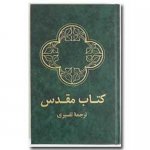
"Thy Word is Truth" John 17:17
"کلام تو حقیقت است"
(Farsi/Persian)
The picture is of the Bible in Farsi/Persian. کتاب مقدس = "Holy Book"
I interacted with comments by a Muslim named Yahya Snow over at Turrentfan's website/blog: I changed a few details for better wording and added some more thoughts.
here
Turretinfan rightly used Surah 10:94 to exhort Muslims to read the Gospel and ask the people of the previous Scriptures: "To my Muslim readers who live in non-Islamic countries, now too is your chance. Recall what your Koran says was told to Mohammed:
Surah 10:94 If thou wert in doubt as to what We have revealed unto thee, then ask those who have been reading the Book from before thee: the Truth hath indeed come to thee from thy Lord: so be in no wise of those in doubt."
Turretinfan's combox
Yahya Snow wrote:
Before I do so I would like to stress the Quran does in no way shape or form ask us to consider what you have today as 100% inspired.
Since the Bibles we have today are essentially the same as the Bible manuscripts long before Muhammad came along; you are wrong. Dr. James White has adequately shown in debates with Bart Ehrman and Shabir Ally and others that the honesty and openness we have about the history of the text and the textual variants do not affect any major doctrines and are a very small percentage and that is an issue of scribal errors, not affecting the doctrines of inspiration or inerrancy.
The Scriptures are essentially the same (textual variants about Mark 16:9-20 and a few other minor passages do not affect any major doctrine of the Bible) as those long before Muhammad's time, (many Manuscripts from 2nd, 3rd, 4th, 5th, 6th centuries - all before Muhammad; and "there is no changing of God's word" (Qur'an 10:65; 6:116; 18:27; 6:34); and "ask the people reading the book before you" means both the Torat (OT) and the Injeel (NT); you are therefore wrong.
These articles below from www.answering-islam.org by Sam Shamoun show that Muhammad did doubt a lot in the Meccan period after Warqa died - the Islamic sources show this.
They also show that it means the Scriptures before the Qur'an including both OT (Torat) and NT ( Injeel) and that the Qur'an and the Muslim sources did not believe that the texts of the previous Scriptures had been altered.
Surah 10, Yunis (Jonah) was revealed in the Meccan period, Pickthall says in the last 4 years of the Meccan period before the Hegira. (The Meaning of the Glorious Koran, Mohammad Marmaduke Pickthall, p. 157)
Surah 10:94 is talking to Muhammad. It was a encouragement for him to stop doubting. He is to ask the people reading the book that was revealed before the Qur'an. ( Includes both Torah and the Injeel. - both OT and NT)
These articles show that "no one can change the word of Allah" and since our Bible today is the same as in 600-700 AD; it has not been corrupted; never was. The articles show that the commentaries say that the "Christians and Jews distort the meanings of the words", but it never accuses them of changing the text itself.
The articles below by Sam Shamoun also use famous Muslim commentators like Ibn Kathir and Ibn Abbas; and Hadith of Al Bukhari and other Muslim sources.
http://www.answering-islam.org/Responses/Osama/zawadi_s10_94.htm
http://www.answering-islam.org/Responses/Osama/zawadi_q10_94.htm
http://www.answering-islam.org/Quran/Bible/ibnabbas.html#ibnkathir
Yahya Snow wrote:
“The Quran is al-Furqan(the Criterion) thus it is used to confirm what parts of your book is correct and which parts are incorrect.“
The Bible is also called “Al Furqan” (the Criterion) الفرقان
by the Qur'an: (Surah 2:53; 21:48)
It is also called a light
And a Reminder - ذ کر
21:49
And in Surah 21:7 - it says that the OT was inspired (وحی)
And to go ask the follower of the Reminder “if you know not”.
So, these passages confirm that our understanding of Surah 10:94 is correct. Muhammad is instructed to not doubt the previous revelations, because no one can change the word of God; and they were true, inspired, perfect, guidance, light, criterion, and reminder of the true path and give wisdom for salvation. ( 2 Timothy 3:15-17)
Yahya Snow wrote:
So whatever agrees with the Qur'an from your book then we know this material within your books is correct.
It is the opposite, whatever comes later (the Qur’an) and does not agree with the previous revelation, the Bible, the later supposed revelation is proved to be the false revelation. (Galatians 1:8-9; Jude 3, Revelation 22:18 and the Qur’an also teaches this in Surah 2:79 – “Woe to those who write Scripture with their hands and then say, “This is from Allah” . . . I realize this, according to the Qur'an, is not applied to Muhammad and his revelation, but the principle is correct. If the Bible is true, OT and NT, then the Qur’an is false. Only what agrees with the previous Scriptures is correct.
Yahya Snow wrote:
“At-Tabari goes further and states “do not ask those who are dishonest or are unbelievers”
Problem with that is the Qur’an calls the Christians honest, that the disciples of Jesus are true believers, followers of Allah, helpers of Allah, and therefore, full of integrity. (Surah 61:14; 5:111 (the disciples of Jesus are believers and helpers of Allah); 5:68-69 (the Christians believe in the Scriptures, Allah as One (Mark 12:29; Deut. 6:5; I Timothy 2:5-6); and believe in judgment day, and seek to do the right things); 5:82 (the monks at the time of Muhammad in the east who are not proud). It also calls some of the Christians and Jews dishonest and unbelievers – and those who believe God has a physical son with a wife as unbelievers – Surah 6:101; 112 – this is true; since no true Christians have ever believed this; nor that there are three gods, nor that Mary was a part of the Trinity (Surah 5:116); it proves the Qur’an mis-understood what Christianity was all about; and the true Christians are vindicated in history; and God did indeed cause true Christians to be the uppermost, victorious (Surah 61:14) in history.
The history of the church of the first 4 Centuries shows that the Christians won the Roman Empire by evangelism in love and good deeds under persecution and torture. They were victorious through weakness. The message of the cross is foolishness to unregenerate people because it means we must be weak and admit we are sinners and in need of a Savior and that we must die in order to live. This is the opposite of the flesh – human efforts and human striving for power in politics and military might and force and externalisms and legalisms; these are the very heart and emphasis of the Islamic religion.
All Christians and all history shows Jesus died on the cross and rose from the dead. So, the victory of the Christians is the victory of the gospel of the death, burial, and resurrection of Jesus. This was the message that won the Roman Empire and all subsequent western history. Much of the Middle East and N. Africa also held to this message until Islam forced by the sword and wiped out the churches in N. Africa and most of the Middle East.
According to the Qur'an, Allah deceived the Jews and Christians and everyone else to believe that Jesus was killed on the cross - Surah 3:54-55; 4:157-158.
Allah is the best of deceivers. (kheir ol makkareen- الله خیر المکارین
Qur'an 3:54
But the living and true God cannot lie (Titus 1:2; Hebrews 6:18) and God cannot sin (1 John 1:5; Habakkuk 1:13).
This is a big contradiction in the Qur'an, because the "uppermost" and victorious group was the Christians who believed in the death of Christ on the cross and the resurrection and the Deity of Christ and the Trinity.
Surah 3:55 says that the true believers would be the victorious ones until the day of resurrection.
History shows that the Allah of the Qur'an failed; because where are those "Muslim" believers in the first century? There is no evidence of their existence. This shows the Qur'an is wrong.
Then, there are more verses that are perhaps the strongest in the Qur'an that show the Bible is true - Surah 5:46-47 (below) and 5:68, which many Christians have pointed out before. Sam Shamoun did a great job recently here with Dr. White and here on the program "Jesus or Muhammad?" on the Aramaic Broadcasting Network that "confirming what had come before him" actually literally says, "confirming what is between his hands".
بین یدیه
Farsi speakers know these words also from Arabic, we use بین
(be'n) for "between" and know of "yad" (ید) as "the hand". We can see it. (Farsi is not a Semitic language, but contains about 40% Arabic in it; because of the Arab Islamic conquering of Persia and converting Iranians to Islam and changing their script and affecting their language.)
وَقَفَّيْنَا عَلَىٰ آثَارِهِم بِعِيسَى ابْنِ مَرْيَمَ مُصَدِّقًا لِّمَا بَيْنَ يَدَيْهِ مِنَ التَّوْرَاةِ ۖ وَآتَيْنَاهُ الْإِنجِيلَ فِيهِ هُدًى وَنُورٌ وَمُصَدِّقًا لِّمَا بَيْنَ يَدَيْهِ مِنَ التَّوْرَاةِ وَهُدًى وَمَوْعِظَةً لِّلْمُتَّقِينَ
46 And in their footsteps We sent Jesus the son of Mary, confirming the Law that had come before him: We sent him the Gospel: therein was guidance and light, and confirmation of the Law that had come before him: a guidance and an admonition to those who fear Allah.
وَلْيَحْكُمْ أَهْلُ الْإِنجِيلِ بِمَا أَنزَلَ اللَّهُ فِيهِ ۚ وَمَن لَّمْ يَحْكُم بِمَا أَنزَلَ اللَّهُ فَأُولَٰئِكَ هُمُ الْفَاسِقُونَ
(47 Let the people of the Gospel judge by what Allah hath revealed therein. If any do fail to judge by (the light of) what Allah hath revealed, they are (no better than) those who rebel.
Subscribe to:
Posts (Atom)

 Posts
Posts


