
Showing posts with label preterism. Show all posts
Showing posts with label preterism. Show all posts
Tuesday, July 09, 2013
Jimmy Akin Dates the Book of Revelation, Without the Help of the Magisterium
Roman apologist Jimmy Akin has an article on the dating of the book of Revelation, dating it before 70 A.D. Dating Revelation previous to 70 A.D. is all the rage these days, particularly with the rise of preterism. It would be very interesting to call Catholic Answers and ask Mr. Akin which Protestant sources he read to arrive at this view.


Tuesday, May 07, 2013
Acts 1:11 and Hyper-Preterism
For those of you who follow a liturgical calender, you're probably aware that May 9 is Ascension Day. So, why not spoil such a blessed commemoration and post something on hyper-preterism?
This morning while surfing around the Internet I came upon something quite distressing: there actually is a hyper-preterist church within driving distance from my house. I don't know how large of a congregation it is, but they actually do have a nice (and historic) church building. My guess is the congregation is small. I know most everyone who first hears about the movement thinks that it's so wacky, no one should even bother taking it seriously. On the other hand, it would not surprise me if the movement gained momentum if a few charismatic leaders with excellent communication skills arise within the movement. Time will tell.
In regard to the ascension of Christ, Acts 1:9-11 states,
Rather than reinvent the wheel, I'll link over to Keith Mathison's pdf article on this very issue. One striking feature of Mathison's article is he points out that in order to understand hyper-preterism as a whole on Acts 1:9-11, one must see that as a whole the movement is quite confusing in regard to interpreting Acts 1:9-11. Mathison did the time-consuming job of documenting quite a number of differing hyper-preterist interpretations of this passage. I came across yet another one today that appears to be arguing Acts 1:9-11 is in regard to Jesus coming back and rapturing the church before coming back in judgment in A.D. 70. If you want to see how far some will go to avoid the obvious of Acts 1:9-11, take a look at Mathison's paper.
This morning while surfing around the Internet I came upon something quite distressing: there actually is a hyper-preterist church within driving distance from my house. I don't know how large of a congregation it is, but they actually do have a nice (and historic) church building. My guess is the congregation is small. I know most everyone who first hears about the movement thinks that it's so wacky, no one should even bother taking it seriously. On the other hand, it would not surprise me if the movement gained momentum if a few charismatic leaders with excellent communication skills arise within the movement. Time will tell.
In regard to the ascension of Christ, Acts 1:9-11 states,
9 And after He had said these things, He was lifted up while they were looking on, and a cloud received Him out of their sight. 10 And as they were gazing intently into the sky while He was going, behold, two men in white clothing stood beside them. 11 They also said, “Men of Galilee, why do you stand looking into the sky? This Jesus, who has been taken up from you into heaven, will come in just the same way as you have watched Him go into heaven.”If you're thinking what I'm thinking, you're wondering how a hyper-preterist get's around this one. Recall, for an advocate of hyper-preterism, Jesus came back in A.D. 70, and as far as I understand their theology, he came back in a spiritual sense in judgment against the nation of Israel. Acts 1:11 though seems to really say that the literal Jesus will literally return in the same way he ascended.
Rather than reinvent the wheel, I'll link over to Keith Mathison's pdf article on this very issue. One striking feature of Mathison's article is he points out that in order to understand hyper-preterism as a whole on Acts 1:9-11, one must see that as a whole the movement is quite confusing in regard to interpreting Acts 1:9-11. Mathison did the time-consuming job of documenting quite a number of differing hyper-preterist interpretations of this passage. I came across yet another one today that appears to be arguing Acts 1:9-11 is in regard to Jesus coming back and rapturing the church before coming back in judgment in A.D. 70. If you want to see how far some will go to avoid the obvious of Acts 1:9-11, take a look at Mathison's paper.
Tuesday, January 22, 2013
No Creed But... Hyper-Preterism: The 9.5 Theses

Over the last year or so, I've had an odd fascination with the grassroots movement of Hyper-Preterism. I never really gave the movement much thought, but after an old acquaintance of mine got into it, to the point where he was booted out of his church (he was the senior pastor), I became curious as to what would drive someone to such an extreme. I can't really say I understand him or the Hyper-Preterists any better now than I did a year ago.
Ken Gentry's has a chapter in the first full-length meaningful response to the Hyper-Preterists, "When Shall These Things Be? A Reformed Response to Hyper-Preterism." Gentry's chapter deals specifically with the movements aversion to creeds and confessions. I've witnessed this first hand: Hyper-Preterists saying that creeds and confessions are the words of man, and that one must go to the Bible alone. The reason is, the creeds and confessions are unanimous in the future coming of Christ. You the careful reader probably see an irony of ironies: such a sentiment ("no creed but the Bible alone) is itself a sort of creed or confession. It's simply inescapable. However far a Hyper-Preterist may disavow any association to the concepts of creeds and confessions, every time they start commenting on it, they themselves are putting out simple creedal confessions. Many of the Hyper-Preterists are a group of folks who shoot themselves in the foot. Their adversity to doctrinal statements leaves them all simply out there. There have been some exceptions. I recall hearing about a few functioning Hyper-Preterist churches. At the time I looked into it, I think I remember there being a church being somewhere in Florida.
I just found another exception: an old Hyper-Preterist document called "The 9.5 Theses for the Next Generation." They consider themselves the new Luther's to reform Christianity (even quoting Luther's "Here I Stand" speech). I found this document being cited on this blog. I don't approve of everything this person posts (nor do I care to venture in to the in-house personal Preterist squabbles). However, the same point is made about how inconsistent the Hyper-Preterists are when it comes to creeds and confessions.
This is another one of those odd little Luther tidbits for me. I've found all sorts of groups appealing to Luther. This is a sad, yet interesting irony about Reformation history- many want to claim Luther, or something about Luther. For a man so despised by so many groups, it’s ironic how those with a particular viewpoint think if they appeal to Luther, somehow or another the large majority of Protestant Christendom will take them seriously. Over the years I've found Seventh Day Adventists, Mormons, Pentecostals, Jehovah's Witnesses, (yes, and even Roman Catholics!) appealing to Luther. Now, I can add the Hyper-Preterists.
Saturday, November 24, 2012
The McDurmon Preston Debate on 70 AD (1)
Back in July (2012) there was a formal debate between Hyper-Preterist (HP) Don Preston and Partial-Preterist (PP) Joel McDurmon. I've been waiting to find a reasonably priced offering of this debate. I recall it was broadcast live for an outrageous price, so no thanks, and Preston's website offers it for around the $35 (also, no thanks). I recently discovered McDurmon's organization is offering the audio along with an e-book, and the total that I was billed was $18.71. While still a bit too much for a few mp3's, along with the e-book I figured the price was getting closer to the realm of sanity.
So last night I put the debate on, sat back and listened to Mr. Preston's opening presentation. He speaks quickly and throws out a lot of Bible verses, so unless you're actively listening and attempting to keep up, the presentation quickly turns into a guy speaking fast that throws out a lot of Bible verses, none of which will appear to make any sense (this presentation reminds me of this old comment from Gerstner).
So this morning I put Preston's presentation back on, and have tried to slow it down a bit to at least try to figure out what he's talking about. I just stopped the mp3 at about 3 minutes in to look up a passage he used, Acts 24:14. Preston says the verse states, "I believe all things that are written in the law and the prophets that there is literally about to be the resurrection of the just and unjust" (emphasis mine). Popular translations however render this passage:
Rather than reinvent the wheel, Ken Gentry has put together an explanation of the grammar of this text in response to the Hyper-Preterists: Acts 24:15 and the Alleged Nearness of the Resurrection and his revised entry here (the revised entry is more extensive). Gentry states, "Hyperpreterism seizes upon the word mellein (from the Greek: mello) and argues that it should be translated 'about to.' " He counter-argues, "...syntactically when mello appears in conjunction with a future infinitive (as here in Acts 24:15) it indicates certainty." He presents far more argumentation than this, but this suffices.
I'm going to attempt to work through this debate, time allowing. Seeing that I'm only 3 minutes in, I calculate the entire process should take at least 7 years, which I'm going to refer to my own personal tribulation (with no rapture in sight).
So last night I put the debate on, sat back and listened to Mr. Preston's opening presentation. He speaks quickly and throws out a lot of Bible verses, so unless you're actively listening and attempting to keep up, the presentation quickly turns into a guy speaking fast that throws out a lot of Bible verses, none of which will appear to make any sense (this presentation reminds me of this old comment from Gerstner).
So this morning I put Preston's presentation back on, and have tried to slow it down a bit to at least try to figure out what he's talking about. I just stopped the mp3 at about 3 minutes in to look up a passage he used, Acts 24:14. Preston says the verse states, "I believe all things that are written in the law and the prophets that there is literally about to be the resurrection of the just and unjust" (emphasis mine). Popular translations however render this passage:
[NIV]14 However, I admit that I worship the God of our ancestors as a follower of the Way, which they call a sect. I believe everything that is in accordance with the Law and that is written in the Prophets, 15 and I have the same hope in God as these men themselves have, that there will be a resurrection of both the righteous and the wicked.
[NAS]14 But this I admit to you, that according to the Way which they call a sect I do serve [a]the God of our fathers, believing everything that is in accordance with the Law and that is written in the Prophets; 15 having a hope in God, which these men cherish themselves, that there shall certainly be a resurrection of both the righteous and the wicked.However, Young's Literal Translation does render the passage, "there is about to be a rising again of the dead, both of righteous and unrighteous."
Rather than reinvent the wheel, Ken Gentry has put together an explanation of the grammar of this text in response to the Hyper-Preterists: Acts 24:15 and the Alleged Nearness of the Resurrection and his revised entry here (the revised entry is more extensive). Gentry states, "Hyperpreterism seizes upon the word mellein (from the Greek: mello) and argues that it should be translated 'about to.' " He counter-argues, "...syntactically when mello appears in conjunction with a future infinitive (as here in Acts 24:15) it indicates certainty." He presents far more argumentation than this, but this suffices.
I'm going to attempt to work through this debate, time allowing. Seeing that I'm only 3 minutes in, I calculate the entire process should take at least 7 years, which I'm going to refer to my own personal tribulation (with no rapture in sight).
Monday, September 03, 2012
Theology is Not a Bad Word.
I came across this cartoon via a hyper-pretersit site:

The irony: this cartoon is a theological statement as well.

The irony: this cartoon is a theological statement as well.
Friday, April 06, 2012
Why I May Give Up Interpreting Matthew 24
My friend Ken and I have had some discussion about Preterism and the interpretation of Matthew 24.
Since becoming Reformed, I've never had any strong eschatological convictions, other than: Dispensationalism is wrong. Since that time, I've more or less parked myself in amillenialism, but not in any sort of dogmatic way.
Like many of my Reformed friends, I picked up R.C. Sproul's The Last Days According to Jesus when it came out. At the time, I was very intrigued and almost persuaded by the argumentation. Unfortunately, I was a bit uneasy about committing to partial-preterism because at the time, the majority of those who were spokesmen for this view were post-millennial. Now I know that's not a valid reason to not embrace something... simply because it may lead to something else. I read some of the books by DeMar and Gentry as well. I always found their views interesting, but I never could commit to it.
I think I've mentioned this here on the blog before: an old friend of mine recently lost his fairly well-paid senior pastor gig at a Dispensational church because he went full-Preterist. If I recall the story correctly, during the Harold Camping May 21 controversy, the elders of his church asked him to preach some messages on end-times. He hadn't studied end times in a while. A few months later, he was a convinced hyper-Preterist. He was then abruptly fired. I keep tabs on him through his websites, watching him move up the ranks in the hyper-Preterist community.
I read this comment from Ken Gentry some time ago that hyper-Preterists were best described as people without jobs with access to the Internet. When I read that, I thought it was fairly accurate. What I didn't realize at the time is that the only thing hyper-Preterism really needs to gain momentum is a few gifted speakers. The views they espouse are not as easy to refute as one may think. Sure, some of the hyper-Preterists are wacky. But some of them are good communicators and good at defending their views. I'm not as quick to write off the impact these folks may eventually have on the church. Their targets are typically Dispensationalists. I've heard a few debates between Dispensationalists and Preterists. In each case, the Dispensationalists did poorly. The more people become disenchanted with Dispensationalism, I think the more opportunity for such people to become some sort of Preterist.
As I've been looking into hyper-Preterism, the entire key to their theology is Matthew 24 (as it is in partial Preterism). That is, if they've got ten minutes to convince you of their view, the first passage of the Bible they will turn to is Matthew 24. The entire world of the Bible seems to rest on Matthew 24 for these folks. It's like that as well sometimes with the partial-Preterists. Here's where I think one of the problems is. The partial-Preterists appear to me to be very arbitrary in how they divide up the chapter to some verses being past and others being future. I'm leaning towards saying that the partial crowd simply isn't being consistent with their hermeneutic, while the hyper folks are. So, I'm even a bit more hesitant now about partial-Preterism.
But I think I may have had a breakthrough on interpreting Matthew 24. Ken asked me if I thought any of it applied to A.D. 70. I took some time to go through Kim Riddelbarger's chapter on Matthew 24 tonight in his book, A Case for Amillennialism. Frankly, I got lost in it a few times, attempting to follow what was supposed to be A.D. 70, what's supposed to be future, what may have double fulfillment, etc. I think what I'll actually have to do is map out exactly what Riddelbarger is saying precisely in the chapter (certain books require that sort of work). I think the destruction of the temple in A.D. 70 must be in view- although I was out with Alan Kurschner the other night, and he's convinced the entire chapter is future (by the way, he'll be debating partial-preterist Dee Dee Warren on Matthew 24).
Here's though where I had some sort of Matthew 24 breakthrough tonight. I read Matthew 24 a few times, keeping in mind something Riddlebarger pointed out. Kim mentioned something that I took for granted. After Jesus shockingly predicts the destruction of the temple, His disciples ask him three questions: "Tell us" they said, "when will this happen, and what will be the sign of your coming and of the end of the age"?
I went back and read Matthew 24 keeping these three questions in mind. Now, let's remember that there were times when the disciples asked the wrong question, or didn't understand the answer they were given. I'm tempted to say in Matthew 24, Jesus answered the three questions posed to him in Mt. 24:3. He answered their wrong questions that didn't distinguish the different time periods of the events Himself by not distinguishing the events of AD 70 to those at the end of history. In other words, he answered the imprecise questions they asked him. Suppose He simply described both events, not clearly distinguishing one from the other? If the three questions are understood to be referring to two (or perhaps three) different periods of time (and the disciples of course, didn't realize this), Jesus simply described all the events at the same time, mixed together. It's not the fault of Jesus that He answered all three questions at the same time not distinguishing one time period from the other. That's the way they asked the questions! It's the fault of the disciples for assuming all the events were to occur at the same time. I don't claim to be able to read the mind of the Lord. But it is possible he did most certainly answer their three questions by answering them all at once.
Now I'm not any sort of rocket scientist when it comes to exegesis. Matthew 24 is a very difficult passage. But based on previous answers the Lord gave to His disciples, it wouldn't surprise me at all that He answered their questions in a way that they didn't expect or completely understand. In this case, if one rules out hyper-Preterism, I think it's at least a possibility that He did indeed answer their imprecise questions leaving out many of the same distinctions about the timing of the events that they did. What concerns me about all those who try to say of Matthew 24, "This is A.D. 70... this part is future... this part is both..." etc., is that they may have missed exactly why the answers Jesus gave were in the form they were in.
I don't normally speculate on the Biblical text like this. I certainly don't hold any of this dogmatically. I'm simply speculating on the text. In other words, I don't at all have any sort of problem with being wrong or way off on this.
Since becoming Reformed, I've never had any strong eschatological convictions, other than: Dispensationalism is wrong. Since that time, I've more or less parked myself in amillenialism, but not in any sort of dogmatic way.
Like many of my Reformed friends, I picked up R.C. Sproul's The Last Days According to Jesus when it came out. At the time, I was very intrigued and almost persuaded by the argumentation. Unfortunately, I was a bit uneasy about committing to partial-preterism because at the time, the majority of those who were spokesmen for this view were post-millennial. Now I know that's not a valid reason to not embrace something... simply because it may lead to something else. I read some of the books by DeMar and Gentry as well. I always found their views interesting, but I never could commit to it.
I think I've mentioned this here on the blog before: an old friend of mine recently lost his fairly well-paid senior pastor gig at a Dispensational church because he went full-Preterist. If I recall the story correctly, during the Harold Camping May 21 controversy, the elders of his church asked him to preach some messages on end-times. He hadn't studied end times in a while. A few months later, he was a convinced hyper-Preterist. He was then abruptly fired. I keep tabs on him through his websites, watching him move up the ranks in the hyper-Preterist community.
I read this comment from Ken Gentry some time ago that hyper-Preterists were best described as people without jobs with access to the Internet. When I read that, I thought it was fairly accurate. What I didn't realize at the time is that the only thing hyper-Preterism really needs to gain momentum is a few gifted speakers. The views they espouse are not as easy to refute as one may think. Sure, some of the hyper-Preterists are wacky. But some of them are good communicators and good at defending their views. I'm not as quick to write off the impact these folks may eventually have on the church. Their targets are typically Dispensationalists. I've heard a few debates between Dispensationalists and Preterists. In each case, the Dispensationalists did poorly. The more people become disenchanted with Dispensationalism, I think the more opportunity for such people to become some sort of Preterist.
As I've been looking into hyper-Preterism, the entire key to their theology is Matthew 24 (as it is in partial Preterism). That is, if they've got ten minutes to convince you of their view, the first passage of the Bible they will turn to is Matthew 24. The entire world of the Bible seems to rest on Matthew 24 for these folks. It's like that as well sometimes with the partial-Preterists. Here's where I think one of the problems is. The partial-Preterists appear to me to be very arbitrary in how they divide up the chapter to some verses being past and others being future. I'm leaning towards saying that the partial crowd simply isn't being consistent with their hermeneutic, while the hyper folks are. So, I'm even a bit more hesitant now about partial-Preterism.
But I think I may have had a breakthrough on interpreting Matthew 24. Ken asked me if I thought any of it applied to A.D. 70. I took some time to go through Kim Riddelbarger's chapter on Matthew 24 tonight in his book, A Case for Amillennialism. Frankly, I got lost in it a few times, attempting to follow what was supposed to be A.D. 70, what's supposed to be future, what may have double fulfillment, etc. I think what I'll actually have to do is map out exactly what Riddelbarger is saying precisely in the chapter (certain books require that sort of work). I think the destruction of the temple in A.D. 70 must be in view- although I was out with Alan Kurschner the other night, and he's convinced the entire chapter is future (by the way, he'll be debating partial-preterist Dee Dee Warren on Matthew 24).
Here's though where I had some sort of Matthew 24 breakthrough tonight. I read Matthew 24 a few times, keeping in mind something Riddlebarger pointed out. Kim mentioned something that I took for granted. After Jesus shockingly predicts the destruction of the temple, His disciples ask him three questions: "Tell us" they said, "when will this happen, and what will be the sign of your coming and of the end of the age"?
I went back and read Matthew 24 keeping these three questions in mind. Now, let's remember that there were times when the disciples asked the wrong question, or didn't understand the answer they were given. I'm tempted to say in Matthew 24, Jesus answered the three questions posed to him in Mt. 24:3. He answered their wrong questions that didn't distinguish the different time periods of the events Himself by not distinguishing the events of AD 70 to those at the end of history. In other words, he answered the imprecise questions they asked him. Suppose He simply described both events, not clearly distinguishing one from the other? If the three questions are understood to be referring to two (or perhaps three) different periods of time (and the disciples of course, didn't realize this), Jesus simply described all the events at the same time, mixed together. It's not the fault of Jesus that He answered all three questions at the same time not distinguishing one time period from the other. That's the way they asked the questions! It's the fault of the disciples for assuming all the events were to occur at the same time. I don't claim to be able to read the mind of the Lord. But it is possible he did most certainly answer their three questions by answering them all at once.
Now I'm not any sort of rocket scientist when it comes to exegesis. Matthew 24 is a very difficult passage. But based on previous answers the Lord gave to His disciples, it wouldn't surprise me at all that He answered their questions in a way that they didn't expect or completely understand. In this case, if one rules out hyper-Preterism, I think it's at least a possibility that He did indeed answer their imprecise questions leaving out many of the same distinctions about the timing of the events that they did. What concerns me about all those who try to say of Matthew 24, "This is A.D. 70... this part is future... this part is both..." etc., is that they may have missed exactly why the answers Jesus gave were in the form they were in.
I don't normally speculate on the Biblical text like this. I certainly don't hold any of this dogmatically. I'm simply speculating on the text. In other words, I don't at all have any sort of problem with being wrong or way off on this.
Wednesday, April 04, 2012
Hyper-Preterists and Roman Catholics Together
It's funny how one little word can mean so much to an argument. For me, one of the signs of desperation is the "until" argument.
Compare and Contrast:
Hyper-Preterism: The Lord's Supper (Don Preston)
Question: If the Lord did come in A.D. 70, then should we partake of the Lord's Supper? Paul said that "As often as you eat this bread and drink this cup, you do shew forth the Lord's death until he come" (1 Corinthians 11:26). So, according to this, we should not take the Supper if the Lord came in A. D. 70.
Answer: I believe that this common argument misunderstands the nature of the Supper and the meaning of "until" in Corinthians. First, the word "until" does frequently mean something like "up to the point of," and indicates a terminus or change. However, it frequently does not always mean this. Paul said "death reigned from Adam until Moses" (Romans 5:14). Surely it is acknowledged that the introduction of the Mosaic Law did not end or defeat death! Similarly, Paul told Timothy, "until I come, give attendance to reading, to exhortation, and to doctrine" (1 Timothy 4:14). I know of no one that would argue that Timothy was to stop reading the Scriptures when Paul arrived! There are many examples of this usage of the word "until."
Roman Catholicism: The Perpetual Virginity of Mary (Tim Staples)
Scripture’s statement that Joseph "knew [Mary] not until she brought forth her firstborn" would not necessarily mean they did "know" each other after she brought forth Jesus. Until is often used in Scripture as part of an idiomatic expression similar to our own usage in English. I may say to you, "Until we meet again, God bless you." Does that necessarily mean after we meet again, God curse you? By no means. A phrase like this is used to emphasize what is being described before the until is fulfilled. It is not intended to say anything about the future beyond that point. Here are some biblical examples:
2 Samuel 6:23: And Michal the daughter of Saul had no child to (until) the day of her death. (Does this mean she had children after she died?)
1 Timothy 4:13: Until I come, attend to the public reading of scripture, to preaching, to teaching. (Does this mean Timothy should stop teaching after Paul comes?)
1 Corinthians 15:25: For he (Christ) must reign until he has put all his enemies under his feet. (Does this mean Christ’s reign will end? By no means! Luke 1:33 says, "he will reign over the house of Jacob forever and of his kingdom there shall be no end.")
Compare and Contrast:
Hyper-Preterism: The Lord's Supper (Don Preston)
Question: If the Lord did come in A.D. 70, then should we partake of the Lord's Supper? Paul said that "As often as you eat this bread and drink this cup, you do shew forth the Lord's death until he come" (1 Corinthians 11:26). So, according to this, we should not take the Supper if the Lord came in A. D. 70.
Answer: I believe that this common argument misunderstands the nature of the Supper and the meaning of "until" in Corinthians. First, the word "until" does frequently mean something like "up to the point of," and indicates a terminus or change. However, it frequently does not always mean this. Paul said "death reigned from Adam until Moses" (Romans 5:14). Surely it is acknowledged that the introduction of the Mosaic Law did not end or defeat death! Similarly, Paul told Timothy, "until I come, give attendance to reading, to exhortation, and to doctrine" (1 Timothy 4:14). I know of no one that would argue that Timothy was to stop reading the Scriptures when Paul arrived! There are many examples of this usage of the word "until."
Roman Catholicism: The Perpetual Virginity of Mary (Tim Staples)
Scripture’s statement that Joseph "knew [Mary] not until she brought forth her firstborn" would not necessarily mean they did "know" each other after she brought forth Jesus. Until is often used in Scripture as part of an idiomatic expression similar to our own usage in English. I may say to you, "Until we meet again, God bless you." Does that necessarily mean after we meet again, God curse you? By no means. A phrase like this is used to emphasize what is being described before the until is fulfilled. It is not intended to say anything about the future beyond that point. Here are some biblical examples:
2 Samuel 6:23: And Michal the daughter of Saul had no child to (until) the day of her death. (Does this mean she had children after she died?)
1 Timothy 4:13: Until I come, attend to the public reading of scripture, to preaching, to teaching. (Does this mean Timothy should stop teaching after Paul comes?)
1 Corinthians 15:25: For he (Christ) must reign until he has put all his enemies under his feet. (Does this mean Christ’s reign will end? By no means! Luke 1:33 says, "he will reign over the house of Jacob forever and of his kingdom there shall be no end.")
Monday, January 30, 2012
Athanasius and the Hyper-Preterists 2
Here's another hyper-preterist Athanasius quote:
The quote above (as found on a hyper-preterist Facebook page) cites "Athanasius, Festal Letter (4th century AD)." The first problem with this reference is that there are multiple festal letters from Athanasius. The second problem is I could not locate any corroboration that the documentation to a Festal Letter is accurate.
After searching around a bit, I would posit the quote in this form is from the hyper-preterist book, House Divided Bridging the Gap in Reformed Eschatology A Preterist Response to When Shall These Things Be? It occurs in the exact form in Chapter Two: If Preterism is True by David A. Green. The contents of this chapter can be found here, posted in this discussion thread by (who appears to be) the author. Mr Green states,
"The earth is already filled with the knowledge of the Lord" is from On the Incarnation, 16:3; 40,6-7; 45, 5-6; 48,4; 50,1; 55,3
"Death is destroyed" is from On the Incarnation, 9,4; 27.1, 3-4; 29.5; 31,3; Festal Letter IV,3; VI,9; VI,10
It would certainly be time-consuming to go through each quote cited by Mr. Green. Some of the citations say nothing more than Christ conquered death by his resurrection. Others say nothing more than the Messiah has come and the Jews are wrong to look for a future Messiah: the prophecies as to his coming have been fulfilled. One quote says nothing more than the knowledge of God pervades all of creation.
Athanasius, the "Father of Orthodoxy" (The Athanasian Creed) says that what futurists are waiting for has ALREADY OCCURRED... "The earth IS ALREADY 'filled with the knowledge of the Lord' in fulfillment of Isaiah 11:9 and Habakkuk 2:14; and DEATH IS ALREADY DESTROYED among believers in FULFILLMENT of First Corinthians 15:55" ~ Athanasius, Festal Letter (4th century AD)Documentation
The quote above (as found on a hyper-preterist Facebook page) cites "Athanasius, Festal Letter (4th century AD)." The first problem with this reference is that there are multiple festal letters from Athanasius. The second problem is I could not locate any corroboration that the documentation to a Festal Letter is accurate.
After searching around a bit, I would posit the quote in this form is from the hyper-preterist book, House Divided Bridging the Gap in Reformed Eschatology A Preterist Response to When Shall These Things Be? It occurs in the exact form in Chapter Two: If Preterism is True by David A. Green. The contents of this chapter can be found here, posted in this discussion thread by (who appears to be) the author. Mr Green states,
Despite futurist errors regarding various and major prophecy-texts, the church has been, in a very real sense, teaching preterism for nearly two thousand years now. We can find examples of preterism throughout the church fathers...The quote is not from a Festal Letter, since Mr. Green goes on to present a section specific to the Festal Letters. In fact, the quote isn't an Athanasius quote at all, but is rather a summary of statement Mr. Green put together from On the Incarnation and the Festal Letters as to what he think Athanasius believed. In other words, each statement represents a quote from Athanasius. Scrolling through the quotes used by Green, these were the references he gives:
The Father of Orthodoxy himself, Athanasius (AD 293-373), is a remarkable example of this same phenomenon. We can see from the following excerpts from his On the Incarnation and his Festal Letters, that although Athanasius believed in a yet-future Second Coming and in a Resurrection of the Flesh, he also believed the following: The earth is already filled with the knowledge of the Lord (the gospel) in fulfillment of Isaiah 11:9 and Habakkuk 2:14; and Death is already destroyed among believers in fulfillment of 1 Corinthians 15:55 (O death, where is your sting? O grave, where is your victory?).
"The earth is already filled with the knowledge of the Lord" is from On the Incarnation, 16:3; 40,6-7; 45, 5-6; 48,4; 50,1; 55,3
"Death is destroyed" is from On the Incarnation, 9,4; 27.1, 3-4; 29.5; 31,3; Festal Letter IV,3; VI,9; VI,10
It would certainly be time-consuming to go through each quote cited by Mr. Green. Some of the citations say nothing more than Christ conquered death by his resurrection. Others say nothing more than the Messiah has come and the Jews are wrong to look for a future Messiah: the prophecies as to his coming have been fulfilled. One quote says nothing more than the knowledge of God pervades all of creation.
Athanasius and the Hyper-Preterists 1
Hyper-preterists typically believe that Satan has been completely defeated: "In chapter 20 [of Revelation] judgment is set, Satan is cast into the lake of fire; and Jesus takes his glorious bride unto himself! This all happened in 70 AD with the full destruction of the Theocracy of Israel, the persecuting city of Jerusalem, the Old Heavens and Earth" [source]. This is not to be confused with other millennial positions that hold Satan is bound now in such a way that while he is still troublesome, he cannot stop the spread of the gospel, and will be eventually cast into the lake of fire (Rev. 20:10).
As with my earlier Spurgeon entries, what I've noticed is that many of those involved with hyper-preterism appear to look for anything written by anybody and use it as proof for their position. Consider the following from Athanasius as found on a hyper-preterist blog:
When one searches the extant writings from Athanasius, it becomes apparent rather quickly that more often than not Satan is portrayed as an active enemy of the church. For instance, "But the mind of man is prone to evil exceedingly; moreover, our adversary the devil, envying us the possession of such great blessings, goeth about seeking to snatch away the seed of the word which is sown within us"[source]. What's going on then? How can Athanasius say that Satan is slain and abolished on the one hand and then say elsewhere that he's out and about seeking to do harm?
The easy way out is to simply say Athanasius contradicted himself. This possibility of course is not out of the question. But when I look up quotes like this, I don't automatically assume that Athansius was so muddleheaded that he would posit two completely contradictory notions. It could be like Augustine or Luther that his position changed over time. It could be one of the texts in question has variants or is spurious. In this case though, I think if one follows the train of thought and allows for the use of hyperbole, the notion that Satan is defeated and that he's also still active isn't such a stretch in interpreting Athanasius.
The context of this quote can be found here. The source for the quote is a Festal letter, or more commonly known as an Easter letter. He begins by pointing out, "For although the date of this letter is later than that usual for this announcement, it should still be considered well-timed, since our enemies having been put to shame and reproved by the Church, because they persecuted us without a cause, we may now sing a festal song of praise." This notion of "defeated enemies" will find its way right up until the quote in question. He mentions Judith "when having first exercised herself in fastings and prayers, she overcame the enemies, and killed Olophernes." Then Esther: "when destruction was about to come on all her race, and the nation of Israel was ready to perish, defeated the fury of the tyrant by no other means than by fasting and prayer to God, and changed the ruin of her people into safety." And then a conclusion:
As with my earlier Spurgeon entries, what I've noticed is that many of those involved with hyper-preterism appear to look for anything written by anybody and use it as proof for their position. Consider the following from Athanasius as found on a hyper-preterist blog:
More FULFILLED ESCHATOLOGY from Early Church Father, Athanasius...It's very simple for a hyper-preterist: Athanasius is saying almost exactly what they are about the total defeat of Satan. Sure, there's probably some differences, but Athanasius is more or less saying the same thing about the defeat of Satan... or is he?
"Now that THE DEVIL, that tyrant against the whole world IS SLAIN...NO MORE DOES DEATH REIGN...now that death and the kingdom of the devil IS ABOLISHED, everything is entirely filled with joy and gladness. God is no longer known ONLY IN JUDEA (Old Covenant - FS), but in ALL THE EARTH (New Covenant - FS)..."(The Festal Letters, 4:3)
When one searches the extant writings from Athanasius, it becomes apparent rather quickly that more often than not Satan is portrayed as an active enemy of the church. For instance, "But the mind of man is prone to evil exceedingly; moreover, our adversary the devil, envying us the possession of such great blessings, goeth about seeking to snatch away the seed of the word which is sown within us"[source]. What's going on then? How can Athanasius say that Satan is slain and abolished on the one hand and then say elsewhere that he's out and about seeking to do harm?
The easy way out is to simply say Athanasius contradicted himself. This possibility of course is not out of the question. But when I look up quotes like this, I don't automatically assume that Athansius was so muddleheaded that he would posit two completely contradictory notions. It could be like Augustine or Luther that his position changed over time. It could be one of the texts in question has variants or is spurious. In this case though, I think if one follows the train of thought and allows for the use of hyperbole, the notion that Satan is defeated and that he's also still active isn't such a stretch in interpreting Athanasius.
The context of this quote can be found here. The source for the quote is a Festal letter, or more commonly known as an Easter letter. He begins by pointing out, "For although the date of this letter is later than that usual for this announcement, it should still be considered well-timed, since our enemies having been put to shame and reproved by the Church, because they persecuted us without a cause, we may now sing a festal song of praise." This notion of "defeated enemies" will find its way right up until the quote in question. He mentions Judith "when having first exercised herself in fastings and prayers, she overcame the enemies, and killed Olophernes." Then Esther: "when destruction was about to come on all her race, and the nation of Israel was ready to perish, defeated the fury of the tyrant by no other means than by fasting and prayer to God, and changed the ruin of her people into safety." And then a conclusion:
Now as those days are considered feasts for Israel, so also in old time feasts were appointed when an enemy was slain, or a conspiracy against the people broken up, and Israel delivered. Therefore blessed Moses of old time ordained the great feast of the Passover, and our celebration of it, because, namely, Pharaoh was killed, and the people were delivered from bondage. For in those times it was especially, when those who tyrannized over the people had been slain, that temporal feasts and holidays were observed in Judaea.Feasts celebrated the defeat of enemies. Easter is a celebration feast. Christ has risen from the dead, conquering his enemies. Here is where the hyper-preterist quote occurs, which I've bolded. Athanasius states:
Now, however, that the devil, that tyrant against the whole world, is slain, we do not approach a temporal feast, my beloved, but an eternal and heavenly. Not in shadows do we shew it forth, but we come to it in truth. For they being filled with the flesh of a dumb lamb, accomplished the feast, and having anointed their door-posts with the blood, implored aid against the destroyer. But now we, eating of the Word of the Father, and having the lintels of our hearts sealed with the blood of the New Testament, acknowledge the grace given us from the Savior, who said, ‘Behold, I have given unto you to tread upon serpents and scorpions, and over all the power of the enemy.’ For no more does death reign; but instead of death henceforth is life, since our Lord said, ‘I am the life;’ so that everything is filled with joy and gladness; as it is written, ‘The Lord reigneth, let the earth rejoice.’ For when death reigned, ‘sitting down by the rivers of Babylon, we wept,’ and mourned, because we felt the bitterness of captivity; but now that death and the kingdom of the devil is abolished, everything is entirely filled with joy and gladness. And God is no longer known only in Judaea, but in all the earth, ‘their voice hath gone forth, and the knowledge of Him hath filled all the earth.’ What follows, my beloved, is obvious; that we should approach such a feast, not with filthy raiment, but having clothed our minds with pure garments. For we need in this to put on our Lord Jesus, that we may be able to celebrate the feast with Him. Now we are clothed with Him when we love virtue, and are enemies to wickedness, when we exercise ourselves in temperance and mortify lasciviousness, when we love righteousness before iniquity, when we honor sufficiency, and have strength of mind, when we do not forget the poor, but open our doors to all men, when we assist humble-mindedness, but hate pride.The language of Athanasius is filled with celebratory hyperbole. Satan, the enemy of Christ and the church was indeed defeated by the resurrection. The enemy was conquered and "slain." Death was also defeated because Christ rose from the dead. The irony as I see it is that hyper-preterists often attack dispensationalists for a rigid literal hermaneutic. But here with Athanasius, they do the very thing they decry. They ignore a typical use of language only meant to express a basic point about the impact and importance of Easter.
Sunday, January 29, 2012
Charles Spurgeon and the Hyper-Preterists
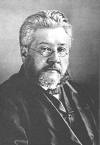
(On the New Heavens and Earth)I had thought perhaps this quote was simply a one-time oddity. I was amazed though to hear it being brought up in an old debate between hyper-preterist Don Preston and dispensationalist Tommy Ice on the Voice of Reason radio Show. Here's a brief mp3 clip of the exchange on the Spurgeon quote. You'll notice that neither men had any idea what was was being put forth by Spurgeon in the quote. How could they? Without a context, the quote can mean whatever someone wishes it to.
"Did you ever regret the absence of the burnt-offering, or the red heifer, of any one of the sacrifices and rites of the Jews? Did you ever pine for the feast of tabernacles, or the dedication? No, because, though these were like THE OLD HEAVENS AND EARTH to the Jewish believers, THEY HAVE PASSED AWAY, and WE NOW LIVE UNDER A NEW HEAVEN AND NEW EARTH, so far as the dispensation of divine teaching is concerned. The substance is come, and the shadow has gone: and we do not remember it." (Metropolitan Tabernacle Pulpit, vol. xxxvii, p. 354)."
I also found Spurgeon being cited on a new hyper-preterist Facebook page. Another Spurgeon quote was cited inferring a future restoration of the Jews and this comment was added, "Seems strange to hear him say this after what he says about the New Heavens and Earth." So I asked what was meant by this, and if you scroll into the comments you'll notice the very same Spurgeon quote was brought forth, along with the following commentary:
Some would say that a preterist has pulled this out of it's context. The greater context they are speaking of would be his larger body of thought. The only thing bringing in his larger context is that he is simply inconsistent. So this may not be the best preterist proof text from Spurgeon. If it does anything, it simply calls into question his humanity...James - thoughts on the Spurgeon quote?My response:
Yes, I have a few comments on that Spurgeon quote you posted from the Metropolitan Tabernacle Pulpit, vol. xxxvii, p. 354. I am in no way any sort of expert on Charles Spurgeon, nor would I even go so far as to claim I've read enough of his writings to really say I'm familiar with him like I am other authors.
I noticed Frank had posted the same Spurgeon quote a few days ago . I would take a guess that Frank posted the quote simply to highlight Spurgeon's use of figurative language as a polemic against dispensational theology. If not, he can correct me. I would also guess Frank took the quote not from any sort of deep study into Spurgeon's writings, but rather snagged it off a secondary webpage (like the one on the Preterist Archive that used the same two Spurgeon quotes Frank used, documented exactly in the same way). As to your usage, it appears to me you see some sort of disconnect between the two quotes from Spurgeon. That is, in some way they contradict each other. If I've misinterpreted your intentions, my apologies. Same to Frank- If I misinterpreted you or your intentions, my apologies.
The sermon is on Isaiah 65:17-19 ("Behold, I create new heavens and a new earth: and the former shall not be remembered, nor come into mind"). The sermon is entitled, God Rejoicing in the New Creation (no. 2211). It can be found in the Metropolitan Tabernacle Pulpit Vol. 37 beginning on page 442. Spurgeon begins:
"THIS passage, like the rest of Isaiah’s closing chapters, will have completest fulfillment in the latter days when Christ shall come, when the whole company of his elect ones shall have been gathered out from the world, when the whole creation shall have been renewed, when new heavens and a new earth shall be the product of the Savior’s power, when, for ever and for ever, perfected saints of God shall behold his face, and joy and rejoice in him" (p.442).One can see that Spurgeon begins saying the New heavens and earth are future. He goes on to say:
"There is to be a literal new creation, but that new creation has commenced already; and I think, therefore, that even now we ought to manifest a part of the joy. If we are called upon to be glad and rejoice in the completion of the work, let us rejoice even in the commencement of it" (p. 443).Spurgeon then goes on to speak of how people should see God in the current world and rejoice in God as creator. Christians should most rejoice in their being a new creation. Spurgeon continues on this theme of Christians being the begining of the new creation, as people who look forward to the new creation coming in its fullness. Then comes the quote you cited. From the context, Spurgeon's figurative language is simply describing the Old Testament rituals and practices that looked forward to Christ. Since Christ has come, he's begun to usher in the new heavens and earth, beginning this work in the hearts of believers, in regeneration.
"He has commenced it thus — by putting new hearts into as many as he has called by his Spirit, regenerating them, and making them to become new creatures in Christ Jesus. These the apostle tells us are a kind of firstfruits of this now creation" (p.443).
There certainly isn't any sort of disconnect between the two Spurgeon quotes you cited.
Here was the response:
Notice Chuck’s take on Rev 21:1…And my response:
(Rev 21:1 NASB) “And I saw A NEW HEAVEN AND A NEW EARTH; for the first heaven and the first earth passed away, and there is NO LONGER ANY SEA.”
"Scarcely could we rejoice at the thought of losing the glorious old ocean: the new heavens and the new earth are none the fairer to our imagination, if, indeed, LITERALLY there is to be no great and wide sea, with its gleaming waves and shelly shores. IS NOT THIS TEXT TO BE READ AS A METAPHOR, tinged with the prejudice with which the Eastern mind universally regarded the sea in the olden times? A real physical world without a sea it is mournful to imagine, it would be an iron ring without the sapphire which made it precious. THERE MUST BE A SPIRITUAL MEANING HERE. In the new dispensation THERE WILL BE no division…
…the sea separates nations and sunders peoples from each other. To John in Patmos the deep waters were like prison walls, shutting him out from his brethren and his work: there shall be no such barriers IN THE WORLD TO COME (I.E. THE NEW HEAVENS & EARTH). Leagues of rolling billows lie between us and many a kinsman whom to-night we prayerfully remember, but in THE BRIGHT WORLD (New H&E) TO WHICH WE GO there SHALL BE unbroken fellowship for all the redeemed family; IN THIS SENSE THERE SHALL BE NO MORE SEA." ~ "Morning and Evening" (1834-1892)
JAMES: Here Chuck clearly FUTURIZES the New Heaven & Earth and interprets the eradication of the sea as NON-LITERAL (Metaphor - a thing MANY if not all futurists would deplore - but which all Preterists would celebrate).The point here is Chuck’s inconsistency. He wants it both ways. Here is the initial quote again…
"Did you ever regret the absence of the burnt-offering, or the red heifer, of any one of the sacrifices and rites of the Jews? Did you ever pine for the feast of tabernacles, or the dedication?”
An obvious reference to the Old Covenant System under Judaism. He continues…
“No, because, though these things were like THE OLD HEAVENS AND EARTH to the Jewish believers, THEY HAVE PASSED AWAY, and WE NOW LIVE UNDER A NEW HEAVEN AND NEW EARTH, so far as the dispensation of divine teaching is concerned. The substance is come, and the shadow has gone: and we do not remember it."
Now here, C.H. clearly accepts a NON-LITERAL interpretation of the New H&E (not a new material creation but a new covenant) and then he proceeds to tell his congregation that they (Christians) are ALREADY (NOW) living in the New H&E!
Well which is it? Is it a FUTURE happening – a thing TO COME or is it a PAST event – a thing that came?
To hold a view that says “BOTH are true; we live in the New H&E Currently and it is also to be realized in a more fashion at a future material consummation is in my humble opinion, pure conjecture.
Mr. S’s handling the LANGUAGE and the TIMING of the New H&E in Isaiah are contradictory of his handling of IDENTICAL language in Rev 21:1. There is no SCRIPTURAL JUSTIFICATION for holding that the Apostle John in Rev 21 was speaking of a FUTURE MATERIAL CONSTRUCT (“New H&E”) - but when Isaiah uses the IDENTICAL TERM in Ch 65:17 he is metaphorically speaking of the New Covenant in Christ - unless one is prepared to say that there are MULTIPLE New Heavens and earths.
For my money - The Hebrew Prophet Isaiah prophesied the EXACT SAME New H&E as the Hebrew Prophet John - only Isaiah said it is far off and John says it near – to arrive upon the consummation of the Old Covenant era – “end of the age” (Mt 24:3; 1 Cor 10:11; Heb 9:26).
Thanks for your explanation. Just so I'm understanding you and we're not speaking past each other, these were my previous concerns: Mr. Loomis posted two Spurgeon quotes that appear to be contradictory according to his own writings. I don't think they are at all, and even a cursory reading of the sermons in question don't amount to "The only thing bringing in his larger context is that he is simply inconsistent."
It is my understanding that Rev. Spurgeon was a historic premillennialist. Within that view, as far as I understand it, Spurgeon's use of figurative language in the quotes cited by Mr. Loomis are consistent with historic premillennialism (for a helpful overview of that view, see: George Eldon Ladd, "Historic Premillennialism" in Robert G. Clouse, ed., The Meaning of the Millennium (WI: Intervarsity Press, 1977) pp. 17-40).
In regards to your further citations of Spurgeon, the historic premillennial view has some similarities with the amillennial paradigm of "already and not yet." While you may disagree with this paradigm (either used by amillennialists or historic premillennialists), all of the Spurgeon quotes you've posted are harmonious with it. That is, Charles Spurgeon is not being inconsistent with the historic premillennial view. Swanson's article http://www.spurgeon.org/eschat.htm does a fine job going through the Spurgeon eschatology maze.
It appears to me your concerns are geared toward whether or not Spurgeon's historic premillennial view is a consistently biblical view. The point of Mr. Loomis appears to me to be that Spurgeon contradicted himself within his own writings. My response has been to the later and not the former. While I'm not fluent in Spurgeon's writings, I do have the desire to see the study of any person in church history as an exercise in the love of God and neighbor. How do we love our neighbor in the study of church history? There probably are many ways, but the one that applies here is in our words. If we bear false witness against our neighbor, we are not loving him. I don't think Mr. Loomis intended to say anything unloving towards Charles Spurgeon, but I certainly think Spurgeon's eschatological thought was not portrayed fairly or correctly here on this Facebook page.
Friday, January 20, 2012
Charles Spurgeon, Full-Preterism, and Figurative Language
From the mouth of Charles Spurgeon...A Non-Preterist Understands the Figurative Language of The Bible.. (On the New Heavens and Earth)This quote can be found on a couple of eschatology related websites. I would take a guess this quote was taken from the Preterist Archive: C.H. Spurgeon. Those involved with Preterism appear to look for anything written by anybody in regard to A.D. 70 and the fall of Jerusalem (simply skim through the pages at the Preterist Archive). The Preterist Archive (now partial preterist) takes this quote without explaining the context. On the other hand, I would assume my full-preterist friend is highlighting Spurgeon's use of figurative language as a polemic against dispensational theology.
"Did you ever regret the absence of the burnt-offering, or the red heifer, of any one of the sacrifices and rites of the Jews? Did you ever pine for the feast of tabernacles, or the dedication? No, because, though these were like THE OLD HEAVENS AND EARTH to the Jewish believers, THEY HAVE PASSED AWAY, and WE NOW LIVE UNDER A NEW HEAVEN AND NEW EARTH, so far as the dispensation of divine teaching is concerned. The substance is come, and the shadow has gone: and we do not remember it." (Metropolitan Tabernacle Pulpit, vol. xxxvii, p. 354)." [source]
So I went and looked up this sermon. The sermon is on Isaiah 65:17-19 ("Behold, I create new heavens and a new earth: and the former shall not be remembered, nor come into mind"). The sermon is entitled, God Rejoicing in the New Creation (no. 2211). It can be found in the Metropolitan Tabernacle Pulpit Vol. 37 beginning on page 442. Spurgeon begins:
THIS passage, like the rest of Isaiah’s closing chapters, will have completest fulfillment in the latter days when Christ shall come, when the whole company of his elect ones shall have been gathered out from the world, when the whole creation shall have been renewed, when new heavens and a new earth shall be the product of the Savior’s power, when, for ever and for ever, perfected saints of God shall behold his face, and joy and rejoice in him (p.442).One can see that Spurgeon begins saying the New heavens and earth are future. He goes on to say:
There is to be a literal new creation, but that new creation has commenced already; and I think, therefore, that even now we ought to manifest a part of the joy. If we are called upon to be glad and rejoice in the completion of the work, let us rejoice even in the commencement of it (p. 443).
He has commenced it thus — by putting new hearts into as many as he has called by his Spirit, regenerating them, and making them to become new creatures in Christ Jesus. These the apostle tells us are a kind of firstfruits of this now creation (p.443).Spurgeon then goes on to speak of how people should see God in the current world and rejoice in God as creator. Christians should most rejoice in their being a new creation:
The eye that can see the new nature is an eye that grace has given, and newly opened to new light. The heart that can rejoice in the new creation is a heart that is itself renewed, or else it would not comprehend spiritual things, and could not rejoice in them. I invite you, therefore, dear friends — you that see, and know, and somewhat appreciate the new creation in its beginnings — to joy, and to rejoice in it to-night. It is a delightful thing that God should make a tree, and bid it come forth in the springtide with all its budding verdure. It is a far better thing that God should take a poor thorny heart like yours and mine, and transform it till it becomes like the fir-tree or the pine-tree to his praise. (p.446).Spurgeon continues on this theme of christians being the begining of the new creation, as people who look forward to the new creation coming in its fullness. Then comes the first quote cited:
As an instance of the expulsive power of a new delight, we all know how the memory of the old dispensation is gone from us. Brethren, did any one of you ever weep because you did not sit at the Passover? Did you ever regret the Paschal lamb? Oh, never, because you have fed on Christ! Was there ever man that knows his Lord that ever did lament that he had not theFrom the context, Spurgeon's "figurative language" is simply describing the Old Testament rituals and practices that looked forward to Christ. Since Christ has come, he's begun to usher in the new heavens and earth, beginning this work in the hearts of believers. He continues:
sign of the old Abrahamic covenant in his flesh? Nay, he gladly dispenses with the rites of the old covenant, since he has the fullness of their meaning in his Lord. The believer is circumcised in Christ, buried in Christ, risen in Christ, and in Christ exalted to the heavenly places. Did you ever regret the absence of the burnt-offering, or the red heifer, or any one of the sacrifices and rites of the Jews? Did you ever pine for the feast of tabernacles, or the
dedication? No, because, though those were like the old heavens and earth to the Jewish believers, they have passed away, and we now live under new heavens and a new earth, so far as the dispensation of divine teaching is concerned. The substance is come, and the shadow has gone; and we do not remember it (p.448).
Now, I want you to feel just the same with regard to all your former life as you now feel towards that old dispensation. The world is dead to you, and you to the world. Carnal customs and attractions are for you abolished, even as the ancient sacrifices are abolished. What were your sins? They are blotted out: the depths have covered them: you shall see them again no more for ever. Seek not after them as though you had a lingering esteem for them. Let them not come to mind, except to excite you to repentance. What were your pleasures when you lived in sin? Forget them. They were very vapid, deceptive, destructive evils. You have a higher pleasure now which enchants your soul. What have been the sorrows of your past life, especially your sorrows while coming to Christ? You need not remember them; but, like the woman who remembereth no more her travail for the joy that a man is born into the world, so your birth into the new creation causes you to forget all the sufferings of your spirit in coming there. “Old things have passed away; behold, all things have become new!” I would to God that the joy of the new creation would so fill us right up to the brim that we should not imaging any other joy. This puts out all other joy as the sun hides all the stars. Let all go; let all go: rolled up as the heavens and the earth are to be, like vestures all outworn, let all of my past life be laid aside. Now put I on my new dress of sparkling joy and delight in the new things, for has not Christ made all things new to me? A new song is in my mouth, even praise to him for evermore; a new law is in my heart; and a new service engages all my powers (pp. 448-449).
Thursday, December 15, 2011
Full-Preterism on Acts 1:9-11
Acts 1:9-11An old friend of mine has recently embraced full-preterism. This has provoked me to look at this issue, which I have been doing, off and on for the last few months. I recently came across this article by Keith Mathison: Acts 1:9–11 and the Hyper-Preterism Debate. What's interesting to me about this article is not Mathison's historical or exegetical explanation of this passage. Rather, his overview of full-preterist interpretations of this text are facinating. It's amazing the extent that some will go to read into a passage (very reminiscent of Mr. Camping).
9 And after He had said these things, He was lifted up while they were looking on, and a cloud received Him out of their sight. 10 And as they were gazing intently into the sky while He was going, behold, two men in white clothing stood beside them. 11 They also said, “Men of Galilee, why do you stand looking into the sky? This Jesus, who has been taken up from you into heaven, will come in just the same way as you have watched Him go into heaven.”
Wednesday, September 28, 2011
Preterism?

Here's another mp3 lecture attempting to pull preterism apart.
Kim Riddlebarger: A Problem for Preterists
Kim's blog can be found here.
Monday, September 19, 2011
Preterism?
About ten years ago I did a study on preterism. I read a number of preterist books, mainly by Gary DeMar and Ken Gentry. I was never fully convinced of the preterist interpretation, although I grant some of their points are intriguing.
While going through a box of old cassettes, I came across a brief review of preterism by Lee Irons that was part of the materials I used for the study. Back then, it was near impossible to find reviews of preterism. I re-listened to the recording, and I thought that others might find his review interesting. Lee gave me permission to post the recording:
A Review of Preterism by Lee Irons
While going through a box of old cassettes, I came across a brief review of preterism by Lee Irons that was part of the materials I used for the study. Back then, it was near impossible to find reviews of preterism. I re-listened to the recording, and I thought that others might find his review interesting. Lee gave me permission to post the recording:
A Review of Preterism by Lee Irons
Subscribe to:
Posts (Atom)

 Posts
Posts


