
Nothing like the scholarly articles of James Swan, . . . but
A Montage of scenes from the 2003 Movie, Luther, starring Joseph Fiennes as Martin Luther. The Montage begins with the 95 theses in 1517, and goes to the famous speech at the trial of the Diet of Worms in 1521, and ends with text about Luther's life after the Augsburg Confession of 1530.
"Luther's Reformation Breakthrough" - lecture by Dr. Ryan Reeves of Gordon-Conwell Seminary.
Professor Reeves calls it a "compression of years" as Luther looks back to recall and recounts the process of working through the "pinching", struggle/anxiety/depression/fear/anger/guilt in his soul (The "Anfechtungen") , to the "tower experience" and prayerful study of the books of Romans and Galatians.
Analysis of the 95 theses. It was very interesting to me that he had already written earlier (just one month earlier in Sept. of 1517) another document of 97 theses on theological issues ("The Disputation Against Scholasticism"). I didn't know that before.
Dr. Ryan Reeves has a lot of lectures on church history and historical theology, including early church, Medieval, Reformation, and Modern church history. (at his YouTube channel)
Showing posts with label Doctrinal causes of the Reformation. Show all posts
Showing posts with label Doctrinal causes of the Reformation. Show all posts
Monday, November 02, 2015


Tuesday, November 05, 2013
Everyday is Reformation Day here on this blog!
As James Swan mentioned in a recent post, "But everyday is Reformation Day here on this blog" !; and as how I had never seen this debate before, it was very encouraging to watch and listen to this with it's spiritual truth. For it reminds of Luther's famous statement at the end of his work, The bondage of the Will, in answering Erasmus' The Freedom of the Will. (cited below)
Debate on the Bondage of the Will - James White vs. Steven Blakemore (Professor at Wesley Biblical Seminary)
Several Old Testament passages were cited by Dr. White that point to the enslaved will of man:
Genesis 6:5 "And the LORD saw that the wickedness of man upon the earth was great; and that every intention of the imagination of his heart was only evil continuously."
The Hebrew of Genesis 6:5 is very graphic and emphatic.
וַיַּרְא יְהוָה כִּי רַבָּה רָעַת הָאָדָם בָּאָרֶץ וְכָל־יֵצֶר מַחְשְׁבֹת לִבֹּו רַק רַע כָּל־הַיֹּֽום׃
The Farsi translation of Genesis 6:5 is also very graphic and emphatic and captures the depth of depravity of the human heart -
و خداوند دید که شرارت انسان بر روی زمین بسیار است، و هر تصور از خیال های دل وی دائماً محض شرارت است
As I teach Iranians (all former Muslims, been doing this in evangelism, discipleship, church ministry, since 1993) the Old Testament, I require them to memorize this key verse on the depravity of man. It is powerful in its teaching in pointing to the enslaved will of man in sin, as seen by even after the flood, Noah gets drunk and sins (Genesis chapter 9) and even after the judgment on Sodom and Gomorrah, Lot and his daughters commit serious ugly sins. (Genesis 19) The OT teaches man's depravity in the historical narrative.
It seems Jesus is drawing upon this verse (Genesis 6:5) when He emphasizes the roots of sinful actions come from the heart and the thoughts and imaginations and intentions/motives within the heart - Matthew 5:21-26 (anger and hatred); Matthew 5:27-30 (sexual lustful thoughts and fantasies); Mark 7:20-23 (pride, arrogance, and foolishness are among the sinful attitudes deep in the heart that Mark describes in a much larger list than what Matthew gives us in Matthew 15:19). The list in Matthew 15:19 is only seven sins, whereas in Mark 7:20-23 there are 13 sins listed. Don't neglect the gospel according to Mark! Mark has some very important nuggets of truth that are not in the other 3 more popular gospels. (For example Mark 1:15 (combining repentance and faith); Mark 9:48 (graphic description of hell) and Mark 11:17 (the emphasis on "the nations"), to cite a few more.)
Jeremiah 13:23 “Can the Ethiopian change his skin
Or the leopard his spots?
Then you also can do good
Who are accustomed to doing evil.
The Hebrew word לִמֻּדֵי (li-mmedai) that is translated "accustomed to" points to something being trained and taught into and learned over a long period of time - so that it is a ingrained habit.
The Farsi translation of "accustomed" is very strong. It is the word, "Mo'taad" (معتاد) which is the word that describes drug addition and unbreakable habits. Our hearts are addicted to sinning. This translation is very useful in bringing home the truth of the bondage of the will in teaching Iranians who have come to Christ from an Islamic background.
Jeremiah 17:9 "The heart is deceitful above all else and desperately sick, who can understand it?"
From the New Testament, I would add Mark 7:20-23 as another very important passage on this issue of sin deep within the heart of mankind.
Luther to Erasmus: “I praise and commend you highly for this
also, that unlike all the rest you alone have attacked the real issue, the
essence of the matter in dispute, and have not wearied me with irrelevancies
about the papacy, purgatory, indulgences, and such like trifles (for trifles
they are rather than basic issues), with which almost everyone hitherto has
gone hunting for me without success. You and you alone have seen the question
on which everything hinges, and have aimed at the vital spot; for which I
sincerely thank you, since I am only too glad to give as much attention to this
subject as time and leisure permit.”
(The Bondage of the Will, 1525; answer to Erasmus' The Freedom of the Will, 1524)
Source: Luther’s Works, 33:294. See also here in a different translation.
For Luther to call the issues of the papacy, purgatory, and indulgences trifles compared to the bondage of the will and to point out not only the necessity of grace but the sufficiency of Grace in order to be saved, was really saying something major, since Luther wrote a lot of other things against the papacy and indulgences and purgatory! This shows how important this issue is - "the vital spot". As others have said, "the main issue of the Reformation" - the sufficiency of grace - that grace alone monergistically causes one to become born again/alive to God and that same grace carries us all the way in justification and perseverance and sanctification until death.
We see the doctrine of election and justification combined in Romans 8:33-34, and that Christ's intecession for us at the right hand of God keeps us in Him against the accusations of Satan when we sin. His grace keeps us and the reality of continual repentance and brokeness when we sin proves our faith was real and our justification was God's grace and we are constantly rejoicing in the finished work of Christ for us!
"Who will bring a charge against God’s elect? God is the one who justifies; who is the one who condemns? Christ Jesus is He who died, yes, rather who was raised, who is at the right hand of God, who also intercedes for us." Romans 8:33-34
Luther was very insightful. He wrote that the issue of the bondage of the will in sin, man’s inability to choose good over evil, without the grace of God, was the main root issue of the Reformation and he thanked Erasmus for focusing in on that.
We see the doctrine of election and justification combined in Romans 8:33-34, and that Christ's intecession for us at the right hand of God keeps us in Him against the accusations of Satan when we sin. His grace keeps us and the reality of continual repentance and brokeness when we sin proves our faith was real and our justification was God's grace and we are constantly rejoicing in the finished work of Christ for us!
"Who will bring a charge against God’s elect? God is the one who justifies; who is the one who condemns? Christ Jesus is He who died, yes, rather who was raised, who is at the right hand of God, who also intercedes for us." Romans 8:33-34
Luther was very insightful. He wrote that the issue of the bondage of the will in sin, man’s inability to choose good over evil, without the grace of God, was the main root issue of the Reformation and he thanked Erasmus for focusing in on that.
Jesus said, “Truly I say to you, he
who commits sin is the slave of sin.” John 8:34
The root of one act of sin shows that we are slaves to sinning, which speaks to the will within man - the will is enslaved to only do what we want to do, which is to sin. Even good works are tainted with evil motives of selfishness and pride. "according to it's lusts and desires"
John 8:43 "Why do you not understand what I am saying? It is because you cannot hear My word." This "cannot" speaks of the inability of the human mind to understand apart from regeneration, which causes the will to be able to then respond in repentance and faith.
John 8:47 "He who is of God hears the words of God; for this reason you do not hear them, because you are not of God." One must be "of God" first, before they are able to hear spiritually in the heart.
Romans 6:22 – “but now having been
freed from sin and enslaved to God . . . ” The will is only freed up to be able to choose rightly after regeneration. See Romans 6:6-7 - "that we should no longer be slaves to sin"
We do not have free will ability to
choose or do good without the grace of God. We do have natural human freedom of
choice in that we are free to choose as we want to choose; but the question
that gets to the root of that issue even deeper is “what does man naturally
want, without the grace of God in regeneration?"
James White's book, The Potter's Freedom, in answering Norman Geisler, and which Geisler has never answered; also shows the relationship of the bondage of man's will with the doctrine of God's total free will.
Sam Storms' book, Chosen for Life, is probably the best one book I have read on this issue.
See also John Piper's web-site and many books. search around and there are many sermons and articles on these issues.
Others who also explain these issues well are
John McArthur ("Grace to You")
and
R. C. Sproul (Ligonier Ministries).
Sam Storms' book, Chosen for Life, is probably the best one book I have read on this issue.
See also John Piper's web-site and many books. search around and there are many sermons and articles on these issues.
Others who also explain these issues well are
John McArthur ("Grace to You")
and
R. C. Sproul (Ligonier Ministries).

Other key verses:
Ephesians 2:1-3 - we were dead in our sins. Verse 4, "But God . . . made us alive . . ." !
John 3:1-8 - The famous passage about being "born again"; by God's Holy Spirit. See verse 8, we hear the sound of the wind, but do not see it and cannot tell where it comes from and where it is going - it is mysterious in that sense. It is invisible, unseen. The new birth, when God converts the soul on the inside, by His Holy Spirit, is mysterious in that we cannot see Him, and we cannot control Him or when or how that work that the Spirit does, comes about. What we know is that when a person genuinely repents and trusts Christ, and there are results of a changed life and attitudes, that is evidence that God has worked that in their hearts on the inside.
Titus 3:3-5
Ezekiel 36:26-27 - God has to give us a new heart and new spirit. Only God can take away our rocky and stony hard heart.
Acts 16:14 "The Lord opened Lydia's heart to respond to the things spoken to her by Paul."
John 6:44 "No one is able to come to Me unless the Father who sent Me draws him."
John 6:65
Romans 8:7-8 - "the mind set on the flesh is hostile toward God, for it does not subject itself to the law of God; for it is not even able to do so." - "not able to do so" - there is the concept of inability again.
Dr. White did an excellent job of responding to Dr. Blakemore's seeming attempt to take the debate more away from the bondage of the will to Predestination, Election, the decrees of God, supralapsianism and infralapsarianism, and Particular Atonement. I am always impressed with his keen sharpness and readiness and ability to respond to his opponents in debate. I appreciated how Dr. White showed the freedom of God's will, the He is sovereign and does what He pleases for His glory, based on His holiness, and that He demonstrates His holiness (Isaiah 6) and wrath against sin (Romans 9:22-24). God demonstrates the fullness of all His attributes, not only His love. (Romans 5:8, 1 John 4:8)
Dr. White's answers to Dr. Blakemore show how the different aspects of Calvinism all relate to each other, and that they are intimately connected.
The debate is also here, the 6th debate down.
Indeed, the issue of the bondage of the sinful human will vs. the freedom of the human will is the "vital spot" of the Reformation. This was the background behind the phrase, Sola Gratia - "by Grace alone"!
Monday, October 29, 2012
Piper on Luther (also Augustine and Calvin)

In the spirit of celebrating the upcoming Protestant Reformation -
John Piper's excellent message/lecture on Martin Luther: "Lessons from his life and labor".
http://www.desiringgod.org/resource-library/biographies/martin-luther-lessons-from-his-life-and-labor
This became one of the chapters in his book, The Legacy of Sovereign Joy, on Augustine, Luther, and Calvin. This is an excellent book on introducing the main issues with the lives and significance of Augustine, Luther, and Calvin.
http://www.desiringgod.org/resource-library/books/the-legacy-of-sovereign-joy
see also Piper's lecture on Augustine: The Swan is not Silent.
http://www.desiringgod.org/resource-library/biographies/the-swan-is-not-silent
Piper's lecture/message on John Calvin: The Divine Majesty of the Word.
http://www.desiringgod.org/resource-library/biographies/the-divine-majesty-of-the-word
Tuesday, June 07, 2011
Between Orange and Trent
An Evangelical Introduction to Church History, part 3
See Part 1
See Part 2
“Semi-Pelagianism condemned at Orange in 529 AD, but reaffirmed at Trent” (1545-1563) (Basically, the essence of statements by Bavinck, Berkouwer, and Sproul; see below)
The full text of the canons of the Council of Orange of 529 AD.
Historical Background: Augustine battled against Pelagius, Coelestius, and Julian of Eclanum. After Augustine died in 430 AD, his disciple Prosper took up the mantle against Pelagianism. There were others who later disagreed with Augustine and Prosper’s doctrines of grace. One of the main leaders of this, known as “semi-Pelagianism” was John Cassian.
Two articles that focus on the beneficial canons of the Council of Orange that Protestant Reformers also emphasized in their battles against the false doctrines of Pelagianism and semi-Pelagianism and how the Council of Trent is contradictory to much of the council of Orange.
Canons 5 - 8 of the Council of Orange
Shows contradictions between Orange and Trent
R. C. Sproul on the Council of Orange of 529 AD
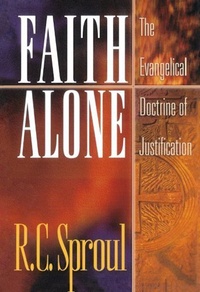
Faith Alone: The Evangelical Doctrine of Justification, by R. C. Sproul. Baker, 1995.
In chapter 7, entitled “Merit and Grace”, R. C. Sproul discusses the issues of merit and grace, Pelagianism, semi-Pelagianism, the Council of Orange in 529 AD and the council of Trent (1545-1463), which seems to affirm semi-Pelagianism.
“Rome has repeatedly been accused of condemning semi-Pelagianism at Orange [in 529 AD] but embracing it anew at Trent. Herman Bavinck held that “although semi-Pelagianism had been condemned by Rome, it reappeared in a ‘roundabout way’”. G. C. Berkouwer observed:Bavinck and Berkouwer are cited by Sproul in Faith Alone, pages 140-141.
“Between Orange and Trent lies a long process of development, namely, scholasticism, with its elaboration of the doctrine of the meritoriousness of good works, and the Roman system of penitence . . . “
The big Problem with the Council of Orange of 529 AD:
Baptismal Regeneration – that baptism in water causes regeneration and gives grace so one may then be able to choose Christ.
This is one of the earliest false emphases and doctrines of the early church. Justin Martyr, who wrote many other good things, writing around 155 AD, seems to be the first to write and teach baptismal regeneration – that water baptism gives grace or causes someone to be born again. This is wrong, and based on a wrong understanding of John 3:5; Acts 2:38; I Peter 3:21, and Titus 3:5; and some other texts. (see the comprehensive exegetical papers on links at the end of this article that deal with all the relevant verses.) Since Jesus rebukes Nicodemus for being the teacher of Israel and not understanding in John 3:10-11, Jesus is pointing to Ezekiel 36:24-27. The water of John 3:5 points to the spiritual internal cleansing from the idolatry in Ezekiel 36:25 – “I will sprinkle clean water on you, and cleanse you from all your idols” . . . how? Ezekiel 14:3, 4, 7 speak of “idols in the heart”. Water cannot cleanse the heart. But the Holy Spirit can. And it is by faith alone that the heart is cleansed. Acts 15:9 “cleansing their hearts by faith”. I Peter 3:21 says that the “baptism that saves” is “not the removal of dirt from the flesh”; that is, is not an outward, physical thing, but an appeal to God for a good conscience” – an internal thing, a crying out and Godly sorrow over sin and a repentance and faith in Christ. Acts 2:38 is using “causal eis” – the Greek preposition eis means here, “because of” or “at” – like in other places. One example of the “causal eis” usage is Luke 11:32 - “they repented at the preaching of Jonah”, meaning, “they repented because of the preaching of Jonah”. (Other places in the NT where the causal eis is used are: Romans 4:20; 11:32; Matthew 3:11; 12:41. See Dana and Mantey, Greek Grammar, pp. 103-104.
24 “I will take you from the nations and gather you from all the countries and bring you into your own land. 25 I will sprinkle clean water on you, and you shall be clean from all your uncleannesses, and from all your idols I will cleanse you. 26And I will give you a new heart, and a new spirit I will put within you. And I will remove the heart of stone from your flesh and give you a heart of flesh. 27 And I will put my Spirit within you, and cause you to walk in my statutes and be careful to obey my rules.” Ezekiel 36:24-27
The Holy Spirit causes us to be born again, not an external rite of baptism in water. (John 7:37-39; John 3:3-8; Acts 10:43-48; I Corinthians 12:13) Baptism in water in the name of the Father, the Son, and the Holy Spirit is an external picture/symbol/testimony of an inward reality of faith and repentance, an appeal to God for a good conscience, and expression of faith and discipleship in following Christ, and a commitment to Christ’s body in a local congregation. (Matthew 28:19; Acts 2:41 – “those who received his word were baptized”)
The Council of Orange in 529 AD
Against Semi-Pelagianism
CANON 13. Concerning the restoration of free will. The freedom of will that was destroyed in the first man can be restored only by the grace of baptism, for what is lost can be returned only by the one who was able to give it. Hence the Truth itself declares: "So if the Son makes you free, you will be free indeed" (John 8:36).
Correction: It, the freedom of the will, can be only restored by the grace of God that He gives in repentance and faith in Christ. Acts 16:14; John 6:44, 65; Romans 6:22; Ezekiel 36:26-27; I Corinthians 12:13 – we are baptized by one Spirit into the body of Christ – water baptism is the outward symbol of the internal repentance and trust in Christ.
The Conclusion of the Council of Orange of 529 AD:
“CONCLUSION. And thus according to the passages of holy scripture quoted above or the interpretations of the ancient Fathers we must, under the blessing of God, preach and believe as follows. The sin of the first man has so impaired and weakened free will that no one thereafter can either love God as he ought or believe in God or do good for God's sake, unless the grace of divine mercy has preceded him. We therefore believe that the glorious faith which was given to Abel the righteous, and Noah, and Abraham, and Isaac, and Jacob, and to all the saints of old, and which the Apostle Paul commends in extolling them (Heb. 11), was not given through natural goodness as it was before to Adam, but was bestowed by the grace of God. And we know and also believe that even after the coming of our Lord this grace is not to be found in the free will of all who desire to be baptized, but is bestowed by the kindness of Christ, as has already been frequently stated and as the Apostle Paul declares, "For it has been granted to you that for the sake of Christ you should not only believe in him but also suffer for his sake" (Phil. 1:29). And again, "He who began a good work in you will bring it to completion at the day of Jesus Christ" (Phil. 1:6). And again, "For by grace you have been saved through faith; and it is not your own doing, it is the gift of God" (Eph. 2:8). And as the Apostle says of himself, "I have obtained mercy to be faithful" (1 Cor. 7:25, cf. 1 Tim. 1:13). He did not say, "because I was faithful," but "to be faithful." And again, "What have you that you did not receive?" (1 Cor. 4:7). And again, "Every good endowment and every perfect gift is from above, coming down from the Father of lights" (Jas. 1:17). And again, "No one can receive anything except what is given him from heaven" (John 3:27). There are innumerable passages of holy scripture which can be quoted to prove the case for grace, but they have been omitted for the sake of brevity, because further examples will not really be of use where few are deemed sufficient.
[The above was very good. Now comes the problem: ]
According to the catholic faith we also believe that after grace has been received through baptism, all baptized persons have the ability and responsibility, if they desire to labor faithfully, to perform with the aid and cooperation of Christ what is of essential importance in regard to the salvation of their soul. . . . “
There is more, see the full text of the Council of Orange here:
Some good articles that show that baptismal regeneration is not good exegesis of the Scriptural texts.
A Brief Rebuttal of Baptismal Regeneration, by James White
Baptismal Regeneration is not part of the gospel: Analysis of the main texts that some groups use to teach baptismal regeneration and a refutation of them all.
On Titus 3:5 Not By Works
http://vintage.aomin.org/NotByWorks.html
Sam Storms on John 3:5 – Part 1
http://www.enjoyinggodministries.com/article/john-35-part-i/
Sam Storms on John 3:5 – Part 2
http://www.enjoyinggodministries.com/article/john-35-part-ii/
Sam Storms on Acts 2:38
http://www.enjoyinggodministries.com/article/acts-238/
Refuting Sacramentalism: Part 1
http://www.enjoyinggodministries.com/article/sacramentalism-part-i/
Refuting Sacramentalism: Part 2
http://www.enjoyinggodministries.com/article/sacramentalism-part-ii/
On Sacraments, Part 1
On Sacraments, Part 2
http://www.enjoyinggodministries.com/article/sacraments-part-ii/
Sunday, October 31, 2010
The Shape of Things to Come
Dr. James White did an interview with Turretinfan that wasn't advertised as an interview with Turretinfan, but rather as a discussion of "Reformation history." That part of the program came later, but it's one of the best Dividing Line programs that I've heard.
Both aspects of this -- Turretin and the Reformation, are well worth the listen:
http://www.aomin.org/podcasts/20101028.mp3
In that program, Dr. White talked about the "tapestry" of all the many things that came together to bring about the Reformation. A couple of days ago, I posted a link about "Reformation Day". Citing Dr. R. Scott Clark from WSCal, "The Reformation doctrines [took shape in Luther's mind] gradually between 1513-21." He outlined some of this "coming together" in that post, and I'm going to start here to outline how Luther's reading of the Scriptures helped him to understand those doctrines.
These were not the only things, of course. There was the historical situation of the papacy, which had in the preceding centuries gone from having claimed global domination, through the Avignon years (when it had moved to France 1305-1378), and then "the Great Schism" (through 1417) when there were two and even three "popes" claiming the papacy and excommunicating each other and their followers. The Council of Constance made the attempt to bring this situation to an end (they deposed three "popes," and "recognized the election of" Martin V, but there were echoes and hiccups, and it wasn't over). They called for "a proper reformation" of the Church [be careful what you ask for!] and they attempted to institute a kind of conciliarism -- that the popes should be subjected to councils.
There was John Wycliffe, "the Morning Star of the Reformation," whose life and writings presented a powerful vision of things to come:
In the intervening years, the rise of humanists including Lorenzo Valla, whose early work in textual criticism discovered that "The Donation of Constantine" was a forgery. In fact, as Diarmaid Maculloch notes:
It is significant that three different scholars working independently -- the future German Cardinal Nicholas of Cusa in 1432-3, the Italian Lorenzo Valla in 1440, and the English bishop Reginald Pecock in 1450 -- all came to the conclusion that the style of this 'Donation of Constantine' was radically wrong for the fourth century.
This was a work believed and cited by medieval scholars such as Thomas Aquinas as a strong evidence in support of papal supremacy, but it was a complete lie. (And those of you who have followed my work know that I believe the early papacy itself was a fraudulent usurpation of power in the church).
Other humanists began to question some of the foundational assumptions of the Medieval church, culminating with Erasmus, who worked to produce the first Greek text of the New Testament in 1516.
The people and events that shaped the Reformation may seem long past, but my hope is to work to bring them back to the front of our minds. For the individuals who lived during this era, these were not mere curiosities; they were in many cases life and death struggles. And of course, I'm only touching the tip of the iceberg.
Both aspects of this -- Turretin and the Reformation, are well worth the listen:
http://www.aomin.org/podcasts/20101028.mp3
In that program, Dr. White talked about the "tapestry" of all the many things that came together to bring about the Reformation. A couple of days ago, I posted a link about "Reformation Day". Citing Dr. R. Scott Clark from WSCal, "The Reformation doctrines [took shape in Luther's mind] gradually between 1513-21." He outlined some of this "coming together" in that post, and I'm going to start here to outline how Luther's reading of the Scriptures helped him to understand those doctrines.
These were not the only things, of course. There was the historical situation of the papacy, which had in the preceding centuries gone from having claimed global domination, through the Avignon years (when it had moved to France 1305-1378), and then "the Great Schism" (through 1417) when there were two and even three "popes" claiming the papacy and excommunicating each other and their followers. The Council of Constance made the attempt to bring this situation to an end (they deposed three "popes," and "recognized the election of" Martin V, but there were echoes and hiccups, and it wasn't over). They called for "a proper reformation" of the Church [be careful what you ask for!] and they attempted to institute a kind of conciliarism -- that the popes should be subjected to councils.
There was John Wycliffe, "the Morning Star of the Reformation," whose life and writings presented a powerful vision of things to come:
Wycliffe’s experience with the corruption of the Catholic Church led him to some of the same moral and doctrinal conclusions Luther would endorse some 130 years later. Indeed, that “John Wycliffe and his followers anticipated many of the key-doctrines of Protestantism has never been in dispute.” Some of these moral and doctrinal conclusions include: a preference for the authority of Scripture over and against papal primacy, a move toward Sola Fide, a rejection of transubstantiation, and a concern for a vernacular translation of Scripture.At the behest of that same council [Rome pride's itself on the fact that it doesn't execute, it merely passes the sentence] John Huss (or Jan Hus) was burned at the stake, despite the fact that he had been assured of safe conduct by the emperor.
In the intervening years, the rise of humanists including Lorenzo Valla, whose early work in textual criticism discovered that "The Donation of Constantine" was a forgery. In fact, as Diarmaid Maculloch notes:
It is significant that three different scholars working independently -- the future German Cardinal Nicholas of Cusa in 1432-3, the Italian Lorenzo Valla in 1440, and the English bishop Reginald Pecock in 1450 -- all came to the conclusion that the style of this 'Donation of Constantine' was radically wrong for the fourth century.
This was a work believed and cited by medieval scholars such as Thomas Aquinas as a strong evidence in support of papal supremacy, but it was a complete lie. (And those of you who have followed my work know that I believe the early papacy itself was a fraudulent usurpation of power in the church).
Other humanists began to question some of the foundational assumptions of the Medieval church, culminating with Erasmus, who worked to produce the first Greek text of the New Testament in 1516.
The people and events that shaped the Reformation may seem long past, but my hope is to work to bring them back to the front of our minds. For the individuals who lived during this era, these were not mere curiosities; they were in many cases life and death struggles. And of course, I'm only touching the tip of the iceberg.
Monday, October 25, 2010
The Reformation was not a "day", but an increase in understanding, caused by the opening of the Scriptures.
"Reformation Day" is traditionally known as October 31, 1517. It's regarded as the day that Luther posted his 95 Theses on Indulgences.
That may or may not have been a historical reality. But the historical reality of the Reformation is that it was a theological event. True, there were moral consequences, but the Reformation wasn’t first of all about moral self-improvement and tidying the ecclesiastical house. It was about aligning the church's doctrines with Biblical teaching.
It was this that prompted Martin Luther later to comment:
That may or may not have been a historical reality. But the historical reality of the Reformation is that it was a theological event. True, there were moral consequences, but the Reformation wasn’t first of all about moral self-improvement and tidying the ecclesiastical house. It was about aligning the church's doctrines with Biblical teaching.
It was this that prompted Martin Luther later to comment:
Life is bad among us as among the papists. Hence, we do not fight and damn them because of their bad lives …. I do not consider myself to be pious. But when it comes to whether one teaches correctly about the word of God, there I take my stand and fight. That is my calling. To contest doctrine has never happened until now. Others have fought over life; but to take on doctrine—that is to grab the goose by the neck! … When the word of God remains pure, even if the quality of life fails us, life is placed in a position to become what it ought. That is why everything hinges on the purity of the Word. I have succeeded only if I have taught correctly. (Cited by Steven Ozment, "The Age of Reform, 1250–1550: An Intellectual and Religious History of Late Medieval and Reformation Europe" (New Haven, Connecticut: Yale University Press, 1980), pgs 315-316 (emphasis added).Several years ago, Scott Clark provided a little bit of history about how Luther came to realize this.
The Reformation doctrines [took shape in Luther's mind] gradually between 1513-21. In succession, and with fits and starts, Luther gradually realized the great Reformation solas. There are some Reformation solas with which we’re not all familiar. Luther’s first breakthrough happened during his lectures on the Psalms when he realized that Scripture teaches that we’re not just a little sinful but that we’re completely sinful, i.e., that the effects of sin are radical and affect every faculty. We’re not able to “do our part” or to “do what lies within us” toward justification because, as a consequence of the fall, all that lies “within us” is sin and death. Therefore the first Reformation sola was “solely unable.”This is really what Matthew Schultz is trying to say in his conversation with "Lyin' Bryan Cross".
This is the essential assumption behind sola gratia, the claim that justification is by grace alone. Grace, is no longer to be reckoned a sort of medicinal stuff with which we are injected, with which we cooperate toward eventual justification. Luther came to understand that grace is God’s attitude of favor toward sinners. Grace isn’t something with which we are infused. Rather, God is gracious toward us. He shows us favor. He gives to us what we do not deserve: righteousness and life.
Only then did Luther realize, as he next lectured through Romans that it was only by the imputation of the righteousness of Christ that we are justified. The entire medieval system was about interior moral renewal. The Reformation is that the gospel is outside of us. The Gospel is that Christ has done it all for us. Justification is solely on the ground of imputed righteousness.
During his next two sets of lectures in Galatians and Hebrews Luther gradually realized that the medieval definition of faith as “formed by love” (fides formata caritate) is false and a misreading of Gal 5. Faith doesn’t justify because it produces sanctity (holiness) in internal moral renewal. Faith justifies because it apprehends Christ and his obedience and death for us (pro nobis). This is solus Christus. Faith is an open, empty hand. Faith is a beggar. Faith looks outside of itself and one’s self to Christ. Faith has no power except Christ its object. Faith is receiving and resting on Christ and his finished work for sinners. Faith is a certain knowledge and a hearty trust in Christ and his gospel. That’s sola fide.
With these breakthrough conclusions came others. During this period Luther came to a new hermeneutic. Where much of the patristic and all of the medieval church had read the Bible to contain two kinds of law, old and new, Luther came to see that the Bible had throughout two kinds of words: law (do) and gospel (done [on our behalf]).
The gospel is not: here is more grace so you can keep the law. The gospel is not: Christ will approve of you if you do your part. The gospel is: Christ has done it. This turn to the law/gospel hermeneutic was a foundation stone of the entire Reformation and it was adopted by all the Protestant churches and confessions Reformed and Lutheran. One of the great tragedies is that today there are congregations that will celebrate Reformation Day or who celebrate a nearby Reformation Sunday who will look you straight in the eye and tell you that the Reformed don’t use a law/gospel hermeneutic.
Another global change that occurred at the same time is the turn to Scripture as the magisterial and unique authority for faith and life: sola scriptura. There’s no one point at which this view developed, but it’s certainly symbolized by Luther’s stand for the sole and unique magisterial authority of Scripture at the Diet of Worms in 1521. Again, the tragedy of this day is that there are Reformed folk who sincerely believe that an Anabaptist hermeneutic or corruption of sola scriptura (biblicism) is the “Reformed” hermeneutic. They believe sincerely and wrongly that it means I and my Bible deciding what is and isn’t true.
Friday, October 22, 2010
Remembering the beginning event of the Reformation

A good reminder to us all, as we celebrate the Reformation (October 31, 1517):
Here is an excellent article by Dan Phillips on Repentance and mortifying sin, and an excellent discussion in the comment boxes, especially comments by Terry Rayburn (though I cannot tell completely where he is coming from), Dan Phillips, and Mary Elizabeth Tyler (the truth is somewhere in the middle of all that discussion; both sides make some excellent points) :
As John Owen wrote years ago:
Do you mortify;
do you make it your daily work;
be always at it while you live;
cease not a day from this work;
be killing sin or it will be killing you (p. 47, Overcoming Sin and Temptation; Crossway Books: 2006, John Owen, edited by Kelly M. Kapic and Justin Taylor [emphases added]) (Cited and emphasized by Dan Phillips at his article at Pyromaniacs.)

In his article, Dan links to Luther’s 95 Theses, especially the first one.
The first 3 points that Luther makes are especially good. Also, important was no. 6, 8, 27, 32, 81-82, as James Swan reminded us all earlier of the historical context and meaning of the 95 theses and that Luther was still in process at the time of posting them; but that “they got the ball rolling” toward justification by faith alone and the whole Reformation of the church.
Disputation on the Power and Efficacy of Indulgences Commonly Known as The 95 Theses
by Dr. Martin Luther
1. When our Lord and Master, Jesus Christ, said "Repent", He called for the entire life of believers to be one of repentance.
2. The word cannot be properly understood as referring to the sacrament of penance, i.e. confession and satisfaction, as administered by the clergy.
3. Yet its meaning is not restricted to repentance in one's heart; for such repentance is null unless it produces outward signs in various mortifications of the flesh.
We cry out to God, as Augustine said in his Confessions several times, which is what made Pelagius angry:
“O God! “Give me the grace to obey Your commands, and command me to do what You will.!” Confessions, Book 10:29 (twice); 10:31; 10:37
Calvin and others would come a little later and write: "We are justified by faith alone, but that faith does not remain alone." (John Calvin, The Acts of the Council of Trent, 3:152, cited in R. C. Sproul, Faith Alone, Baker Books, 1995, page 128.) See also, The Westminster Confession of Faith, On Justification, chapter 11, verse 2.
True faith in Christ alone does not stay alone, it results in change, fruit, hatred of sin, deeper levels of repentance, good works, zeal for evangelism and missions, deeper love for God and His word; constant growing and moving and active service, humility, putting to death the deeds of the flesh.
Tuesday, September 28, 2010
Doctrinal causes of the Reformation
In the past, I've cited Paul Johnson to the effect that 1/3 to 1/2 of all priests had concubines and illegitimate children, a system which perpetuated itself (Paul Johnson, "History of Christianity"). As bad as that was, it wasn't the cause for the Reformation.
Heiko Oberman, "Harvest of Medieval Theology," noted that
Oberman continued to discuss "the extent to which hierarchy, Pope, bishops, priests, and monks are understood to have exchanged poverty for greed." (324) But even on top of all of these evils, it wasn't the worst thing, and it wasn't the cause for the Reformation.
All of these characterized the state of the church at the time of the Reformation. And we all need to be reminded of such things -- the evils present within the Western church, the church at Rome, at the time of the Reformation.
But there was a greater evil than all of these, and it was the doctrinal mess that was passed off as "the one true faith."
Of course, at the doctrinal heart of the Reformation was the doctrine of justification, how exactly God saved men.
In his Iustitia Dei, "A History of the Christian Doctrine of Justification" (Third Edition, Cambridge: Cambridge University Press, 2005) Alister McGrath noted that "the medieval period saw the the justification of the sinner firmly linked to the sacramental life of the church" (126), notably, the sacraments of baptism as an entree and confession as a "second plank" (initially a one-time saving plank after a "shipwreck," but by this time available over and over again)."
It was this that prompted Martin Luther to comment:
That's why I want to take a little bit of time to discuss the "doctrinal system" that was in place at the time of the Reformation, and how truly far it had moved from its supposedly Biblical moorings.
Heiko Oberman, "Harvest of Medieval Theology," noted that
there is much to warrant the thesis that the later Middle Ages were born in Avignon and were shaped by the uncertainty and hierarchical confusion due to the Babylonian Captivity of the papacy (1309-1377) and the succeeding period of the Schism (1378-1415). The impact of this event can scarcely be overestimated, so much that we are inclined to advocate the terms "preschismatic" and "schismatic" Middle Ages to replace the traditional terms "early" and "later" Middle Ages. (323)Avignon was the era when the papacy moved to southern France; the "Schism" was a time when there were two and even three popes excommunicating each other and their followers. But as bad and as fundamental as that was, it wasn't the cause of the Reformation.
Oberman continued to discuss "the extent to which hierarchy, Pope, bishops, priests, and monks are understood to have exchanged poverty for greed." (324) But even on top of all of these evils, it wasn't the worst thing, and it wasn't the cause for the Reformation.
All of these characterized the state of the church at the time of the Reformation. And we all need to be reminded of such things -- the evils present within the Western church, the church at Rome, at the time of the Reformation.
But there was a greater evil than all of these, and it was the doctrinal mess that was passed off as "the one true faith."
Of course, at the doctrinal heart of the Reformation was the doctrine of justification, how exactly God saved men.
In his Iustitia Dei, "A History of the Christian Doctrine of Justification" (Third Edition, Cambridge: Cambridge University Press, 2005) Alister McGrath noted that "the medieval period saw the the justification of the sinner firmly linked to the sacramental life of the church" (126), notably, the sacraments of baptism as an entree and confession as a "second plank" (initially a one-time saving plank after a "shipwreck," but by this time available over and over again)."
It was this that prompted Martin Luther to comment:
Life is bad among us as among the papists. Hence, we do not fight and damn them because of their bad lives …. I do not consider myself to be pious. But when it comes to whether one teaches correctly about the word of God, there I take my stand and fight. That is my calling. To contest doctrine has never happened until now. Others have fought over life; but to take on doctrine—that is to grab the goose by the neck! … When the word of God remains pure, even if the quality of life fails us, life is placed in a position to become what it ought. That is why everything hinges on the purity of the Word. I have succeeded only if I have taught correctly. (Cited by Steven Ozment, "The Age of Reform, 1250–1550: An Intellectual and Religious History of Late Medieval and Reformation Europe" (New Haven, Connecticut: Yale University Press, 1980), pgs 315-316 (emphasis added).It may have seemed a bit out of place to be talking about the earliest church at Rome on a site that's devoted to the Reformation. But the Reformation was, among other things, a discussion about authority as well as a discussion about doctrine. Rome claimed its own authority as the reason why it was able to stress doctrines (such as the sacramental system alluded to above).
That's why I want to take a little bit of time to discuss the "doctrinal system" that was in place at the time of the Reformation, and how truly far it had moved from its supposedly Biblical moorings.
Subscribe to:
Posts (Atom)

 Posts
Posts


