Friday, March 03, 2023

The Real Reason Why Martin Luther Rejected the Book of James?

Here's a statement evaluating Martin Luther's opinion of the Epistle of James.

Luther strongly repudiated the Epistle as "a letter of straw", and "unworthy of the apostolic Spirit", and this solely for dogmatic reasons, and owing to his preconceived notions, for the epistle refutes his heretical doctrine that Faith alone is necessary for salvation.

 Soley for dogmatic reasons? As I've looked at this over the years, it's more complicated than that. There's actually contradicting evidence on Luther's opinion of the Epistle of James and exactly what his rejection entirely entails. Let's take a look at these charges and see if the real reason (or reasons) Luther rejected James can be determined. 

Documentation
I came by the statement above on a website dedicated to early Christian writings. Searching for the author, the webpage cited: "Camerlynck, A. "Epistle of James." Early Christian Writings. 2023. 22 Jan. 2023."  Doing a search for "Camerlynck, A," I discovered this webpage was a complete cut-and paste from the old Catholic EncyclopediaAchilles Camerlynck was a well-educated Roman Catholic scholar from long ago. The old Catholic Encyclopedia is generally not favorable to Luther, so it makes sense that multiple shots are taken at Luther by Camerlynck 

The early Christian Writings website appears to be selling CD-ROM's (remember those?) of the entire content of the website (I'm not sure what the legality of that is... selling someone else's work?). Back in 2015, the owner of the site gave a brief overview of who he was: a young man with Roman Catholic roots that's become some sort of agnostic (as of 2015). Where he is now on his spiritual journey, I didn't spend time to discover. His blog entries stop December 2015. From a cursory search, he appears to have fallen off the cyber-radar in 2015. 

Letter of Straw? Epistle of Straw?
Luther's famous statement is "Saint James’ epistle is really an epistle of straw" compared to John's gospel and epistles, Paul's epistles, and 1 Peter, and, further, that James "has nothing of the nature of the gospel about it" (LW 35:362). The  "epistle of straw" line comes from Luther's Preface to the New Testament, originally penned in 1522.  These are negative comments. 

Back in 2004, I addressed the "epistle of straw" comment in Luther's View of the Canon of Scripture (on the now defunct NTRmin.org website). In 2007, I put up a short article on aomin.org: Six Points On Luther's Epistle of Straw. Now years later, there's nothing significant to add beyond repeating this pertinent fact:  The "epistle of straw" comment was deleted by Luther himself. He eventually dropped this comment along with the entire paragraph that placed value judgments on particular biblical books (see LW 35:361-362, particularly the footnotes, and also fn. 5 on p. 358).  The editors of Luther's Works include all the deleted text, using brackets [ ] to delineate what was dropped from the final text. The older Philadelphia edition does the same thing. I suspect they simply intended to be transparent and scholarly (presenting a type of critical text). What the final product though practically does is insert back into the text what Luther wanted edited out!  

Why did Luther delete his text? The editors of LW offer this reason: they suggest Luther's early biblical prefaces had a polemic bent directed toward his opponents: 
Divergences from the original 1522 text were due primarily to Luther’s desire to accommodate the text of the New Testament prefaces to that of the Old Testament prefaces with which they were—in the 1534 complete Bible—to appear for the first time, rather than to criticism on the part of Emser or other opponents (LW 35:357, fn 5).
It would be interesting to see which of Luther's contemporary opponents criticized Luther's view of James, especially those early on in the 1520's. In 1530, the Roman Catholic respected theologian Johann Eck included it against Luther:
106 Many, with much probability, have asserted that this epistle was not written by the apostle James, and that it is not worthy of an apostolic spirit (Luther).
 After Luther's death, his archrival Cochlaeus wrote,
For Luther seemed to the best people to have proceeded too maliciously against the Sacred Scripture of the New Testament; since he had, with an audacious censorship, rejected the Letter to the Hebrews, the Letter of James, the Letter of Jude, and the Apocalypse of John from the canon of the New Testament. He defamed these books openly, with savage falsehoods, in his prefaces.
Luther saw fit to delete the comment. Subsequent citations of this quote should at least mention his deletion. The "epistle of straw" comment is cited by those favorable and unfavorable to Luther. I suspect many of those not hostile to him citing it often don't know about the deletion and that Luther did not intend the statement to be part of his enduring legacy. For those who cite it against him, the deletion probably doesn't matter anyway. They will find a way to spin the comment to use against him. 

Unworthy of the Apostolic Spirit?
The basic thrust of "unworthy of the apostolic spirit" is that Luther did not believe the Epistle of James was written by an apostle or eyewitness of the life and ministry of Jesus Christ. He argued at times that James was a second-generation Christian. Camerlynck probably took the phrase he used from Luther's 1520 treatise, The Babylonian Captivity of the Church. In commenting on the Roman Catholic sacrament of extreme unction, Luther writes: 
But I say: If ever folly has been uttered, it has been uttered especially on this subject: I will say nothing of the fact that many assert with much probability that this epistle is not by James the apostle, and that it is not worthy of an apostolic spirit; although, whoever was its author, it has come to be regarded as authoritative. But even if the apostle James did write it, I still would say, that no apostle has the right on his own authority to institute a sacrament, that is, to give a divine promise with a sign attached. For this belongs to Christ alone (LW 36:118).

Original text: Ego autem dico: si uspiam delyratum est, hoc loco praecipue delyratum est. Omitto enim, quod hanc Epistolam non esse Apostoli Iacobi nec apostolico spiritu dignam multi valde probabiliter asserant, licet consuetudine autoritatem, cuiuscunque sit, obtinuerit. Tamen si etiam esset Apostoli Iacobi, dicerem, non licere Apostolum sua autoritate sacramentum instituere, id est, divinam promissionem cum adiuncto signo dare. Hoc enim ad Christum solum pertinebat (WA 6:568). 

A blatant thing to note here is that there's nothing in the context about faith alone. Luther is expressing doubts about the authorship of James in regard to extreme unction.  Here Luther presents two options but appears to favor the Epistle of James as not apostolic... though grants the possibility of it being apostolic. For Luther, the epistle of James may have been written by a later Christian, therefore not an apostle or eyewitness of the risen Christ, therefore not canonical. 

Just a year earlier (1519), Luther wrote the following, (and this may be his earliest criticism of James):

For although it is argued from the epistle of the Apostle James that ‘faith without works is dead,’ the style of that epistle is far inferior to the Apostolic majesty of St. Paul, and should in no way be compared with him. Paul speaks of living faith, for a faith that is dead is not faith but opinion. Yet you see theologians who hold on to this one authority and care nothing at all that the rest of Scripture teaches faith without works. That’s how these fellows do it. They rip out one little phrase from a text and set it up against all of Scripture (Resolutiones Lutherianae super propositionibus suis Lipsiae disputatis, English translation by Jason D. Lane).
Original text: Quod autem Iacobi Apostoli epistola inducitur ‘Fides sine operibus mortua est’, primum stilus epistolae illius longe est infra Apostolicam maiestatem nec cum Paulino ullo modo comparandus, deinde de fide viva loquitur Paulus. Nam fides mortua non est fides, sed opinio. At vide theologos, hanc unam autoritatem mordicus tenent, nihil prorsus curantes, quod tota alia scriptura fidem sine operibus commendet: hic enim mos eorum est, una abrepta oratiuncula textus contra totam scripturam cornua erigere] (WA 2:425).
Here, faith alone is in view. Luther appears to accept James as an authority, but of lesser authority than Paul. Luther says James lacks "Apostolic majesty," which echos "apostolic spirit," therefore questioning apostolic pedigree (and therefore, canonicity). Luther's emphasis is on those who use James as a prooftext to refute "the rest of scripture." Luther accuses his detractors of misusing James: "They rip out one little phrase from a text and set it up against all of Scripture." Luther explains what Paul means but does not overtly explain what James meant.
    
Then in his 1522 Preface to James, Luther reiterates that James was written by a second-generation Christian, 
...[H]e throws things together so chaotically that it seems to me he must have been some good, pious man, who took a few sayings from the disciples of the apostles and thus tossed them off on paper. Or it may perhaps have been written by someone on the basis of his preaching [LW 35: 396-397].

Original text: Aber diser Jacobus thutt nicht mehr, denn treybt zu dem gesetz vnd seynen wercken, vnd wirfft so unordig eyns vns ander, das mich dunckt, es sey irgent eyn gut frum man gewesen, der ettlich spruch von der Aposteln Jungern gefasset, vund also auffs papyr geworffen hat, oder ist villeicht aus seyner predigt von eynem andern beschriebon (WA Db 7:386). 

Moreover he cites the sayings of St. Peter [in 5:20]: “Love covers a multitude of sins” [1 Pet. 4:8], and again [in 4:10], “Humble yourselves under the hand of God” [1 Pet. 5:6]; also the saying of St. Paul in Galatians 5[:17], “The Spirit lusteth against envy.” And yet, in point of time, St. James was put to death by Herod [Acts 12:2] in Jerusalem, before St. Peter. So it seems that [this author] came long after St. Peter and St. Paul (LW 35:397).

Original text: Uber das, furet er die spruch Sanct Petri. Die liebe bedeckt der sund menge, Jtem demutiget euch vnter die hand Gottis, Jtem Sanct Paulus spruch Gal. 5. den Geyst gelust wider den hass. So doch Sanct Jacobus zeytlich von Herodes zu Jerusalem, fur S. Peter todtet war, das woll scheynet, wie er lengst noch S. Peter vnd Paul gewesen sey (WA Db 7:386). 

When challenged that the Epistle of James stood against justification by faith alone, in 1543 Luther stated:

The authority of this [James] is not so great that (it detracts from the divine promise [or that] on its account one should abandon the doctrine of faith and depart from the authority of the rest of the apostles and all of Scripture (LW 73:349-350). 

Original text: Non est tanta eius autoritas, ut propterea doctrina fidei relinquatur et discedatur ab autoritate reliquorum apostolorum et totius scripturae (WA 39.2: 219).

Luther is recorded in a 1542 Table Talk utterance saying,

We should throw the Epistle of James out of this school, for it doesn’t amount to much. It contains not a syllable about Christ. Not once does it mention Christ, except at the beginning [Jas. 1:1; 2:1]. I maintain that some Jew wrote it who probably heard about Christian people but never encountered any. Since he heard that Christians place great weight on faith in Christ, he thought, ‘Wait a moment! I’ll oppose them and urge works alone.' This he did. He wrote not a word about the suffering and resurrection of Christ, although this is what all the apostles preached about. Besides, there’s no order or method in the epistle. Now he discusses clothing and then he writes about wrath and is constantly shifting from one to the other. He presents a comparison: ‘As the body apart from the spirit is dead, so faith apart from works is dead’ [Jas. 2:26]. O Mary, mother of God! What a terrible comparison that is! James compares faith with the body when he should rather have compared faith with the soul! The ancients recognized this, too, and therefore they didn’t acknowledge this letter as one of the catholic epistles.” (LW 54:424).

Original text:  Epistolam Iacobi eiciemus ex hac schola, denn sie soll nichts. Nullam syllabam habet de Christo. Er nennet auch Christum nicht eins nisi in principio. Ich halt, das sie irgents ein Jude gemacht hatt, welcher wol hat horen von den christen leuten, abr nit gar zusam schlagen; vnd dieweil er hat gehört, das die christen also sehr auff den glauben in Christum dringen, hat er gedacht: Halt, du wilt in begegnen vnd schlecht die opera treiben! Wie er den thut. De passione et resurrectione Christi sagt er nicht ein wort, das doch allr apostell predigt ist gewest. Dazu ist da kein ordo noch methodus. Jzt sagt er von kleidern, bald von zorn, fellet imer von einem auff das ander. Er gibet ein gleichnus: Sicut corpus non vivit sine anima, ita fides nihil est sine operibus. Ei Marge, Gotts mutter! Wie ein arme similitudo ist das! Confert fidem corpori, cum potius fides animae fuisset comparanda! Das haben auch die alten gesehen¹⁴, darumb haben sie die epistolam nicht pro catholica epistola gehalten (WA Tr 5:157). 

I say "recorded in the Table Talk" because Luther didn't write these words, someone else transcribed them, context unknown. The comments though match up to the sentiment found in Luther's earlier statements.
  
Did Luther simply arrive at this authorship conclusion without precedent? No. He maintained a position that echoed other voices from church history. Eusebius and Jerome both recorded doubts to the apostolicity and canonicity of James. The great Roman Catholic humanist Scholar Erasmus likewise questioned the authenticity of James, as did Cardinal Cajetan, one of the leading 16th Century Roman Catholic scholars. Some think the early influence of Erasmus impacted Luther view. consider the speculation from Lutheran scholar J.M Reu:
It is possible that the position of Erasmus had influenced Luther in some particulars. Luther had first expressed his critical attitude towards the Epistle of St. James in his Resolutiones of 1519; afterwards more energetically in De Captivitate Babylonica. Under such conditions we have no reason to be surprised that Luther entered into the question in his New Testament of 1522, especially as the fundamental understanding of Scripture that had come to him compelled him to take a stand, at least concerning James, and furthermore, he did not think that these matters were to be kept hidden from the congregations but even discussed them in his sermons [M. Reu, Luther’s German Bible: An Historical Presentation Together with a collection of Sources (Ohio: The Lutheran Book Concern, 1934), 176].
Reu points out that Erasmus "had assumed a critical attitude towards [James, Jude, Hebrews, Revelation] in the Annotationes of 1516" (Reu, 175). Reu then later speculates, that Luther publicly altered his criticisms of James "to keep his personal opinions in the background, especially as the German Bible was intended for the whole congregation" [Reu, 226]. Reu documents the changes from Luther's September-Testament to the softening revision in the 1530's (p.226-227):
In fine, he wanted to guard against those who tried to rely on faith without works but he was too weak in spirit, understanding and words, and so he rends Scripture and opposes Paul and all Scripture, trying to accomplish by the occasion of the Law what the other apostles effect by incentives to love. Therefore I will not have him reckoned in my Bible in the number of the real chief books, but will not prevent anyone from esteeming him as he pleases, for otherwise it contains many good sayings. One man is reckoned, as no man in worldly affairs. How then should this one alone count against Paul and all the rest of Scripture ?
Then, this statement was modified in the 1530's:
In fine, he wanted to guard against those who tried to rely on faith without works but was too weak for the undertaking, trying to accomplish by the coercion of the Law what the other apostles effect by incentives to love. Therefore I will not have him reckoned in my Bible in the number of the real chief books, but will not prevent anyone from esteeming him as he pleases. For it contains many good sayings.
Did Luther Want to Throw the Epistle of James in the Stove?
Was Luther’s hatred for the Epistle of James was so severe, he wanted to burn the book in a stove? Most often, this charge comes from a comment found in The Licentiate Examination Of Heinrich Schmedenstede, July 7 1542. At one point, James chapter 2 is raised as a potential counter argument against justification by faith alone: “James says that Abraham was justified by works. Therefore, justification is not by faith.” Protestant Heinrich Schmedenstede countered this by saying, “James is speaking of works as the effect of justification, not as the cause.” Luther then gave his opinion:
That epistle of James gives us much trouble, for the papists embrace it alone and leave out all the rest. Up to this point I have been accustomed just to deal with and interpret it according to the sense of the rest of Scriptures. For you will judge that none of it must be set forth contrary to manifest Holy Scripture. Accordingly, if they will not admit my interpretations, then I shall make rubble also of it. I almost feel like throwing Jimmy into the stove, as the priest in Kalenberg did (LW 34:318).

Original text:  Illa epistola Iacobi nobis multum facesseit negotii. Eam enim solam amplectuntur reliquis omnibus omissis papistae. Ego hactenus solitus sum iam operare et interpretari secundum sententiam reliquae scripturae. Nam nihil ex ea contra manifestam scripturam sanctam statuendum esse iudicabitis. Si igitur non admittent meas interpretationes, tum faciam quoque ex ea vastationem. Ich wil schier den Zedel in den offen werffen wie der pfaff vom Kalenberg (WA 39.2:199).

Luther does not deny the answer put forth by Schmedenstede. What Luther does point out is heavy Roman Catholic reliance on James 2. It troubled him that this passage weighed so strongly in Roman Catholic arguments against justification by faith alone. Interestingly, he also says that he has previously interpreted it “according to the sense of the rest of Scriptures” (which will be shown below) But what of the comment “I feel like throwing Jimmy in the stove”? What is not explicit in the context above is the historical background of Luther’s comment. The editors of Luther’s Works explain,
The preacher of Kalenberg, when visited by the duchess, heated the room with the wooden statues of the apostles. The statue of James was the last and as the preacher shoved it into the stove he exclaimed, “Now bend over, Jimmy, you must go into the stove; no matter if you were the pope or all the bishops, the room must become warm" (LW 34:318, cf. WA 39.2:199, n.2).

 Even though Luther isn't saying to throw the actual Epistle of James into the stove, it's obvious there's a sarcastic intent to his comment and frustration being expressed. For a full treatment of this quote, see this entry.   

Luther Did Not Reject James Because of "Faith Alone"?
There is also evidence from Luther that complicates the information above. For instance, even while criticizing James, he positively quoted it throughout his career. He also occasionally preached from the book: in 1536 Luther preached on James 1:16-21, Sermon for the Fourth Sunday after Easter, "Two things there are which part men from the Gospel: one is angry impatience, and the other evil lust. Of these James speaks in this epistle." But more surprisingly, there are also statements in which Luther harmonized James and Paul on the relationship of faith and works!

In his early lectures on Romans, Luther provides a harmonious explanation of James on faith and works (LW 25:234-235), "Therefore justification does not demand the works of the Law but a living faith which produces its own works" [LW 25:235]:
Therefore, when St. James and the apostle say that a man is justified by works, they are contending against the erroneous notion of those who thought that faith suffices without works, although the apostle does not say that faith justifies without its own works (because then there would be no faith, since, according to the philosophers, “action is the evidence that form exists”), but that it justifies without the works of the Law. Therefore justification does not demand the works of the Law but a living faith which produces its own works (LW 25:235).

Original text: Igitur quando b. Iacobus et Apostolus dicunt ex operibus hominem Iustificari, contra falsam intelligentiam disputant eorum, qui fidem sine operibus suis sufficere putabant, Cum Apostolus Non dicat, quod fides sine suis propriis operibus (quia tunc nec fides esset, cum 'operatio arguat formam adesse' secundum philosophos), Sed sine operibus legis Iustificat. Igitur Iustificatio requirit non opera legis, Sed viuam fidem, quę sua operetur opera. (WA 56:249). 

In 1530, Luther answered the question, "Why does James [2:26] say, 'Faith apart from works is dead'?" Luther answered:
James is dealing with a moral point, not theological, just as he is almost entirely about morality. Morally speaking, it is true that faith without works is dead- that is, if faith does not do works or if outward works do not follow faith. In this way then, faith cannot exist apart from works; that is, it cannot fail to do works, else there is no faith alone.

We, however, are dealing with a theological point here since we are discussing justification before God. Here we assert that faith alone is counted as righteousness before God, apart from works and merits." (LW 61:183-184).

Original text:  Iacobus versatur in loco Morali, non in Theologico, sicut fere totus est moralis. Moraliter loquendo verum est fidem sine operibus esse mortuam i. e. si non operetur fides, aut si fidem non sequantur opera foris. Hoc enim modo fides non potest esse sine operibus, i. e. non potest non operari, aut nulla est fides ibi.

Sed nos hic in loco Theologico sumus, ubi de iustificatione coram Deo loquimur. Hic dicimus fidem solam pro iusticia reputari coram Deo, sine operibus et meritis, Quia Deus merita nostra non curat, sed fidei donat per promissiones suas (WA 30.2:664).

In The Disputation Concerning Justification, Luther answered this spurious proposition: Faith without works justifies, Faith without works is dead (Jas. 2:17, 26). Therefore, dead faith justifies. Luther responded:
The argument is sophistical and the refutation is resolved grammatically. In the major premise, ‘faith’ ought to be placed with the word ‘justifies’ and the portion of the sentence ‘without works justifies’ is placed in a predicate periphrase and must refer to the word ‘justifies,’ not to ‘faith.’ In the minor premise, ‘without works’ is truly in the subject periphrase and refers to faith. We say that justification is effective without works, not that faith is without works. For that faith which lacks fruit is not an efficacious but a feigned faith. ‘Without works’ is ambiguous, then. For that reason this argument settles nothing. It is one thing that faith justifies without works; it is another thing that faith exists without works. [LW 34: 175-176].

Original text: Argumentum est sophisticum et ἔλεγχος per grammaticam solvitur. In maiore fides debet constitui cum verbo iustificat, et particula sine operibus iustificat ponitur in periphrasi praedicati et est referenda ad verbum iustificat, non ad fidem. In minore vero sine operibus est in periphrasi subiecti, et ad fidem refertur. Nos loquimur, quod iustificatio fiat sine operibus, non quod fides sit sine operibus. Nam illa, quae caret fructu, non est efficax, sed ficta fides. Est igitur aequivocatio: sine operibus. Ideoque nihil concludit hoc argumentum. Aliud est fidem iustificare sine operibus, aliud est esse fidem sine operibus (WA 39.1:106).

In a 1521 sermon Luther is recorded as saying,
This is what James means when he says: 2, 26: “Faith which does not work is dead. Just as the body without the soul is dead, so faith without works is also dead” (James 2[:17,26]).  This does not mean that faith is in a person and does not work, which is impossible, for faith is a living, restless thing. Rather, this means that people should not deceive themselves and think they have faith when they have none of it; rather, they should look at their works, that is, whether they also love their neighbors and do good to them. If they do this, it is a sign they have true faith. However, if they do not do this, then they only have the sound of faith. What happens to them is like the person who examines himself in the mirror. When he goes away, he no longer sees himself. Through looking at other things, he forgets the face he saw in the mirror, as also St. James says (James 1 [:23-24] (LW 79:75-76). 
Original text: Sihe, das meynet S. Jacob. Jaco. ij. "Der glawbe, so er nit wirckt, ist er todt. Und wie der leyb on seel todt ist, so ist auch der glaub on werck todt". Nit das der glaube ym menschen sey und nit wircke, wilchs nitt muglich ist, denn der glawb ist ein lebendig unrugig ding, sondern das sich die menschen nitt selb betriegen und meynen, sie haben den glawbenn, so sie doch nichts davon haben, sondern sollen ansehen yhr werck, ob sie auch yhrn nehisten lieben und yhm woll thun. Thun sie das, so ists ein zeychen, das sie dissen rechten glauben haben. Thun sie aber nit, so haben sie nur das gehore vom glawben. Und geschicht yhn, wie dem, der sich ym spiegel besihet: wenn er davon geht, szo sihet er sich nymmer, und durch ansehen anderer ding vorgisset er des spiegels gesicht, alsz auch Jaco. i. geschrieben stet (WA 8:361-362).

The deceivers and blind masters have stretched this passage of James so far that they have destroyed faith and set up only works, as if righteousness and salvation consist not of faith but of works. To this great darkness they have added an even greater darkness and have taught only good works which are of no benefit to your neighbor, such as fasting; saying many prayers; observing festival days; not eating meat, butter, eggs, and milk; building churches, cloisters, chapels, and altars; instituting Masses, vigils, hours; wearing gray, white, or black clothes; becoming clergy; and innumerable similar things from which no one has any benefit or enjoyment, and all of which God condemns, and justly. St. James, however, says this intentionally, since a Christian life is nothing except faith and love. Love means nothing else than doing good and being useful to all people, enemies and friends. Where faith is correct, it certainly loves and acts toward others in love, just as Christ has acted in his faith. Thus each one should be on his guard so that he does not have a dream and fiction in his heart instead of faith, and thus deceive himself. He can recognize this in nothing better than in works of love. Christ Himself gives the sign of this when He says, ‘By this everyone can know that you are My disciples, if you love one another’ (John 13:35). Therefore, St. James means to say, ‘Be on your guard, lest your life not serve others, you live for yourself, and you take no interest in your neighbor, for then your faith is certainly nothing, since it does not do what Christ has done for it.’ Yes, he does not believe that Christ has done good for him; otherwise he would not omit also doing good for his neighbor (LW 79:76).

Original text: Dissen spruch Jacobi haben die vorkurer und blinden meyster szo weyt gezogen, bysz das sie den glawben vortilget unnd nur die werck auff gericht haben, alsz stehe die gerechtickeyt und selickeyt nit ym glawben, szondern yn den wercken. Zu der grossen finsternisz haben sie darnach noch eyn gröszere thunn unnd nur die gutte werck geleret, die dem nehisten feyn nütz sind, alsz fasten, viel gepet sprechen, feyren, nit fleysch, putter, eyer, milch essen, kirchen, kloster, capeln, altar bawen, mesz, vigilien, horas stifften, graw, weisz, schwartz kleider tragen, geistlich werden, und der unzehlich gleichen, davon doch keyn mensch nütz noch geniesz hatt, wilch auch got alle vordampt, und billich. Aber S. Jacobus will das, sintemal eyn Christlich leben ist nichts denn glawbe unnd liebe. Liebe ist nichts denn eyttel woll thun und nuy seyn allen menschen, feynden und freunden. Unnd wo der glawb recht ist, szo liebt er auch gewiszlich und thut den andern ynn der liebe, wie yhm Christus than hatt ynn seynem glawben. Szo soll nu eyn iglicher sich fursehen, das er nit eynen trawm und geticht an stat des glaubens ym hertzen habe und sich selber betriege: das wirt er bey seynem ding alsz woll erkennen, alsz bey den wercken der liebe. Wie auch Christus dasselb zeychen gibt und spricht: "Da bey kan man wissen, das yhr meine iunger seyt, szo yhr euch untereinander liebt". Darumb will S. Jacob sagen: Sihe fur dich, steht dein leben nit also, das es andern diene, und du fur dich selbs lebist, nympst dich deynsz nehisten nit an, szo ist deyn glawbe gewiszlich nichts, denn er thut nit, wie yhm Christus than hatt.  Ja er glowbt nit, das yhm Christus woll than hat, sonst liesz er nitt, er thet seynem nehisten auch wol (WA 8:362). 

Similarly, In a 1522 sermon Luther states:
This is what St. James means in his Epistle when he writes: “Faith without works is dead” (James 2[:26]). That is, when works do not follow, it is a sure sign that there is no faith there, but a dead thought and dream, which they falsely call “faith.” This is how we understand these words of Christ: “Make friends for yourselves with the unrighteous mammon” [Luke 16:9]; that is, plainly demonstrate your faith with external giving, by which you gain friends, so that from your obvious works the poor can be witnesses that you have genuine faith. External giving of itself can never make friends, unless it happens from faith. Christ rejects the Pharisees’ alms (Matthew 6[:1–4]); they made no friends with their alms, because their hearts were false. Now no heart ever becomes right without faith, so that even nature is forced to confess that no works make anyone righteous, but the heart must first be righteous and good (1522 published sermon, LW 78:324).
Original text: Das meynet S. Jacobus yn seyner Epistel, da er spricht "Der glawb on werck ist todt". Das ist, weyll die werck nicht folgen, ists eyn gewiß heychen, das keyn glaub da sey, sondern eyn todter gedancke und trawm, den sie falschlich glawben nennen. Also verstehen wyr nu diß wortt Christi "Machet euch freundt von dem unrechten Mammon", das ist: beweyset offenbar mit eußerlichem geben ewren glawben, damit yhr freundt ubirkomet, das die armen ewrs offinbarn wercks zeugen seyn kunden, das yhr rechtschaffen glauben habt, denn das eußerlich geben von yhm selber mochte nymmer mehr freundt machen, wo es nicht auß dem glawben geschech. Sintemal Christus Matt. 6. Der Phariseer almoßen verwirfft, das sie keyn freundt damit machten, weyll das herz falsch war. Nu wirt yhe keyn herz recht on den glawben, das also auch die natur zwingt zu bekennen, das keyn werck frum macht, sondern das herz zuvor frum und gutt seyn muß (WA 10.3:288). 
Conclusion
The extant evidence of Luther's view is therefore conflicting. On the one hand, Luther overtly doubted the apostolic pedigree of the Epistle of James and saw that it conflicted with Paul. On the other hand, Luther approvingly cited James, preached from it, embraced a harmonious way of understanding James and Paul, and softened his earlier criticisms. This contradictory evidence appears to run parallel throughout his life. It could very well be that definitive answer on Luther's view of James... is that there is not a definitive answer! It seems to me that in light of Rome's defenders generally, Luther argued James was not canonical, particularly if pressed by Rome's advocates that James refuted justification by faith alone. In other contexts generally, Luther treated James as harmonious with the rest of Scripture. As I've read Luther over the years, the balance of these positions seems to lean more towards the former evidence that James was not an apostolic witness. This could simply be the result of the continual polemical conflicts Luther found himself in. 

Perhaps Reu's speculation that Erasmus influenced Luther on authorship and LW's conclusion that his papal opponents were citing James against him may be the pertinent factors that explain the confusion as to Luther's view. For both of these speculations, I would need to see evidence. For the former, I have never seen a statement from Luther demonstrating he was following Erasmus on James. For the later, I searched through my collection of early polemical writers against Luther and did not come across meaningful early uses of James being cited against Luther... though I suspect it certainly was! It seems to be assumed as a papal criticism in the many disputations Luther took part in throughout his life. 

Addendum #1: Interacting With Rome's Defenders on Luther's View of James
If you're dealing with Luther's detractors, most often Rome's defenders... keep in mind that one of the main reasons they're bringing up Luther's view of James is that the intention is to put forth the infallible authority of Rome in determining the canon of the Bible. Simply in response: it does not follow that unless Rome infallibly determines the canon of the Bible, everyone will pick and choose their own Biblical canon. Despite Luther's view of James, this has practically not happened. To my knowledge, there was not any significant following of Luther on his view of James, nor has Protestantism created 30,000 canons to match the alleged 30,000 denominations Rome's defenders continually squawk about. I would exhort the reader to realize that the choice between the infallible authority of Rome and total anarchy is a false dilemma. 

If you're engaging Rome's defenders on the canon and Luther's view of the canon comes up, a counter question that they should be forced to consider is answering.... why has the canon of the Bible remained very consistent despite Luther's views? Is Rome responsible for this? Is so, how? If Luther's view amounts to a subjective personal canon, why is it that the canon has been so stable since the publication of Luther's opinions found in his translation of the Bible?

I've argued elsewhere that Erasmus, Cajetan, and Luther had a right within the Roman Catholic system to engage in Biblical criticism and debate over the extent of the canon previous to the dogmatic declarations of the Council of Trent. All expressed some doubt. Theirs was not a radical higher criticism. The books they questioned were books that had been questioned by previous generations. The editors of Luther’s Works note that both Eusebius and Jerome raised or confirmed similar doubts to the apostolicity and canonicity of James:
In the earliest general history of the church, Eusebius: The Ecclesiastical History (II, xxiii, 25), the author… writes, “Such is the story of James, whose is said to be the first of the Epistles called Catholic. It is to be observed that its authenticity is denied, since few of the ancients quote it, as is also the case with the Epistle called Jude’s.”… Eusebius also includes both epistles in his list of “Disputed Books” (History, III, xxiv, 3)…Cf. the statement by Jerome (d. 420) in his Liber de Viris Illustribus (II) concerning the pseudonymity ascribed to the epistle of James and its rather gradual attainment of authoritative status [LW 35:396].

Follow this up the following from The New Catholic Encyclopedia

According to Catholic doctrine, the proximate criterion of the Biblical canon is the infallible decision of the Church. This decision was not given until rather late in the history of the Church (at the Council of Trent). Before that time there was some doubt about the canonicity of certain Biblical books, i.e., about their belonging to the canon.
The New Catholic Encyclopedia, Vol. III Can to Col (New York: Mcgraw-Hill, 1967), p. 29.
Nihil Obstat: John P. Whalen, M.A., S.T.D. Censor Deputatus
Imprimatur: Patrick O'Boyle, D.D. Archbishop of Washington, August 5, 1966

Rome's defender Robert Sungenis admitted the validity of my argument in regard to Trent and the canon. 

Addendum #2: John Warwick Montgomery
Here's nitpicking myself: Back in 2004, I addressed the "epistle of straw" comment in Luther's View of the Canon of Scripture. I cited John Warwick Montgomery writing, 

Few people realize — and liberal Luther interpreters do not particularly advertise the fact — that in all the editions of Luther’s Bible translation after 1522 the—Reformer dropped the paragraphs at the end, of his general Preface to the New Testament which made value judgments among the various biblical books and which included the famous reference to James as an “Epistle of straw.
In my old paper I summarized Montgomery saying, "An interesting fact about this quote (hardly ever mentioned by Luther-detractors!) is that it only appears in the original 1522 Preface to the New Testament." LW 35:358, fn. 5 though states: "The portions here set in brackets did not appear in any editions of the complete Bible, nor in editions of the New Testament after 1537." It appears to me that editions of Luther's New Testament previous to 1537 and incomplete editions of the Bible previous to 1534 probably did include the "epistle of straw" comment.

Revised April 2026

Saturday, January 07, 2023

What Luther Says, Available Online

Volume 1 (Internet Archive)

Volume 2 (Internet Archive)

Volume 3 (Internet Archive)


The Internet Archive continues to provide free access to many of the books I've purchased! I bought the three-volume set of What Luther Says around twenty years ago. It's not a set that simply sits on my bookshelf: I've continued to use it regularly in my studies or treatments of Luther here on this blog.  Early on, when I came across a seemingly outrageous charge about Luther, often I was able to get a broad overview of what Luther really thought on the subject by using this anthology.  

In regard to English treatments of Luther, this set is one the most helpful in my entire library. The author, Ewald Plass, went painstakingly through Luther's writings (in their original languages) and compiled a massive anthology of what Luther thought about particular topics. It isn't a systematic theology per se, but there is a sense in which it's a topical systematic treatment of Luther's immense literary output. According to the Forward of the set, the project began in 1948 and finished in 1956.  

What I find unfortunate is that detailed information as to exactly who the author was is not easily located online. Concordia Publishing says of the author, 

Edwald Plass, a long-time Lutheran college professor, devoted his life to introducing laypeople and clergy alike to Martin Luther, a man's whose writings he thoroughly studied and read in the original language. His great work What Luther Says remains in print to this day as the most outstanding and thorough collection of the wit and wisdom of Martin Luther. This volume offers a storehouse of information about Luther, about those with whom he worked and struggled during the tumultuous years of the Reformation. In his book, Plass presents Luther's attitudes on many aspects of life, while demonstrating Luther's one overriding passion that animated everything he did: the Gospel of Jesus Christ. Let Ewald Plass introduce you to Martin Luther.
With a such a unique name, I suspected the author was the founding pastor of Mount Calvary Lutheran Church in Milwaukee WI:
Founding Pastor, Rev. Ewald M. Plass, imparted to the congregation a strong support for foreign missions which remains a part of Mount Calvary’s ethos. Rev. Plass served two years at the Lutheran Seminary in Brazil and his passion for overseas mission work took hold at Mount Calvary.

This was confirmed in an obituary which provided the following information:

Lutheran Church--Missouri Synod pastor at Mt. Calvary Lutheran Church, Milwaukee, WI from 1926 to 1936; Assistant pastor at Nazareth Lutheran Church, Milwaukee, WI. He served as a professor at Concordia Seminary, Porto Alegre, Brazil from 1923 to 1925 and Concordia College, Milwaukee, Wisconsin from 1936 to 1960, where he was also the librarian from 1941 to 1950. He served as the Secretary of the Commission on College and University Work for the LCMS from 1932 to 1956. He was a published author, providing a book of sermon illustrations with Frederick Selle, as well as a Luther biography in 1948 and his monumental three-volume anthology of "What Luther Says" in 1959.


I'm sure there are some of you reading this that, sometimes like me, do a basic Internet search of your name to see what's out there. Sad to say that many cyber hits to my name are slanderous and malicious. Not so with Ewald Plass! A typical search of "Ewald Plass" produces countless hits to his set, What Luther Says. He truly left a significant legacy and deserves to be remembered!

Addendum  

Volume 1 (Google Books, search only)

Volume 2 (Google Books, search only) 

Volume 3 (Google Books, search only)

Wednesday, January 04, 2023

John Calvin: the Roman Catholic Church was the Mother church?

 John Calvin was a secret Roman Catholic? Here's an odd John Calvin quote utilized on a discussion forum:

Calvin on the RCC:
"the Roman Catholic church was the Mother church; that no one had the right to withdraw from the Mother church even if it were sinful; and that there was no salvation outside the walls of the Mother church."(Book 4, Institutes, Calvin)
If this quote seems awkwardly worded and suspicious... you're right! While there are some aspects of this quote that hint at some of Calvin's comments from Book Four of the Institutes, it's common knowledge that he was clearly opposed to Roman Catholicism. Rome's defenders overtly recognized him as an enemy of the Roman church. Let's take a closer look at this quote and see if it can be determined exactly how Calvin ended up supporting Roman Catholicism! 

Documentation
The person who posted this quote provided the vague reference, "Book 4, Institutes, Calvin." Granted, Calvin released different editions of the Institutes throughout his lifetime, but I did not come across any meaningful direct hits to this quote in the Institutes.  The only direct search hit that did occur was to a webpage entitled, Calvinism is a counterfeit Christian cult. It is actually carefully disguised Roman Catholicism. That webpage states, 
Not only is calvinism a counterfeit Christian cult, it is also largely based upon the Catholic heresies which were greatly influenced by Augustine. And, no great surprise, for Calvin’s Institutes were also greatly influenced by that same Augustine. Thus, calvinism is merely a counterfeit Catholic belief; Calvin was, all along, a closet Catholic. He declared that the Roman Catholic church was the Mother church; that no-one had the right to withdraw from the Mother church even if it were sinful; and that there was no salvation outside the walls of the Mother church. (Book 4, Institutes, Calvin)
As far as I could determine, the author of this link is anonymous. The website hosting the page states
"Hoppers Crossing Christian Church is a small home based church in the Western Suburbs of Melbourne. Over the past two to three years since inception, we have become concerned about the state of the Christian Church in western society and have therefore embarked on a mission to spread the truth about what we are seeing."
The website hosts an entire collection of articles under their category, "Calvinist heretics & heresies," with John Calvin taking many beatings. Someone (perhaps the author?) on the website claims to have been a "Calvinist" for 19 years... therefore now, of course, an expert! From reading the biographical information provided, this person admits to being born into a Presbyterian family and then had some sort of theological epiphany at age 19, I think it's disingenuous to claim a full 19 years of a well-researched and understood Calvinistic background. Rather, why not simply admit to being born into a family with particular theological leanings, and then later on questioning that upbringing in later teen years?   

Since an exact reference to the Institutes Book 4 was not provided, this following is a quick overview of Calvin's Institutes comments on Romanism and a speculative excursion into which texts from Calvin were misconstrued into the Reformer supporting Roman Catholicism.

Context
In Book 4 Calvin shows his deep criticism of the Roman Church (they are "Christ's chief adversaries"). For instance:
Instead of the ministry of the Word, a perverse government compounded of lies rules there, which partly extinguishes the pure light, partly chokes it. The foulest sacrilege has been introduced in place of the Lord’s Supper. The worship of God has been deformed by a diverse and unbearable mass of superstitions. Doctrine (apart from which Christianity cannot stand) has been entirely buried and driven out. Public assemblies have become schools of idolatry and ungodliness. In withdrawing from deadly participation in so many misdeeds, there is accordingly no danger that we be snatched away from the church of Christ. The communion of the church was not established on the condition that it should serve to snare us in idolatry, ungodliness, ignorance of God, and other sorts of evils, but rather to hold us in the fear of God and obedience to truth.

They indeed gloriously extol their church to us to make it seem that there is no other in the world. Thereupon, as if the matter were settled, they conclude that all who dare withdraw from the obedience with which they adorn the church are schismatics; that all who dare mutter against its doctrine are heretics. 

Surprisingly, Calvin did refer to Rome as the "mother church" In Book 4 he wrote, "Of old, Rome was indeed the mother of all churches; but after it began to become the see of Antichrist, it ceased to be what it once was" (4,7,24). He compares Rome to the "ancient church of Israel," meaning that in a similar way that Israel was corrupt /idolatrous, so also was Rome: "The Romanists, therefore, today make no other pretension than what the Jews once apparently claimed when they were reproved for blindness, ungodliness, and idolatry by the Lord’s prophets." In 4,2,20. Calvin discusses why one must separate from the corrupted church.

This does not mean though there is no such thing as "mother church" since Rome's corruption. Rather, there is a visible church that is the mother of believers and there is no salvation apart from her. Calvin writes,  
But because it is now our intention to discuss the visible church, let us learn even from the simple title “mother” how useful, indeed how necessary, it is that we should know her. For there is no other way to enter into life unless this mother conceive us in her womb, give us birth, nourish us at her breast, and lastly, unless she keep us under her care and guidance until, putting off mortal flesh, we become like the angels [Matthew 22:30]. Our weakness does not allow us to be dismissed from her school until we have been pupils all our lives. Furthermore, away from her bosom one cannot hope for any forgiveness of sins or any salvation, as Isaiah [Isaiah 37:32] and Joel [Joel 2:32] testify. Ezekiel agrees with them when he declares that those whom God rejects from heavenly life will not be enrolled among God’s people [Ezekiel 13:9]. On the other hand, those who turn to the cultivation of true godliness are said to inscribe their names among the citizens of Jerusalem [cf. Isaiah 56:5; Psalm 87:6]. For this reason, it is said in another psalm: “Remember me, O Jehovah, with favor toward thy people; visit me with salvation: that I may see the well-doing of thy chosen ones, that I may rejoice in the joy of thy nation, that I may be glad with thine inheritance” [Psalm 106:4-5 p.; cf. Psalm 105:4, Vg., etc.]. By these words God’s fatherly favor and the especial witness of spiritual life are limited to his flock, so that it is always disastrous to leave the church. (4,1,4). 
Some years back I took a look at Calvin's adherence to the phrase that there is no salvation outside the church. In summary, I concluded that the extra ecclesiam nulla salus of Calvin and Rome are in essence quite different.


Conclusion
In fairness to whoever put the quote together, it is true that in Book 4 of the Institutes John Calvin applied the phrase "mother church" to Rome. It's also true that Calvin believed one had to be joined to the mother church, and it's also true he believed there is no salvation outside the church. However, these concepts are to be interpreted according to their immediate context, and when done, the exact opposite is discovered: for Calvin, Rome may have originally held an important maternal pedigree in a qualified sense, but it no longer did. Yes, there is a "mother church," but it was the visible church, not the visible Roman church.  One needed to be joined to that visible church as the normal means of salvation. 

This quote is a perfect example that one cannot simply assume a quote found on the Internet is accurate. In this case, what John Calvin actually wrote in Book 4 of the Institutes is directly opposed to the quote he's purported to have written! It appears to me that this the words "He declared that the..." were cut off of the original anti-Calvin webpage, thus creating a quote alleged to be directly from Calvin. Therefore, the key to this quote... is that it's not a direct quote from Calvin's Institutes. The author of the anti-Calvinist webpage appears to be erroneously summarizing some points from Calvin's Institutes, Book 4.

Monday, December 26, 2022

Luther: "The more and the longer we preach, the worse matters grow."

Did Martin Luther think his preaching (and that of his collogues) made things worse for the people of Germany? Luther is quoted as saying, 

"The more and the longer we preach, the worse matters grow" (Walch XII, 2120).

This sparse quote has been used as proof of the failure of the Reformation or something like Luther's regret or concession to the failure of the Reformation, etc. I've documented a number of these Martin Luther quotes here and here

From a cursory search, the quote is most often taken from the old book, Luther's Own Statements Concerning His Teaching and Its Results: Taken Exclusively from the Earliest and Best Editions of Luther's German and Latin Works (1884), p. 55.  The author, Henry O'Connor, used the quote to describe the "Results of Luther's Teaching," specifically the "Moral Results" that there was a "Lower State of General Morality." This Roman Catholic source (from roughly the same time period as O'Connor) uses it as part of a cumulative case proof that "Christianity without the confessional bore the following fruits, according to Luther's own statement: neglect of the poor and of the sick; sad state of the youth; increase of drunkenness; increase of the number of suicides; lower state of general morality." Fast forward to 2009, this seeming defender of Rome uses it to demonstrate Luther's "irrational state." This Roman Catholic blogger in 2017 regurgitated this quote (along with other statements from O'Connor's book) declaring the information from O'Connor is "favorable to the truth seeker." 

Was Luther admitting the failure of his preaching? Was he admitting that his preaching made people worse? Did he regret the Reformation? Let's take a look and find out! 

Documentation
Stating the obvious: Luther's original writings were in German and Latin.  As far as I can determine, Henry O'Connor appears to be responsible for this particular English rendering (he says, "In every single case the translation from the German or the Latin is my own"). There is another English version (from yet another hostile Roman Catholic source), J. Verras, Luther an Historical Portrait: "The more and the longer the Evangelium is preached, the worse things are getting." Verras also seems to be responsible for his particular English rendering: "The prospect of having to devote many months to going through [Luther's] voluminous and frequently disgusting books was anything but cheerful..."(p.I). One older meaningful polemical source using this quote is a German text:  Johann Joseph Ignaz von Döllinger's Die reformation vol. 1, p. 301-302, "Je mehr und länger es [das Evangelium] geprebigt wird, je ärger wirb ed") (cf. French text).

Both O'Connor and Verras cite "Walch XII. 2120." This is a sermon on Romans 13:11-14 (Nov. 27, 1530). The sentence reads, "Aber je mehr und das Evangelium , daruin ſollen wir nicht länger es gepredigt wird , je ärger wird es." Notice the word, "Evangelium." Verras's English translation is more authentic to the meaning of the text: "The more and the longer the Evangelium is preached, the worse things are getting."  O'Connor has left out "Evangelium" (Gospel).  O'Connor does say, "Not a single second-hand quotation is to be found from beginning to end of my little work." Either O'Connor left a significant word out of his translation, or he took the quote from a secondary source.   It would not surprise me to discover O'Connor and Verras both mined the quote out of  Döllinger's Die reformation vol. 1 (or someone using that source).  Döllinger was unapologetically hostile to Luther and influential in Roman Catholic historical studies in the nineteenth century. Verras does reference Döllinger a number of times.  Many older German sources use parentheses on the word "Evangelium."  Did O'Connor use a secondary source and left the bracketed word "Evangelium" out, thinking it not important to the text? 

Besides Walch XII, the quote can be found in a slightly different form in WA 32:219 ("Aber je mehr und länger es gepredigt wird, je ärger wirds").  There is no "official" English translation of this sermon that I'm aware of. An inferior computer-generated English translation can be found here.  O'Connor says, “I have taken special care not to quote anything, that would have a different meaning, if read with the full context” (p.5). We'll see that the context does demonstrate a different meaning with the word "Evangelium" left out.


Context
It's helpful to see exactly what Biblical text Luther was preaching on. Romans 13:11-14 states, 
 And do this, understanding the present time: The hour has already come for you to wake up from your slumber, because our salvation is nearer now than when we first believed. The night is nearly over; the day is almost here. So let us put aside the deeds of darkness and put on the armor of light. Let us behave decently, as in the daytime, not in carousing and drunkenness, not in sexual immorality and debauchery, not in dissension and jealousy. Rather, clothe yourselves with the Lord Jesus Christ, and do not think about how to gratify the desires of the flesh.
Paul is blatantly exhorting his readers to Godly living. It should not be surprising therefore that Luther's sermon on this passage does the same thing! Luther's entire sermon gives strong attention to exhorting Christians to reflect Christ in their lives: to live a life outwardly that reflects what has been done inwardly to the heart. There should be no slumbering in regard to the Christian life. One should think of Jesus Christ as the master of the Christian household. Christ says to his servants: rise up and do your appointed work! 

 "Salvation is nearer now" because Christ has come and the Gospel is being preached. The Jews of the Old Testament had only the promise of the coming Gospel, Christians have the fulfillment of the Gospel. Therefore, now is the time to put away sinful living. It is the time to live as people transformed by the Gospel. If someone claims to be a Christian, yet their life dishonors the gospel, that person dishonors God. Similarly, if a society in general claims to be Christian but lives immorally, it should not come as any surprise if God punishes that society, especially if the gospel is being clearly preached. The more the gospel is preached to people claiming to be Christians that continue in immorally, the worse God's punishment against that person or society will be. Hence the quote, "The more and the longer we preach, the worse matters grow."  As an example, Luther mentions those in 1 Corinthians 11 that were partaking in the Lord's Supper in an unworthy manner and were being stricken will illness. The "worse matters" are God's punishment! Luther chastises those specifically who use their freedom to practice Christianity without persecution ("Dieweil jeßt der Bann abgetban ift") but maintain blatantly sinful lifestyles. He ends his chastisement particularly at them: "Wem zu sagen ist, dem ist gnug gefagt."


Conclusion
Henry O'Connor did translate Luther in a sense other than what the primary source originally stated: he left out the key word, "Evangelium." In O'Connor's contextless version, Luther appears to be lamenting he and his colleagues collected preaching efforts: "The more and the longer we preach, the worse matters grow." One sees a societal picture of sinking ship, Germany going to moral ruins with Luther in utter despondency of his failed efforts. This is not what the text said. Rather, what Luther preached is that the proclamation of the Gospel makes things worse for people if they live blatantly sinful lifestyles. God will bring judgment on people that either besmirch the Gospel, abuse their Christian freedom, or claim to be Evangelicals while living in open grievous sin.  

The context does not warrant the conclusions of some of Rome's defenders, that this sermon was a lament of the moral failures of Luther's ministry or that there was a "Lower State of General Morality." Luther was in no way regretting... anything. He was not bemoaning that his failed preaching was having a devastating effect on society. Rather, he was exhorting his hearers to godly living (just like Paul), and even says that his point is directed at those who do not demonstrate godly living. 

In Luther's eschatology, it was the end of the world. Things were indeed going to get worse. The Gospel was going to be fought against by the Devil with all his might. The true church was a tiny flock in a battle against the world, the flesh, and the Devil. He hoped the people would improve with the preaching of the Gospel, he often admitted he knew things were going to get worse because of the Gospel. 

Wednesday, December 14, 2022

Martin Luther Did Not Write "Away in a Manger"


According to Hymnary.org, Away in a Manger is attributed to Martin Luther. I went through this a few years ago (see my link here). Luther did not write Away in a Manger!

Friday, December 09, 2022

Luther: "misery, corruption, scandal, blasphemy, ingratitude, and wickedness" was the result of the Reformation?

 Kudos to the Three Pillars blog for debunking this Luther quote utilized by Catholic Answers:

Toward the end of his life, Martin Luther would bemoan the religious indifference wrought by the movement he began:

Who among us could have foreseen how much misery, corruption, scandal, blasphemy, ingratitude, and wickedness would have resulted from it? Only see how the nobles, the burghers, and the peasants are trampling religion underfoot! I have had no greater or severer subject of assault than my preaching, when the thought arose in me: thou art the sole author of this movement.
This is another of many quotes typically used by Rome's defenders claiming Luther regretted the Reformation. I don't recall seeing the bulk of this particular quote before. The Three Pillars blog was able to determine that Catholic Answers mined it out of either Warren Carroll's The Cleaving of Christendom or Johannes Janssen, History of the German People 6: 276-277. Janssen was a nineteenth century Roman Catholic historian heavily fueled with anti-Luther sentiment.   The quote appears to be a hodgepodge of Luther quotes strung together. Catholic Answers haphazardly cut-and-pasted from one of these sources without checking it first.  

It looks to me that the first sentence was not documented by Janssen: "Who among us could have foreseen how much misery, corruption, scandal, blasphemy, ingratitude, and wickedness would have resulted from it?" I suspect this may be from Luther's comments on John 13 which I covered here. The Three Pillars blog was able to determine the origins of the second and third sentences. Sentence #2 was taken from the Table Talk: "Only see how the nobles, the burghers, and the peasants are trampling religion underfoot!" The last sentence then comes from a completely different page in the Table Talk, "I have had no greater or severer subject of assault than my preaching, when the thought arose in me: thou art the sole author of this movement." Janssen presented a cumulative case of Luther quotes from different places, Catholic Answers appears to have simply assumed it was one quote Luther said.... somewhere!

I greatly appreciate the work on this quote done by Scott Cooper, and will add his post to my series, Did Luther Regret the Reformation? Many of Rome's defenders have notoriously used secondary hostile sources without checking the quotes they're utilizing. I concur with Mr. Cooper: 
It’s surprising that a non-profit, extremely popular apologetics empire with an annual budget over $10 million doesn’t have basic editorial standards minimally requiring direct quotes to have a citation. What’s more concerning is this doesn’t appear to be a simple oversight on a web page. Catholic Answers is apparently selling a book with this false quote and the author of the article is “a Lecturer in Church History at the Christendom College Graduate School of Theology.”


Saturday, December 03, 2022

Dr. Martin Luther's Complete Writings (Walch set in English)

The Internet Archive has a 23-volume set of the Walch edition of Luther works..... in English. This was a set of Luther's works originally published 1740-1753 by Johann Georg Walch (then revised in the next century). This set was originally in German.  I do not recall there ever being a complete English translation done of Walch. Mystery solved: the Internet Archive states, "This is an English machine translation (by DeepL Translator) of the original German book, available at Google Books and HathiTrust."

Volume 1: Interpretations of the first book of Moses, Genesis (part one) 

Volume 2:  Interpretations of the first book of Moses, Genesis (part two)  

Volume 3: Interpretation of the Old Testament (continued)

Volume 4: Interpretation of the Old Testament (continued)

Volume 5: Interpretation of the Old Testament (continued)- Interpretation of the Psalms (continued), Ecclesiastes, the Song of Solomon

Volume 6: Interpretation of the Old Testament (continued)- Interpretations of the major and some of the minor prophets, namely Hosea, Joel and Amos

Volume 7: New Testament interpretation

Volume 8: New Testament Interpretation (continued)- John (continued), Acts 1, 1 Corinthians 15, 17, Shorter interpretation of Galatians, Luther's marginal glosses on the Bible Old and New Testament 1545, collection of Proverbs from Luther's writings

Volume 9: New Testament interpretation (conclusion)- Galatians, etc.

Volume 10: Catechetical writings and sermons

Volume 11:  The Church Postils, Gospels Section

Volume 12: Church Postil Epistle section, miscellaneous sermons 

Volume 13: The House Postils according to Veit Dietrich

Volume 13b: The House Postils according to Georg Rorer

Volume 14:  Preface to the German Bible, forwards to other books, Luther's historical and philological writings

Volume 15: Reformation writings

Volume 16: Reformation writings

Volume 17: Documents related to the history of the Reformation

Volume 18: Disputes with the Papists

Volume 19: Disputes with the Papists

Volume 20: Disputes with the Sacramentarians and other Enthusiasts 

Volume 21a: Dr. Luther's Letters (part one)

Volume 21b: Dr. Luther's Letters (part two)

Volume 22: Colloquia or Table Talk

Volume 23: Main index 

Tuesday, November 29, 2022

Erasmus, Romans 3:28 and Faith Alone: "Vox sola, tot clamoribus lapidata hoc saeculo in Luthero, reverenter in Patribus auditur"

Martin Luther is often criticized for allegedly adding the word "alone" to his German translation of Romans 3:28. Ironically, it was a Roman Catholic scholar that best defended Luther on this: Joseph A. Fitzmyer pointed out a number of people previous to Luther also saw the thrust of "alone" in Romans 3:28. There's another popular historical snippet sometimes used similarly to defend Luther's translation, this time from Reformed theologian Charles Hodge:

That a man is justified by faith. If by faith, it is not of works; and if not of works, there can be no room for boasting, for boasting is the assertion of personal merit. From the nature of the case, if justification is by faith, it must be by faith alone. Luther's version, therefore, allein durch den glauben, is fully justified by the context. The Romanists, indeed, made a great outcry against that version as a gross perversion of Scripture, although Catholic translators before the time of Luther had given the same translation. So in the Nuremberg Bible, 1483, "Nur durch den glauben." And the Italian Bibles of Geneva, 1476, and of Venice, 1538, per sola fede. The Fathers also often use the expression, "man is justified by faith alone;" so that Erasmus, De Ratione Concionandi, Lib. III., says, "Vox sola, tot clamoribus lapidata hoc saeculo in Luthero, reverenter in Patribus auditur." See Koppe and Tholuck on this verse.

According to Hodge, Erasmus similarly knew that others previous to Luther used the word "alone" in Romans 3:28. Erasmus is claimed to have said, "Vox sola, tot clamoribus lapidata hoc saeculo in Luthero, reverenter in Patribus auditur" (The word alone, which has been received with such a shower of stones when uttered in our times by Luther, is yet reverently listened to when spoken by the Fathers). The quote seems suspicious. Luther began translating the New Testament in 1521 and released a finished version in 1522. Certainly Erasmus had some sympathy to Luther's cause early on, but by 1524 their polite ties were severed over the freedom / bondage of the human will and the relationship of faith and works. It would be surprising to find Erasmus defending Luther at any time on this issue! 

It seemed simple enough to search out the context of this statement from Erasmus (especially since it was a renowned Reformed scholar citing it!).  However, the exact opposite occurred: I could not locate it. I did discover though that Erasmus said something like it without mentioning Luther... at all. 

Documentation
I'm going to work backward in searching for the sources Hodge mentions. He says, "See Koppe and Tholuck on this verse." "Tholuck" refers to Fred Augustus Gottreu Tholuck, Exposition of St. Paul’s Epistle to the Romans: With Extracts from the Evangelical Works of the Fathers and Reformers (Philadelphia: Sorin and Ball, 1844). Hodge certainly appears to be citing Erasmus via Tholuck verbatim on page 113. Notice the Erasmus citation is almost exact except Hodge cites "De Ratione Concionandi, Lib. III" while Tholuck cites "De ratione conciondi 1.3." 


"Koppe" appears to refer to Johann Benjamin Koppe, and I think Hodge had in mind Koppe's Novum Testamentum Koppianum.  I could find no extant copies online to see exactly what Hodge was referring to from this source. Koppe wrote in the eighteenth century, so seeing exactly what Hodge was referring to would be interesting since it predates Tholuck's nineteenth century comment. 

"De Ratione Concionandi"refers to the book by Erasmus, Ecclesiastes: On the Art of Preaching (Ecclesiastes: sive de ratione concionandi) (1535).  I spent some time searching the works of Erasmus for any of the volumes of "De Ratione Concionandi." Of the volumes I was able to locate, I found no instance of the exact quote "Vox sola, tot clamoribus lapidata hoc saeculo in Luthero, reverenter in Patribus auditur." I'm not alone in this. In the nineteenth century, James Morison did the same thing. He states
Tholuck says that Erasmus (Liber Concion. lib. iii.) remarks,—vox sola, tot clamoribus lapidata hoc seculo in Luthero, reverenter in patribus auditur,—“The word alone, which has been received with such a shower of stones when uttered in our times by Luther, is yet reverently listened to when spoken by the Fathers." Hodge repeats the quotation and the reference. We do not know where Tholuck picked it up. But while the observation seems to bespeak, by its peculiar felicity and piquancy, an Erasmian origin, it is certainly not to be found in that great repository of felicities, and wisdom, and wit, and semi-garrulities,—the Liber Concionandi.
To answer Morison's question, Tholuck could have picked up the quote from any number of sources. 
If one does a search specific to eighteenth century books, a number of hits appear with attribution to Erasmus. The quote goes back further. In the early seventeenth century, Lutheran theologian Johann Gerhard states, "Erasmus wrote to someone: 'The word 'alone' which in our time has been assailed by so many outcries in Luther, is reverently heard and read in the fathers" (Latin source, English translation from On Justification through Faith - Theological Commonplaces, p. 317). The quote makes it all the way back to the sixteenth century: In 1591, Martin Chemnitz also cites it: "Therefore we can correctly say with Erasmus: 'This word sola, which has been attacked with so much noise in the era of Luther, was reverently heard and read among the fathers'" (English source). Still though, there is no meaningful reference. There is a sixteenth century source that predates Chemnitz by ten years (1581) that includes some important aspects of the quote:


Notice some striking similarities to the quote under scrutiny. First, the source is said to be "Eccl 3." Second, some of the quote is exactly presented: "vox Sola, tot clamoribus hoc seculo lapidata." There are blatant dissimilarities as well. First, Luther is not mentioned. Second, the church fathers are not mentioned, but rather, Hilary of Poitiers is. If one searches the writings of Erasmus focusing on Hilary rather than Luther, significant clues are revealed. Note the following observations from The Collected Works of Erasmus


The author cites "book 3 CWE 68 967" for footnotes 828 and 829. "CWE 68" stands for "Collected Works of Erasmus." "book 3" refers to "The Evangelical Preacher, book one (Ecclesiates sive de ratione confitendi) (1535)." This appears to correspond to the reference given above by Tholuck (De ratione conciondi 1.3) On page 966-967, Erasmus states: 


Interestingly, footnote 1399 states, "Erasmus is no doubt alluding to Martin Luther and the central theological issue of the Reformation, justification by faith alone (sola fides)."
  

Conclusion
I think it's probable to say that "book 3 CWE 68 967" (expounded above) is the original source of the quote eventually used by Hodge and others. I'm uncertain who added "hoc saeculo in Luthero" to the quote. Erasmus penned his original words in 1535. Martin Chemnitz was the first I could locate adding Luther to the citation (1591). Was it Chemnitz? I don't know. If it was, his basic crime would be adding explicit meaning to what Erasmus was probably implying (i.e., Luther) and changing Hilary to "fathers." Also, the context of the comment from Erasmus was not an exegetical exposition of Romans 3:28, but rather, a passing comment made on Matthew 9:6.  What I find most interesting is that if Erasmus had Luther in mind, he penned these words about a decade after his harsh battle with Luther. I find that amazing: Erasmus was able to get beyond his personal encounter with Luther and still defend his translation of including "alone"... in a roundabout way.  

Addendum
 
This source posits the early Erasmus agreed with Luther in some sense about "faith alone." 


Wednesday, November 23, 2022

Debunked Luther: No One Can Give Himself Faith, It is a Gift of God"

Here's a Martin Luther quote found on a Facebook page dedicated to Martin Luther and the Reformation (shared from another FB page)-


Is this something Martin Luther wrote?   I don't think so. Is it something he believed? Yes. 

Documentation
From a cursory search, I found no instances of the exact "no one can give himself faith, it is a gift of God" attributed meaningfully to Luther.  The exact form of the quote though can be found in the writings of Soren Kierkegaard. In his Journals and Notebooks he states, 


Conclusion
It's within the realm of possibility that some sort of English Luther quote in this exact form exists, but I did not locate anything in this exact English form meaningfully attributed to Luther. If the quote was taken from Kierkegard "But no one can give himself faith, it is a gift of God I must pray for," notice the addition of the words, "I must pray for." In the context of Kierkegaard's remarks. he makes a concession that salvation has an aspect of human contribution. Kierkegaard follows up the comment by asking: is the desire to pray for faith also a gift of God? His point is that in some sense there must be a place for human contribution in salvation, however small, if not, the conclusion is "fatalistic election."  

Would Luther agree with Kierkegard? Granted, they were from different time periods with different concerns, however, I think Luther would oppose Kierkegard on the point. In his Preface to Romans (cf. LW 35:371), Luther states: 
Faith is a work of God in us, which changes us and brings us to birth anew from God (cf. John 1). It kills the old Adam, makes us completely different people in heart, mind, senses, and all our powers, and brings the Holy Spirit with it. What a living, creative, active powerful thing is faith! It is impossible that faith ever stop doing good. Faith doesn't ask whether good works are to be done, but, before it is asked, it has done them. It is always active. Whoever doesn't do such works is without faith; he gropes and searches about him for faith and good works but doesn't know what faith or good works are. Even so, he chatters on with a great many words about faith and good works.
Faith is a living, unshakeable confidence in God's grace; it is so certain, that someone would die a thousand times for it. This kind of trust in and knowledge of God's grace makes a person joyful, confident, and happy with regard to God and all creatures. This is what the Holy Spirit does by faith. Through faith, a person will do good to everyone without coercion, willingly and happily; he will serve everyone, suffer everything for the love and praise of God, who has shown him such grace. It is as impossible to separate works from faith as burning and shining from fire. Therefore be on guard against your own false ideas and against the chatterers who think they are clever enough to make judgements about faith and good works but who are in reality the biggest fools. Ask God to work faith in you; otherwise you will remain eternally without faith, no matter what you try to do or fabricate.
Now justice is just such a faith. It is called God's justice or that justice which is valid in God's sight, because it is God who gives it and reckons it as justice for the sake of Christ our Mediator. It influences a person to give to everyone what he owes him. Through faith a person becomes sinless and eager for God's commands. Thus he gives God the honor due him and pays him what he owes him. He serves people willingly with the means available to him. In this way he pays everyone his due. Neither nature nor free will nor our own powers can bring about such a justice, for even as no one can give himself faith, so too he cannot remove unbelief. How can he then take away even the smallest sin? Therefore everything which takes place outside faith or in unbelief is lie, hypocrisy and sin (Romans 14), no matter how smoothly it may seem to go.
From these paragraphs, it is possible to extrapolate the sentiment that faith is a gift of God. Some years back I did an entry on Luther believing faith is the gift of God.  

Sunday, November 06, 2022

Debunked Luther "I sin continually. But Christ has died, and forever lives, as my redeemer, priest, advocate, and King."

Here's a Martin Luther quote I came across on a Facebook page dedicated to Martin Luther and the Reformation cut-and-pasted from a John MacArthur appreciation page.   


Is this something Martin Luther wrote?  No!


Documentation
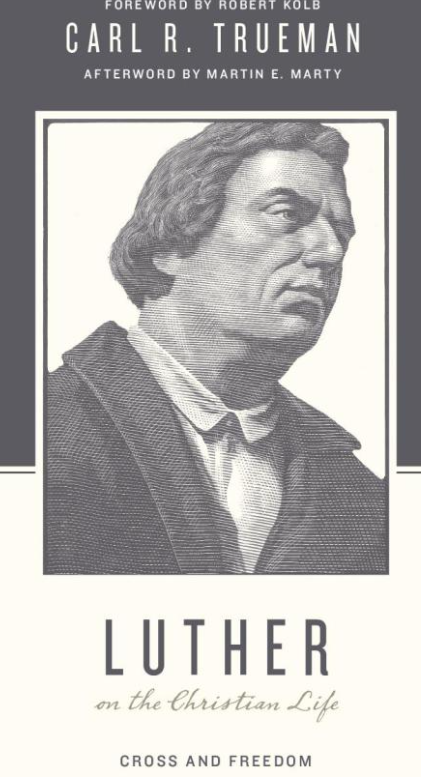
The quote in the picture above is said to come from "Luther on the Christian Life by Carl Trueman." Whoever concocted this picture probably had this book by Carl Trueman in mind: Luther on the Christian Life. I do not own this book. Relying solely on the Google Books text search and Amazon's "Look Inside" text search of the book, I did not find any trace of the quote. Perhaps whoever created this text and picture wanted only to document the picture used? Notice, the background picture of the quote is the exact front cover of Trueman's book.  

A cursory Google search of this quote reveals rather quickly who wrote it  originally: John Newton. I found the quote in a book from Newton entitled, Twenty-five Letters, Hitherto Unpublished. The quote appears in a letter written March 17, 1757. The quote is found here.


Context
What could have been done for me that the Lord has not done? yet still I am a cumberer of the ground; I am, by grace, kept from such sins as would dishonour my calling openly, and stumble my brethren, but the wickedness of my heart is amazing. I may especially mention three sins most unsuitable to men in general, but still more to believers, and, above all believers, most unsuitable to me, I mean pride, ingratitude, and insensibility. The instances in which the two former discover themselves are more in number than the hairs of my head; yet I am so much under the power of the third, that, for the most part, I sit still as if nothing were the matter. Thus much for the dark side. Blessed be God, amidst so many causes of mourning in myself, it is still my duty and my privilege to rejoice in the Lord: in him I have righteousness and strength, pardon and peace. I have sinned—I sin continuallybut Christ has died, and forever lives, as my Redeemer, Priest, Advocate, and King. And though my transgressions and corruptions, my temptations and my enemies, are very many and very prevalent, the Lord, in whom I trust, is more and mightier than all that is against me. From this consideration I would adopt your inference, “What manner of persons ought we to be in all holy conversation and godliness?" It is to be lamented that any persons should so mistake the doctrine of free unchangeable grace, as to imagine it has a tendency to introduce licentiousness; but much more to be lamented, if a real believer should give occasion to such a reproach by his remiss, careless, or worldly behaviour. I hope I do in my heart detest and abhor the thought of continuing in sin, that grace may abound, but I fear my practice condemns me of it; for sure there are many who are not favoured with such a view of God's unchangeable love as I am, who walk in heaviness, and darkness, and fear, and yet are more zealous, humble, and sensible, more abounding in good works, more impressed with a sense of sin, and more careful in redeeming time than I am. My path lies between two dangerous extremes legality and presumption; and I am continually inclined to one or the other, according to the difference of my frames. Thus I am made up of contradictions.
Conclusion
Luther did not write this quote, nor did Carl Trueman attribute the quote to Martin Luther in his book, Luther on the Christian Life. An immediate tip off that Luther didn't write it is that he did not use the phrase prophet, priest, and king in regard to Jesus Christ. Most often, the phrase is attributed to Eusebius and then popularized by John Calvin.  In his book, Carl Trueman points out

Trueman cites LW 31: 353-354. There Luther does affirm Christ as priest and king. Luther says, "Now just as Christ by his birthright obtained these two prerogatives, so he imparts them to and shares them with everyone who believes in him... Hence all of us who believe in Christ are priests and kings in Christ, as 1 Pet. 2[:9] says; “You are a chosen race, God’s own people, a royal priesthood, a priestly kingdom, that you may declare the wonderful deeds of him who called you out of darkness into his marvelous light" (LW 31:354). In my cursory search, I did not come across any instances of Luther referring to Jesus as "prophet" in the sense of the way it's used in "prophet, priest, and king." Did he ever do it? I don't know. 

A ridiculous aspect of this quote has to do with people I attempted to interact with that posted it.  On both Facebook pages, I pointed out Luther did not write it.  On the Martin Luther and the Reformation Facebook page, I left a brief comment that Newton wrote it... which garnered no response. On the John MacArthur Appreciation page, the comment I left was not allowed to be posted. The quote is no less true because Luther did not write it!