Tuesday, January 14, 2014

Discussion about Sola Scriptura at a Muslim Blog


Discussion about Sola Scriptura at a Muslim blog.  

Muslims are using Roman Catholic arguments to cast doubt on the doctrine of Sola Scriptura and the basis for the canon.   They then use the arguments against Sola Scriptura and the Canon to cast doubt on reliability of the NT books themselves.  I noticed this a long time ago in evangelism with Muslims. And then when I started listening to Dr. White's debates and reading his books, and visiting regularly his web-site sometime in 1996- 2004,  (when it had these articles on Roman Catholicism), I noticed it even more in the details of Roman Catholic agruments and how Muslims would bring up the same objections as regards the canon and Sola Scriptura and church history details.  

I remember when Dr. White started sharing why he was going into debating Muslims - because a lot of the apologetic issues are the same on the history of the text of the Bible, textual variants, inerrancy, the canon, Sola Scriptura, church history, etc.   His experience with Roman Catholics, King James Only advocates, Mormons, atheists, and others had prepared him for defending the faith against Muslims. Dealing with Mormons, Jehovah's Witnesses and Oneness Pentecostals prepared him for dealing with Muslim objections to the Trinity. 

Jonathan Doyle is a Roman Catholic.  If I recall correctly, he is a traditionalist Roman Catholic, one who holds to the Tridentide Latin Mass as binding, sees the "no salvation outside of the church" as binding and Vatican 2 was wrong to soften that tradition, and probably disagrees with a lot of Vatican 2 and the modern Popes since that time.  But he has not shared the exact details of his views on those issues.

There are other comments since I grabbed this much of the discussion.  Most people know this, but in case this is the first time you are reading here, Paul Bilal Williams is an English convert to Islam. (see his story at his blog, linked above.)
  1. Jonathan Doyle
  2. For once I fully agree. From the Catholic point of view, the Christian religion existed before the Gospels even started to be written, so it is absurd to claim one is based on the other.
    • the Catholic position is certainly more historically accurate and plausible than the evangelical.
    • Sola Scriptura never says that the Christian religion did not exist from 30 AD to 48 AD or did not exist until 96 AD, the common date for believing all the NT books were written by that date. Most were written before 70 AD.
      Protestants who hold to Sola Scriptura agree that the church existed in that period of 30-96 AD, while the Scriptures were being written; and oral preaching and teaching (God-breathed tradition) of the gospel was authoritative – 2 Thess. 2:15.
      • Ken who decided which books were to go into the Bible? And by what authority to do reject the Bible commonly accepted by the early church? Who elected you a Protestant Pope or are you self-appointed?
  3. The anti-thesis principle against the thesis principle of Sola Scriptura is the claim of the Roman Catholic Church is that the Pope is infallible, and that was not proclaimed as dogma until 1870. This is very late in history, and totally absent from the early centuries of church history. The RC claim is also that only it as a church is infallible and infectible – before the dogma was proclaimed in 1870, the church and bishops and councils, etc. were infallible in doctrinal decisions and interpretations.
    Sola Scriptura is only saying that only the Bible is infallible; the Pope and the church are not infallible; and there are many different definitions of what “tradition” is. Some traditions are derived from Scripture and good; others are not.
    Protestants believe in church and church authority to teach and interpet the Scriptures properly. (Ephesians 4:11-12; 1 Timothy 3:14-16; 2 Timothy 4:1-7; 2 Tim. 2:2) It is the Roman Church that claims only it has the right and authority to interpret the Scriptures and that it is always infallible in her interpretations and decisions.
    When that Roman Church started adding other doctrines to “the faith” and claimed that they were from the apostles, like penance instead of repentance, purgatory, indulgences, NT priests, ex opere operato priestly powers, Transubstantiation, the treasury of merit, good works as meriting salvation, prayers to dead saints, relics, icons, statues and people praying to those inanimate objects, exalting Mary too much in prayer and praise – those things eclipsed the teaching of justification by faith alone, especially in Romans and Galatians and the gospel of John and is totally consistent with James 2; – when the RC Church was more exposed for making mistakes and adding doctrines not found in the Scriptures(Wycliffe, Hus, Luther, Calvin, etc), the fall-back position was Sola Scriptura, that Luther relied on, in order to back up authority for protesting against the false doctrines that the RCC had been slowly adding through the centuries.
    • In fact there was no such thing as a Papal office in the early church. Even Gregory in 601 AD, the bishop of Rome, rebuked John of Constantinople for claiming he was “Universal Bishop”. Cyprian (lived 200-258 AD), bishop of Carthage, in 258 AD, along with 86 other bishops from around the Christian world, rebuked Stephen, bishop of Rome, for claiming that he was “bishop over all the other bishops”.
      See here for the 7th Council of Carthage, where Cyprian, Firmillian, and 85 other bishops condemn Stephen, the bishop of Rome, for his arrogant claims.
  4. ‘Sola Scriptura is only saying that only the Bible is infallible’
    What is the scriptural evidence for this claim?
    • The principle of Sola Scriptura is not explicit in one verse, but the principle is derived theologically from bringing many texts together in a harmonized and consistent way.
      2 Timothy 3:16 – since all Scripture is God-breathed, then it is infallible.
      Jesus said to test traditions by the word of God, the Scriptures – Matthew 15:1-20, Mark 7:1-23.
      The “only” is implied from these passages, because the only other atlernatiive is man and his interpretations, and additions to Scripture; therefore only the Scriptures are infallible, not man. Therefore the Pope and councils and other traditions are not infallible, since they are man made. The early E. creeds (Nicea, Constantinople, Apostles, Athanasian) and 4 ecumenical councils were right because the doctrinal decisions were based on Scripture, not tradition. They are secondary sources of authority, along with local church elders/teachers/pastors/overseers, but they are not infallible.
      John 17:17 – Jesus said to the Father – “Thy Word if truth”. John 17:8 – the words from the Father to Jesus, then to the apostles and later the Spirit would bring all things to their remembrance and lead them into all the truth – John chapters 14, 16. Psalm 119 – 176 verses on the truthfulness of God’s Word.
      Only God is infallible. (not man)
      God spoke through prophets and apostles.
      the Prophets and apostles wrote the Word of God down in Scriptures.
      God cannot lie.
      So, the Scripture are also infallible.
      When traditions are tested and questioned, the Scriptures overrule them; therefore only the Scriptures are infallible, since man is not infallible and his interpretations and traditions therefore are not infallible.
      Traditions (oral teaching and preaching during the process of the time of en-Scripturation – 30-96 AD) of the apostles (2 Thess. 2:15; 3:6; I Cor. 11:2, 1 Cor. 15:1-9; Jude 3; Galatians 1:6-9) are infallible because the Scriptures say that they are. (in those contexts – also 1 Thessalonians 2:13 – the preaching of the gospel / word of God was accepted not as the word of men, but as the word of God.
      The unbiblical traditions of the Roman Catholic Church were man-made traditions not in Scripture at all, not even implicitly.
      The doctrines like the Trinity are Scriptural because they correctly derive from Scripture, in a consistent and harmonized way.
      • I don’t agree that “only” is implied at all anywhere in the Bible – its a very weak argument Ken. And it was not believed by Christians till the likes of Luther came along. The bizarre thing is that the Bible does not even claim to be the Word of God so why should it be the only authority!
        Ken who decided which books were to go into the Bible? And by what authority to do reject the Bible commonly accepted by the early church? Who elected you a Protestant Pope or are you self-appointed?
  5. Does the Bible ever say that the elders/teachers/pastors that the apostles appointed to lead the churches would ever be infallible?
    No.
    Therefore since we know God and His Word are infallible and man is not infallible, then by logic, only God’s Word is infallible as oppossed to man’s interpretations of the Scriptures.
    Therefore, the “only” in “Scripture Alone is the final and infallible rule of faith and practice for the church” is implied.
  6. They did not “decide” but they discerned and testified which ones were God-breathed and already existed, being written between 48-96 AD.
    Irenaeus (200 AD)
    Tertullian (200 AD)
    Origen (250 AD)
    Athanasius (died in 373 AD)
    rightly discerned which Scriptures were already in existence and God-breathed. (Though Irenaeus and Tertullian did not mention a few of the lesser known books. They are silent on Philemon, James, 2 Peter, and 2-3 John, and Irenaeus is silent on Jude, but Tertullian approves of Jude)
    • so if they “discerned and testified which ones were God-breathed” why do you reject their Bible? You are not very consistent!
      • I am talking about the 27 New Testament books – Origen’s list (I mentioned that in a previous post in another one of your articles here) around 250 AD is the same as Athanasius’ list in 367 AD as to the canon.
        Athanasius did not approve of most of the Apocrypha Jewish books written between 300-100 BC – his list does include Baruch and the letter of Jeremiah as part of Jeremiah as “one book”; but he did not approve of Maccabees and the others that the RC claims is infallible), and neither did Jerome. Jerome was one of the few who actually investigated the Jewish canon by going to Israel and living among the Jews there and learning Hebrew. His investigations confirm the list of the OT canon that was meant in Luke 24:44; Luke 11:51 (“from the blood of Abel” = Genesis, “to the blood of Zechariah” = the Zechariah killed in 2 Chronicles 24 – the last book written in the OT and Jews to this day still have that one as the last book in their canon, written around 430 BC); and Romans 3:2. (“the Jews are entrusted with the oracles of God”). Josephus in Against Apion 1:8 also confirms the correct OT canon as the same as the Protestant OT canon. So we have Jesus, Josephus, the Jews, and Jerome on our side of that argument.
        Even Gregory “the Great”, bishop of Rome, around 601-604, wrote against the Apocrypal books, as did Cardinal Cajetan, who oppossed Luther in 1518-1521 – they said, “the judgment of Jerome on those books is the correct doctrine.”
  7. “Who elected you Protestant Pope?”
    There is no such thing as a “Papal office” in Scripture, nor in early church history – the concept started gaining traction only after the split between the Eastern Orthodox Church vs. The Roman Catholic Church (1054 AD) and it grew from there. It is completely absent from the first 600 years of early church history.
    So, there is no such thing as a “Protestant Pope” either. The concept is a false concept.

Monday, January 13, 2014

Luther Throwing James in the Fire, the Canon, and Heresy

Further musing from the Catholic Answers Forum:

Today, 11:14 am
Regular Member
 
Join Date: May 19, 2004
Location: New Jersey
Posts: 741
Religion: Reformed
Default Re: Protestant Canon

Quote:
Originally Posted by Topper17 View Post
The throwing in the fire comment was not disrespectful? If not then what could be?
There are at least two sources I'm aware of in which Luther is said to have wanted "to throw James in the fire." The first statement is a Tabletalk reference, which means Luther didn't write it, but is something he is reported to have said. The second statement comes from a 1542 writing in which it isn't clear at all that the actual book of James is in question, but rather a statue of Saint James. Regardless, the statements reflect Luther's frustration with his catholic critics who relied on James 2. Where I would fault Luther here is not for his fire / stove comment (which is nothing more than polemics), but rather the ease in which he gave up on the consistent harmonizing of James with Paul as a response to the critics. In the same context of the second statement, Luther admits to having interpreted James 2 previously according to the sense of the rest of scripture. In fact, one can actually find Luther presenting the typical protestant harmonization of James and Paul.

Quote:
Originally Posted by Topper17 View Post
There was relatively little disagreement on the canon until the Reformation, when Luther chose to question literally everything, showing very little deference to all those who had come before him.
I've seen this particular topic debated endlessly over the years. As far as I can tell in terms of the Intertestamental books. there were two traditions running concurrently through the church, one accepting them, one rejecting them (I've seen both traditions argued as the prevalent one). This is why there were a group of excellent scholars at Trent arguing to exclude them. In regard to the New Testament books, I would agree that there probably was 'relatively little disagreement." What I think provoked 16th Century theologians like Cajetan, Luther, Erasmus, etc. was the recovery of Greek and Hebrew. Cajetan for instance, came under heavy attack from the Paris theologians for relegating the Latin Vulgate as inferior to the Hebrew and Greek. Cajetan questioned the authenticity of a number of New Testament Bible passages, and in his criticism he invoked Jerome's authority as support. To sum it up, the reason for questioning the New Testament canon during the 16th Century had a lot to do with the recovery of the original Biblical languages. Certainly Luther went a step further and attached a theological criteria, but once again there were no dogmatic parameters in place to prevent this.

Quote:
Originally Posted by Topper17 View Post
In addition, the Church grants those rights to the Doctors which it sanctions. Luther WAS sanctioned by the Church as a Doctor of Sacred Scripture. But then, beginning with his being released from his vows as a monk by Staupitz in 1518 (I think), and culminating with his excommunication from the Church, Luther no longer was a Catholic sanctioned Theologian. He was judged to be an unrepentant heretic and as such, from the time of his excommunication, he no longer had any rights a Catholic, not even as a lay Catholic.
First, Trent never condemned Luther by name. That is, there is no infallible dogmatic pronouncement against Luther. In other words, a Catholic has no official judgment on Luther to which he is bound. This is why there is such a thing as Catholic Luther scholarship. Second, Jimmy Akin has an interesting article called "Identifying Infallible Statements." In that article he points out that Exsurge Dominae was not infallible, nor was Luther condemned for violating infallibly defined dogmas. Third, the Edict of Worms was decreed by Charles V deeming Luther a heretic, but to my knowledge, the statements of Charles V are not considered infallible by the Catholic church.

Pope John Paul II exhorted his hearers one time to "meditate, in truth and Christian charity" on the Reformation period. This suggests to me that the same sort of allowances made for the theological errors of Erasmus and Cajetan could be extended to Luther on the extent of the canon. John Paul went on to say that the event of the Reformation can be "understood and represented better" when those of us in later centuries can look back and reflect on what happened What JonNC has been demonstrating is that if one takes the time to look at the actual historical situation of Luther's canon, he was certainly not alone. To allow Cajetan and Erasmus a free pass while condemning Luther on this issue could, in the minds of some people, demonstrate double standards or an underlying unjustified bias.

"Where polemics have clouded the view, the direction of this view must be corrected and independently by one side or the other."- John Paul II on Luther and the Reformation

Sunday, January 12, 2014

Martin Luther, Reformer of Bowling

I've not heard this one before:
Bowling as we know it began in Germany sometime during the fifth century. People pretended that the pins were devils and they used a round rock or heavy ball as a weapon to knock them down. If successful, it indicated they were overcoming the temptations of the devil in their lives. If not, their lives still had too many sins. The number of pins used varied from three to seventeen. Martin Luther is credited with deciding on nine pins. In the 1800s, because bowling (or platzbahnkegln as it was then called Germany) was used for gambling, it was outlawed. But the law specified nine-pin bowling. Players added a 10th pin to avoid being illegal. A life-size diorama at the International Bowling Museum and Hall of Fame in St. Louis portrays Martin Luther bowling on the single lane at the side of his home. A brochure from the museum states that Luther, an avid bowler, “once preached a sermon that proclaimed Christians ‘strive for perfection in life. But when we roll a gutterball, all is not lost.’”
I have no idea if all this is true or not, but it certainly appears to be true that the Bowling Museum had the picture of Luther at one time. The museum is no longer in St. Louis, it's in Texas. Brecht notes that "Luther had a bowling alley built for the amusement of  his students in their spare time, and he occasionally participated in the game himself."

Addendum (ht: Carl Vehse): From a comment below, the quote in the pamphlet reads,"He [Luther] once preached a sermon which, if put into bowling vernacular, proclaimed we all strive for perfection in life. But if we roll a gutterball, all is not lost." So, the "quote" appears to be a loose paraphrase of something Luther is alleged to have said.

Addendum #2 (1/30/14)
This blog post was linked to by Gene Veith with his entry, Luther and Bowling? See the subsequent discussion. Carl Vehse noted my citation of Brecht (Martin Luther: Shaping and Defining the Reformation, 1521-1532 [Fortress Press, 1994, p. 432]), and also included Brecht's accompanying footnote:
Weimarer Ausgabe (Weimar Edition): D. Martin Luthers Werke: Kritische Gesammtausgabe (Dr. Martin Luther's Works: Critical Collected Edition), Briefwechsel (Correspondence), Volume 6: 199-200. Tischreden (Table Talk), Vol. 1, No. 261; Vol. 2, No. 1494.

Saturday, January 11, 2014

Roland Bainton on Luther and the Canon


Today, 1:08 pm
Regular Member
 
Join Date: May 19, 2004
Location: New Jersey
Posts: 735
Religion: Reformed
Default Re: Bainton

Quote:
Originally Posted by Topper17 View Post
We have been discussing Luther’s disrespect for Scripture and especially the way that he viewed the Canon. “Luther treated Scripture with amazing freedom, with so much freedom indeed that one wonders why he did not disrupt the canon. Tradition at this point was presumably too strong for him”, Roland Bainton, Studies on the Reformation, pg. 5 Bainton, who normally gives Luther every break possible, makes a startling admission, admitting that he believes that Luther might have changed the canon if he thought he could get away with it.
Quote:
Originally Posted by JonNC View Post
Perhaps you have had a monologue on this, be we certainly haven't been having a discussion on it. How about that! Tradition was strong for him. That's not what the quote says. He doesn't say "change" the canon. He says "disrupt". the only way I might disagree with Bainton is I don't believe Luther had the power to change the canon. And Luther's response to Tradition is precisely what I've been saying: Luther had the Catholic liberty to challenge and even dispute the canon prior to Trent, just like any other Catholic, and this he did while frequently stating it was his opinion, and in the end, he responds and defers to the Tradition of the western Church by seeing to it that all 73 books are translated and included, except for the arrangement of the books, and the addition of the Prayer of Manasseh.
Interesting discussion, thanks guys.

I happen to have the book in question by Roland Bainton. There is nothing in Bainton's essay "The Bible and the Reformation" [Studies on the Reformation (Boston: Beacon Press, 1963)] that suggests "he believes that Luther might have changed the canon if he thought he could get away with it," and for that matter, "Bainton, who normally gives Luther every break possible," actually Bainton presents a short essay that includes critical reflection.

The actual comment on Luther and the canon is more of a passing comment that was part of Bainton's broad overview on who had the authority to interpret the Bible during the Reformation period. Bainton points out that "Luther epitomized two centuries of antipapal critique" (p.4); that is, Luther wasn't doing anything new when he questioned whether or not the pope had the infallible ability to interpret the Bible, this debate had been going on for quite some time. Bainton presents the argument given back to the Reformers that the church created the canon, therefore she had such infallible authority. Bainton says the Reformers countered that the Gospel or "Word" made the church, so the Gospel or "Word" is above the church, and therefore the church must be submit to the authority of the Gospel or "Word." Bainton cites "a canon lawyer at the Council of Basel" who had earlier reflected Luther's view "in matters touching the faith, the word of a single person is to be preferred to that of a pope, if that person is moved by sounder arguments from the Old Testament and the New Testament" (p.4). The point is that this issue of Biblical interpretative authority was nothing new when Luther showed up on the radar.

As JonNC has explained the canon was also a related issue during this time period. Luther's solution was (in part) to evaluate the canon by the "Word." When Luther did so, certain books accepted by broad Tradition appeared to lack a pedigree of containing the "Word," but as Bainton points out, "Tradition at this point was presumably too strong for him." In essence, one sees that Luther was being cautious (for instance, simply compare Luther's early preface to Revelation with the later revision).

The heart of the issue is that Luther questioned the infallibility of the church, and this questioning included whether or not the church infallibly determined the canon, linked with this was the confusion present during the Reformation period. M. Reu notes,

Quote:
How was it that [Luther] came to consider the question of the canon at all? There were a number of factors that almost compelled him to do so. Towards the end of the middle ages uncertainty had arisen in the Church not only concerning the canonicity of the Old Testament Apocrypha but also concerning the extent of the New Testament Canon; an uncertainty that existed in actual usage rather than in the attitude of the official Church. Many medieval Bible manuscripts included a fifth Gospel, the Gospel of Nicodemus; many manuscripts and all the printed German Bibles included an additional epistle of St. Paul, the so-called Epistle to the Laodiceans, which is even to be found as late as 1544 in Dietenberger's Roman Catholic translation of the Bible [M. Reu, Luther’s German Bible: An Historical Presentation Together with a collection of Sources (Ohio: The Lutheran Book Concern, 1934), 175].
One of the big questions as I see it is not, "Why did Luther question the contents of the canon?" but rather, "Given the historical situation in the 16th Century, why wouldn't Luther question the contents of the Bible?" The entire credibility and infallibility of the papacy was a major issue, and had been so for quite some time before Luther came on the scene. He inherited the issues of his day, like we inherit the issues of ours.

Friday, January 10, 2014

Marian dogmas began with fiction and Gnostic accounts

My title is derived from John Bugay's article today. (see at the end of this post) Time for a reminder of basic issues we have against the Roman Catholic Church. Peter talked about writing so that he could stir up their sincere minds by reminding the believers of the truth. (2 Peter 1:12-21; 3:1)
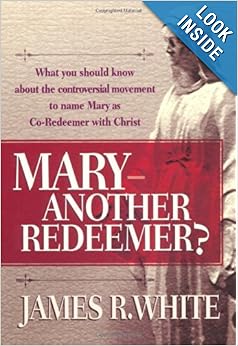
Perpetual Virginity, Immaculate Conception, Sinlessness, and Bodily Assumption of Mary have their beginnings in fictional accounts like the Protoevangelium of James and Gnostic writings like the Odes of Solomon and the Ascension of Isaiah (James White, Mary: Another Redeemer?, Bethany, 1998, p. 33). Pious beliefs like co-Mediatrix and co-Redemptrix, that could possibly be declared dogmas in the future by a Pope, are even more later innovative corruptions. _________________________________________________________________________________________________________ Another excellent book, which we have mentioned here many times before, is worth repeating again: Who is My Mother? by Eric Svendsen, Calvary Press, 2001.
"So, for Mary’s “beginning and end”, we have fiction and the Gnostics. The process by which these “things”, as you put it, became “universal feast days” relies in tremendous measure on the popular piety of what essentially were the baptized pagans of the Roman empire. While it is true that some early things said about Mary (i.e. “theotokos”) were truly intended to say things about Christ, Mary wouldn’t have been on the radar screen (from a Scriptural perspective) if these fictitious legends were not floating about the broader culture."
from John Bugay's article, "Why I reject the Marian Dogmas" at Triablogue. Good job, John!

Thursday, January 09, 2014

Luther, Sproul, and Private Interpretation

Here's part of a post and my brief response from the Catholic Answers Non-Catholic Religions forum. I've learned to always keep a record of what I post on Catholic Answers!

Yesterday, 10:42 pm
New Member
Join Date: October 25, 2013
Posts: 44
Religion: Catholic
Default Re: Protestant Canon

Quote:
Originally Posted by spina1953 View Post
You gave a lot of great information. it is what I had learned from reading history.
Thanks spina,

It's a fascinating period of time, one that is not well known here on this side of the pond, and what we do know about it is sometimes told differently than how it happened. Finding sources that tell it fairly can be a challenge sometimes.

In my last post I documented how Luther is the one who is responsible for unleashing the doctrine of Private Interpretation on modern Christendom. Actually it was not his intention whatsoever, but was rather an ‘Unintended Consequence’ of his revolt against the Church. It got very messy fast, and very bloody. It should also be noted that he taught Private Interpretation of Scripture in spite of the warning of St. Peter.

R. C. Sproul also ‘gets it’ regarding Luther and Private Interpretation:

“Two of the great legacies of the Reformation were the principal of private interpretation and the sharp focus in the sixteenth century. Hidden beneath the famous response of the Reformer to the ecclesiastical and imperial translation of the Bible into the vernacular……. It was Luther himself who brought the issue of private interpretation of the Bible authorities at the Diet of Worms was the implicit principal of private interpretation. 

When asked to recant of his writings, Luther replied, “Unless I am convinced by Sacred Scripture or by evident reason, I cannot recant. For my conscience is held captive by the Word of God and to act against conscience is neither right nor safe. Here I stand, I can do no other, God help me.” (of course Luther never said “Here I stand…….” –Topper) Notice that Luther said “unless I am convinced…….” In earlier debates at Leipzig and Augsburg, Luther had dared to presume to interpret Scripture contrary to interpretations rendered by Popes and by church councils. That he would be so presumptuous led to the repeated charge of arrogance by church officials. Luther did not take these charges lightly but agonized over them. He believed that he could be wrong but maintained that the Pope and councils could also err. For him only one source of truth was free from error. He said, “The Scriptures never err.” Thus, unless the leaders of the church could convince him of his error, he felt duty-bound to follow what his own conscience was convinced Scripture taught. With this controversy the principal of private interpretation was born and baptized with fire.” R.C. Sproul, Knowing Scripture, pg. 33-4

Luther demonstrated that he placed his own personal, independent, private understanding and his conscience above those of all the popes and Councils with all of their thousands of Theologians, On the face of it it seems pretty foolish doesn't it? 


Today, 3:28 pm
Regular Member
Join Date: May 19, 2004
Location: New Jersey
Posts: 734
Religion: Reformed
Default Re: Protestant Canon

Quote:
Originally Posted by Topper17 View Post
R. C. Sproul also ‘gets it’ regarding Luther and Private Interpretation
Thanks for all the interesting info.

I found the section from Sproul you quoted so intriguing that I wanted to read more of what Dr. Sproul said. As I read pages 33 and following, Sproul contrasts Luther's embracing private interpretation with the notion of an infallible interpreter of sacred scripture (p. 34). Luther was holding that the only infallible voice of God on earth is that recorded in sacred Scripture. On page 35 Sproul points out that Trent responded by saying "it is the responsibility of the teaching office of the... Catholic Church to expound the Scriptures and to declare the meaning of the Scriptures." In other words, Luther was challenging the infallibility of the church of his day. When Luther was fighting for the right to interpret, he was basically saying that the church certainly can have a collected wisdom and understanding of what the Scriptures are saying, but it isn't an infallible understanding because only God and His word are infallible.

Sproul then goes on to say:

Quote:
Did the Reformers promote the notion of unbridledness? Does private Interpretation mean that an individual has the right to interpret Scripture to suit himself? May a person interpret Scripture in a whimsical, capricious manner with no restraint? Should the private individual take seriously the interpretations of others such as those who specialize in teaching the Scriptures? The answers to these questions are obvious. The Reformers were also concerned with ways and means to check unbridled spirits. (That is one of the reasons they worked so hard to delineate sound principles of biblical interpretation as a check and balance to fanciful interpretation.) But the way in which they sought to check unbridled spirits was not to declare the teachings of churchmen infallible. Private interpretation never meant that individuals have the right to distort the Scriptures. With the right of private interpretation comes the sober responsibility of accurate interpretation. Private interpretation gives license to interpret but not to distort.
-snip-

Quote:
Private interpretation opened the Bible for laymen, but it did not do away with the principle of the educated clergy. Going back to biblical days, the Reformers recognized that in Old and New Testament practice and teaching there was a significant place for the rabbi, the scribe and the ministry of teaching. That teachers should be skilled in the ancient languages, customs, history and literary analysis is still .an important feature of the Christian church.
What I found fascinating about Sproul's chapter as well is that he goes on to discuss the error of subjectivism in regard to interpretation. Sproul places a high value in the collected wisdom of the historic church and proper methods of interpretation (as did the Reformers).

One final related point comes to mind: The Catholic church has had quite a long time since Trent declared that the church has the power to have the true sense and interpretation of scripture, but, as far as I know, the Catholic church has not infallibly interpreted a lot of passages. This leads me to wonder whether or not Catholics likewise are engaging in a fair degree of private interpretation (while in the confines of declared dogma). The issue is not private interpretation (because Catholics and protestants both do it), the issue for the Reformers was whether or not the church has the ability of infallible interpretation.

Thanks again for raising such interesting issues.

The Case Against Ergun Caner

See over at my other blog, I embedded Dr. White's video on the Case against Ergun Caner, and other links with the documentation; and also another video done by a Muslim, who made a video of news reports about Caner going to Brewton-Parker College in Mount Vernon, Ga. The discussion in the combox is also interesting so far, as it is with a Muslim concerning the doctrines of the Trinity, the Incarnation, and the Qur'an's mistakes about those doctrines and also the Qur'an's mistkae about the crucifixion and death of Christ as established historical fact, which the Qur'an denies. (Surah 4:157)

Saturday, January 04, 2014

Luther: Christians Are Allowed to Marry Their Nieces?

Here's one from the Catholic Answers Forums concerning marriage and the degrees of consanguinity:
...why would Luther feel compelled to write about marriage and challenge/refute so much of what had been considered Christian marriage for centuries? Do we as modern day Christians think he was right about Christians being allowed to marry our nieces, or do we feel that Luther was way off base here? Did this nuttiness have an impact on the culture? You bet it did.
These questions were asked along with the posting of Luther's The Persons Related By Consanguinity and Affinity Who Are Forbidden To Marry According To Scriptures, Leviticus 18 (LW 45:3-7) was posted. Marriage in the 16th Century was a complicated topic, and these questions / conclusions appear to be based on Luther writing "From this it follows that with a good conscience before God I may marry the child of my brother or sister, or my stepmother's sister" found in the link above.

The simple answer to the above questions is that the Roman church had developed an entire legal system from the preceding centuries, particularly with the development of canon law during the late eleventh through thirteenth centuries.  Canon law had determined which people could marry, and often these rules had no scriptural basis. Luther sought to define whom was allowed to marry based on Scripture (i.e., Leviticus 18). The important question to ask is not whether or not Luther was "off  base" or engaging in "nuttiness," but rather whether or not (or to what degree) a society should follow Levitical law in defining marriage. If one should not keep Levitical law, isn't that saying that one is allowed to basically marry anyone?  Certainly Luther was not in favor of keeping the law of Moses. On the other hand, Luther saw that the laws in Leviticus 18 set up natural law guidelines for marriage. In a letter commenting on Lev. 18:16, Luther states:
You will reply: If someone continues this argumentation then he will end up teaching that we also are not prevented by any law of God from marrying daughters, sisters, or mothers, since the law of Moses prohibits this, but the law of Moses now no longer binds us Gentiles. I answer that such marriages are prohibited and considered incestuous by natural law. This is sufficiently proven by the fact that in Scripture before, during, and after [the time in which] the law [of Moses was valid,] no example [for the permission of such marriages] can be found, and without example and law nothing may be undertaken. Precisely by this fact God has sufficiently demonstrated that he condemns such marriages. But there are laws and examples for marrying your deceased brother’s wife. (LW 50:37)
When Luther says, "From this it follows that with a good conscience before God I may marry the child of my brother or sister, or my stepmother's sister," he's basing his conclusion on an interpretation of Leviticus 18.  Luther elsewhere reasons,
The first impediment is blood relationship. Here they have forbidden marriage up to the third and fourth degrees of consanguinity. If in this situation you have no money, then even though God freely permits it you must nevertheless not take in marriage your female relative within the third and fourth degrees, or you must put her away if you have already married her. But if you have the money, such a marriage is permitted. Those hucksters offer for sale women who never have been their own. So that you can defend yourself against this tyranny, I will now list for you the persons whom God has forbidden, Leviticus 18[:6–13], namely, my mother, my stepmother; my sister, my stepsister; my child’s daughter or stepdaughter; my father’s sister; my mother’s sister. I am forbidden to marry any of these persons. From this it follows that first cousins may contract a godly and Christian marriage, and that I may marry my stepmother’s sister, my father’s stepsister, or my mother’s stepsister. Further, I may marry the daughter of my brother or sister, just as Abraham married Sarah. None of these persons is forbidden by God, for God does not calculate according to degrees, as the jurists do, but enumerates directly specific persons. Otherwise, since my father’s sister and my brothers daughter are related to me in the same degree, I would have to say either that I cannot marry my brother’s daughter or that I may also marry my father’s sister. Now God has forbidden my father’s sister, but he has not forbidden my brothers daughter, although both are related to me in the same degree. We also find in Scripture that with respect to various stepsisters there were not such strict prohibitions. For Tamar, Absalom’s sister, thought she could have married her stepbrother Amnon, II Samuel 13[:13] (LW 45:22-23).
The first question being asked above is in regard to why Luther engaged the subject of marriage rather than just leaving the established medieval order alone. This question was answered in a thoughtful essay, John Witte, The Reformation of Marriage Law in Martin Luther's Germany: Its significance Then and Now (Journal of Law and Religion, Vol. 4, No. 2 (1986), pp. 293-351.
According to many contemporary observers, Luther's alarm over the decrepit estate of marriage and marriage law was certainly not unfounded. Germany suffered through decades of indiscipline and immorality in the late fifteenth and early sixteenth centuries. Prostitution was rampant. High clerics and officials of government regularly kept concubines and visited the numerous brothels in German cities. The small fines incurred for such activity discouraged few. Drunken orgies were commonplace. Women were raped and ravaged,particularly by robber bands and soldiers. Lewd pamphlets and books exalting sexual liberty and license were published with virtual impunity. Writings by some Roman Catholics extolling celibacy and deprecating marriage and sex dissuaded many couples from marriage and persuaded many parents to send their children to monasteries and cloisters. The number of single men and women, of monasteries and cloisters, of monks and nuns reached new heights in the years shortly before the Reformation. Within the estate of marriage itself, instances of bigamy, incest, and polygamy appeared with alarming frequency. The canon laws governing the formation and dissolution of marriages were flouted or arbitrarily enforced in several parts of Germany. Laws prescribing care and education of children as well as laws proscribing abortion, abuse of family members, adultery, and desertion were regularly violated. Calls such as Luther's for the reformation of marriage and marriage law and for the reinforcement of public morality were therefore received sympathetically by Roman Catholics and Protestants alike.
Unlike the Roman Catholics, however, Luther and other German Protestant reformers attributed much of the decay of marriage not only to the negligence and arbitrariness of authority and the moral laxness of society but also to the canon laws of marriage and the Roman Catholic theological concepts of marriage underlying these laws. For the reformers the canon law of marriage yielded paradoxical results. It discouraged and prevented mature persons from marrying by its celebration of celibacy, its proscriptions against the breach of vows to celibacy, its permission to breach oaths of betrothal, and its numerous impediments. Yet it encouraged marriages between the immature by declaring valid secret unions consummated without parental permission as well as oaths of betrothal followed by sexual intercourse. It highlighted the sanctity and solemnity of marriage by deeming it a sacrament. Yet it permitted a couple to enter this holy union without clerical or parental witness, instruction, or participation. Celibate and impeded persons were thus driven by their sinful passion to incontinence and all manner of sexual deviance. Married couples, not taught the Scriptural norms for marriage, adopted numerous immoral practices. Such paradoxical results, the reformers averred, were rooted in tensions within the Roman Catholic theology of marriage. Although Roman Catholic theologians emphasized the sanctity and sanctifying purpose of the marriage sacrament, they nevertheless subordinated it to celibacy and monasticism. Although they taught that marriage is a duty mandated for all persons by divine natural law, they excused many from this duty through the restrictions of canon law. Both the Roman Catholic theology and the canon law of marriage thus met with sharp criticism on the part of the reformers.
First, many of the cardinal issues of the Lutheran Reformation were implicated by this doctrine and law. The Roman Catholic Church's exclusive legal authority over marriage was, for the reformers, a particularly flagrant example of the church's usurpation of civil legal authority. The Roman Catholic sacramental concept of marriage,on which the church had founded this authority, raised questions of sacramental theology and Scriptural interpretation. The numerous canon law impediments to marriage and prohibitions against complete divorce were in tension with the reformers' understanding of Scriptural norms for marriage. That a child could enter marriage without instruction or permission raised questions about the responsibilities of the family, church, and state to children. Issues of marriage doctrine and law implicated and epitomized the broader theological, political, and social issues of the Reformation. Thus it is not surprising that such a large number of German reformers-Luther, Melanchthon, Bucer, Brenz, Osiander, and numerous other theologians as well as Schiirpf, Monner, Kling, Lagus, Beust, Schneidewin, and many other jurists -debated these questions with such vigor(pp.293-296).
The Roman church had a complex set of these rules as well. The rules were set up in part as a way for the Roman church to nullify a consummated putative marriage:
Far more important were the diriment impediments used by the ecclesiastical courts to nullify even fully consummated putative marriages. One group of these impediments sought to preserve the freedom of consent of both parties. Thus a mistake about the identity of the other party nullified the marriage; mistakes about the social, financial, or civil status of the other were generally no longer considered to be grounds for nullification by the early sixteenth century. Extreme duress, fear, compulsion or fraud (by parents, spouses, or third parties) also impinged on consent and invalidated the marriage contract.
The canon law not only defined free consent but also specified which parties were free to give their mutual consent. Those who had made religious vows of celibacy or chastity in one of the sacred orders of the Church were eternally bound to God and thus could not bind themselves to another in marriage. Christians could not contract marriage with infidels, Jews, or pagans since the sacrament of baptism was a prerequisite for marriage; furthermore, such marriages could not symbolize the union of Christ with his faithful Church. Thus if a party departed from the faith after consummation and remained incorrigible, the Church could declare the marriage void. Persons related up to the fourth degree either to a common ancestor or to a couple (whether or not married) who had engaged in sexual relations were prohibited from marrying. These were called the impediments of consanguinity and affinity. Parents could not marry their adopted children or grandchildren, nor the spouses of their adopted children. One who baptized or confirmed a party or who became a godparent could not marry him or her; for these persons were considered to be the "spiritual fathers or mothers" of the party who received the sacrament.
The canon law also developed a group of impediments to protect the ultimate sanctity and function of the sacrament of marriage. First, conditions attached to marriage promises which were illegal or which were repugnant to the sacrament or harmful to the offspring automatically rendered the marriage contract void. Thus a promise with the condition "that we abstain for a season" was valid; but a condition "that we abort our offspring" or "that we permit each other sexual liberty with others" nullified the marriage contract. For such conditions vitiated the entire purpose of marriage: to unite together in love and to raise children in the service of God. Second, permanent impotence, insanity, or bewitchment of either party were generally grounds for nullification as well, provided that such a condition was latent before marriage, but unknown to the parties; if the parties knew of the condition before marriage or if it arose after consummation, they had no action for nullification. Third, the church annulled all bigamous and polygamous relations as contrary to the Gospel and to the purpose of marriage. Fourth, an unconsummated marriage could be annulled if one party severely abused or consistently threatened another with death, contracted a permanent contagious disease, or committed adultery. Where the marriage was consummated, however, the church permitted only a divorce, i.e., a judicial separation from bed and board. Divorce in the modern sense was not permitted; the sacramental bond, once consummated, remained indissoluble till the physical or civil death of one of the parties.(Witte, 305-306)
Luther expounded on his earlier rules of marriage in his treatise, The Estate of Marriage (1522) (LW 45). Here Luther directly comments on the rules of the church as they functioned in his day. Here are a few examples:

The second impediment is affinity or relationship through marriage. Here too they have set up four degrees, so that after my wife’s death I may not marry into her blood relationship, where my marriage extends up to the third and fourth degrees—unless money comes to my rescue! (LW 45:23)

The third impediment is spiritual relationship. If I sponsor a girl at baptism or confirmation, then neither I nor my son may marry her, or her mother, or her sister—unless an appropriate and substantial sum of money is forthcoming! This is nothing but pure farce and foolishness, concocted for the sake of money and to befuddle consciences. Just tell me this: isn’t it a greater thing for me to be baptized myself than merely to act as sponsor to another? Then I must be forbidden to marry any Christian woman, since all baptized women are the spiritual sisters of all baptized men by virtue of their common baptism, sacrament, faith, Spirit, Lord, God, and eternal heritage [Eph. 4:4–6].(LW 45:24)

The fifth impediment is unbelief; that is, I may not marry a Turk, a Jew, or a heretic. I marvel that the blasphemous tyrants are not in their hearts ashamed to place themselves in such direct contradiction to the clear text of Paul in I Corinthians 7[:12–13], where he says, “If a heathen wife or husband consents to live with a Christian spouse, the Christian should not get a divorce.” And St. Peter, in I Peter 3[:1], says that Christian wives should behave so well that they thereby convert their non-Christian husbands; as did Monica, the mother of St. Augustine. (LW 45:26)

The sixth impediment is crime. They are not in agreement as to how many instances of this impediment they should devise. However, there are actually these three: if someone lies with a girl, he may not thereafter marry her sister or her aunt, niece, or cousin; again, whoever commits adultery with a woman may not marry her after her husband’s death; again, if a wife (or husband) should murder her spouse for love of another, she may not subsequently marry the loved one. (LW 45:26)

The seventh impediment they call public decorum, respectability. For example, if my fiancée should die before we consummate the marriage, I may not marry any relative of hers up to the fourth degree, since the pope thinks and obviously dreams that it is decent and respectable for me to refrain from so doing—unless I put up the money, in which case the impediment of public decorum vanishes. Now you have heard a moment ago that after my wife’s death I may marry her sister or any of her relatives except for her mother and her daughter. You stick to this, and let the fools go their way. (LW 45:27)

The tenth impediment is condition of servitude. When I marry one who is supposed to be free and it turns out later that she is a serf, this marriage too is null and void. (LW 45:27)

There are still four more impediments, such as episcopal prohibition, restricted times, custom, and defective eyesight and hearing. It is needless to discuss them here. It is a dirty rotten business that a bishop should forbid me a wife or specify the times when I may marry, or that a blind and dumb person should not be allowed to enter into wedlock. So much then for this foolishness at present in the first part. (LW 45:30)

Wednesday, January 01, 2014

Discussion With Catholic Apologist Art Sippo on Luther Biographies

Discussion With Catholic Apologist Art Sippo on Luther Biographies:  Back in 2006, Roman defender Art Sippo and I discussed which were the best and worst biographies on Luther to read. Dr. Sippo and I agreed on nothing. From my perspective. the conversation shows that Sippo begins with Luther as an arch-villain, and any book that says otherwise is propaganda.

I. On Dialoging With Catholic apologist Art Sippo on Luther Scholarship

II. Catholic Apologist Art Sippo on Father O’Hare’s “Facts About Luther”

III. Catholic Apologist Art Sippo on Luther Scholarship and Research (Part 1)

IV. Art Sippo on Catholic Historians Grisar and Denifle and Luther’s Demon Possession (part 2)

V. Using Psychohistory To Interpret Luther (A Response To Catholic Apologist Art Sippo (part3)

VI. Catholic Apologist Art Sippo Takes The Time To Thank Me For My Luther Research

VII. Luther Between God and the Devil: Catholic Apologist Art Sippo on Heiko Oberman

VIII. Catholic Apologist Art Sippo on Roland Bainton's "Here I Stand"

IX. Catholic Apologist Art Sippo on Richard Marius 

X. Catholic Apologist Art Sippo on Catholic Historian Joseph Lortz

XI. A Last Look At Catholic Apologist Art's Sippo's View Of Luther Biographies

XII. Art Sippo on Luther Biographies Revisited: Marius on Denifle 

Sippo vs Lortz Revisted: Cardinal Ratzinger help Dr. Sippo understand Joseph Lortz

Sippo, Lortz, Ratzinger, and Luther