Sunday, January 14, 2007

FREE (Out of Print) Books About Martin Luther


Every so often I come across free digital books about Martin Luther. Most of these books date from the 1800’s and early 1900’s. I happen to collect Luther books from this period, so I’m very pleased to be saving some $$ and getting these books for free. Most have downloadable pdf versions available. Some even include pictures of thumbs of whomever was scanning the text.

Here’s a copy of Jules Michelet’s, The Life of Luther Written By Himself (London: George Bell and Sons, 1904). The book was written in 1828-1829, and published in 1835. Two brief reviews can be found here: Review (The Living Age, Vol. 10, issue 116, Aug. 1, 1846). Review (The United States Democratic review. / Volume 19, Issue 97, July 1846). While out of print, this book is not too difficult to track down under twenty bucks.

Also available is scanned copy of Julius Kostlin, Life of Luther. (New York: Charles Scribner’s Sons, 1883). I actually own this book. Kostlin was one the greatest Luther scholars of the 19th Century. Here's a Text Version as well. While out of print, this book is not too difficult to track down under twenty bucks. The great Luther expert J.M. Reu commented, "Kostlin's great Luther work...which appeared in 1883 in an improved edition, sought to satisfy all scientific demands. Luther's life is not only discussed in its smallest details in this work, but the main contents of almost all his writings are given to the reader. For that reason it is even today the leading work on Luther..." [Source: J.M. Reu, Thirty-Five Years of Luther Research, 114]. Ian Siggins: "One of the most balanced biographies of Luther ever written" [Source: Luther (Evidence and Commentary Series), 197.

Here’s a copy of Preserved Smith, The Life and Letters of Martin Luther, a book which dates from the early 20th Century. Another book I own. Smith’s work is interesting yet flawed. He was an advocate of the psychoanalytical approach to understanding Luther. This book is more Smith’s commentary than actual letters. Here’s a copy of Smith’s Luther’s Correspondence and Other Contemporary Letters (vol. 2). Here’s his book, Conversations With Luther: Selections From Recently Published Sources of the Tabletalk (1915). Both of these volumes are tough to track down.

Here’s an 1830’s compilation of The Most Celebrated Sermons of Martin Luther. This book is a good find. Used copies start around $45 and go up.


Other full length books about Luther

Audin (Jean MarieVincent), History of the Life, Writings, and Doctrines of Luther: Writings, & Doctrines of Luther (1854 Dolman)

Charles Beard, Martin Luther and the Reformation in Germany Until the Close of the Diet of Worms (1896 Philip Green)

George Boardman, A Sermon Suggested by the 400th Birthday of Martin Luther (Philadelphia: Allen, Lane, and Scott’s Printing House, 1883)

C. A.Buchheim, Henry Wace, Robert Scarlett Grignon, First Principles of the Reformation, Or, The Ninety-five Theses and the Three Primary Works of Martin Luther (1883)

Thomas Carlyle, Life of Martin Luther (New York, American Book Exchange, 1879)

Elizabeth Rundle Charles, Watchwords for the Warfare of Life From Dr. Martin Luther (New York: MW Dodd, 1869).

Henry Cole, Select works of Martin Luther (1826)

WHT Dau: At the Tribunal of Caesar: Leaves from the Story of Luther's Life (1921Concordia Pub. House)

WHT Dau: Four Hundred Years: Commemorative Essays on the Reformation of Dr. Martin Luther (1916Concordia Pub. House)

Kuno Francke, Personality in German Literature Before Luther (1916 Harvard University Press)

Gustav Freytag, Martin Luther (Chicago: The Open Court Publishing Company, 1897)

Gustav Freytag, Doctor Luther (1916 The Lutheran publication society)

James Anthony Froude, Luther (1883 Longmans, Green, and co.)

Fannie Harris, The Jew and the German; Or, From Paul to Luther. A Historical Study (1894 J. C. Winston)

Frederic Henry Hedge, Martin Luther and Other Essays (1888 Roberts brothers)

Thomas Martin Lindsay, Luther and the German Reformation (1900 T. & T. Clark)

Martin Luther, Explanation of Luther's Small Catechism (1900 Augsburg)

Martin Luther, Luther's Letters to Women (1865 Chapman & Hall)

Martin Luther, Martin Luther's Spiritual songs (1854)

Martin Luther, Luther's Two Catechisms Explained by Himself: In Six Classic Writings (1908 The Luther Press)

Martin Luther, Barnas Sears, Select Treatises of Martin Luther in the Original German: With Philological Notes, and an Essay... (1846 Allen, Morrill andWardwell)

Martin Luther, William Michell, What Did Luther Teach? Contents: Luther's Shorter Catechism, with Preface. Articles Affirmative... (1870)

Edwin Mead, Martin Luther: A Study of the Reformation (Boston: Geo H. Ellis, 1884).

Arthur McGiffirt, Martin Luther, The Man and His Work (The Century Co, 1911)

Robert Montgomery, Luther: Or, The Spirit of the Reformation (Baisler, 1843)

John Rae, Martin Luther: Student, Monk, Reformer (Hodder & Stoughton, 1884)

Wilhelm Rein, The Life of Martin Luther(1883 Funk & Wagnalls)

William Bruce Robertson, German Student Life ; Poetry ; from the Manuscripts of the Late (1892 J. Maclehose & sons)

Hannah Farnham Sawyer, The Life and Times of Martin Luther (Hillard Grey, 1841)

Barnas Sears, Luther: his mental and spiritual history; with special reference to its earlier periods and the (1799)

Joseph Augustus Seiss, Luther and the Reformation: The Life-springs of Our Liberties (1883 Charles C. Cook)

John Scott, Luther and the Lutheran Reformation (1833 J. & J. Harper)

Levin Schücking, Eudora Lindsay South, Luther in Rome: Or, Corradina, the Last of the Hohenstaufen. A Religio-historical Romance (1890 A.M. Thayer)

George Stephenson, The Conservative Character of Martin Luther (United Lutheran Publishing house, 1921)

John H. Treadwell, Martin Luther. (New Plutarch) (1881)

John Tulloch, Leaders of the Reformation: Luther, Calvin, Latimer, Knox, the Representative Men of Germany (1860 Sheldon and company)

John Tulloch, Luther, and other leaders of the reformation (1883 W. Blackwood and sons)

Franklin Verzelius Newton Painter, Luther on education: including a historical introduction and a translation of the reformer's two...(1889 Lutheran PublicationSociety)

Edmond Walters, Martin Luther, a poem (1884 Alexander and Shepheard)

Reuben Weiser, Luther by a Lutheran: Or, A Full-length Portrait of Doctor Martin Luther : Being a Comprehensive... (1848 Printed at thePublication rooms)

Jane Whatley, The Story of Martin Luther (1862)


I'm sure there are dozens more availalble. If you find some, please drop me a line.

Thursday, January 11, 2007

Did Luther Recant on His Deathbed?

I was digging through some of my computer files the other day, and I found an old discussion from the Catholic Answers boards. The question asked was as follows:

“I have heard from several people within the last couple of years that Luther died a Catholic and was administered last rites. I had never heard of this before. Is there a historical basis for either of the assertions??? Thanks and God Bless.”

And also:

“I read somewhere (though I don’t know if the source was accurate) that he asked for last rites. But there is the fact that he was excommunicated at the time, so he would have been unable to receive the sacraments. If this is true though, it's pretty funny because Lutherans and other Protestants only have two sacraments, and last rites is not one of them.”

A dramatic deathbed change of heart is emotionally compelling. I myself had a close family member (my brother) who actually may have accepted Christ in his dying moments. I won’t know this side of eternity whether or not that change of heart really occurred. Imagine what a Luther-change-of-heart-on-his-deathbed would mean to  Roman Catholic apologetics! If Luther was administered last rights, he was admitting that works were necessary: that is, Christ’s righteousness is not imputed to a sinner. Rather, Luther would be admitting that one must literally become holy, in order for God to view a person as holy. The sacrament of last rights would take away mortal sin. One is therefore not saved by faith alone, but by faith and the process of becoming sanctified.

Well, it isn't true. Luther’s friend Philip Melanchthon recorded this final prayer uttered by Luther:
“My Heavenly Father, eternal Compassionate God, you have revealed to me your beloved Son our LORD Jesus Christ whom I have known, of whom I have acquaintance, whom I love, and whom I honor as my beloved Savior and Redeemer, whom the Godless persecute, dissipate, and reproach. Take my Soul to you. This he said three times: 'Into your hands I commend my Spirit, you have redeemed me God of truth. And God so loved the world…”
Luther’s friend Justus Jonas also recorded this prayer, but added a bit more to it: Luther made one last jab at the Pope, and those enslaved to the papacy. A contemporary and enemy of Luther, the Roman Catholic polemicist, Cochlaeus, commented on Luther’s last prayer as recorded by Jonas. Cochlaeus lamented:

“…[W]hat shall we say of Luther’s last prayer… ‘Oh my Heavenly Father’ (he says) ‘God and Father of our Lord Jesus Christ, God of all consolation, I give thanks to You, because You have revealed Your beloved Son Jesus Christ to me, in Whom I believe, Whom I have preached and have confessed, Whom I have loved and praised; Whom the abominable Pope and all impious people revile, persecute, and blaspheme, etc.’ Here let Jonas inquire of all corners of the Councils, to see whether he shall be able to find in the writings of any Christian a dying man's prayer of this sort, in which anyone at all thus boasts of himself, thus in comparison to himself condemns and accuses all those who, under the Pope, have worshiped Christ, thus attacks and slanders the Shepherd of the Church, the Supreme Pontiff.
Or is it not rather to be believed, that soon after these words of Luther's Christ the Judge said to Luther's soul, just now snatched from his body in death itself, 'From your own mouth I judge you, you wicked servant - since you yourself earlier both said and wrote that you heard Christ's voice in the Pope, Who was speaking and governing in him? Moreover, let that man be anathema and cursed, who speaks against the truth of the Apostolic privileges. Moreover, I aver that there are more good Christians under the Pope - nay, rather, every good Christian; and that under the Pope is the true Christianity, and what is more, the true kernel of Christianity. Therefore, what hope of salvation can a man so hardened possibly have, and one who persists, to the very end, against charity, in his heresy, schism, and rebellion, and in his everlasting hatred against the Pope, and so breathes out his stubborn and obstinate soul? For not only does the judgment of Christ and of Paul, Cyprian, Augustine, and others like them, attested many times over, judge him, but also his own speech and the judgment of his own mouth. Therefore, Jonas stupidly and impiously praises him for this prayer.” [Luther Lives: Two Contemporary Accounts of Martin Luther (New York: Manchester University Press, 2002), 348-349].

Cochlaeus was familiar with the contemporary accounts of Luther’s last days, and those closest to Luther never mentioned he ever recanted or received last rights. Heiko Oberman begins his famous biography Luther: Man Between God and the Devil by giving an account of Luther's death:
"Reverend father, will you die steadfast in Christ and the doctrines you have preached?" Yes," replied the clear voice for the last time. On February 18, 1546, even as he lay dying in Eisleben, far from home, Martin Luther was not to be spared a final public test, not to be granted privacy even in this last, most personal hour. His longtime confidant Justus Jonas, now pastor in Halle, having hurriedly summoned witnesses to the bedside, shook the dying man by the arm to rouse his spirit for the final exertion. Luther had always prayed for a "peaceful hour": resisting Satan—the ultimate, bitterest enemy—through that trust in the Lord over life and death which is God's gift of liberation from the tyranny of sin. It transforms agony into no more than a brief blow.
But now there was far more at stake than his own fate, than being able to leave the world in peace, and trust in God. For in the late Middle Ages, ever since the first struggle for survival during the persecutions of ancient Rome, going to one's death with fearless fortitude was the outward sign of a true child of God, of the confessors and martyrs. The deathbed in the Eisleben inn had become a stage; and straining their ears to catch Luther's last words were enemies as well as friends.
As early as 1529, Johannes Cochlaeus, Luther's first "biographer," had denounced Luther in Latin and German as the seven-headed dragon, the Devil's spawn. Slanderous reports that he had died a God-forsaken death, miserable and despairing, had circulated time and again. But now the end his friends had dreaded and his enemies had longed for was becoming reality. Who now would lay claim to Luther and fetch him, God or the Devil? While simple believers imagined the Devil literally seizing his prey, the enlightened academic world was convinced that a descent into Hell could be diagnosed medically—as apoplexy and sudden cardiac arrest. Abruptly and without warning, the Devil would snip the thread of a life that had fallen to him, leaving the Church unable to render its last assistance. Thus, in their first reports, Luther's friends, especially Melanchthon, stressed that the cause of death had not been sudden, surprising apoplexy but a gradual flagging of strength: Luther had taken leave of the world and commended his spirit into God's hands. For friend and foe alike his death meant far more than the end of a life.
Shortly after Doctor Martinus died at about 3:00 A.M. on February 18, Justus Jonas carefully recorded Luther's last twenty-four hours, addressing his report not to Luther's widow, as one might expect, but to his sovereign, Elector John Frederick, with a copy for his university colleagues in Wittenberg. Had Luther—born on November 10, 1483, as a simple miner's son—died young, history would have passed over his parents' grief unmoved. But now his death was an affair of state. The day after his birth—the feast of St. Martin—he had been baptized and received into the life of the Church as a simple matter of course, but now there was open dispute over whether, having been excommunicated by the pope, he had departed from this world a son of the Church.
In the last days before his death Luther had been the cheerful man his friends knew and loved. He had successfully completed a difficult mission: a trip from Wittenberg to Eisleben to mediate in a protracted quarrel between the two counts of Mansfeld, the brothers Gebhard and Albert. Hours had been spent sitting between the parties, listening to the clever reasoning of administrative lawyers—a breed he had despised ever since his early days as a law student in Erfurt. After two tough weeks of negotiation, the parties had narrowed their differences and a reconciliation had finally—though only temporarily—been achieved. So there was reason to be cheerful. Luther had suspected that he would die in Eisleben, the place of his birth. But this did not worry him, although he was quite sure he had little time left: "When I get home to Wittenberg again, I will lie down in my coffin and give the worms a fat doctor to feast on." By highlighting the skeleton within the human body, late medieval art had urgently reminded everyone that health, beauty, and wealth were only a few breaths away from the Dance of Death. The "fat doctor" was well aware of this, not as a moralistic horror story, but as a reality of life poised on the brink of eternity. [Source: Heiko Oberman, Luther: Man Between God and the Devil (New York: Doubleday, 1982), 305].

25 August
Ancient Baptists and Other Myths- by James White


A number of years ago Patrick Madrid and the folks at Envoy decided to take a shot at me regarding an article I wrote for the CRI Journal. Here is the original article from CRI. You will see it is about the Council of Nicea and is focused upon explaining the issues surrounding the issue of the deity of Christ. But Madrid and Hugh Barbour decided to use an article that was about the deity of Christ as a pretext for attacking me and my scholarship, and that based upon...a footnote. Yes, a footnote. What was worse, the reply itself was quite sub-standard, especially for a self-professed patristic scholar. And though the Envoy article was quite lengthy, I had to be quite brief in my rebuttal in the CRI Journal. Since Madrid has recently been promoting the article again (as has Prejean), and since it is not found on the CRI website, I provide it here. I think the fair-minded person will once again recognize that all is not well in Rome's apologetics realm when they have to stoop to this kind of activity. The cover of the July/August 1998 issue of Envoy magazine sports a man, dressed to look like a Baptist (replete with a very Baptist looking watch, a gold cross pin on his jacket, and a tie too ugly to ever be worn) holding a mask in front of his face. The mask is the face of an ancient Christian, possibly an early Church father. The title reads, "Who is that Masked Man?" The subtitle continues: "A Baptist tries to hijack the early Church. You know how he'd be punished in Singapore, don't you?" The article itself, by Fr. Hugh Barbour, is titled, "Ancient Baptists and Other Myths."[1] The article pulls no punches. Its opinions are clearly stated: "A Catholic expert on early Christianity debunks the fanciful claims of a Protestant apologist." The article being reviewed is said to be "error-laden," "amateurishly 'researched,'" and "filled with historical and theological fallacies." One subtitle reads, "The Absurd, and the Outrageously Absurd." And Barbour ends with allegations of "cut-and-paste patristic work," "feats of "scholarly" gymnastics," and "grotesque historical contortions." What horrible, unscholarly article by some backwoods Baptist would attract the attention of Hugh Barbour and Envoy? The article was my own What Really Happened at Nicea? from the July/August 1997 edition of the Christian Research Journal. And while the thrust of that article was providing a response to common and false claims by cultists concerning Nicea and its definition of the deity of Christ, that was never mentioned in the Envoy response. The fact that Fr. Barbour would agree with the vast majority of what I presented also somehow didn't make it into his article. Instead, the discussion I provided concerning the relationship of Nicea to Scriptural authority, and one particular sentence regarding Athanasius' stand for the truth during the resurgence of Arianism after the Council of Nicea, became the target of this lengthy example of how to skewer your opponents without once touching on the issues that really matter. Hugh Barbour uses some pretty strong language in his review. Of course, there is nothing wrong with such language, if, in fact, it is true. I have used the very same language in describing Gail Riplinger's New Age Bible Versions, and have then gone on to demonstrate the truth of the conclusions I have reached. That is how Christian apologetics is supposed to be done: an honest representation of the position being examined, followed by a fair and full refutation. If my article was, in fact, grossly in error, nothing more than a cut-and-paste mockery of patristic sources, then there is nothing at all wrong in pointing this out. However, a little closer examination reveals some very troubling facts. The first thing that struck me as I read Hugh Barbour's article was this: not once, in approximately 4700 words of text, does the article name the "Reformed Baptist author of the Christian Research Journal article." You will never find "James White" in the text of this article. All the way through, I am anonymous, a nameless and faceless person. Can you imagine encountering an article in the CRI Journal that would accuse someone of such shoddy scholarship, but would never tell you who did this poor job of research and writing? What kind of tactic is this? The second thing that struck me was that while the CRI Journal is specifically mentioned, not once was the article's bibliographical information provided. That is, Fr. Barbour would actually quote the article, but never give the date, issue, or page number. If a reader of Envoy wanted to check out the original source, they would not have an author's name, date or issue. Their task would be daunting. Immediately we should be struck by the contrast in methodology used by Envoy and that of the CRI Journal. There is a fundamental issue of fairness involved in providing at least the most minimal information necessary to allow your readers to check your sources and your conclusions. None of us are above the need to give our references and allow the reader to judge our fairness and accuracy. Surely it is easier to take anonymous shots at those with whom we disagree, but such shows disrespect to our readers. They must simply trust that we are being fair and accurate since we don't provide any means by which they can examine our sources. And when we are making personal comments, impugning a person's scholarship, research, and conclusions, we cannot hide behind the mask of anonymity and not allow "full disclosure" of the facts. One cannot help but wonder how many regular readers of Envoy likewise noted the glaring deficiency of this "scholarly" rebuttal. But the most fundamentally disturbing aspect of this reply is to be found in its tremendous misrepresentation of the article it pretends to review. Over and over again Barbour argues that it was my intention to turn the council of Nicea into an ancient convention of Baptists. He writes, "The article. . . actually claimed the Fathers of the Council were essentially Evangelical Protestants." But such is simply untrue. What I did say was that in the particular instance of Athanasius' well-known stand against the combined weight of councils (such as the one held at Sirmium, attended by 600 bishops), bishops (including Liberius, bishop of Rome), and Emperors was not something that you would identify with Roman Catholicism, but with Protestantism, especially since Athanasius defended his action via his fidelity to Scriptural truth. Just because his actions were more consistent with modern day Protestantism than with Roman Catholicism cannot logically mean that I was identifying him as a full-blown Protestant. The early Fathers were neither Protestant nor Roman Catholic. They were who they were, and we badly misrepresent them, and end up engaging in errors of anachronistic interpretation, when we try to force them into our mold. As a Protestant, I can allow all the early Fathers to be themselves, not what I need them to be, simply because my faith is not based upon making claims about the alleged "universal" faith of the early Fathers. I can recognize both truth and error in the patristic sources, even within the same writer. I can appreciate Irenaeus' defense against the gnostics, while rejecting his erroneous view of the atonement, for example. I need not gloss over those places where early writers would have disagreed with me, for I make no claim that they were infallible or perfect in their beliefs, since no Christian today would fit into that category either. But the Roman Catholic, if he or she is faithful to the statements of the Magisterium, does not have this luxury. This can be seen in striking fashion in the words of Satis Cognitum, a papal encyclical promulgated by Leo XIII in 1896, written to explain and defend the definition of Papal Infallibility put forward by the First Vatican Council:
Wherefore, in the decree of the Vatican Council as to the nature and authority of the primacy of the Roman Pontiff, no newly conceived opinion is set forth, but the venerable and constant belief of every age. The faithful Roman Catholic who seeks to defend the ultimate authority of the Roman magisterium is left with little choice than to believe that the Roman claims on the Papacy (and by extension, the entire Roman concept of authority) are the "venerable and constant belief of every age" (emphasis added). The largest portion of Barbour's article is devoted to skewering the straw-man idea that "the Council attendees were Protestant." I never made such a claim, nor would I. Unfortunately, the main point I did make regarding Athanasius' willingness to stand against the combined weight of bishops and councils was lost in the flourish of demonstrating what was not contested: that Athanasius wasn't a Baptist. A wonderful opportunity was lost for this patristic scholar to explain why, if the members of the Nicene Council were Roman Catholics, they did not believe in the very doctrines that define the Roman communion over against others, doctrines such as an infallible Papacy, Marian dogmas such as the Bodily Assumption, the treasury of merit, indulgences, and devotion to reserved, consecrated hosts that would indicate that the patristic belief in "real presence" was in fact a belief in transubstantiation.[2] The fact is that the early Church was neither Protestant nor Roman Catholic. It was what it was. That's perfectly in line with the Protestant view, but is fundamentally contrary to the Roman Catholic concept.One Good Example While I strongly disagree with Barbour's attempt to turn Athanasius into a follower of the Papacy,[3] a different assertion in his article serves to illustrate best what happens when we view Church History in a partisan fashion. Barbour presents a highly questionable thesis regarding the role of the bishop of Rome, Sylvester, and the calling of the Council of Nicea. It is a well known fact that the bishops of Rome had little to do in the convocation of many of the early Councils. This presents a problem for the Roman apologist only because Rome has anachronistically claimed that she has always held that position. Modern Roman Catholic historians have abandoned this claim, preferring the less strident "development hypothesis," agreeing with Newman that in the early Church the Papacy was more of an "unfulfilled prophecy."[4] Barbour abandons sound historical procedures by pointing to the words of the Council of Constantinople, which met 355 years after Nicea, which claimed that both Constantine and Sylvester together called the council. R.P.C. Hanson, a noted historian, writes concerning this claim:
Religious partisanship has in the past led some scholars to suggest that Sylvester, bishop of Rome, convoked the council of Nicea, but modern Roman Catholic Scholars honourably dismiss this idea.[5] Likewise, George Salmon describes as "less scrupulous" those who make Barbour's assertion, saying that there is "no foundation" for the claim.[6] Roman Catholic historian and Notre Dame professor Richard McBrien likewise notes that Sylvester "played no part" in the proceedings of the Council of Nicea, that he "did not convene the council," and that even Sylvester's representatives "were given no special status" at the assembly.[7] Barbour goes on to make an even more questionable claim when he cites Gelasius of Cyzigus (without reference) as his sole basis for making Hosius, bishop of Cordova in Spain, the representative of Sylvester, so that he can then assert, "So the Council proceeded, led by a bishop officially representing the Church of Rome." Barbour, who begins his article by calling himself a "trained patristic scholar," well knows the character of the source he is citing, but how many of his readers do? Gelasius wrote 150 years after Nicea. Renowned church historian Philip Schaff, speaking of the Council of Nicea, said, "There afterwards arose a multitude of apocryphal orations and legends in glorification of it, of which Gelasius of Cyzicus in the fifth century collected a whole volume."[8] Hanson likewise makes mention of Gelasius' claim:
Gelasius alleges that Ossius presided as representing the bishop of Rome, but this is probably because an historian writing in the second half of the fifth century could not imagine that a bishop of as obscure a see as Cordova could have presided over a General Council unless he was a proxy for a much more important ecclesiastic.[9] And the Westminster Dictionary of Church History is very frank in describing the character of Gelasius' work: "Highly imaginative, it is hardly trustworthy."[10] Yet, this is the source Barbour cites to turn the Council of Nicea into a Roman Catholic entity. Such claims look good when the reader does not inquire into their true value. Such can be said as well for Envoy's attempted response.James WhiteEndnotes:[1] This article is currently posted in its entirety here. In the magazine itself the article is found on pp. 30-37.[2] Points made in a written debate here. For an excellent discussion of these issues, see the article by Bill Webster here.[3] The article originally referenced here is no longer on line.[4] John Henry Cardinal Newman, An Essay on the Development of Christian Doctrine (Notre Dame: University of Notre Dame Press, 1989), p. 150.[5] R.P.C. Hanson, The Search for the Christian Doctrine of God (Edinburgh: T&T Clark, 1997), p. 154.[6] George Salmon, The Infallibility of the Church (Grand Rapids: Baker Book House, 1959), p. 289.[7] Richard McBrien, Lives of the Popes (HarperSanFrancisco: San Francisco, 1997), p. 58.[8] Philip Schaff, History of the Christian Church (Grand Rapids: Eerdmans, 1985), III:631.[9] Hanson, p. 155. See as well Trevor Gervase Jalland, The Church and the Papacy (London: SPCK, 1946, p. 199, "The fact that Hosius' name occurs first in all lists of subscriptions suggests that he presided as the Emperor's representative, though probably not as Gelasius Cyz....states as a legate of Silvester."[10] Jerald Brauer, ed., The Westminster Dictionary of Church History (Philadelphia: The Westminster Press, 1971), p. 354.
posted at 00:01:00 on 08/25/06 by James R. White - Category: Roman Catholicism

Ancient Baptists and Other Myths by James White

25 August
Ancient Baptists and Other Myths by James White
A number of years ago Patrick Madrid and the folks at Envoy decided to take a shot at me regarding an article I wrote for the CRI Journal. Here is the original article from CRI. You will see it is about the Council of Nicea and is focused upon explaining the issues surrounding the issue of the deity of Christ. But Madrid and Hugh Barbour decided to use an article that was about the deity of Christ as a pretext for attacking me and my scholarship, and that based upon...a footnote. Yes, a footnote. What was worse, the reply itself was quite sub-standard, especially for a self-professed patristic scholar. And though the Envoy article was quite lengthy, I had to be quite brief in my rebuttal in the CRI Journal. Since Madrid has recently been promoting the article again (as has Prejean), and since it is not found on the CRI website, I provide it here. I think the fair-minded person will once again recognize that all is not well in Rome's apologetics realm when they have to stoop to this kind of activity. The cover of the July/August 1998 issue of Envoy magazine sports a man, dressed to look like a Baptist (replete with a very Baptist looking watch, a gold cross pin on his jacket, and a tie too ugly to ever be worn) holding a mask in front of his face. The mask is the face of an ancient Christian, possibly an early Church father. The title reads, "Who is that Masked Man?" The subtitle continues: "A Baptist tries to hijack the early Church. You know how he'd be punished in Singapore, don't you?" The article itself, by Fr. Hugh Barbour, is titled, "Ancient Baptists and Other Myths."[1] The article pulls no punches. Its opinions are clearly stated: "A Catholic expert on early Christianity debunks the fanciful claims of a Protestant apologist." The article being reviewed is said to be "error-laden," "amateurishly 'researched,'" and "filled with historical and theological fallacies." One subtitle reads, "The Absurd, and the Outrageously Absurd." And Barbour ends with allegations of "cut-and-paste patristic work," "feats of "scholarly" gymnastics," and "grotesque historical contortions." What horrible, unscholarly article by some backwoods Baptist would attract the attention of Hugh Barbour and Envoy? The article was my own What Really Happened at Nicea? from the July/August 1997 edition of the Christian Research Journal. And while the thrust of that article was providing a response to common and false claims by cultists concerning Nicea and its definition of the deity of Christ, that was never mentioned in the Envoy response. The fact that Fr. Barbour would agree with the vast majority of what I presented also somehow didn't make it into his article. Instead, the discussion I provided concerning the relationship of Nicea to Scriptural authority, and one particular sentence regarding Athanasius' stand for the truth during the resurgence of Arianism after the Council of Nicea, became the target of this lengthy example of how to skewer your opponents without once touching on the issues that really matter. Hugh Barbour uses some pretty strong language in his review. Of course, there is nothing wrong with such language, if, in fact, it is true. I have used the very same language in describing Gail Riplinger's New Age Bible Versions, and have then gone on to demonstrate the truth of the conclusions I have reached. That is how Christian apologetics is supposed to be done: an honest representation of the position being examined, followed by a fair and full refutation. If my article was, in fact, grossly in error, nothing more than a cut-and-paste mockery of patristic sources, then there is nothing at all wrong in pointing this out. However, a little closer examination reveals some very troubling facts. The first thing that struck me as I read Hugh Barbour's article was this: not once, in approximately 4700 words of text, does the article name the "Reformed Baptist author of the Christian Research Journal article." You will never find "James White" in the text of this article. All the way through, I am anonymous, a nameless and faceless person. Can you imagine encountering an article in the CRI Journal that would accuse someone of such shoddy scholarship, but would never tell you who did this poor job of research and writing? What kind of tactic is this? The second thing that struck me was that while the CRI Journal is specifically mentioned, not once was the article's bibliographical information provided. That is, Fr. Barbour would actually quote the article, but never give the date, issue, or page number. If a reader of Envoy wanted to check out the original source, they would not have an author's name, date or issue. Their task would be daunting. Immediately we should be struck by the contrast in methodology used by Envoy and that of the CRI Journal. There is a fundamental issue of fairness involved in providing at least the most minimal information necessary to allow your readers to check your sources and your conclusions. None of us are above the need to give our references and allow the reader to judge our fairness and accuracy. Surely it is easier to take anonymous shots at those with whom we disagree, but such shows disrespect to our readers. They must simply trust that we are being fair and accurate since we don't provide any means by which they can examine our sources. And when we are making personal comments, impugning a person's scholarship, research, and conclusions, we cannot hide behind the mask of anonymity and not allow "full disclosure" of the facts. One cannot help but wonder how many regular readers of Envoy likewise noted the glaring deficiency of this "scholarly" rebuttal. But the most fundamentally disturbing aspect of this reply is to be found in its tremendous misrepresentation of the article it pretends to review. Over and over again Barbour argues that it was my intention to turn the council of Nicea into an ancient convention of Baptists. He writes, "The article. . . actually claimed the Fathers of the Council were essentially Evangelical Protestants." But such is simply untrue. What I did say was that in the particular instance of Athanasius' well-known stand against the combined weight of councils (such as the one held at Sirmium, attended by 600 bishops), bishops (including Liberius, bishop of Rome), and Emperors was not something that you would identify with Roman Catholicism, but with Protestantism, especially since Athanasius defended his action via his fidelity to Scriptural truth. Just because his actions were more consistent with modern day Protestantism than with Roman Catholicism cannot logically mean that I was identifying him as a full-blown Protestant. The early Fathers were neither Protestant nor Roman Catholic. They were who they were, and we badly misrepresent them, and end up engaging in errors of anachronistic interpretation, when we try to force them into our mold. As a Protestant, I can allow all the early Fathers to be themselves, not what I need them to be, simply because my faith is not based upon making claims about the alleged "universal" faith of the early Fathers. I can recognize both truth and error in the patristic sources, even within the same writer. I can appreciate Irenaeus' defense against the gnostics, while rejecting his erroneous view of the atonement, for example. I need not gloss over those places where early writers would have disagreed with me, for I make no claim that they were infallible or perfect in their beliefs, since no Christian today would fit into that category either. But the Roman Catholic, if he or she is faithful to the statements of the Magisterium, does not have this luxury. This can be seen in striking fashion in the words of Satis Cognitum, a papal encyclical promulgated by Leo XIII in 1896, written to explain and defend the definition of Papal Infallibility put forward by the First Vatican Council:
Wherefore, in the decree of the Vatican Council as to the nature and authority of the primacy of the Roman Pontiff, no newly conceived opinion is set forth, but the venerable and constant belief of every age. The faithful Roman Catholic who seeks to defend the ultimate authority of the Roman magisterium is left with little choice than to believe that the Roman claims on the Papacy (and by extension, the entire Roman concept of authority) are the "venerable and constant belief of every age" (emphasis added). The largest portion of Barbour's article is devoted to skewering the straw-man idea that "the Council attendees were Protestant." I never made such a claim, nor would I. Unfortunately, the main point I did make regarding Athanasius' willingness to stand against the combined weight of bishops and councils was lost in the flourish of demonstrating what was not contested: that Athanasius wasn't a Baptist. A wonderful opportunity was lost for this patristic scholar to explain why, if the members of the Nicene Council were Roman Catholics, they did not believe in the very doctrines that define the Roman communion over against others, doctrines such as an infallible Papacy, Marian dogmas such as the Bodily Assumption, the treasury of merit, indulgences, and devotion to reserved, consecrated hosts that would indicate that the patristic belief in "real presence" was in fact a belief in transubstantiation.[2] The fact is that the early Church was neither Protestant nor Roman Catholic. It was what it was. That's perfectly in line with the Protestant view, but is fundamentally contrary to the Roman Catholic concept.One Good Example While I strongly disagree with Barbour's attempt to turn Athanasius into a follower of the Papacy,[3] a different assertion in his article serves to illustrate best what happens when we view Church History in a partisan fashion. Barbour presents a highly questionable thesis regarding the role of the bishop of Rome, Sylvester, and the calling of the Council of Nicea. It is a well known fact that the bishops of Rome had little to do in the convocation of many of the early Councils. This presents a problem for the Roman apologist only because Rome has anachronistically claimed that she has always held that position. Modern Roman Catholic historians have abandoned this claim, preferring the less strident "development hypothesis," agreeing with Newman that in the early Church the Papacy was more of an "unfulfilled prophecy."[4] Barbour abandons sound historical procedures by pointing to the words of the Council of Constantinople, which met 355 years after Nicea, which claimed that both Constantine and Sylvester together called the council. R.P.C. Hanson, a noted historian, writes concerning this claim:
Religious partisanship has in the past led some scholars to suggest that Sylvester, bishop of Rome, convoked the council of Nicea, but modern Roman Catholic Scholars honourably dismiss this idea.[5] Likewise, George Salmon describes as "less scrupulous" those who make Barbour's assertion, saying that there is "no foundation" for the claim.[6] Roman Catholic historian and Notre Dame professor Richard McBrien likewise notes that Sylvester "played no part" in the proceedings of the Council of Nicea, that he "did not convene the council," and that even Sylvester's representatives "were given no special status" at the assembly.[7] Barbour goes on to make an even more questionable claim when he cites Gelasius of Cyzigus (without reference) as his sole basis for making Hosius, bishop of Cordova in Spain, the representative of Sylvester, so that he can then assert, "So the Council proceeded, led by a bishop officially representing the Church of Rome." Barbour, who begins his article by calling himself a "trained patristic scholar," well knows the character of the source he is citing, but how many of his readers do? Gelasius wrote 150 years after Nicea. Renowned church historian Philip Schaff, speaking of the Council of Nicea, said, "There afterwards arose a multitude of apocryphal orations and legends in glorification of it, of which Gelasius of Cyzicus in the fifth century collected a whole volume."[8] Hanson likewise makes mention of Gelasius' claim:
Gelasius alleges that Ossius presided as representing the bishop of Rome, but this is probably because an historian writing in the second half of the fifth century could not imagine that a bishop of as obscure a see as Cordova could have presided over a General Council unless he was a proxy for a much more important ecclesiastic.[9] And the Westminster Dictionary of Church History is very frank in describing the character of Gelasius' work: "Highly imaginative, it is hardly trustworthy."[10] Yet, this is the source Barbour cites to turn the Council of Nicea into a Roman Catholic entity. Such claims look good when the reader does not inquire into their true value. Such can be said as well for Envoy's attempted response.James WhiteEndnotes:[1] This article is currently posted in its entirety here. In the magazine itself the article is found on pp. 30-37.[2] Points made in a written debate here. For an excellent discussion of these issues, see the article by Bill Webster here.[3] The article originally referenced here is no longer on line.[4] John Henry Cardinal Newman, An Essay on the Development of Christian Doctrine (Notre Dame: University of Notre Dame Press, 1989), p. 150.[5] R.P.C. Hanson, The Search for the Christian Doctrine of God (Edinburgh: T&T Clark, 1997), p. 154.[6] George Salmon, The Infallibility of the Church (Grand Rapids: Baker Book House, 1959), p. 289.[7] Richard McBrien, Lives of the Popes (HarperSanFrancisco: San Francisco, 1997), p. 58.[8] Philip Schaff, History of the Christian Church (Grand Rapids: Eerdmans, 1985), III:631.[9] Hanson, p. 155. See as well Trevor Gervase Jalland, The Church and the Papacy (London: SPCK, 1946, p. 199, "The fact that Hosius' name occurs first in all lists of subscriptions suggests that he presided as the Emperor's representative, though probably not as Gelasius Cyz....states as a legate of Silvester."[10] Jerald Brauer, ed., The Westminster Dictionary of Church History (Philadelphia: The Westminster Press, 1971), p. 354.
posted at 00:01:00 on 08/25/06 by James R. White - Category: Roman Catholicism

Tuesday, January 09, 2007

Fr Alvin Kimel "The Pontificator" Misses The Point

I sometimes receive new comments on older blog entries. I recently received a comment on one of my blog articles on Alister McGrath. This time Fr Alvin Kimel (aka “Pontificator”) stopped by posting a link as a response. His link-comments can be found here. Now, I’ve never heard of this guy, but I have learned one thing about him: he read my entire post, and completely missed the point.

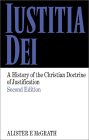
A few months back, I wrote a few blog entries on Alister McGrath’s book, Iustitia Dei: A History of the Christian Doctrine of Justification:

Alister McGrath on Augustine and Justification- McGrath documents that Augustine misunderstood the biblical term “justification” and thus set the tone for the understanding of the Roman Catholic Church.

Response on McGrath’s Book Iustitia Dei- A look at Catholic usage of McGrath’s book on Justification. A response to the Catholic attempt to show that that the protestant understanding of justification was unknown in church history previous to the Reformation.

The Alleged Roman Catholic Tradition of Justification- An entry showing that there was not “one” tradition of justification before the Council of Trent made its declaration. Also included is a review of Catholic layman Apolonio Latar’s use of Alister McGrath’s book on Justification.

I wrote these entries because I found Roman Catholics love to quote this book as proof Luther introduced a “theological novum” into the history of the Western Church. I guess using McGrath is supposed to prove that the Reformers deviated from the historical Catholic understanding of justification, and a Protestant scholar admits it. Implied in this argument is the proposition that the Roman Catholic Church received their understanding of Justification from the Apostles, and subsequent Church history records the passing on of its understanding to the Church Fathers, and then ultimately to its dogmatic proclamation at the Council of Trent.

Now, I’m not going to re-write these entries here. The interested reader can see my work on McGrath’s book in the above links. Basically, I argued most of the Catholics I’ve come across quoting McGrath haven’t actually read McGrath. They’ve probably just swiped some of his quotes in the service of Mother Church. McGrath’s book is not easy reading, and the statements the Catholics selectively cite also come with a broader context that explains what McGrath means. I think that if a Roman Catholic actually read McGrath’s book, they wouldn’t cite him. He does not establish Rome’s view on justification, and his comments in context do not say what Catholics think they do.

Now, read through Fr Alvin Kimel’s comments. Do his words show that he grasped I was presenting McGrath’s material? No. Does he even attempt to answer or respond to the six questions/conclusions I posed in the blog post? No. Does he attempt to prove I’ve mis-cited McGrath, and Catholics quoting him are accurate? No. The Pontificator did not provide any meaningful response to my blog entry.

But then, I came home today to find the Pontificator’s blog entry now included comments from the peanut gallery. Sure, I realize that’s an uncharitable statement- but I can’t help but see a few more Catholics following along with Kimel in missing the point. Can’t somebody at least read with comprehension? One comment couldn’t even get my name right, calling me, “Swain”. But, my favorite was Jonathan Prejean:

“James Swan himself went to none other than Eric Svendsen and David T. King for help, admitting that he was out of his league in trying to follow McGrath: Augustine and Justification. A bit of “blind leading the blind,” to be sure, particularly given Svendsen’s recent admission that “Patristics is not my field of study, and only marginally an area of interest for me. I make no apologies for not ‘keeping up’ with that field.”

I have to immediately wonder if Mr. Prejean has ever read McGrath’s book on Justification. I’m tempted to say he hasn’t, because if he had, he would probably agree it is a difficult book. One needs to be familiar with Greek, Hebrew, and Latin, as McGrath provides no translations of many citations used throughout the book. I appealed to David King, Eric Svendsen, and others, hoping they had read McGrath’s book. If I had misunderstood McGrath, I wanted to be corrected, I still do. Prejean seems to miss that I actualy care about reading accurately, and interpreting accurately.

Prejean continues:

“The fact is that they don’t know anything about what the Fathers believed, and I wish we had more candid confessions by people like Swan that they more or less don’t know and don’t care. It would save the rest of us who DO know and DO care the bother of interacting with them, except as an example of what the true attitude behind Protestantism is, as was the case with Fr. Al’s post.”

Here it is again- Catholics read what they want to. My question on the Areopagus was about McGrath’s book, and whether or not I properly interpreted it. If Mr. Prejean would like to play in the “same ball field” as I, he could pick up McGrath’s book and let me know if I interpreted McGrath accurately. But no, he really just wanted an opportunity to bash Eric Svendsen on Patristics, so it’s probably best he doesn’t pick up McGrath’s book. I recall hearing Prejean’s call to James White’s Dividing Line Show, and after hearing his inability to answer simple questions, I really want nothing to do with him. I would’ve hung up on him five minutes before James White did.

Guest Blog: Response To a Catholic Critique Of The Reformed Protestant Doctrine of Inscripturation (Part Three)

This is part three of a response to a paper critiquing The Reformed Protestant Doctrine of Inscripturation and The Fullness of Time.

Part one can be found here: Guest Blog: Response To a Catholic Critique Of The Reformed Protestant Doctrine of Inscripturation (Part One).

Part two can be found here.

Iohannes offered to take a look at Frank’s paper, and provide a critique. His response will be posted here in parts. To really appreciate this interaction, it is essential that one actually first reads the paper posted by Frank Ramirez.

************************************

A defense of the Protestant position on Scripture

Here it is needful to demonstrate two things: (a) that the Scriptures are the only infallible rule of faith and practice; and (b) that the testimony of an infallible church is not necessary for the reception of the Scriptures as being, with certainty, the word of God. In both cases it will be possible to give only a cursory overview of the subject matter; but nevertheless, this overview will hopefully provide an accurate depiction of the larger issue.

There are many approaches to proving that the Scriptures are the rule of faith and practice, and a thorough, albeit condensed, treatment of this matter is available in the fifth chapter of A.A. Hodge’s Outlines of Theology. Rather than repeat unnecessarily the breadth of the arguments there presented, here we shall focus only on one argument, which is that “Christ and his apostles always refer to the written Scriptures, then existing, as authority, and to no other rule of faith whatsoever.” This does not mean that the word as proclaimed orally in the ministry of Christ and the apostles was without authority. The point is rather that the example of Christ and the apostles shows that for the Church today, “The Scriptures of the Old and New Testaments, having been given by inspiration of God, are the all-sufficient and only rule of faith and practice, and judge of controversies.”

It was noted at the outset that the Savior’s words in John 5:39 can be read as a command to “search the scriptures.” Even if the imperative reading be rejected in this particular verse, there is abundant witness elsewhere in the Bible to the fact that the Scriptures are the authoritative corpus of divine revelation, and that it is by the standard of Scripture that all teaching is to be tested. To begin with, Christ constantly quoted and appealed to the Scriptures in order to establish his doctrine and defend it against the charges of critics. In this he followed the watchword of Isaiah: “To the law and to the testimony: if they speak not according to this word, it is because there is no light in them.”

The practice of Christ shows that the law and testimony, as delivered by the oracles of old, was to be found in Scripture. This is exemplified in the parable of the rich man and Lazarus. Abraham responds to Dives’ entreaty for his brethren by saying, “They have Moses and the prophets; let them hear them.” Moses and the prophets, though they had perished long ago, were yet still speaking in Christ’s time through their written testimony. Although oral traditions about the teachings of the prophets may have survived at that time, nevertheless the definitive account of the prophets’ doctrine was in fact the written word. This is shown, for example, in Luke 24:27: “And beginning at Moses and all the prophets, he expounded unto them in all the scriptures the things concerning himself.” (cf. vs. 44) When the risen Lord wished to show the disciples ‘all that the prophets had spoken’ about himself, he took them through all the scriptures, since that is where the prophets’ revelation was authoritatively recorded for the church. As Hodge said, it is significant that in his ministry on earth Christ both taught with his own authority and appealed to the authority of Scripture, but nowhere does it appear that he recognized any further rule of faith.

Christ’s practice continued after his ascension, as is shown by the letters and history of the apostles. The apostles not only taught authoritatively as Christ’s ambassadors, but, like their Lord, also frequently made appeal to Scripture. They did not countenance any doctrinal authority not countenanced by Christ. Moreover, as the commendation of the Bereans in Acts 17 shows, the message of the apostles themselves, like all doctrine, was to be judged by Scripture. In the current age, with Christ and the apostles departed, the Church must continue to follow their example. And as was the case with the prophets of old, Christ and his apostles, though not present with us in the body, are yet still speaking to the world, their doctrine having been likewise authoritatively set down for the Church in Scripture.

Thus, in its simplest form, runs one of the arguments for the sola scriptura. This argument may not put to rest every thesis that may be advanced in support of the Roman doctrine of tradition, but it does, at any rate, hopefully give some insight into how the Protestant position may be substantiated. Having addressed the place of Scripture as the rule of faith and life, it is proper now to look at the last matter requiring our attention, namely the basis on which the Christian receives the Scriptures as the word of God. This was already covered at length in the previous discussion, and rather than repeat everything that was said there, it is best here only to restate the Protestant view and to point out the main weaknesses of the claim for the necessity of the Church’s infallible testimony.

Protestants hold that God, in the abundance of His wisdom and mercy, has given men many useful external testimonies to the truth and authority of Scripture. These include the evidence of history and the witness of individual believers, as well as, perhaps most importantly, the testimony of the Church. Furthermore, the written word does itself exhibit magnificent characteristics that foster an impression of credibility. The totality of this evidence is quite weighty, but as the Westminster Confession says, “yet notwithstanding, our full persuasion and assurance of the infallible truth and divine authority [of Scripture], is from the inward work of the Holy Spirit bearing witness by and with the Word in our hearts.” In the nature of the case, nothing less than this would be sufficient; and at the same time nothing else could be more persuasive. Calvin puts the matter well in saying:

In vain were the authority of Scripture fortified by argument, or supported by the consent of the Church, or confirmed by any other helps, if unaccompanied by an assurance higher and stronger than human Judgment can give. Till this better foundation has been laid, the authority of Scripture remains in suspense. On the other hand, when recognising its exemption from the common rule, we receive it reverently, and according to its dignity, those proofs which were not so strong as to produce and rivet a full conviction in our minds, become most appropriate helps.[Institutes, Bk. I, Ch. 8]

A defense of this position was made at length in the sixteenth century by William Whitaker in his Disputations on Holy Scripture [pp. 332-358 of the Parker Society edition]. In that work he advanced in meticulous, even scholastic fashion, nineteen arguments in its favor. It is not necessary, however, to argue in this way, nor is it necessary that each of Whitaker’s arguments be accepted; for the strength of the position can be shown through its comparison with some of the simplest teachings of Scripture. In the parable referenced above, Abraham informs Dives that if men “hear not Moses and the prophets, neither will they be persuaded, though one rose from the dead.” Calvin, commenting on the verse, observes that “faith does not depend on miracles, or any extraordinary sign, but is the peculiar gift of the Spirit, and is produced by means of the word.” Just as men will not ultimately believe in Christ until the Spirit gives them eyes to see salvation in Him, so too they will not receive the Scriptures for what they are until the Spirit gives them ears to hear God’s word in them.

It should be remembered that when the ancients heard Christ preaching, they did not have the benefit of the church, infallible or otherwise, telling them to receive his words. Christ simply taught as one with authority, and his word was with power (cf. Mat. 7:29, Mark 1:22, Luke 4:32). It is true both that John the Baptist bore witness to Christ, and that Christ wrought many miracles that showed himself and his message to be from above. But it is also true that, in spite of this impressive evidence, very many people refused to believe. “The light shineth in darkness; and the darkness comprehended it not.” Christ’s preaching did not produce true faith in any of his hearers until the Spirit unstopped their ears; until He opened their eyes and hearts, and thus illuminated their minds and understandings. It is this illuminating testimony of the Spirit that gives believers the certainty of their faith. Once it is enjoyed, all other testimonies, even the most forceful of them, appear as what they properly are—what Calvin called “secondary helps to our weakness,” or testimonies corroborating “that chief and highest proof,” i.e. “the inward persuasion of the Holy Spirit.” And as Owen said, “When our Saviour Christ himself preached, what he spoke was as much the word of God when he spake it as now that it is written.” [Sermon on Luke 16:29] Even as the hearers of Christ had many corroborating testimonies to the truth and authority of his message, so too have we many to the truth and authority of Scripture; but just as their certainty came ultimately from the testimony of the Holy Spirit, so must ours also.

There are other places in Scripture which shed light on this doctrine. Among them is the line in First John: “But ye have an unction from the Holy One, and ye know all things.” (vs. 2:20) Regarding this verse, John Murray wrote, “This anointing is an abiding possession and invests believers with discernment of the truth and stedfastness in it.” [The Infallible Word, ed. Stonehouse & Woolley.] For the present purposes, however, it is appropriate now to turn from the positive case in order to respond to an objection. It was asked whether an Old Testament believer would, when accepting the teaching of Isaiah, need to have faith in the prophet in addition to faith in his message. Here the trust had in Isaiah would indeed be an important confirmation of the truth of his proclamation. But in this case as in others, the message was to be received with certainty not so much because the believer heard Isaiah utter it, but because he heard God speaking in what Isaiah uttered. When Paul was in Athens, he was so little esteemed by some of the learned men that they called him a “babbler.” (Acts 17:18) This is an idiomatic rendering of a rather contemptuous word. Yet although Paul was despised, his words to the Athenians and foreigners at the Areopagus did not lose any of their authority or their trustworthiness. In the same way, when Paul first entered the synagogue in a town and began to preach the gospel, he was not immediately recognized as an apostle commissioned by the Lord Jesus. Whatever trust men had in him as a teacher, it was not because of this that they were ultimately led to embrace the good news he brought. They embraced the gospel in the end because God enabled them to see the truth of what Paul preached. It is only after they recognized Jesus as Lord that they could properly recognize Paul as their Lord’s duly appointed herald.

This leads us to the often-made claim that without an infallible church, believers could not have certainty that the Bible they receive is the word of God. Two main responses have been made to this, in order to show it is mistaken. The first is that it seems problematic historically. For the ancient Jews did not have an infallible Church to settle for them the matter of which books were divinely inspired. As Old Testament scholar Edward J. Young said:

How the books were gathered together we are not told. Apparently, no religious council in ancient Israel ever drew up a list of the divine books. Rather, in the singular providence of God, his people recognized his Word and honored it from the time of its first appearance. Thus was formed the collection of inspired writings which are known as the canonical books of the Old Testament. [The Infallible Word]

The key concept here is that “in the singular providence of God, his people recognized his Word.” This is what Protestants hold to be case in the New Testament age, as well. And the historical facts seem to fit well with this thesis. It makes sense that in the absence of a distinct body of tradition that authoritatively resolves the matter of the canon, there may at times, especially early on, have been some disagreements about it. As was suggested previously, it is conceivable that in the days before the cessation of the gift of prophesy, Christians may sometimes have erred in thinking something to have been delivered from God which in fact came only from men (cf. 1 Cor. 14:29; 1 Thess. 5:21) In the same way, Christians may sometimes have erred in their judgments about the canon. Yet if the position of the Church of Rome is correct, it seems peculiar that other very ancient Churches, each claiming to follow the tradition of the apostles, have different canons. It seems also a little strange that the church fathers, who are said to have transmitted apostolic tradition to the later church, did not have a more perfect agreement about the canon.

It might be asked how, if the Protestant position is correct, the Church could ever finally settle on a single recognized canon. Calvin’s remarks on the command to ‘try the spirits’ in 1 John 4:1 may be helpful with this and like questions. The passage is somewhat too lengthy to quote in full, but the most relevant portion is the following:

But here a difficult question arises: If every one has the right and the liberty to judge, nothing can be settled as certain, but on the contrary the whole of religion will be uncertain. To this I answer, that there is a twofold trial of doctrine, private and public. The private trial is that by which every one settles his own faith, when he wholly acquiesces in that doctrine which he knows has come from God; for consciences will never find a safe and tranquil port otherwise than in God. Public trial refers to the common consent and polity of the Church; for as there is danger lest fanatics should rise up, who may presumptuously boast that they are endued with the Spirit of God, it is a necessary remedy, that the faithful meet together and seek a way by which they may agree in a holy and godly manner. But as the old proverb is too true, “So many heads, so many opinions,” it is doubtless a singular work of God, when he subdues our perverseness and makes us to think the same thing, and to agree in a holy unity of faith.

The last sentence is especially interesting. The general consensus on the canon that appears historically is a precious token of divine providence. This consensus is not altogether perfect, and it is not in itself infallible. Nevertheless, given that so many believers have historically testified that God speaks in the recognized books of the Bible, their testimony carries great weight. They were, after all, the people of God, indwelt and guided by the Holy Spirit. Although the testimony of the Spirit is ultimately decisive as the source of the believer’s certainty—for our faith stands not in the wisdom of men, but in the power of God—nevertheless, if a man thinks the Spirit leads him away from the consensus reached by the great body of believers, then he should carefully consider whether his perception is correct. There is a time when it is necessary to stand, like Athanasius, against the world. Protestants believe this was the case at the time of the Reformation. The judgment of men, and even of the men of the church, is not infallible, and God’s word must remain the final arbiter of controversies. Nonetheless, believers should treat with a healthy respect the conclusions of their brethren and forebears in the faith.

This brings us to the other weakness of the notion that an infallible church is required for the certainty about the canon. It may be assumed, for the sake of argument, that the Roman Magisterium is infallible in its teaching on the canon. However, even if this were the case, for our certainty about the Scripture to be mediated through the infallible judgment of the Magisterium, it would first be necessary for us to recognize the authority of the Magisterium. We must then ask on what basis a Roman Catholic comes to believe that, as his Catechism says, “The task of giving an authentic interpretation of the Word of God, whether in its written form or in the form of Tradition, has been entrusted to the living teaching office of the Church alone.” The answer is bound to be similar to the Protestant’s reason for receiving the Scriptures as the word of God. The Roman Catholic believer might indeed be able to point to many objective evidences that support the claim for authority made by the Magisterium. But would he not in the end say, that even after all these important testimonies have been considered, his full persuasion and assurance about the infallibility and divine authority of the Church’s teaching office come from nothing less than work and witness of the indwelling Holy Spirit? Is it not because of this witness of the Spirit that the Roman Catholic believer finds himself, in the last analysis, truly certain that the Roman Church has correctly interpreted the apostolic tradition, while the Greek Church has not?

The same tremendous epistemological weight therefore bears down on the Roman Catholic deciding to accept the judgment of the Magisterium that bears down on the Protestant deciding to receive the books of Scripture. In both cases, although the believer’s conviction may be buttressed by objective evidence, it nonetheless derives its certainty not from anything of this world, but from the voice and agency of the Triune God. Only God Himself can handle the epistemic burden. Only the light of the Spirit can finally illuminate and dispel the twilight of uncertainty.

It is true that both Roman Catholics and Protestants reason in a circle. Being the finite creatures of the infinite God, the situation could not be otherwise. The important question that must be asked is, whose template of beliefs fits reality? Which position can consistently harmonize the facts of Christian faith and experience? As contraries rather than contradictions, it is possible that both sides could be mistaken. But for my part, I firmly believe that one is correct, and hope that this response might show something of the reason.

With Prayer and Respect,

Iohannes

Monday, January 08, 2007

Guest Blog: Response To a Catholic Critique Of The Reformed Protestant Doctrine of Inscripturation (Part Two)

This is part two of a response to a paper critiquing The Reformed Protestant Doctrine of Inscripturation and The Fullness of Time. Part one can be found here: Guest Blog: Response To a Catholic Critique Of The Reformed Protestant Doctrine of Inscripturation (Part One). Iohannes offered to take a look at Frank’s paper, and provide a critique. His response will be posted here in parts. To really appreciate this interaction, it is essential that one actually first reads the paper posted by Frank Ramirez.

************************************

It is appropriate to turn now to the Scriptural evidence cited for the Roman Church’s position. In the interest of brevity some of the verses which were brought forward will have to be left unnoticed, but an attempt will be made to address the weightiest of the proof texts given. As part of the providence of God, the matters now under discussion have been explored extensively by many gifted theologians of the past, and since the true Protestant doctrine is sola scriptura—as opposed to what is sometimes called ‘solo scriptura’—reference will be made to the accounts given by learned commentators: it nonetheless being the reader’s task to judge whether these accounts truly accord with the bible’s teaching, which must remain the final authority.

These things write I unto thee, hoping to come unto thee shortly: but if I tarry long, that thou mayest know how thou oughtest to behave thyself in the house of God, which is the church of the living God, the pillar and ground of the truth. I Tim. 3:14f

Here is an excerpt from one commentator:

"By holding out to pastors the greatness of the office, he undoubtedly intended to remind them with what fidelity, and industry, and reverence they ought to discharge it. […] Hence we may easily conclude in what sense Paul uses these words. The reason why the Church is called the “pillar of truth” is, that she defends and spreads it by her agency. God does not himself come down from heaven to us, nor does he daily send angels to make known his truth; but he employs pastors, whom he has appointed for that purpose. To express it in a more homely manner, is not the Church the mother of all believers? Does she not regenerate them by the word of God, educate and nourish them through their whole life, strengthen, and bring them at length to absolute perfection? For the same reason, also, she is called “the pillar of truth;” because the office of administering doctrine, which God hath placed in her hands, is the only instrument of preserving the truth, that it may not perish from the remembrance of men."

Who wrote this? The answer is none other than John Calvin, whose words are quoted here in order to show that one need not speak meanly of the church when denying Rome’s claims about infallibility.

Calvin’s explanation of the passage is that Paul reminds Timothy of the high purpose of the church—namely, to hold up and defend God’s truth in the world—so that he and other pastors might be stirred to a great diligence and care in performing their service. If this is the real meaning of the passage, it seems to be something of a stretch to infer that the Church is “the ‘pillar and foundation’ of the Word of God,” as is said in the paper. For the truth that the Church maintains in the world is the truth now contained in Scripture, and it is on this truth that the Church itself rests. As John Owen observed, the church “cannot be so the pillar and ground of truth that the truth should be, as it were, built and rest upon it as its foundation; for this is directly contrary to the same apostle, who teacheth us that the church itself is ‘built upon the foundation of the apostles and prophets, Jesus Christ himself being the chief corner-stone,’ Eph. ii. 20. The church cannot be the ground of truth, and truth the ground of the church, in the same sense or kind.” [Pneumatologia, Bk. VI, P. 1, Ch. 3]

It should be noted that the allusion to a pillar may involve the church not only holding up the truth, but also holding it out. Matthew Henry’s commentary states:

"The church itself is the pillar and ground of truth. Not that the authority of the scriptures depends upon that of the church, as the papists pretend, for truth is the pillar and ground of the church; but the church holds forth the scripture and the doctrine of Christ, as the pillar to which a proclamation is affixed holds forth the proclamation. Even to the principalities and powers in heavenly places is made known by the church the manifold wisdom of God, Eph. 3:10."

The commentator may have spoken somewhat imprecisely in attributing to Rome the notion that the authority of Scripture depends upon that of the church, but notice the statement that “truth is the pillar and ground of the church.” Is this a subtle Protestant attempt to weaken the authority of the church? Certainly not, for it is Chrysostom who said of the church that, “it is this that maintains the faith and the preaching of the Word. For the truth is the pillar and the ground of the Church.” [Homily XI on First Timothy] And therefore, if the foundation of truth upon which a particular church rests begins to crumble, then the pillar which that church is may become unsteady, and may even fall. Recognizing this, Calvin insisted that: “Paul does not wish that any society, in which the truth of God does not hold a lofty and conspicuous place, shall be acknowledged to be a Church.” The text consequently demonstrates that one of the marks of a true church is the maintenance of sound doctrine. For this application of the text, see Article 29 of the Belgic Confession, which lists the distinctive characteristics of the true church.

Therefore, brethren, stand fast, and hold the traditions which ye have been taught, whether by word, or our epistle. II Thess. 2:15

Now I praise you, brethren, that ye remember me in all things, and keep the ordinances [or, traditions], as I delivered them to you. I Cor. 11:2


These verses are best treated together, since both are relevant to the discussion specifically because of the use of the word paradoseis, or traditions. It is important that this word be understood rightly, and for that reason it is helpful to consider an excerpt from J.N.D. Kelly’s work on Early Christian Doctrines.

"At the threshold, however, the reader should be placed on his guard against an ambiguity inherent in the word. In present day idiom ‘tradition’ denotes the body of unwritten doctrine handed down in the Church, or the handing down of such doctrine, and so tends to be contrasted with Scripture. In the language of the fathers, as indeed of the New Testament, the term of course conveyed this idea of transmission, and eventually the modern usage became regular. But its primary significance (cf. paradidonai; tradere), viz. authoritative delivery, was originally to the fore and always remained prominent. Hence by tradition the fathers usually mean doctrine which the Lord or His apostles committed to the church, irrespective of whether it was handed down orally or in documents, and in the earlier centuries at any rate they prefer to employ other words or phrases to designate the Church’s unwritten traditional teaching." [pp. 30f of the Prince Press edition]

This understanding of the word’s meaning is reflected in the way Archibald Alexander responded to the claim that these verses support the Roman Church’s doctrine of tradition:

Now all that is necessary to refute the argument derived from these and such like passages, where the word traditions is used, is to observe, that Paul employs this word in a very extensive sense, to signify whatever doctrines or institutions he had delivered to the churches, whether by his preaching or writing. [...] [I]n the quotation from the second chapter, it is clear, that by traditions, the apostle did not mean merely oral communications, for he explains himself, by saying, “whether by word or epistle.” It is not denied, that Paul delivered many things orally to the churches, as has been already acknowledged. All the instructions given to the churches first planted, were oral, for as yet no gospels nor epistles were written; but the true point in dispute is, whether any article of faith, or any important institution, thus originally communicated, was omitted, when the books of the New Testament were written by divine inspiration. Whether, while a part of the revelation of God, for the use of his church, was committed to writing, another important part was left to be handed down by tradition. That the word tradition, as used by Paul, makes nothing in favour of the doctrine of the Romish church, is evident, because by this word he commonly means such things as were distinctly recorded in the Scriptures. Thus, in his first epistle to the Corinthians, he says, “For I delivered unto you first of all,” where the word for transmitting by tradition, is used; but what were those things which he had by tradition communicated to them? He informs us in the next words, “How that Christ died for our sins according to the Scriptures, And that he was buried, and that he rose again the third day, according to the Scriptures.” 1 Cor. xv. 3, 4. [cf. I Cor. 11:23ff] [The Canon of the Old and New Testaments Ascertained, Part 2, Sect. 17]

Further evidence would therefore be needed to prove the Roman doctrine of tradition. The bare fact that the Apostles taught the first Christians by both spoken and written words does not in any sense require the conclusion that later Christians were to receive God’s final and authoritative revelation of Himself through the twin streams of written books and unwritten traditions, or that, as is said in Dei Verbum (9), “both sacred tradition and Sacred Scripture are to be accepted and venerated with the same sense of loyalty and reverence.” Protestants do, of course, believe the tradition of the apostles is authoritative, but they also believe that this tradition is now perfectly recorded in the completed Scriptures, to which nothing is to be added as part of the rule of faith and life.

When these verses were cited in the paper, it was said that “the Reformed theologians would respond that these apostolic traditions were what the divine economy required at that time.” But to be clear, the special importance of the spoken word in the earliest days of the Church was due not so much to a deep theological reason as it was to a practical reality—until the New Testament was completed, God’s revelation could not but be spread orally. God made provision for this situation by commissioning the apostles and other special officers, who would be responsible for the initial diffusion of the gospel. Paul’s words in First Corinthians are illustrative here (either directly or indirectly): “...when that which is perfect is come, then that which is in part shall be done away. When I was a child, I spake as a child, I understood as a child, I thought as a child: but when I became a man, I put away childish things.” Jonathan Edwards held that the text has in view what he called a “twofold perfect,” and in explaining one aspect of this he said: “The church in its beginning, or in its first stage, before it was strongly established in the world, and settled in its New Testament state, and before the canon of Scripture was completed, was in an imperfect state — a state, as it were, of childhood, in comparison with what it was to be in its elder and later ages, when it should have reached its state of manhood, or of comparative earthly perfection.” [Charity and Its Fruits, Sermon 16] In other words, while it was entirely proper for the Church, in its state of relative childhood, to receive the word of God from the mouths of the apostles, this was not to continue into the age of the Church’s relative maturity, once the Church had been well established, and the whole of God’s revealed will for His Church had been committed to writing.

Two points remain to be addressed with connection to these verses. The first point is that which Thomas Scott noted in his commentary on the verse from Second Thessalonians: “Doubtless Paul’s traditions were worthy of credence and obedience; but how shall we know anything of them, except as they were written for our benefit?” In order to hold that there is an authoritative body of extra-Scriptural apostolic tradition, it is necessary to show that such traditions as it is held to include actually came from the apostles. As Scott wrote, the good news “which Paul, Silvanus, and Timothy were sent to preach to” the Thessalonians “came not to them in word only, but with the power of the Holy Ghost” (cf. I Thess. 1:5; I Cor. 2:4). It appears that God gave a strong witness to the truth of his apostles’ message that he has not similarly given to truth of the alleged body of unwritten tradition. The other point is a response to the (admittedly clever) suggestion in the paper that the Protestant position amounts to shouting, “To hell with Timothy, we want 1 and 2 Timothy!” As should be clear by now, the Protestant position does not diminish the honor or importance of the special officers through whom God delivered the gospel to the early Church. Neither do Protestants, in recognizing the authority of Scripture as the infallible rule of faith and life, in any way rob the church and its pastors of their high importance in Christianity. Recognizing that it is with the feet that the body stands, and that rather using the hands for standing, the body uses them for holding things, does not in any way belittle the hands and their service.

What has been covered thus far should be sufficient for relating the general answer to the Scripture witness offered in the paper. Nevertheless, in order that the case might be more fully presented, it will be beneficial to look briefly at a few more of the Scripture passages that were referenced.

And the things that thou hast heard of me among many witnesses, the same commit thou to faithful men, who shall be able to teach others also. II Tim. 2:2

This verse should be compared with Paul’s words in the previous chapter: “Hold fast the form of sound words, which thou hast heard of me, in faith and love which is in Christ Jesus. That good thing which was committed unto thee keep by the Holy Ghost which dwelleth in us.” It is without doubt that the Spirit aids the good pastors set over the church; as it is said in Matthew Henry’s commentary, “Even those who are ever so well taught cannot keep what they have learned, any more than they could at first learn it, without the assistance of the Holy Spirit. We must not think to keep it by our own strength, but keep it by the Holy Ghost.” At the same time, it clearly goes beyond what is written to infer from these verses anything touching the putative infallibility of the church’s teaching office. Regarding the command to “hold fast the form of sound words,” and to pass this on to future generations, this has historically been done, at least in part, through the drafting of creedal statements, which are simply short compendiums of Christian doctrine. These statements are received by the Church as authoritative, not in themselves, but derivatively and in a secondary way because they concisely but accurately present the teaching of Scripture.

Take heed therefore unto yourselves, and to all the flock, over the which the Holy Ghost hath made you overseers, to feed the church of God, which he hath purchased with his own blood. Acts 20:28

At this point it should be unnecessary to comment directly on the use made of this verse in the paper. But rather than silently pass by such a wonderful sentence, it seemed proper to quote it and make two observations on it. The first is that it contains a profound statement about how salvation comes to us in Christ; for God purchased His Church with nothing less than His own blood. The second, which must seem quite mundane in comparison, is that Paul here calls ‘overseers’ or ‘bishops’, i.e. episkopoi, the same men who in verse 17 are called ‘elders’, i.e. presbuteroi. Although it may be true that the institution of the monarchical bishop can be traced to very ancient times, the New Testament yet knows nothing of it, and seems rather to contradict it by equating bishops and elders.

These things have I spoken unto you, being yet present with you. But the Comforter, which is the Holy Ghost, whom the Father will send in my name, he shall teach you all things, and bring all things to your remembrance, whatsoever I have said unto you. John 14:25f

This passage has long been used by the Church of Rome to prove, as is maintained in the paper, that Christ promised that the Spirit “would help the Church’s memory.” The old Catholic Encyclopedia identifies it as one of several places in this part of John’s Gospel “which clearly imply the promise of infallibility.” In response to this claim, Protestants do not necessarily deny that this promise can indirectly, in some sense, be extended to all believers. As is said in Matthew Poole’s commentary, “It is one great work of the holy Spirit, to bring the revelations of holy Writ to our remembrance, and withall to [make] clear to us the sense of them, and confirm our faith in them, and chiefly to quicken us to practice what is our duty.” Nevertheless, this is not at all the primary meaning of the passage; for Christ was here addressing his immediate disciples, telling them that they would be helped to remember the things which he himself had spoken to them during their time together.

An old article from Time Magazine [Nov. 1, 1968] describes a book by Roman Catholic Bishop Francis Simons titled Infallibility and the Evidence. This book was extremely controversial because Bishop Simons plainly asserted that, “a scrutiny of the traditional arguments seems to prove that the very structure of infallibility has to be abandoned.” Here is a short excerpt from the article: “Simons cites Jesus' declaration in John 14:26... In Simons' view, the obviously personal meaning of the word remembrance ‘makes the words applicable only to the Apostles.’ Nor is there any hint in the Bible, Simons claims, that the Apostles' successors would inherit more than ordinary providential assistance in interpreting what the Apostles themselves witnessed.” Depending on the context in which it is said, it may go a little too far to assert that the verse is applicable strictly to the Apostles alone. Nonetheless, the basic point remains as something deserving consideration.

This verse is also relevant to a fact that was mentioned several times in the discussion: namely, that Luke “had to sift through the traditions in order to write his Gospel.” Luke may indeed have had to sift through many sources when drafting his Gospel, but it is worth noting that in this process, besides having the benefit of divine inspiration, he also had the benefit of having been the contemporary of the men to whom the promise in John 14:26 was directly given. This is far from being the case with the men who today must interpret tradition as part of Rome’s teaching office.

Having many things to write unto you, I would not write with paper and ink: but I trust to come unto you, and speak face to face, that our joy may be full. II John 12

I had many things to write, but I will not with ink and pen write unto thee: but I trust I shall shortly see thee, and we shall speak face to face. III John 13f


These verses were referenced in the paper’s conclusion, not so much as outright proofs of the Roman Church’s doctrine, but as evidence tending to support it. In response it may be said that John’s purpose in coming in person rather than only in letter appears to have been determined more by the nature of pastoral care and Christian fellowship than by the nature of revelation. After all, John explicitly identifies his reason as being “that our joy may be full.” Since unwritten tradition moves men no closer to this end than the written word does, it is somewhat unnatural to read into this text a witness to the Roman position on revelation.

It was also asserted in the paper, again as something on the order of confirmatory evidence for a position already established: “That Moses and the Prophets were to write down everything is clear from the Old Testament writings... In the New Testament, however, these explicit divine commands to inscripturate are totally absent.” Two observations may be made in answer to this. First, in it is logical form it is essentially an argument from silence, and thus its value is doubtful, especially when other more forceful arguments can be made. But further, taking the argument at face value, the premise that the New Testament lacks any command to commit revelation to writing does itself appear questionable. In the opening chapter of the Apocalypse John is twice bidden to write down the vision that he receives (verses 11 and 19). This command to write is then reiterated at various important points in the prophesy (see the instructions to write to the angels of the seven particular churches, as well as 14:13, 19:9, and 21:5). It is true that no equally explicit command is found in the rest of the New Testament. However, it seems fair to infer from the Old Testament examples that such commands to write are more to be expected in prophetic literature than in other genres, and given that the Apocalypse is the only book of its type in the New Testament, it does not seem unusual that a command to write should be found in it but not in the other books.

With this the examination of the biblical witness brought forward in the paper must, for now, conclude, so that there be time to give something toward a defense of the Protestant position on Scripture.