Showing posts with label Spurgeon. Show all posts

Monday, August 03, 2020

Luther: Every week I preach justification by faith to my people, because every week they forget it.

Did Luther say, "Every week I preach justification by faith to my people, because every week they forget it"? Sometimes the quote is stated as "we need the gospel every day because we forget the gospel every day."

This is a murky Luther quote that seems like something he would have said, yet finding an exact reference isn't easy. A couple of people have searched for this quote uncovering interesting clues and theories of its origin (see for instance, About That Great Luther Quote and also the discussion here). Piggybacking on their efforts, I have my own theory of how this quote became popular: it's in the form it's in because singer-song writer Derek Webb was quoting Charles Spurgeon quoting Luther... whether he knew it or not!

Derek Webb, The House Show 
It was posited by this blogger that the quote popularly stems from Derek Webb's, The House Show CD. That seems possible. In this 2003 article from the Christian Post,  Webb is quoted as saying, 
Martin Luther was once quoted when a member of his congregation came in and said, "Pastor, why is it week after week you preach to us the Gospel? We've read your books, we know you to be a brilliant man. Why do we never move on? When do we get past this, on to something else?" And he said, "Beloved, because week after week, you forget it. You will never be without your need for the Gospel, so I will never cease to preach it to you."
In another version, Webb states:
There’s a great quote by Martin Luther in the sixteenth century. He had a church that he was the pastor of and some came to him and said, “Pastor, why is it that week after week after week all you ever preach to us is the gospel?” – implying that “we’re ready to move on to something else. Certainly we know this by now.” Luther’s response was, “Well, because week after week you forget it, because week after week you walk in here looking like a people who don’t believe the gospel. And until you walk in looking like people who are truly liberated by the truth of the gospel, I’m going to continue to preach it to you.” And, until his dying day, he did.
The blogger who uncovered Derek Webb's use states, "...what I think has happened is that Derek Webb put a bit of a story to an actual Luther quote...". He's right that the story was "jazzed up a bit," but I don't think Webb was jazzing up Luther directly. One year earlier, this 2002 author states, "A frustrated parishioner once asked Martin Luther why he preached the gospel of grace every Sunday. Luther replied, “Because every week you forget it.” Was this 2002 book on "Devotion for Dating Couples" the source Derek Webb used?  I don't know. I suspect one  (or both) of these people may have been "jazzing up" Luther via Charles Spurgeon.  

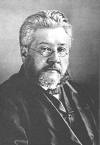
Charles Spurgeon
I've been through a few popular Luther quotes that are the result of Charles Spurgeon. This doesn't surprise me. Spurgeon's writings were widely published in English, he's still widely read, and he's extremely quotable! Spurgeon alluded to or quoted Luther from memory, though he typically did not quote Luther verbatim but rather summarized something from Luther in his own words. 

From an 1855 sermon, Spurgeon is recorded as saying, 
...the whole Bible tells us, from beginning to end, that salvation is not by the works of the law, but by the deeds of grace. Martin Luther declared that he constantly preached justification by faith alone, "because," said he, "the people would forget it; so that I was obliged almost to knock my Bible against their heads, to send it into their hearts." So it is true; we constantly forget that salvation is by grace alone.
The question then becomes: what source did Spurgeon use? Spurgeon's primary language was English. During his time period, there was only a limited pool of Luther's writings available in English. During Spurgeon's lifetime, one of the most popular of Luther's writings available in English was his commentary on Galatians. This blogger rightly identifies a comment from Luther's commentary that seems very likely what Spurgeon had in mind. Luther states,   
Bur here will some men say, the law is divine and holy. Let the law have his glory, but yet no law, be it never so divine and holy, ought to teach me that I am justified, and shall live through it. I grant it may teach me that I ought to love God and my neighbour; also to live in chastity, soberness, patience, etc., but it ought not to show me, how I should be delivered from sin, the devil, death, and hell. Here I must take counsel of the gospel. I must hearken to the gospel, which teacheth me, not what I ought to do, (for that is the proper office of the law,) but what Jesus Christ the Son of God hath done for me : to wit, that He suffered and died to deliver me from sin and death. The gospel willeth me to receive this, and to believe it. And this is the truth of the gospel. It is also the principal article of all Christian doctrine, wherein the knowledge of all godliness consisteth. Most necessary it is, therefore, that we should know this article well, teach it unto others, and beat it into their heads continually. for as it is very tender, so it is soon hurt. This Paul had well tried, and of this have all the godly also good experience. 

Conclusion
The quote in its current popular form does not appear to be an exact quote from Martin Luther, but rather a quote that was originally from his Galatians commentary, used extemporaneously by Spurgeon, and then picked up by a few people in the early 2000's. The only exact way to connect these dots is to specifically ask Derek Webb or the authors of Devotions for Dating Couples about it. Till then, here is Luther from one of his sermons:
The devil is ever on the alert to insinuate all kinds of wickedness into our hearts, and would fain make them as cold as ice. Where God’s Word is not repeatedly proclaimed in sermons, in hymns, in private conversation, so that we may not forget it or become callous towards it, there it is impossible for our hearts, which are burdened with many an earthly pain and sorrow, with wicked purposes and the devil's malicious instigations, not to fail and to fall from Christ. Thus it is an urgent necessity that the preaching of the Gospel continue among us, that we may hear and retain it, otherwise we would soon forget our Lord. 

Thursday, February 27, 2020

Luther: "Affliction is the best book in my library"

Here's a popular Martin Luther quote making the cyberspace rounds, even finding it's way into Christian History Magazine:
"Affliction is the best book in my library." Another version says, "The best book in the library of my life is the Book of Affliction." Did Luther say it? I don't think so.

Documentation
Since this quote often appears undocumented throughout cyberspace, let's use Christian History Magazine as the source. While entertainingly written, Christian History is often lacking in regard to precise documentation. This particular quote is included in their section, "Colorful Sayings of Colorful Luther: A sample of the reformer's wit and wisdom" (Issue 34, Vol. XI, No. 2, pp.27-28), compiled by Mary Ann Jeffreys (apparently, a freelance writer if this is the same person).

What's interesting about Ms. Jeffreys is that a simple Google search of her name + "Christianity Today" (the publisher of Christian History) puts forth a number of hits to articles on or by Charles Spurgeon.  A basic Google book search of this Luther quote also puts forth a number of hits to books by Charles Spurgeon. Coincidence?  Probably not! It appears to me that the basic English form of this quote originated from a Charles Spurgeon sermon published in the nineteenth-century. Spurgeon preached,
Another reason for this discipline is, I think, that in heaviness we often learn lessons that we never could attain elsewhere. Do you know that God has beauties for every part of the world; and he has beauties for every place of experience? There are views to be seen from the tops of the Alps that you can never see elsewhere. Ay, but there are beauties to be seen in the depths of the dell that ye could never see on the tops of the mountains; there are glories to be seen on Pisgah, wondrous sights to be beheld when by faith we stand on Tabor; but there are also beauties to be seen in our Gethsemanes, and some marvelously sweet flowers are to be culled by the edge of the dens of the leopards. Men will never become great in divinity until they become great in suffering. “Ah!” said Luther, “affliction is the best book in my library;” and let me add, the best leaf in the book of affliction is that blackest of all the leaves, the leaf called heaviness, when the spirit sinks within us, and we can not endure as we could wish.
Context
I could not locate anything exactly like "affliction is the best book in my library" from Luther.  The closest I could locate was the following Table Talk utterance:
To have Patience in Suffering.
On the 8th of August, 1529, Luther, together with his wife lay sick of a fever; then he said, God hath touched me sorely, and I have been impatient: but God knoweth better than we whereto it serveth. Our Lord God doth like a printer, who setteth the letters backwards; we see and feel well his setting, but we shall see the print yonder, in the life to come: in the mean time we must have patience.
The tribulations of God-fearing christians are strong and profitable. Tribulation is a right school, and an exercise of flesh and blood: whoso is without them, the same understandeth nothing. Therefore the Psalms, almost in every verse, speaketh of nothing but tribulations, and perplexities, sorrows, and troubles: it is a book of tribulations.

Conclusion
That Table Talk quote was taken from one of the oldest modern English versions, a version published in the nineteenth-century. Included in this volume is a lengthy anthology of quotes on "Temptation and Tribulation." Did Spurgeon have this edition? During Spurgeon's time period, there was only a limited pool of Luther's writings available in English, so it's highly likely he had a copy. It was a very popular book!  It certainly would make sense that he would gravitate to those Table Talk topics that expounded on suffering. Spurgeon's sermon is about spiritual "heaviness," or rather despair. It's a fairly uncontested fact that Spurgeon suffered from bouts of depression, as did Luther.

I suspect though, Spurgeon had a flair for using the phrase, "best book," and he was not citing Luther at all.  Elsewhere, Spurgeon says:
Let me yet further observe, that YOUR FAITH WILL BE TRIED FOR AN ABUNDANTLY USEFUL PURPOSE. The trial of your faith will increase, develop, deepen, and strengthen it. “Oh,” you have said, “I wish I had more faith.” Your prayer will be heard through your having more trial. Often in our prayers we have sought for a stronger faith to look within the veil. The way to stronger faith usually lies along the rough pathway of sorrow. Only as faith is contested will faith be confirmed. I do not know whether my experience is that of all God’s people; but I am afraid that all the grace that I have got out of my comfortable and easy times and happy hours, might almost lie on a penny. But the good that I have received from my sorrows, and pains, and griefs, is altogether incalculable. What do I not owe to the hammer and the anvil, the fire and the file? What do I not owe to the crucible and the furnace, the bellows that have blown up the coals, and the hand which has thrust me into the heat? Affliction is the best bit of furniture in my house. It is the best book in a minister’s library. We may wisely rejoice in tribulation, because it worketh patience, and patience experience, and experience hope; and by that way we are exceedingly enriched, and our faith grows strong.
Notice also this comment from Spurgeon:
We learn more true divinity by our trials than by our books. The great Reformer said, "Prayer is the best book in my library." He might have added affliction as the next. Sickness is the best Doctor of Divinity in all the world; and trial is the finest exposition of Scripture. This is so inestimable a mark of the love of our blessed Lord that we might almost desire trouble for the sake of it.
Notice also this comment from Spurgeon:
LUTHER has well said that the experience of the minister is the best book in his library. I am persuaded it is so, and that God often leads his servants through peculiar states of mind, not so much for their own benefit as for the sake of those to whom they may afterwards minister.
The similarities are apparent, but no mention of Luther in the first quote, and referring to the "great Reformer" in the second, and "Luther" in the third. I suspect the "best book" was Spurgeon's phrase, not Luther's.

If Spurgeon was citing Luther, he was probably working from memory in his sermon and not citing Luther directly, perhaps summarizing the Table Talk's extensive quotes on suffering. The quote, as has been popularized, may simply also be Spurgeon's recollection of what he recalls reading Luther to have said, perhaps by Luther, or perhaps a book about Luther. Interestingly, elsewhere in the Table Talk, Luther does mention the "best book" in regard to suffering:
The Holy Scriptures are full of divine gifts and virtues. The books of the heathen taught nothing of faith, hope, or charity; they present no idea of these things; they contemplate only the present, and that which man, with the use of his material reason, can grasp and comprehend. Look not therein for aught of hope or trust in God. But see how the Psalms and the Book of Job treat of faith, hope, resignation, and prayer; in a word, the Holy Scripture is the highest and best of books, abounding in comfort under all afflictions and trials. It teaches us to see, to feel, to grasp, and to comprehend faith, hope, and charity, far otherwise than mere human reason can; and when evil oppresses us, it teaches how these virtues throw light upon the darkness, and how, after this poor, miserable existence of ours on earth, there is another and an eternal life.

Monday, June 10, 2019

Luther: I have so much to do that I shall have to spend the first three hours in prayer

A recent email asks,

I know you love chasing sources for Luther quotes. I know he's widely quoted as saying "I have so much to do that I shall have to spend the first three hours in prayer", but I can't find a source for it. I thought I'd flick you an email to see if you've ever tried tracking a source for this one down. Have you?

If you Google search it, you'll get numerous hits. This source from 1896 states,
Martin Luther, upon being asked one time by a friend what his plans were for the following day, replied, "Work, work from early until late. In fact, I have so much to do that I shall spend the first three hours in prayer" (c.f.  1871; 1880).
Other variants of this rendering state, "Work, work, from morning until late at night. In fact, I have so much to do that I shall have to spend the first three hours in prayer." One lengthier variation reads,
Martin Luther famously said, "If I fail to spend two hours in prayer each morning, the devil gets the victory through the day. I have so much business, I cannot go without spending three hours daily in prayer."
Spurgeon Not Luther?
So where did this quote come from? There were a flurry of variants and usages of it in the late nineteenth century and early twentieth century. I suspect the quote was popularized via the publication of C.H. Spurgeon's writings. Note this secondary source quoting Spurgeon:
PRAYING AND WORKING. I Like that saying of Martin Luther, when he says, "I have so much business to do to-day, that I shall not be able to get through it with less than three hours' prayer." Now, most people would say, "I have so much business to do to-day, that I have only three minutes for prayer; I cannot afford the time." But Luther thought that the more he had to do, the more he must pray, or else he could not get through it. That is a blessed kind of logic: may we understand it! "Praying and provender hinder no man's journey." If we have to stop and pray, it is no more hindrance than when the rider has to stop at the farrier's to have his horse's shoe fastened; for if he went on without attending to that it may be that ere long he would come to a stop of a far more serious kind.—C. H. Spurgeon.
There were a number of sources similarly citing this snippet from Spurgeon. The snippet  appears to come from Spurgeon's sermon 1865 sermon, Degrees of Power Attending the Gospel (pdf).  The date  of the sermon is relevant in trying to determine where Spurgeon took the quote from. Spurgeon's primary language was English. During this time period, there was only a limited pool of Luther's writings available in English. I think it's safe to rule out Spurgeon reading Luther in German; Spurgeon's education was limited, and I don't think he knew German. This is not to imply that Spurgeon was not intelligent or intellectual. I've read that he may have had a photographic memory. This website states, "Spurgeon had no formal education beyond Newmarket Academy, which he attended from August 1849 to June 1850, but he was very well-read in Puritan theology, natural history, and Latin and Victorian literature." Christian History says he was tutored in Greek and "his personal library eventually exceeded 12,000 volumes." Spurgeon's autobiography states his study of Latin began in 1845. So, it's possible Spurgeon could have read Luther in Latin.  

I suspect though,  Spurgeon was simply working from memory in his sermon and not citing Luther directly.  The quote, as has been popularized, may simply be Spurgeon's recollection of what he recalls reading Luther to have said.

Conclusion
I have not found any evidence that Martin Luther penned or uttered the exact words of the variants posted above. Interestingly,  Luther's Table Talk does say,
"I have every day enough to do to pray" (source) 
"I," said Luther, "have every day enough to do to pray; and when I lay me down to rest and sleep, and pray the Lord's Prayer, and afterwards take hold of two or three sentences out of the Bible, and so take my sleep, then I am satisfied." (source)  (source)
This could very well be what Spurgeon was recalling, coupled with the fact that Luther was known to spend much time in prayer.  I found this review helpful: Martin Luther on Prayer. The author presents a detailed look on Luther's view on prayer. It's probably the case that Luther did not utter this saying, but it would in fact be in harmony with his view of prayer.

Did Luther really pray three hours a day? According to Luther's friend Viet Dietrich, he did. Writing to Melanchthon in 1530, Dietrich wrote: "Nullus abit dies, quin ut minimum tres horas, easque studiis aptissimas in orationibus ponat." He goes on to describe Luther's prayers (source):


Addendum
This is a revision of an earlier blog entry. The original can be found here.

Monday, December 03, 2018

Luther: "If any man ascribes anything of salvation, even the very least thing, to the free will of man, he knows nothing of grace, and he has not learned Jesus Christ rightly"

I was asked about the authenticity of this quote:


This image above is typical of the many presentations of this quote. A simple Google search demonstrates its popularity; it's been cut-and-pasted endlessly. What I found interesting is that I didn't come across a lot of Lutheran websites using the quote. Rather, it appears to be most popular with those of a Calvinistic bent. Similarly, many of Luther's comments about free-will are more popular with Calvinists than Lutherans, at least that's been my experience... that's a topic though for another day. However pithy, witty, or heartwarming (particularly to Calvinists) this quote may be,  I'm not convinced Luther penned it.

Documentation
The English form of the quote is easy enough to track down. It comes from the sermon, Free Will a Slave by C.H. Spurgeon.  Commenting on John 5:40, Spurgeon states:
This is one of the great guns of the Arminians, mounted upon the top of their walls, and often discharged with terrible noise against the poor Christians called Calvinists. I intend to spike the gun this morning, or, rather, to turn it on the enemy, for it was never theirs; it was never cast at their foundry at all, but was intended to teach the very opposite doctrine to that which they assert. Usually, when the text is taken, the divisions are: First, that man has a will. Secondly, that he is entirely free. Thirdly, that men must make themselves willing to come to Christ, otherwise they will not be saved. Now, we shall have no such divisions; but we will endeavour to take a more calm look at the text; and not, because there happen to be the words "will," or "will not" in it, run away with the conclusion that it teaches the doctrine of free-will. It has already been proved beyond all controversy that free-will is nonsense. Freedom cannot belong to will any more than ponderability can belong to electricity. They are altogether different things. Free agency we may believe in, but free-will is simply ridiculous. The will is well known by all to be directed by the understanding, to be moved by motives, to be guided by other parts of the soul, and to be a secondary thing. Philosophy and religion both discard at once the very thought of free-will; and I will go as far as Martin Luther, in that strong assertion of his, where he says, "If any man doth ascribe aught of salvation, even the very least, to the free-will of man, he knoweth nothing of grace, and he hath not learnt Jesus Christ aright." It may seem a harsh sentiment; but he who in his soul believes that man does of his own free-will turn to God, cannot have been taught of God, for that is one of the first principles taught us when God begins with us, that we have neither will nor power, but that he gives both; that he is "Alpha and Omega" in the salvation of men.
The Spurgeon Center cites the date of the sermon as December 2, 1855. The date is relevant in trying to determine where Spurgeon took the quote from. Spurgeon's primary language was English. During this time period, there was only a limited pool of Luther's writings available in English. I think it's safe to rule out Spurgeon reading Luther in German; Spurgeon's education was limited, and I don't think he knew German. This is not to imply that Spurgeon was not intelligent or intellectual. I've read that he may have had a photographic memory. This website states, "Spurgeon had no formal education beyond Newmarket Academy, which he attended from August 1849 to June 1850, but he was very well-read in Puritan theology, natural history, and Latin and Victorian literature." Christian History says he was tutored in Greek and "his personal library eventually exceeded 12,000 volumes." Spurgeon's autobiography states his study of Latin began in 1845. So, it's possible Spurgeon could have read Luther in Latin. 

The pool, therefore, of  where Spurgeon could have taken the quote, even excluding German texts, is rather large: Luther's Latin writings, or perhaps a secondary source which simply cited it. It could have easily been something he picked up from a secondary Puritan source.  Despite this mountain of possible texts, in English, there are two specific books from Luther that discuss "free will" both very popular, and available to Spurgeon in 1855. 


The first is Henry Cole's 1823 English translation of Luther's De Servo Arbitrio (On The Bondage of the Will). There's nothing exactly matching the quote in question, but Luther does say to Erasmus, "While you establish Free-will, you make Christ void, and bring the whole scripture to destruction" (p. 360), and also that the advocates for free-will deny Christ (p.357).  He states also,

First, God has promised certainly His grace to the humbled: that is, to the self-deploring and despairing. But a man cannot be thoroughly humbled, until he comes to know that his salvation is utterly beyond his own powers, counsel, endeavours, will, and works, and absolutely depending on the will, counsel, pleasure, and work of another, that is, of God only. For if, as long as he has any persuasion that he can do even the least thing himself towards his own salvation, he retain a confidence in himself and do not utterly despair in himself, so long he is not humbled before God; but he proposes to himself some place, some time, or some work, whereby he may at length attain unto salvation. But he who hesitates not to depend wholly upon the good-will of God, he totally despairs in himself, chooses nothing for himself, but waits for God to work in him; and such an one, is the nearest unto grace, that he might be saved (p.56-57).
The second book is Luther's Table Talk. This anthology of second-hand statements from Luther was widely available in English during Spurgeon's lifetime. One of the chapters is specifically dedicated to Luther's comments on Free will. If Luther actually said what's attributed to him by Spurgeon, I believe Spurgeon may have been summarizing the following Table Talk passage. Note the sentence in bold lettering below.

Context
Another Discourse of Free-will.
 Ah, Lord God ! (saith Luther) why should we boast of our free-will, as if it were able to do any thing in divine and spiritual matters, were they never so small? For when we consider what horrible miseries the devil hath brought upon us through sin (which are innumerable and monstrous), then we might shame ourselves to death. 
For, first, free-will did lead us into original sin, and brought death upon us: afterwards, upon sin followed not only death, but all manner of mischiefs, as we daily find in the world; such as murder, lying, deceiving, stealing, and other evils, insomuch that no man is in safety the twinkling of an eye, neither in body nor goods, which always do hover and stand in danger. 
And, besides these evils, there is yet a greater (as is noted in the gospel), namely, that people are possessed of the devil, who maketh them mad and raging, so that, by reason of sin, the generation of mankind is nothing else but a stinking and filthy privy and habitation of devils. For there lieth on our necks everlasting death and God's wrath. Moreover, we are never in quiet but are plagued here on earth, both in body and soul. Now (said Luther) what goodness can such a spoiled and poisoned creature think, much less perform, that might be pleasing to God, in divine and spiritual matters which concern the salvation of our souls? 
In temporal things which pertain to body and wealth, and to this life, as to govern land and people, to rule in house-keeping, &c., free-will may do something that hath a shew and respect before men; but every thing that proccedeth not out of faith is sin, saith St. Paul. 
We know not rightly what we became after the fall of our first parents; what from our mothers we have brought with us. For we have brought altogether a confounded, a spoiled, and a poisoned nature, both in body and soul: and throughout the whole of man is nothing that is good, as the Scripture saith.
And this is my absolute opinion: (said Luther) he that will maintain and defend man's free-will, that it is able to do or work any thing in spiritual causes, (be they never so small) the same hath denied Christ. This I have always maintained in my writings, especially in those which I wrote against Erasmus Roterodamus; (one of the principal learned men in the whole world) and thereby will I remain, for I know it to be the truth: and though all the world should be against it, and otherwise conclude, yet the decree of the Divine Majesty must stand fast against the gates of hell. 
Touching this point, I find myself much wronged by some, (especially by the Synergists) who prate and allege, that I had altered my harsh opinion concerning free-will, and had mollified the same, (as they term it) seeing it is directly against their errors, and they falsely give out that they are my disciples. 
I confess that mankind hath a free will, but it is to milk kine, to build houses, &c., and no further: for so long as a man is at ease and in safety, and is in no want, so long he thinketh he hath a free will which is able to do something; but when want and need appeareth, so that there is neither meat, drink, nor money, where is then free-will? It is utterly lost, and cannot stand when it cometh to the pinch. But faith only standeth fast and sure, and seeketh Christ. 
Therefore faith is far another thing than free-will ; nay, free- will is nothing at all, but faith is all in all. 
I pray (said Luther) put it to the trial; art thou thou bold and stout, and canst thou carry it lustily with thy free-will when plague, wars, and times of dearth and famine are at hand? In the time of plague thou knowest not what to do for fear; then thou wishest thyself a hundred miles off. In time of dearth thou thinkest, Where shall I have to eat? Thy will cannot so much as give thy heart the smallest comfort in these times of need, but the longer thou strivest, the more it maketh thy heart faint and feeble, insomuch as it is affrighted even at the rushing and shaking of a leaf. These are the valiant acts which our free-will can do and achieve. 
But, on the contrary, faith is the Domina and empress: and although it be but small and weak, yet it standeth, and suffereth not itself to be utterly dejected. Faith hath great and mighty parts, as we see in holy Scripture, and on the loving disciples; waves, winds, seas, and all manner of misfortune do appear even unto death: who in such a case would not be affrighted? But faith (how weak soever) standeth like a wall, and little David- like assaulteth Goliah; that is, it fighteth against sin, death, and all danger, especially it fighteth valiantly when it is a strong and complete faith: a weak faith striveth well, but it is not so bold as strong faith.
Conclusion
Spurgeon's sermons were taken down by "loyal transcriptionists" and then "personally edited" by Spurgeon himself (source). Of the versions of Spurgeon's sermon I checked, the words attributed to Luther are always placed in quotes. It is possible though that Spurgeon may have been summarizing Luther rather than directly quoting Luther.

While I couldn't find anything that exactly matched this quote, it does reflect something Luther would have believed or stated. It surprises me though that such a clever quote, if it's really Luther's, would be so difficult to locate. I do not think Rev. Spurgeon concocted a Luther quote; rather he either was summarizing Luther, quoting someone quoting Luther, or perhaps he simply was mistaken that Luther said it (it was one of the Puritans, for instance). I'm open to correction. If someone has a better passage from Luther that fits what Spurgeon cited, please leave a comment.

Thursday, March 01, 2012

Spurgeon: "I looked at Christ and the dove of peace flew into my heart. I looked at the dove and it flew away"

Recently I listened to a lecture in which Spurgeon was quoted saying, "I looked at Christ and the dove of peace flew into my heart. I looked at the dove and it flew away."

In the context of the lecture the point was that if one scrutinizes their own works for certainty of salvation, if one is truly honest with oneself, no work is good enough to meet the criteria of salvation. In fact, even our best efforts are tainted with sin. The only thing deep honest scrutiny of our works would produce is... despair. If you want to end up in despair like Luther before his evangelical breakthrough, take a good long look at your works.

I like how the Belgic confession puts it in Article XXIV:
Therefore we do good works, but not to merit by them (for what can we merit?); nay, we are indebted to God for the good works we do, and not He to us, since it is He who worketh in us both to will and to work, for his good pleasure. Let us therefore attend to what is written: When ye shall have done all the things that are commanded you, say, We are unprofitable servants; we have done that which it was our duty to do. In the meantime we do not deny that God rewards good works, but it is through His grace that He crowns His gifts.
Moreover, though we do good works, we do not found our salvation upon them; for we can do no work but what is polluted by our flesh, and also punishable; and although we could perform such works, still the remembrance of one sin is sufficient to make God reject them. Thus, then, we would always be in doubt, tossed to and fro without any certainty, and our poor consciences would be continually vexed if they relied not on the merits of the suffering and death of our Savior.
This sort of thing about works producing assurance is one of the reasons I'm not Puritan-crazy. I know, the Puritan writings are vast and varied. I'm not throwing them all out. I'm not particularly fond though of any that over-emphasize self-introspection to such an extreme that finding any sort of assurance of salvation is like finding a pearl of great price. Any sort of "assurance" that begins to function like a second blessing (the paradigm that sometimes works like, "Now I'm good enough to take communion") is not for me. I've run into these people. I met a dear old woman one time who explained to me she never took communion because she wasn't sure of her salvation.

That Spurgeon quote certainly hits the target. I was curious about the particular quote attributed to him, so I did a cursory search, and came up with... nothing. I don't claim to be any sort of expert on Charles Spurgeon, nor would I even admit to having read many of his writings. I do though have many of his writings, either in electronic format, or actual books. I even took the time to contact the mastermind of the Spurgeon Archive, and he likewise could not find anything.  So, my guess is the quote isn't Spurgeon's, or if it is, perhaps it's a summary of something he said.

As to assurance in general, here's my 2 cents. It's grounded upon the gracious promises of God in Christ. Yes, the witness of the Spirit in our hearts confirms it. Yes it is also confirmed by the way of obedience. But these later two do not trump the only foundation, the finished work of Christ and the promises of God. Someone focusing on the witness of the Spirit in the heart and  the way of obedience demonstrated by works rather than the promises of God tends to be relying on personal experience for assurance.

Go ahead and scrutinize your works. Do you find yourself falling short of your duty? If you do, like I do, embrace the promises of God for your assurance. Do you want some sort of supernatural experience of the Holy Spirit assuring you of your faith? Cling to what the Holy Spirit wrote in the pages of Scripture. Believe what He says. You see, even the "experiential" assurances should lead you back to the promises of God for your assurance.

Sunday, January 29, 2012

Charles Spurgeon and the Hyper-Preterists

This is a follow-up to my earlier entry, Charles Spurgeon, Full-Preterism, and Figurative Language. In that entry I discussed a Spurgeon quote I found being used by some full-preterists (henceforth referred to as "hyper-preterists"). That Spurgeon quote states:
(On the New Heavens and Earth)
"Did you ever regret the absence of the burnt-offering, or the red heifer, of any one of the sacrifices and rites of the Jews? Did you ever pine for the feast of tabernacles, or the dedication? No, because, though these were like THE OLD HEAVENS AND EARTH to the Jewish believers, THEY HAVE PASSED AWAY, and WE NOW LIVE UNDER A NEW HEAVEN AND NEW EARTH, so far as the dispensation of divine teaching is concerned. The substance is come, and the shadow has gone: and we do not remember it." (Metropolitan Tabernacle Pulpit, vol. xxxvii, p. 354)."
I had thought perhaps this quote was simply a one-time oddity. I was amazed though to hear it being brought up in an old debate between hyper-preterist Don Preston and dispensationalist Tommy Ice on the Voice of Reason radio Show. Here's a brief mp3 clip of the exchange on the Spurgeon quote. You'll notice that neither men had any idea what was was being put forth by Spurgeon in the quote. How could they? Without a context, the quote can mean whatever someone wishes it to.

I also found Spurgeon being cited on a new hyper-preterist Facebook page. Another Spurgeon quote was cited inferring a future restoration of the Jews and this comment was added, "Seems strange to hear him say this after what he says about the New Heavens and Earth." So I asked what was meant by this, and if you scroll into the comments you'll notice the very same Spurgeon quote was brought forth, along with the following commentary:
Some would say that a preterist has pulled this out of it's context. The greater context they are speaking of would be his larger body of thought. The only thing bringing in his larger context is that he is simply inconsistent. So this may not be the best preterist proof text from Spurgeon. If it does anything, it simply calls into question his humanity...James - thoughts on the Spurgeon quote?
My response:

Yes, I have a few comments on that Spurgeon quote you posted from the Metropolitan Tabernacle Pulpit, vol. xxxvii, p. 354. I am in no way any sort of expert on Charles Spurgeon, nor would I even go so far as to claim I've read enough of his writings to really say I'm familiar with him like I am other authors.

I noticed Frank had posted the same Spurgeon quote a few days ago . I would take a guess that Frank posted the quote simply to highlight Spurgeon's use of figurative language as a polemic against dispensational theology. If not, he can correct me. I would also guess Frank took the quote not from any sort of deep study into Spurgeon's writings, but rather snagged it off a secondary webpage (like the one on the Preterist Archive that used the same two Spurgeon quotes Frank used, documented exactly in the same way). As to your usage, it appears to me you see some sort of disconnect between the two quotes from Spurgeon. That is, in some way they contradict each other. If I've misinterpreted your intentions, my apologies. Same to Frank- If I misinterpreted you or your intentions, my apologies.

The sermon is on Isaiah 65:17-19 ("Behold, I create new heavens and a new earth: and the former shall not be remembered, nor come into mind"). The sermon is entitled, God Rejoicing in the New Creation (no. 2211). It can be found in the Metropolitan Tabernacle Pulpit Vol. 37 beginning on page 442. Spurgeon begins:
"THIS passage, like the rest of Isaiah’s closing chapters, will have completest fulfillment in the latter days when Christ shall come, when the whole company of his elect ones shall have been gathered out from the world, when the whole creation shall have been renewed, when new heavens and a new earth shall be the product of the Savior’s power, when, for ever and for ever, perfected saints of God shall behold his face, and joy and rejoice in him" (p.442).
One can see that Spurgeon begins saying the New heavens and earth are future. He goes on to say:
"There is to be a literal new creation, but that new creation has commenced already; and I think, therefore, that even now we ought to manifest a part of the joy. If we are called upon to be glad and rejoice in the completion of the work, let us rejoice even in the commencement of it" (p. 443).
"He has commenced it thus — by putting new hearts into as many as he has called by his Spirit, regenerating them, and making them to become new creatures in Christ Jesus. These the apostle tells us are a kind of firstfruits of this now creation" (p.443).
Spurgeon then goes on to speak of how people should see God in the current world and rejoice in God as creator. Christians should most rejoice in their being a new creation. Spurgeon continues on this theme of Christians being the begining of the new creation, as people who look forward to the new creation coming in its fullness. Then comes the quote you cited. From the context, Spurgeon's figurative language is simply describing the Old Testament rituals and practices that looked forward to Christ. Since Christ has come, he's begun to usher in the new heavens and earth, beginning this work in the hearts of believers, in regeneration.
There certainly isn't any sort of disconnect between the two Spurgeon quotes you cited.

Here was the response:
Notice Chuck’s take on Rev 21:1…
(Rev 21:1 NASB) “And I saw A NEW HEAVEN AND A NEW EARTH; for the first heaven and the first earth passed away, and there is NO LONGER ANY SEA.”
"Scarcely could we rejoice at the thought of losing the glorious old ocean: the new heavens and the new earth are none the fairer to our imagination, if, indeed, LITERALLY there is to be no great and wide sea, with its gleaming waves and shelly shores. IS NOT THIS TEXT TO BE READ AS A METAPHOR, tinged with the prejudice with which the Eastern mind universally regarded the sea in the olden times? A real physical world without a sea it is mournful to imagine, it would be an iron ring without the sapphire which made it precious. THERE MUST BE A SPIRITUAL MEANING HERE. In the new dispensation THERE WILL BE no division…


…the sea separates nations and sunders peoples from each other. To John in Patmos the deep waters were like prison walls, shutting him out from his brethren and his work: there shall be no such barriers IN THE WORLD TO COME (I.E. THE NEW HEAVENS & EARTH). Leagues of rolling billows lie between us and many a kinsman whom to-night we prayerfully remember, but in THE BRIGHT WORLD (New H&E) TO WHICH WE GO there SHALL BE unbroken fellowship for all the redeemed family; IN THIS SENSE THERE SHALL BE NO MORE SEA." ~ "Morning and Evening" (1834-1892)


JAMES: Here Chuck clearly FUTURIZES the New Heaven & Earth and interprets the eradication of the sea as NON-LITERAL (Metaphor - a thing MANY if not all futurists would deplore - but which all Preterists would celebrate).The point here is Chuck’s inconsistency. He wants it both ways. Here is the initial quote again…


"Did you ever regret the absence of the burnt-offering, or the red heifer, of any one of the sacrifices and rites of the Jews? Did you ever pine for the feast of tabernacles, or the dedication?”


An obvious reference to the Old Covenant System under Judaism. He continues…


“No, because, though these things were like THE OLD HEAVENS AND EARTH to the Jewish believers, THEY HAVE PASSED AWAY, and WE NOW LIVE UNDER A NEW HEAVEN AND NEW EARTH, so far as the dispensation of divine teaching is concerned. The substance is come, and the shadow has gone: and we do not remember it."


Now here, C.H. clearly accepts a NON-LITERAL interpretation of the New H&E (not a new material creation but a new covenant) and then he proceeds to tell his congregation that they (Christians) are ALREADY (NOW) living in the New H&E!


Well which is it? Is it a FUTURE happening – a thing TO COME or is it a PAST event – a thing that came?


To hold a view that says “BOTH are true; we live in the New H&E Currently and it is also to be realized in a more fashion at a future material consummation is in my humble opinion, pure conjecture.


Mr. S’s handling the LANGUAGE and the TIMING of the New H&E in Isaiah are contradictory of his handling of IDENTICAL language in Rev 21:1. There is no SCRIPTURAL JUSTIFICATION for holding that the Apostle John in Rev 21 was speaking of a FUTURE MATERIAL CONSTRUCT (“New H&E”) - but when Isaiah uses the IDENTICAL TERM in Ch 65:17 he is metaphorically speaking of the New Covenant in Christ - unless one is prepared to say that there are MULTIPLE New Heavens and earths.


For my money - The Hebrew Prophet Isaiah prophesied the EXACT SAME New H&E as the Hebrew Prophet John - only Isaiah said it is far off and John says it near – to arrive upon the consummation of the Old Covenant era – “end of the age” (Mt 24:3; 1 Cor 10:11; Heb 9:26).
And my response:
Thanks for your explanation. Just so I'm understanding you and we're not speaking past each other, these were my previous concerns: Mr. Loomis posted two Spurgeon quotes that appear to be contradictory according to his own writings. I don't think they are at all, and even a cursory reading of the sermons in question don't amount to "The only thing bringing in his larger context is that he is simply inconsistent."

It is my understanding that Rev. Spurgeon was a historic premillennialist. Within that view, as far as I understand it, Spurgeon's use of figurative language in the quotes cited by Mr. Loomis are consistent with historic premillennialism (for a helpful overview of that view, see: George Eldon Ladd, "Historic Premillennialism" in Robert G. Clouse, ed., The Meaning of the Millennium (WI: Intervarsity Press, 1977) pp. 17-40).

In regards to your further citations of Spurgeon, the historic premillennial view has some similarities with the amillennial paradigm of "already and not yet." While you may disagree with this paradigm (either used by amillennialists or historic premillennialists), all of the Spurgeon quotes you've posted are harmonious with it. That is, Charles Spurgeon is not being inconsistent with the historic premillennial view. Swanson's article http://www.spurgeon.org/​eschat.htm does a fine job going through the Spurgeon eschatology maze.

It appears to me your concerns are geared toward whether or not Spurgeon's historic premillennial view is a consistently biblical view. The point of Mr. Loomis appears to me to be that Spurgeon contradicted himself within his own writings. My response has been to the later and not the former. While I'm not fluent in Spurgeon's writings, I do have the desire to see the study of any person in church history as an exercise in the love of God and neighbor. How do we love our neighbor in the study of church history? There probably are many ways, but the one that applies here is in our words. If we bear false witness against our neighbor, we are not loving him. I don't think Mr. Loomis intended to say anything unloving towards Charles Spurgeon, but I certainly think Spurgeon's eschatological thought was not portrayed fairly or correctly here on this Facebook page.

Friday, January 20, 2012

Charles Spurgeon, Full-Preterism, and Figurative Language

A friend of mine who is a full-preterist quoted the following from Charles Spurgeon:
From the mouth of Charles Spurgeon...A Non-Preterist Understands the Figurative Language of The Bible.. (On the New Heavens and Earth)
"Did you ever regret the absence of the burnt-offering, or the red heifer, of any one of the sacrifices and rites of the Jews? Did you ever pine for the feast of tabernacles, or the dedication? No, because, though these were like THE OLD HEAVENS AND EARTH to the Jewish believers, THEY HAVE PASSED AWAY, and WE NOW LIVE UNDER A NEW HEAVEN AND NEW EARTH, so far as the dispensation of divine teaching is concerned. The substance is come, and the shadow has gone: and we do not remember it." (Metropolitan Tabernacle Pulpit, vol. xxxvii, p. 354)." [source]
This quote can be found on a couple of eschatology related websites. I would take a guess this quote was taken from the Preterist Archive: C.H. Spurgeon. Those involved with Preterism appear to look for anything written by anybody in regard to A.D. 70 and the fall of Jerusalem (simply skim through the pages at the Preterist Archive). The Preterist Archive (now partial preterist) takes this quote without explaining the context. On the other hand, I would assume my full-preterist friend is highlighting Spurgeon's use of figurative language as a polemic against dispensational theology.

So I went and looked up this sermon. The sermon is on Isaiah 65:17-19 ("Behold, I create new heavens and a new earth: and the former shall not be remembered, nor come into mind"). The sermon is entitled, God Rejoicing in the New Creation (no. 2211). It can be found in the Metropolitan Tabernacle Pulpit Vol. 37 beginning on page 442. Spurgeon begins:
THIS passage, like the rest of Isaiah’s closing chapters, will have completest fulfillment in the latter days when Christ shall come, when the whole company of his elect ones shall have been gathered out from the world, when the whole creation shall have been renewed, when new heavens and a new earth shall be the product of the Savior’s power, when, for ever and for ever, perfected saints of God shall behold his face, and joy and rejoice in him (p.442).
One can see that Spurgeon begins saying the New heavens and earth are future. He goes on to say:
There is to be a literal new creation, but that new creation has commenced already; and I think, therefore, that even now we ought to manifest a part of the joy. If we are called upon to be glad and rejoice in the completion of the work, let us rejoice even in the commencement of it (p. 443).
He has commenced it thus — by putting new hearts into as many as he has called by his Spirit, regenerating them, and making them to become new creatures in Christ Jesus. These the apostle tells us are a kind of firstfruits of this now creation (p.443).
Spurgeon then goes on to speak of how people should see God in the current world and rejoice in God as creator. Christians should most rejoice in their being a new creation:
The eye that can see the new nature is an eye that grace has given, and newly opened to new light. The heart that can rejoice in the new creation is a heart that is itself renewed, or else it would not comprehend spiritual things, and could not rejoice in them. I invite you, therefore, dear friends — you that see, and know, and somewhat appreciate the new creation in its beginnings — to joy, and to rejoice in it to-night. It is a delightful thing that God should make a tree, and bid it come forth in the springtide with all its budding verdure. It is a far better thing that God should take a poor thorny heart like yours and mine, and transform it till it becomes like the fir-tree or the pine-tree to his praise. (p.446).
Spurgeon continues on this theme of christians being the begining of the new creation, as people who look forward to the new creation coming in its fullness. Then comes the first quote cited:

As an instance of the expulsive power of a new delight, we all know how the memory of the old dispensation is gone from us. Brethren, did any one of you ever weep because you did not sit at the Passover? Did you ever regret the Paschal lamb? Oh, never, because you have fed on Christ! Was there ever man that knows his Lord that ever did lament that he had not the
sign of the old Abrahamic covenant in his flesh? Nay, he gladly dispenses with the rites of the old covenant, since he has the fullness of their meaning in his Lord. The believer is circumcised in Christ, buried in Christ, risen in Christ, and in Christ exalted to the heavenly places. Did you ever regret the absence of the burnt-offering, or the red heifer, or any one of the sacrifices and rites of the Jews? Did you ever pine for the feast of tabernacles, or the
dedication? No, because, though those were like the old heavens and earth to the Jewish believers, they have passed away, and we now live under new heavens and a new earth, so far as the dispensation of divine teaching is concerned. The substance is come, and the shadow has gone; and we do not remember it
(p.448).
From the context, Spurgeon's "figurative language" is simply describing the Old Testament rituals and practices that looked forward to Christ. Since Christ has come, he's begun to usher in the new heavens and earth, beginning this work in the hearts of believers. He continues:

Now, I want you to feel just the same with regard to all your former life as you now feel towards that old dispensation. The world is dead to you, and you to the world. Carnal customs and attractions are for you abolished, even as the ancient sacrifices are abolished. What were your sins? They are blotted out: the depths have covered them: you shall see them again no more for ever. Seek not after them as though you had a lingering esteem for them. Let them not come to mind, except to excite you to repentance. What were your pleasures when you lived in sin? Forget them. They were very vapid, deceptive, destructive evils. You have a higher pleasure now which enchants your soul. What have been the sorrows of your past life, especially your sorrows while coming to Christ? You need not remember them; but, like the woman who remembereth no more her travail for the joy that a man is born into the world, so your birth into the new creation causes you to forget all the sufferings of your spirit in coming there. “Old things have passed away; behold, all things have become new!” I would to God that the joy of the new creation would so fill us right up to the brim that we should not imaging any other joy. This puts out all other joy as the sun hides all the stars. Let all go; let all go: rolled up as the heavens and the earth are to be, like vestures all outworn, let all of my past life be laid aside. Now put I on my new dress of sparkling joy and delight in the new things, for has not Christ made all things new to me? A new song is in my mouth, even praise to him for evermore; a new law is in my heart; and a new service engages all my powers (pp. 448-449).