Monday, January 09, 2006

Luther's View Of The Canon: Dialog With Malcolm

Above: Luther's German Bible

Of all the things I’ve written, none has generated more interest and comment than my paper Luther's View Of The Canon Of Scripture.

Dr. Eric Svendsen graciously put this paper on his website: http://www.ntrmin.org/. For this I am very grateful. Ntrmin is a popular site, and its resources are some of the best there are. Both Dr. Svendsen and Jason Engwer are Godly men and capable apologists.

Occasionally, someone posts on a discussion board attempting to discredit this paper. Granted, I have found some typos, and the software I used for Luther’s Works did not function properly with some of the page numbers cited. Overall, I’m pleased with the paper, and the discussions usually don’t go very well for those I interact with about this subject.

Recently, I got an e-mail from a person named Malcolm critiquing this paper. I promptly wrote him back and let him know I would address his points on this blog. Malcolm, if you’re out there, this is for you.

Malcolm’s words will be in black, my words will be in blue.

***************

Malcolm says: “I found this article interesting. While Mr. Swan puts out the flames of some straw-man arguments, he obviously fails in his mission to rescue Luther.”

Swan replies: There was no “mission to rescue Luther.” My purpose was explicitly stated in the introduction:

“I thought it would be helpful to provide a brief overview of the most frequent Luther-related issues on the subject of the canon of Scripture. My goal is to encourage both Catholics and Protestants to at least seek to understand his view, even if one ultimately disagrees with it. Understanding Luther’s view of the canon is no small undertaking, nor do I claim to have successfully exhausted this topic or provided answers to every question. Understanding Luther on this issue demands approaching him from two perspectives:

1. Luther’s perspective on the canon as a sixteenth century Biblical theologian
2. Luther’s personal criterion of canonicity expressed in his theology

My primary focus will be on the first point since Roman Catholics tend to completely disregard it. Any attempt though to understand Luther’s view of the canon that neglects either of these is prone to distortion and caricature. My aim is not to develop excuses for Luther. You will find no argument in favor of removing James (or any other book) from the canon of Scripture. Here you will find no argument for Luther as an infallible authority. What I hope to present is Luther, a sixteenth century Biblical theologian and his concerns with the canon of sacred Scripture.”


Malcolm Says: “The point [James Swan] is dodging is whether Luther viewed the books in question as divinely inspired. Clearly, he did not, particularly in the case of James.”

Swan Replies: I did not “dodge” this. I explicitly stated: “Luther appears to have held lifelong doubts about the canonicity of James. In 1520 he wrote, “…I will say nothing of the fact that many assert with much probability that this epistle is not by James the apostle, and that it is not worthy of an apostolic spirit; although, whoever was its author, it has come to be regarded as authoritative.” Toward the end of his life in 1542, a Table Talk recorded similar sentiments.” I also stated that the evidence shows Luther’s opinions on Hebrews and Revelation fluctuated. It did not in the case of Jude.

Malcolm Says: “Yes, he included them in his Bible. But obviously did so for tradition's sake, similar to his inclusion of the "deutero-canonicals." However, his clear statement that James stood in contradiction to Romans and "all the rest of Scripture" indicates that he did not believe it to be divinely inspired or inerrant. Luther's own reasoning (shown in your coverage of Paragraph 3) clearly indicates this.”

Swan Replies: Well, then obviously Malcolm, I never “dodged” anything.

Malcom Says: “It is reported that his handwritten notes in James in [Luther's] own Bible includes indicating that one of the statements by James is simply wrong. Again, this indicates that he did not see it as divinely inspired or inerrant.”

Swan Replies: I have some transcriptions of the handwritten notes you’re mentioning (See J.M Reu, Luther And The Scriptures [Ohio: Wartburg Press,1944], p.42-43). I don’t recall anything like what you’re mentioning above. Perhaps you’re confusing this with a later Tabletalk entry in which he criticizes the simile in James 2:26 (see Reu, 43-44). It would be helpful to our discussion (and my research) for you to produce this information. While Luther's views on James can be criticized, at least stick with those you can actually prove. Attributing something to him you can't prove borders on slander.

Malcolm Says: “This position was obviously for public appeal. Simply put, for public consumption Luther held that the scriptures could include both divinely inspired, and non-inspired books due to public acceptance. He excluded the "deutero-canonicals" from these, because he could appeal to the Masoretic canon (an ironic appeal, considering Luther's anti-Semitism, and since late second century unbelieving Jews could not have been under the leading of the Holy Spirit). One might attempt to appeal to Luther's venire of graciousness as to how each person regarded these books. But this belies the fact that he himself did not view them as authoritative. It was a game of keeping the crowd. This was the same game Calvin played when trying to build a unified view of the Lord's Supper within Protestantism, forming a mediatorial view in hopes of building a unified front against Catholicism.”

Swan Replies: I must say, this is an amazing statement. It just goes to show, I haven’t heard it all. I’ve interacted with dozens of people critical of Luther’s view of the canon, and to my recollection, this is the first time someone has suggested that Luther was simply trying to gain public approval by stating Hebrew, James, Jude, and Revelation might not be Sacred Scripture, but included them in his Bible anyway. If you stop and think about what you’re saying, I hope you’ll see how silly it is.

Simply, Luther was honest about his views. You have to account for his usage of these books throughout his lifetime throughout his writings. If you really read my paper carefully, you would have noted that Luther preached from James, cited it approvingly, and did so with the other books in question as well. He did this both before and after the publication of his Bible. “Public appeal” was simply not an issue relevant to his views on the Canon. In my paper see specifically:

6: Luther Cited And Preached From The Book Of James: The rarely documented positive usage of the Epistle of James by Luther.”

Malcolm Says: “Appealing to Cajetan cannot justify Luther's position against the vast majority of Church use since the fourth century. Further, there is a great deal of difference between questioning authorship, and questioning inspiration and authority. Many do not hold that Hebrews is of Pauline authorship, but they do not question its inspiration and authority.” Both can be wrong together. Appeal to Erasmus' view is under the general category of the Middle Ages is rather playing fast and loose with the truth. He was a contemporary of Luther's. This vouchsafes absolutely no credibility to Luther's view as being anywhere near standard. Erasmus was also a heretic, whom Luther's later repudiated."

Swan Replies: This is historical anachronism. The Renaissance caused all sorts of ripples in canonical issues. Cajetan, Erasmus, and Luther all approached the Canon as honest theologians. It’s very telling to me that Roman Catholics generally don’t criticize Cajetan or Erasmus on the canon. Nor do you really find any critical opinions of Cajetan’s views during his lifetime. A good student of the 16th Century knows how powerful and important a theologian Cajetan was, and how involved in the Papal machine he was. That these three men were three of the most famous theologians of the 16th Century should make you stop and think.

Malcolm Says: “Hardly a pictures of credibility. He also blows his credibility for not keeping in perspective that early canonical doubts for N.T. books had largely to do with lack of universal distribution (thus requiring the Council to investigate each). Further, his flagrant error of mistaking which James wrote "James" in his argument against Apostolic origin is such an amateur mistake, it seems likely that it was guided by his anxiousness to reject its authority due to his personal antipathy towards portions of it.”

Swan Replies: If these comments apply to Luther, again you’re perpetuating anachronism, because you assume to know what Luther should have known, rather than ask what was available to him. Jaroslav Pelikan has clarified, “According to [Luther’s] knowledge of early Christian literature, there was a sizable gap in time between the writers of the New Testament and the earliest church fathers. Luther regarded Tertullian, who died in 230, as the earliest writer in the church after the apostles…he apparently did not know the writers who later acquired the title ‘apostolic fathers.’ He was therefore, able to invoke the historical and chronological argument in a form no longer available to theologians of the twentieth century.” [Jaroslav Pelikan, Luther The Expositor (St. Louis: Concordia Publishing House, 1959), 84].

Malcolm Says: “Both by technical definition, and by evangelical viewpoint Luther stands as a heretic regarding canon, not to mention his view of Christ suffering for our sins in hell (ala the prosperity gospel folks).”

Swan Replies: Erasmus, Luther, and Cajetan formed their opinions and debated these issues previous to the council of Trent. The New Catholic Encyclopedia has honestly pointed out,

According to Catholic doctrine, the proximate criterion of the Biblical canon is the infallible decision of the Church. This decision was not given until rather late in the history of the Church (at the Council of Trent). Before that time there was some doubt about the canonicity of certain Biblical books, i.e., about their belonging to the canon.”

If the New Catholic Encyclopedia is correct, Erasmus, Cajetan, and Luther had every right within the Catholic system to engage in Biblical criticism and debate over the extent of the Canon. All expressed “some doubt.” Theirs was not a radical higher criticism. The books they questioned were books that had been questioned by previous generations. None were so extreme as to engage in Marcion-like canon-destruction. Both Erasmus and Luther translated the entirety of Bible, and published it.

Malcolm Says: “The desire to uplift [Luther], and protect his saintly status in Protestantism is...perplexing. We the masses have obviously been sold a "bill of goods" on him; a load of p.r. hype and cover-up. "Luther, the great theologian!" What an embarrassment. Luther remains un-rescued.”

Swan Replies: I don’t view Luther as a saint, nor do I attempt to do anything else but treat him fairly. I’m not sure how familiar you are with Roman Catholic theologians, but many disagree with you: Luther was a great theologian. See my paper: The Roman Catholic Perspective of Martin Luther(Part Two)*. If you are a Roman Catholic, you may find this paper interesting.

Saturday, January 07, 2006

Calvin and Ephesians 2:8-9 (Ray Strikes Back)


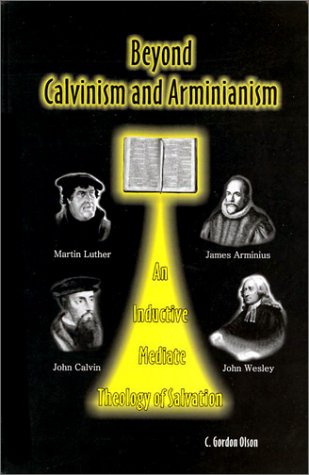
Previously, I discussed God’s gift of faith, Ephesians 2:8-9 and the interpretations of Norman Geisler and C. Gordon Olson of Calvin’s comments of Ephesians 2:8-9:
Did John Calvin Believe Faith is a Gift given From God? To quickly summarize the above link, John Calvin has been in the theological laboratories of some recent anti-Calvinist authors. After twisting, turning, and poking at Calvin’s writings, they’ve reinvented John Calvin to be a non-Calvinist. One of the arguments against Calvinists and John Calvin goes like this:

1. Calvinists believe faith is a gift from God, given only to specific people.
2. Some Calvinists appeal to Ephesians 2:8-9 as proof that faith is a gift from God.
3. John Calvin did not believe Ephesians 2:8-9 teaches faith to be a gift from God.
4. Therefore, those Calvinists who do believe Ephesians 2:8-9 teach faith is a gift from God perpetuate an extreme form of Calvinism, one that Calvin would not affirm.

In the next two links below, a mystery man named Ray critiqued my analysis, and I responded accordingly:
Everybody Loves Raymond.... But Raymond doesn't like Calvin

Calvin on Ephesians 2:8-9 "The Return of Ray"

Ray offered further comments. Ray’s words will be in black, my words will be in blue.
****************

Ray says: Regarding "Dr. Swan," you have my best wishes in achieving it, assuming that it is a goal. One caution, however; I know very few with the degree who weren't just a little "puffed up" and maybe a little too willing to say something when true wisdom would direct otherwise. If the knowledge is used for noble ends, then it's a good thing.

Swan Replies: Of course, knowledge can be used inappropriately. This would be a good point if it were directed toward Dr. Geisler. I consider Dr. Geisler an extremely knowledgeable man. I have over twenty of his books, and they have been useful in my studies. However, in his book Chosen But Free, Dr. Geisler has put forth a work not worthy of the title “Doctor.”

Ray Says: "Your charge that I as well as Geisler and Olson are not reading Calvin carefully bears some scrutiny. I’ve spend considerable time reading Calvin as you suggested. Clearly, Calvin believes faith to be a gift from God. Your point is well made. However, as I’ve said, and indeed as you’ve also said in your original post (to be fair to both Geisler & Olson that they don’t explicitly say Calvin doesn’t believe faith to be the gift of God) both Geisler and Olson are not challenging this fact. Instead, they are addressing the fact that extreme Calvinists use Eph 2:8-9 (among others) to bolster their case that faith is a gift from God."

Swan Replies: I would direct you to page 228 of Gordon Olson’s book, Beyond Calvinism and Arminianism. In his section discussing faith, Olson concludes:

Contemporary Calvinists have gone far beyond Calvin in this area and show a serious lapse into a scholastic deductionism rather than giving preference to direct Scriptural inductive study.”

Now, we could quibble about what Olson means by “far beyond.” But, read his comments almost immediately following this one: Olson notes inductive study proves faith is not “…the immediate, direct gift of God…”

Flip back a few pages to 224-225. Olson heads a section, “Faith comes mediately in human hearts.” Olson says, “…God is never represented in Scripture as striking people with faith as a direct gift…” He then offers a number of proofs. Note the subcategory in this section entitled, “Faith is always ascribed to man, not God.” Note Olson’s use of Calvin on page 225. Here would be an opportunity to show Calvin believed faith was the gift of God. Rather, Olson utilizes Calvin to show that “faith is a means”.

Notice the quote of Calvin’s utilized by Olson. It is from Calvin’s commentary on Ephesians 2:8. Olson is intent on showing faith is something that man has the ability to muster up without it being given by God. He molds Calvin’s quote to say this. Look at the quote and notice the “…” (indicating he left some of Calvin's words out). Gordon Olson left this part out of the quote:

Ought we not then to be silent about free-will, and good intentions, and fancied preparations, and merits, and satisfactions? There is none of these which does not claim a share of praise in the salvation of men; so that the praise of grace would not, as Paul shews, remain undiminished.”

Rather than stating Calvin’s real view of faith as a gift, Olson presents a Calvin that agrees with him. He had to leave this above section from Calvin out, because it interferes with his interpretation of Calvin. Calvin says man brings nothing to God, absolutely nothing.

One needs to evaluate the overall tenor of Geisler and Olson’s presentation of Calvin to appreciate my concerns. I’ve dialoged with a few people who’ve read both books. For a novice reader not familiar with Calvin, it’s fairly easy to come away with a caricatured understanding of his beliefs. With the issue of Calvin’s comments on Ephesians 2:8-9, I actually attended a class in which Geisler and Olson’s books were used as textbooks. The teacher actually said Calvin did not believe that faith was a gift from God, and utilized Geisler and Olson to prove it. Sometimes it not what one says that produces error, it’s what one doesn’t say. Of course Geisler and Olson don’t challenge the fact that Calvin believed faith was a gift from God. This would be ludicrous. What they do instead is leave out this bit of information in order to perpetuate their false distinction of moderate vs. extreme Calvinism.

Ray Says: "I think they [Geisler and Olson] would have a case were it not for the use of “alone” in the sentence “Many persons restrict the word gift to faith alone.” It’s use, however, links Calvin's comments to his broader views and supports your claim that he is not contradicting himself here, but is rather only addressing an aside that appears to have been a problem in his day (as ours also) that some take “gift” to refer only to faith."

Swan Replies: Thank you Ray for this comment. I have maintained all along throughout our dialog that Calvin did not contradict himself on this point. That you finally see my point is refreshing. It’s easy for us to get worked up via internet dialog- we are strangers in different locations sitting behind keyboards- not two guys face to face sipping coffee discussing the issue.

Ray Says: "Speaking of asides, I believe my original complaint about Calvin is somewhat justified. Calvin is hard to understand. In my reading, I came across a similar text in his commentary where he makes what seems to be an unqualified statement that faith is not a gift. It is found in his commentary on John 6:29 and is quoted as follows: “Those who infer from this passage that faith is the gift of God are mistaken; for Christ does not now show what God produces in us, but what he wishes and requires from us.”

Swan Replies: I agree with Calvin. Off the top of my head, I can’t think of any Reformed writer that has put forth John 6:29 to prove the Bible teaches faith is the gift of God. Perhaps such a writer has done so. Even with this passage, Calvin is not contradicting himself. The key words are “not now show.” Indeed, Christ isn’t talking about how God chooses some for salvation by calling and regenerating them unto faith, while leaving others for reprobation. Calvin discusses this later in his comments on John 6:44-

Unless the Father draw him. To come to Christ being here used metaphorically for believing, the Evangelist, in order to carry out the metaphor in the apposite clause, says that those persons are drawn whose understandings God enlightens, and whose hearts he bends and forms to the obedience of Christ. The statement amounts to this, that we ought not to wonder if many refuse to embrace the Gospel; because no man will ever of himself be able to come to Christ, but God must first approach him by his Spirit; and hence it follows that all are not drawn, but that God bestows this grace on those whom he has elected. True, indeed, as to the kind of drawing, it is not violent, so as to compel men by external force; but still it is a powerful impulse of the Holy Spirit, which makes men willing who formerly were unwilling and reluctant. It is a false and profane assertion, therefore, that none are drawn but those who are willing to be drawn, as if man made himself obedient to God by his own efforts; for the willingness with which men follow God is what they already have from himself, who has formed their hearts to obey him.”

Source: Calvin’s Commentary on John 6:44 (The Comprehensive John Calvin Collection (Ages Digital Library, 1998), 226-227.

Ray Says: "Regardless of how clear (or unclear) Calvin expresses himself, the point that both Geisler and Olson are trying to make is simply that the inductive evidence to support extreme Calvinist’s view that faith is a gift is wanting. Perhaps you should focus on this broader issue as well, for if you also believe as Calvin and other extreme Calvinists do, I believe you err."

Swan Replies: I understand the point Geisler and Olson are trying to make. However, (particularly with Olson) to claim that they are the one’s doing correct “inductive” study and in no way doing faulty “deductive” study is simply not the case. There are at least three errors here. The first is pitting inductive study against deductive study. Simply look at their mistaken way they handled Calvin’s comments on Ephesians 2:8-9. They applied an inductive hermeneutic and ignored historical context, and the overall context of Calvin’s theology. Second, Olson may claim his theology is the product of inductive study, but a closer look will show he has deductive paradigms at work as well. Thirdly, to suggest that Calvinists don’t do inductive study is ridiculous.

Ray Says: "By the way, you did misquote me, but it’s not significant now."

Swan Replies: It is significant to me. If I’ve misquoted you I’d like to be shown where. If I have done so, I will promptly and publicly apologize.

Ray Says: "Calvin and I absolutely disagree. I think that, he, you and all those who think faith is a gift are wrong. Scripture simply does not teach it, and all attempts to show the contrary are good examples of eisegesis. This is both Olson's and Geisler's point which apparently you still don't apprehend."

Swan Replies: As I stated previously, Hebrews 12:2 says, “Let us fix our eyes on Jesus, the author and perfecter of our faith.” You can’t read Olson’s “inductive study” of this verse, because I don’t think he analyzes Hebrews 12:2. You can’t read anything in Chosen But Free on this verse either.

Ray Says: "Your statement, however, that Calvinists cannot be said to be extreme for holding that faith is the gift of God is irrelevant since neither Geisler nor Olson claim that holding that “faith is the gift of God” makes one an extreme Calvinist."

Swan Replies: Again, see Olson’s Beyond Calvinism and Arminianism p.228 (as cited above). Secondly, keep in mind Geisler calls himself a “moderate Calvinist.” On page 182 of Chosen But Free (first edition), Geisler holds “Saving faith is not a special gift of God given to the elect.” He then cites R.C. Sproul as a “defender of extreme Calvinism”. What is it Sproul believes as an extreme Calvinist according to Geisler? That faith is a gift from God.

Ray Says: "Lewis Sperry Chafer held that Eph 2:8 teaches that faith is the gift of God (Systematic Theology, Vol III, pg. 216), and yet he’s far from an extreme Calvinist."

Swan Replies: Well, so did Arminius. He said: “Faith is the effect of God illuminating the mind and sealing the heart, and it is his mere gift”(The Writings of Arminius, I, 384). One must be very careful though to do the deductive work necessary to understand what he means. Arminius believed that God gives sufficient grace to all men to believe if they will. Chafer though would disagree with Arminius. He says,

Saving faith is not a possession of all men but is imparted specifically to those who do believe (Eph 2:8). With any reception of the divine nature through the regenerating work of the Spirit, a new understanding and a new capacity to respond to the authority of Christ are gained."

Source: Lewis Sperry Chafer, “A Voice From The Past: The Terms Of Salvation” Journal of the Grace Evangelical Society Volume 1, 49.

Well what does Chafer mean “imparted specifically to those who do believe”? One needs to do the work necessary to understand what Chafer means. He does not mean the same thing John Calvin meant.

Ray Says: "I think you’re side stepping the issue here. In fact, you really haven’t responded to the charges of eisegesis. That’s both Geisler’s and Olson’s point."

Swan replies: In fact, I did. I exegeted Ephesians 2:8-9 previously. I also interpreted Calvin in context on Ephesians 2:8-9. Subsequently, I noted that neither Geisler nor Olson point out that Calvin explicitly held faith was a gift from God, but rather attempt to perpetuate a disharmony between Calvin and modern-day Calvinists by citing his comments selectively. This is not “side-stepping.” This is direct confrontation.

Ray Says: "When Geisler defines extreme Calvinism, he rests the biggest part of his case on “Limited Atonement,” not whether faith is a gift or not although they are related. Since Calvin did not embrace “limited atonement,” Geisler makes the case that Calvin is not a Dortian Calvinist, and I think he makes a good case. Look at the inductive data he provides. Notice how Geisler even enlists the support of John Owen (Chosen But Free, 2nd Edition, pg. 164) in Owen's comments on Heb 9:28."

Swan Replies: I grant that Geisler bases the majority of his claim “Calvin was not a Calvinist” on a misunderstanding of Calvin’s view of the atonement (I have worked through each quote of Calvin’s he utilizes, and I’ve even found one that is bogus. See my link, Did Dr. Geisler Fabricate a Quote from John Calvin? I would appreciate if you could explain to me why Dr. Geisler made up his own quote).

However, you are indeed correct that the gift of faith is related (note on page 164 the heading, “Unbelief is the reason that some do not receive the benefits of Christ’s death”). Here would be a good place to actually state Calvin’s view, since this section is part of Geisler's treatment of Calvin. What about belief? How does one gain the ability to believe according to Calvin?

Ray Says: "I believe the referent is “salvation,” not the whole phrase. It's unlikely we'll ever get a final authoritative answer on it this side of heaven. Interesting, that A. T. Robertson agrees with me. To me the fact that the perfect periphrastic is used is not insignificant. Regardless, this issue is no longer disputed. The grammar unquestionably supports my conclusion. It's support for your position is not as strong, but can't be ruled out. However, I would suggest that to say "that" refers to all that goes into this salvation is theological, not grammatical which makes it vulnerable to eisegesis."

Swan Replies: Our disagreement is primarily theological, not grammatical. “Salvation by grace through faith” is the antecedent of “that”. The entirety of salvation which is “by grace” and “through faith” did not come from the Ephesians. Now, I don’t know you, but I’m speculating you pour a particular meaning into the words grace, faith, and salvation. Biblically, Salvation has a particular meaning. It is the result of God’s grace and is acquired by faith. As Calvin says, “…[N]ay, the whole man, and everything that he can call his own, is set aside.” I’m guessing you would believe that grace is not something we do, and its part of salvation. On the other hand, I’m guessing you would say faith is something we do, and is part of salvation. If this is your position, you are the one at odds with Paul, not I.

Ray Says: "Again, I accept your position. The comment on understanding Calvin’s response to the Roman Catholics is helpful. Thanks. But I disagree with what you call spurious logic. At this point you’re interpreting Calvin, not Eph 2:8-9. To me, the grammar is the only issue. That keeps me from becoming an eisegete."

Swan Replies: Ray is accepting my interpretation of Calvin on Ephesians 2:8-9. His disagreement here is on the meaning of Ephesians 2:8-9. This is significant, in that his initial responses to me were primarily about Calvin’s view. The discussion is shifting, which is fine, but the reader should be aware of what’s happening.

Ray Says: "I think you, Calvin and other extreme Calvinists are eisegeting, and Geisler and Olson have given you lots of inductive data to consider. You should read them carefully. This issue is not insignificant. I read Calvin (painful!)."

Swan Replies: I will continue to evaluate the material of Geisler and Olson in upcoming blogs.

Ray Says: "Yes, but to receive a gift requires a response from the recipient. And if the recipient is other than an automaton, it is meaningful. Otherwise, the only thing God demonstrates with mankind is his omniscience. There’s much more to God than that."

Swan Replies: This was Ray’s response to my usage of Hebrews 12:2. Notice, it is not exegesis. It’s deductive theology. Ray is pouring meaning into the verse without first exegeting it- the same thing he accuses Calvinists of!

Ray Says: "All I can say is that if that’s all you see in this passage, then you are to be pitied. God’s majesty, grace, and the gospel could not be better illustrated. Sadly, not many will see it."

Swan Replies: This was Ray’s response to my interpretation of John 3. “I should be pitied” is not a response that requires a reply.

Ray Says: "I think you got ‘em on a minor point. However, don’t miss the forest for this little twig."

Swan Replies: Oh, I got them all right. In upcoming posts I will take a closer look at the Biblical information concerning the gift of faith. Consider this Ray: earlier you mentioned one should use “caution” before one speaks. The next time you feel like critiquing my historical analysis of Calvin, do some research first. Perhaps we could simply then just discuss the Bible. It would save me a lot of time if I didn’t have to correct multiple errors first.

Friday, January 06, 2006

Certainty of Salvation

A Roman Catholic apologist recently posted this: "John Calvin: Only God Knows Who is Numbered Among the Elect":

“We can't know (any of us: Protestant or Catholic or green-eyed, one-legged, red-haired Rastafarian moth catcher) if we will be eschatologically saved because none of us know the future. You may claim to know that by some interior revelation or something, but you really don't.”

I don’t think I have ever met a Roman Catholic who claims to know with certainty he or she is saved. The Roman Catholic theologian Ludwig Ott has said, “The reason for the uncertainty of the state of grace lies in this: that without a special revelation nobody can with certainty of faith know whether or not he has fulfilled all the conditions which are necessary for achieving justification.”

Contrary to the above, 1 John 5:10-13 says:

1John 5:10 He that believeth on the Son of God hath the witness in him: he that believeth not God hath made him a liar; because he hath not believed in the witness that God hath borne concerning his Son.

1John 5:11 And the witness is this, that God gave unto us eternal life, and this life is in his Son.

1John 5:12 He that hath the Son hath the life; he that hath not the Son of God hath not the life.

1John 5:13 These things have I written unto you, that ye may know that ye have eternal life, even unto you that believe on the name of the Son of God.

John tells us he wrote that “you may know you have eternal life.”

A theologian of glory will usually then argue something like "how can you prove that you know?" In which case, I strongly recommend they pick up a copy of Bertrand Russell's book, The Problems of Philosophy"- since the question being asked is not the question of a theist, but that of an atheist. Russell demonstrates the slippery and elusive nature of all knowledge- from the perspective of atheism.

As Christians though, we begin with the presupposition that God has spoken, and what He says is true. God says I can know, so therefore I can. I have more to say on this over the weekend.

Wednesday, January 04, 2006

Luther And The Law: Did Martin Luther Abhor God's Law? (Part Two)

Rome's defenders say:


“Luther of course wanted the Law announced. He preached and taught it; he inserted it in his catechism and he exhorted his followers to recite it daily. Nevertheless, he, at the same time, warned against allowing the Law to have any influence on the conscience, for then it would become, as he said, “a sink of heresies and blasphemies” [Father Patrick O’Hare, The Facts About Luther (Illinois: Tan Books, 1987), 108].

The Law and the Gospel are not opposed to each other. Jesus and Paul taught that the Law by itself never saved anyone - it was always faith and grace. But that is not the same thing as saying that Law is antithetical to the Gospel. That was Luther's error (one of many) and it is simply unbiblical. Matthew 5:17-20 is sufficient in itself to nail this point down. Salvation is a lifelong process, free will does cooperate after the initial pure act of grace by God. It can't be otherwise.” [ The Interpretation and Exegesis of Romans 2-4]

Contrary to these polemicists, Luther’s theology indeed had a place for the Law of God and its use in the life of a Christian. The Law for Luther was dual purposed: it first drives one to see their sin and a need for a savior. Secondly, it functions in the life of a Christian to lead one to a correct understanding of the good one ought to do. The polemicists above should have had at least a cursory knowledge of how important Moses and the law was in his theology. For instance, Luther taught that anyone who is to preach must be able to preach the law:
First, he must preach the Law so that the people may learn what great things God demands of us; of these we cannot perform any because of the impotence of our nature which has been corrupted by Adam's fall. [Sermons of Martin Luther Volume 1 (Michigan: Baker Books, 2000), 1:131].
Luther also points out that only by knowing God’s Law does one even "know" what a good work is:
…[O]nly those things are good works which God has commanded, just as only that is a sin which God has forbidden. Therefore, he who wants to know and do good works need only know God’s Commandments… These Commandments of God must teach us how to distinguish among good works. [Ewald Plass, What Luther Says Volumes 1-3 (St. Louis: Concordia Publishing house, 1959) 3:1499; cf. Works of Martin Luther. Vol. 1, p. 187].
These examples show that Luther valued the law. Luther scholar Paul Althaus points out for Luther, “The Ten Commandments have their place not only ‘before’ but also ‘after’ justification; thus they not only exercise the Christian in the theological function of the law but also lead him to a right knowledge of the good he ought to do according to God’s will.” [Paul Althaus, The Theology of Martin Luther (Philadelphia: Fortress Press, 1963), p. 272].

Althaus points out Luther composed a hymn on the Ten Commandments in which he states, “To us come these commands, that so- Thou son of man, thy sins mayst know- And make thee also well perceive- How before God man should live.” [LW 53:279] Elsewhere Luther said of the Ten Commandments, “They are the true fountain from which all good works must flow.” [Paul Althaus, The Theology of Martin Luther (Philadelphia: Fortress Press, 1963), p. 272, footnote 124; Book of Concord, p. 401].

In Luther’s Small Catechism the Ten Commandments were placed first to demonstrate immediately that God is wrathful against sin. The negative prohibitions in the Ten Commandments were to show the need for a savior. Also in the Small Catechism, Luther suggests a daily regiment of prayer and includes a verbal reading of the Ten Commandments. In the reciting of the Ten Commandments along with the Apostles Creed and Lord’s Prayer, one hears both law and gospel at the beginning and ending of each day. Luther says,  "…[N]o man can progress so far in sanctification as to keep even one of the Ten Commandments as it should be kept, but that the Creed and the Lord’s Prayer must come to our assistance, as we shall hear, through which we must continually seek, pray for, and obtain the power and strength to keep the Commandments" [What Luther Says 3:1501; cf Book of Concord, p. 402].

Luther placed a strong emphasis on the First Commandment. It was one of the key factors in the shape of his entire theology. He believed God spoke the word of creation bringing human creatures into existence, and this creative word was repeated in the First Commandment. Further, the whole of the Scripture could be summarized in the First Commandment. It was both law and gospel. It is law because it invokes a demand with a burden that can crush us. This command is also gospel: it is good news that God says He is our Father, protector-provider, Lord and Savior. As Roland Bainton has rightly said,
One might have expected the great line of demarcation for [Luther] to have lain between the Old Testament and the New. It did for some Protestants, like the Anabaptists, who rejected the wars of Yahweh and took literally the ethic of the Sermon on the Mount. Luther on a different count might have used his distinction of law and gospel to repudiate Moses as law, but Luther did not. Law and gospel, said he, lie side by side throughout the whole Bible. That which relies on man's good works is law. That which relies on God's good grace is gospel. The Ten Commandments can witness to grace and the Sermon on the Mount can be treated as a new law. Therefore, the Old Testament is not to be rejected or relegated to a lower rank. Here one must recall that Luther interpreted the Old Testament in terms of the pre-existent Christ, who was speaking through Moses and through David [Roland Bainton, Studies on the Reformation, (Boston: Beacon Press, 1963) 6-7].

Luther said of the entire Old Testament, “Christ must first be heard in the Gospel, then it will be seen how beautiful and lovely the whole Old Testament is in harmony with him, so that a man cannot help giving himself in submission to faith and be enabled to recognize the truth of what Christ says in John 5: 46, "For if ye believed Moses, ye would believe me, for he wrote of me.” [Sermons of Martin Luther Volume 1 (Michigan: Baker Books, 2000), 1:151].

Addendum 2006
This blog entry is a revision of an entry I posted back in 2006. The original can be found here. Because so many sources are now available online, I'm revising older entries by adding additional materials and commentary, and also fixing or deleting dead hyperlinks. Nothing of any significant substance has changed in this entry from that presented in the former. 

Luther And The Law: Did Martin Luther Abhor God's Law? (Part Two)

Rome's defenders say:


“Luther of course wanted the Law announced. He preached and taught it; he inserted it in his catechism and he exhorted his followers to recite it daily. Nevertheless, he, at the same time, warned against allowing the Law to have any influence on the conscience, for then it would become, as he said, “a sink of heresies and blasphemies” [Father Patrick O’Hare, The Facts About Luther (Illinois: Tan Books, 1987), 108].

The Law and the Gospel are not opposed to each other. Jesus and Paul taught that the Law by itself never saved anyone - it was always faith and grace. But that is not the same thing as saying that Law is antithetical to the Gospel. That was Luther's error (one of many) and it is simply unbiblical. Matthew 5:17-20 is sufficient in itself to nail this point down. Salvation is a lifelong process, free will does cooperate after the initial pure act of grace by God. It can't be otherwise.” [ The Interpretation and Exegesis of Romans 2-4]

Contrary to these polemicists, Luther’s theology indeed had a place for the Law of God and its use in the life of a Christian. The Law for Luther was dual purposed: it first drives one to see their sin and a need for a savior. Secondly, it functions in the life of a Christian to lead one to a correct understanding of the good one ought to do. The polemicists above should have had at least a cursory knowledge of how important Moses and the law was in his theology. For instance, Luther taught that anyone who is to preach must be able to preach the law:
First, he must preach the Law so that the people may learn what great things God demands of us; of these we cannot perform any because of the impotence of our nature which has been corrupted by Adam's fall. [Sermons of Martin Luther Volume 1 (Michigan: Baker Books, 2000), 1:131].
Luther also points out that only by knowing God’s Law does one even "know" what a good work is:
…[O]nly those things are good works which God has commanded, just as only that is a sin which God has forbidden. Therefore, he who wants to know and do good works need only know God’s Commandments… These Commandments of God must teach us how to distinguish among good works. [Ewald Plass, What Luther Says Volumes 1-3 (St. Louis: Concordia Publishing house, 1959) 3:1499; cf. Works of Martin Luther. Vol. 1, p. 187].
These examples show that Luther valued the law. Luther scholar Paul Althaus points out for Luther, “The Ten Commandments have their place not only ‘before’ but also ‘after’ justification; thus they not only exercise the Christian in the theological function of the law but also lead him to a right knowledge of the good he ought to do according to God’s will.” [Paul Althaus, The Theology of Martin Luther (Philadelphia: Fortress Press, 1963), p. 272].

Althaus points out Luther composed a hymn on the Ten Commandments in which he states, “To us come these commands, that so- Thou son of man, thy sins mayst know- And make thee also well perceive- How before God man should live.” [LW 53:279] Elsewhere Luther said of the Ten Commandments, “They are the true fountain from which all good works must flow.” [Paul Althaus, The Theology of Martin Luther (Philadelphia: Fortress Press, 1963), p. 272, footnote 124; Book of Concord, p. 401].

In Luther’s Small Catechism the Ten Commandments were placed first to demonstrate immediately that God is wrathful against sin. The negative prohibitions in the Ten Commandments were to show the need for a savior. Also in the Small Catechism, Luther suggests a daily regiment of prayer and includes a verbal reading of the Ten Commandments. In the reciting of the Ten Commandments along with the Apostles Creed and Lord’s Prayer, one hears both law and gospel at the beginning and ending of each day. Luther says,  "…[N]o man can progress so far in sanctification as to keep even one of the Ten Commandments as it should be kept, but that the Creed and the Lord’s Prayer must come to our assistance, as we shall hear, through which we must continually seek, pray for, and obtain the power and strength to keep the Commandments" [What Luther Says 3:1501; cf Book of Concord, p. 402].

Luther placed a strong emphasis on the First Commandment. It was one of the key factors in the shape of his entire theology. He believed God spoke the word of creation bringing human creatures into existence, and this creative word was repeated in the First Commandment. Further, the whole of the Scripture could be summarized in the First Commandment. It was both law and gospel. It is law because it invokes a demand with a burden that can crush us. This command is also gospel: it is good news that God says He is our Father, protector-provider, Lord and Savior. As Roland Bainton has rightly said,
One might have expected the great line of demarcation for [Luther] to have lain between the Old Testament and the New. It did for some Protestants, like the Anabaptists, who rejected the wars of Yahweh and took literally the ethic of the Sermon on the Mount. Luther on a different count might have used his distinction of law and gospel to repudiate Moses as law, but Luther did not. Law and gospel, said he, lie side by side throughout the whole Bible. That which relies on man's good works is law. That which relies on God's good grace is gospel. The Ten Commandments can witness to grace and the Sermon on the Mount can be treated as a new law. Therefore, the Old Testament is not to be rejected or relegated to a lower rank. Here one must recall that Luther interpreted the Old Testament in terms of the pre-existent Christ, who was speaking through Moses and through David [Roland Bainton, Studies on the Reformation, (Boston: Beacon Press, 1963) 6-7].

Luther said of the entire Old Testament, “Christ must first be heard in the Gospel, then it will be seen how beautiful and lovely the whole Old Testament is in harmony with him, so that a man cannot help giving himself in submission to faith and be enabled to recognize the truth of what Christ says in John 5: 46, "For if ye believed Moses, ye would believe me, for he wrote of me.” [Sermons of Martin Luther Volume 1 (Michigan: Baker Books, 2000), 1:151].

Addendum 2006
This blog entry is a revision of an entry I posted back in 2006. The original can be found here. Because so many sources are now available online, I'm revising older entries by adding additional materials and commentary, and also fixing or deleting dead hyperlinks. Nothing of any significant substance has changed in this entry from that presented in the former. 

Basic Apologetics

"Echoes From The Plains" Apologetics Corner
My church puts out a bi-monthly extended Newsletter called Echoes From The Plains. I submit articles on basic apologetic issues

Common Misunderstandings of John 3:16 (1/05): A look at apologetic opportunites to explain Reformed theology to non-reformed people.

Apologetics and the Christian Bookstore (1/06): Catholic apologetic books are now for sale in Protestant bookstores.

I Believe in The Resurrection Because…..Sola Scriptura (4/06)- Countless books have been written "proving" the Resurrection of Christ. The best reason though to believe in the resurrection is because the Bible says it happened.


Other:Various Apologetic issues from the blog

Why is "Soul Sleep" So Important for a Seventh Day Adventist? -A look at where the doctrine of "soul sleep" fits in SDA theology.

Basic Doctrine Quiz (Part 1)- A quiz from the White Horse Inn gang on basic doctrine. It's important to know the truth....see if you do.

Church History Quiz (Part Two)- Church history did not begin with Billy Graham. See how well you know about your own spiritual forefathers.

Tuesday, January 03, 2006

Luther And The Law: Did Martin Luther Abhor God's Law? (Part One)


It’s common in cyber space to find Roman Catholics putting forth a negative image of Luther. It’s often insinuated that Luther was a gross sinner, often promoting sin and lawlessness. The argument typically goes: did not Luther teach salvation by faith alone? If salvation is by faith alone, it doesn’t matter what one does. Holy living isn’t important. God’s law is not important. Related to this, a common charge against Luther is that he also despised the Old Testament law. Such Luther quotes like these find there way into Roman Catholic books and web pages:
"We must remove the Decalogue [Ten Commandments] out of sight and heart."
"We have no wish either to see or hear Moses."
"If we allow them- the Commandments- any influence in our conscience, they become the cloak of all evil, heresies, and blasphemies"
"If Moses should attempt to intimidate you with his stupid Ten Commandments, tell him right out: chase yourself to the Jews."
You'll get plenty of hits if you put any of these quotes in a search engine. What you may not find is a context. Below is a closer look at these quotes, as well as examples of their usage (or rather, mis-usage) from Roman Catholic web pages. One should never fear a context, especially with Luther. Many times, what seems so awful really isn't when you've got the entire passage in front of you. If you've come across these quotes, one of the major writings that's popularized them in cyberspace was Patrick O'Hare's The Facts About Luther (Illinois: Tan Books, 1987). This old book was reprinted in 1987 and was heavily used by Rome's cyber-defenders in the late 1990's - early 2000's.

1. “We must remove the Decalogue [Ten Commandments] out of sight and heart.”
Probable Cyber-Source: Luther as cited by Patrick O’Hare, The Facts About Luther (Illinois: Tan Books, 1987), 311. For an example of a Roman Catholic webpage using this quote, see, Catholic Culture. This quote is from a letter Luther wrote to Jerome Weller, 1530. A thorough treatment of the context can be found here.  When Luther makes strong statements against the Law, it's always the Law considered as a means of salvation or justification. For instance, consider how the same statement is used here in Luther’s Commentary on John. Luther’s point is to hear Christ and his gospel only as the way of salvation. Commenting on John 14:10, Luther says,
“ ‘John 14:10. Do you not believe that I am in the Father and the Father in Me? The words that I speak to you I do not speak on My own authority; but the Father who dwells in Me does His works.’ As I have said, it is the purpose of these words to impress on and drum into us this chief article. Where the relationship of man to God or the ascertainment of God’s will is involved, we are to learn to dismiss everything else from our sight and heart, whatever may be taught and preached, even in the Law of Moses, and still more everything that proceeds from human reason and imagination. We must learn this one thing: to have a clear conception of Christ and let nothing tempt us away from this or lead us astray, be it a good work or an evil one, a good life or an evil life, holiness or sin. This is the knowledge in which St. John, an outstanding evangelist with regard to this theme, and St. Paul instruct more than the others do. They join and bind Christ and the Father so firmly together that we learn to think of God as only in Christ. As soon as we hear the mention of God’s name, or of His will, His works, His grace, or His displeasure, we must not judge these as the voice of our heart or man’s wisdom may discourse on them, or as the Law may suggest to us; but we must nestle and cuddle on the lap of Christ, like dear children on their mother’s lap or in her arms, and close our eyes and ears to everything but Him and His words. Or we must see Him as the faithful Savior, who sheds His blood so richly on the cross, rises again, subdues the devil and hell, treads death underfoot, proclaims this to you both personally and through the apostles, and grants all this to you. Thus He affirms abundantly that He harbors no anger or disfavor toward you but does everything to help and comfort you, all that He should and can do, if you but believe and accept this” [LW 24:64].

2. “We have no wish either to see or hear Moses.”
Probable Cyber-Source: Luther as cited by Patrick O’Hare, The Facts About Luther (Illinois: Tan Books, 1987), 202. For Roman Catholic webpage examples using such quotes, see Gary Hoge: Common Objections. O'Hare does not provide a reference. This quote  may originally come from a few places, as I documented here. It may  come from Luther’s treatise Against The Heavenly Prophets In The Matter Of Images And Sacraments. It is a writing against Luther’s former colleague Andreas Bodenstein von Karlstadt who joined with radical factions of the Anabaptists. When Luther did not support Karlstadt’s violent expunging of all images, Karlstadt accused Luther of disobeying God’s law given through Moses: “You shall not make yourself a graven image, or any likeness …” Luther responded by pointing out that Karlstadt misunderstood his position, as well as misinterpreted Moses. Luther, well heated up says:
Now then, let us get to the bottom of it all and say that these teachers of sin and Mosaic prophets are not to confuse us with Moses. We don’t want to see or hear Moses. How do you like that, my dear rebels? We say further, that all such Mosaic teachers deny the gospel, banish Christ, and annul the whole New Testament. I now speak as a Christian for Christians. For Moses is given to the Jewish people alone, and does not concern us Gentiles and Christians. We have our gospel and New Testament. If they can prove from them that images must be put away, we will gladly follow them. If they, however, through Moses would make us Jews, we will not endure it”[LW 40:91].
The “teachers of sin and Mosaic prophets” are Karlstadt and the Anabaptists. Luther viewed these people as denying the gospel and imposing law on people. The editors of Luther’s works have included an excellent overview of Luther’s opinion on Moses:
Anyone who, like the enthusiasts, erects Mosaic law as a biblical-divine requirement does injury to the preaching of Christ. Just as the Judaizers of old, who would have required circumcision as an initial requirement, so also the enthusiasts and radicals of this later era do not see that Christ is the end of the Mosaic law. For all the stipulations of that law, insofar as they go beyond the natural law, have been abolished by Christ. The Ten Commandments are binding upon all men only so far as they are implanted in everyone by nature. In this sense Luther declares that “Moses is dead [LW 35:158].

3. "If we allow them- the Commandments- any influence in our conscience, they become the cloak of all evil, heresies, and blasphemies.”
Probable Cyber-Source: Luther as cited by Patrick O’Hare, The Facts About Luther (Illinois: Tan Books, 1987), 311. For Roman Catholic webpage examples using such quotes, see, Luther: Exposing the Myth. I've done a full exposition of this quote here. This quote is from Luther’s Galatians Commentary:
From this you should learn, therefore, to speak most contemptuously about the Law in the matter of justification, following the example of the apostle, who calls the Law “the elements of the world,” “traditions that kill,” “the power of sin,” and the like. If you permit the Law to dominate in your conscience instead of grace, then when the time comes for you to conquer sin and death in the sight of God, the Law is nothing but the dregs of all evils, heresies, and blasphemies; for all it does is to increase sin, accuse, frighten, threaten with death, and disclose God as a wrathful Judge who damns sinners [LW 26:365].
Father O’Hare is engaging in a fallacious selective citation process. Luther is here speaking with a law /gospel distinction in regards to justification. Just a paragraph later Luther says, Apart from the matter of justification, on the other hand, we, like Paul, should think reverently of the Law. We should endow it with the highest praises and call it holy, righteous, good, spiritual, divine, etc.”[LW 26:365].

4. "If Moses should attempt to intimidate you with his stupid Ten Commandments, tell him right out: chase yourself to the Jews.”
Probable Cyber-Source: Luther as cited by Patrick O’Hare, The Facts About Luther (Illinois: Tan Books, 1987), 311. For Roman Catholic webpage examples using such quotes, see, Catholic Truths. I've done an extensive treatment of this quote here. This quote may be from the 1525 treatise How Christians should regard Moses. Luther says,
Now if anyone confronts you with Moses and his commandments, and wants to compel you to keep them, simply answer, “Go to the Jews with your Moses; I am no Jew. Do not entangle me with Moses. If I accept Moses in one respect (Paul tells the Galatians in chapter 5[:3]), then I am obligated to keep the entire law.” For not one little period in Moses pertains to us [Source: LW 35:165].
The editors of Luther’s Works explain,
How, then, is “Moses” Word of God, and how is “Moses” law? How do Word of God and law relate to each other? Here Luther makes sometimes the most contrary statements. On the one hand “Moses” is completely abolished: “Moses does not pertain to us.” On the other hand we hear Luther expressing the wish “that [today’s] lords ruled according to the example of Moses.” Anyone who, like the enthusiasts, erects Mosaic law as a biblical-divine requirement does injury to the preaching of Christ. Just as the Judaizers of old, who would have required circumcision as an initial requirement, so also the enthusiasts and radicals of this later era do not see that Christ is the end of the Mosaic law. For all the stipulations of that law, insofar as they go beyond the natural law, have been abolished by Christ. The Ten Commandments are binding upon all men only so far as they are implanted in everyone by nature. In this sense Luther declares that “Moses is dead [Source: LW 35:158].

Addendum 2017
This blog entry is a revision of an entry I posted back in 2006. The original can be found here. Because so many sources are now available online, I'm revising older entries by adding additional materials and commentary, and also fixing or deleting dead hyperlinks. Nothing of any significant substance has changed in this entry from that presented in the former.

Sunday, January 01, 2006

Luther's Analogy on the Works of Marriage and Works For God


From Martin Luther’s Treatise On Good Works (1520):

When a man and a woman love and are pleased with each other, and thoroughly believe in their love, who teaches them how they are to behave, what they are to do, leave undone, say, not say, think? Confidence alone teaches them all this, and more. They make no difference in works: they do the great, the long, the much, as gladly as the small, the short, the little, and vice versa; and that too with joyful, peaceful, confident hearts, and each is a free companion of the other.”

Source: Martin Luther, Works of Martin Luther Volume 1 (Philadelphia: Muhlenberg Press, 1948), 191.

This is a synopsis of an ideal and healthy marriage relationship. Out of love, a husband and wife freely serve each other. They aren’t trying to “earn” the other’s love and affection. They do what they do because they love the other- it’s natural for them to simply act lovingly toward each other in what they do. Whether it’s a great act taking excessive time, or a little act taking a few moments, all are done with the same love. All spring from the same loving heart.

Luther then contrasts this with the “workings” of an unhealthy marriage:

But where there is a doubt, search is made for what is best; then a distinction of works is imagined whereby a man may win favor; and yet he goes about it with a heavy heart, and great disrelish; he is, as it were, taken captive, more than half in despair, and often makes a fool of himself.”

Source: Martin Luther, Works of Martin Luther Volume 1 (Philadelphia: Muhlenberg Press, 1948), 191.

Perhaps Luther is saying: if you're not sure whether your spouse loves you, one may search for a “way” to earn that love. The relationship has “doubt.” You begin to imagine monumental acts that will win love. In fact the ‘way” becomes a burden and produces despair. Think back to some of your failed relationships- perhaps those in which you cared for someone more than they cared for you. You may have tried everything to win their love, but ultimately failed. Wasn’t it a burden? Did it at times make a fool of you? Does it embarrass you now to think about?

These words from Luther were used as an analogy for a spiritual point:

So a Christian who lives in this confidence toward God, knows all things, can do all things, undertakes all things that are to be done, and does everything cheerfully and freely; not that he may gather many merits and good works, but because it is a pleasure for him to please God thereby, and he serves God purely for nothing, content that his service pleases God.

On the other hand, he who is not at one with God, or doubts, hunts and worries in what way he may do enough and with many works move God. He runs to St. James of Compostella, to Rome, to Jerusalem, hither and yon, prays St. Bridget's prayer and the rest, fasts on this day and on that, makes confession here, and makes confession there, questions this man and that, and yet finds no peace. He does all this with great effort, despair and disrelish of heart, so that the Scriptures rightly call such works in Hebrew “Avenamal,” that is, labor and travail. And even then they are not good works, and are all lost. Many have been crazed thereby; their fear has brought them into all manner of misery. Of these it is written, Wisdom of Solomon v: "We have wearied ourselves in the wrong way; and have gone through deserts, where there lay no way; but as for the way of the Lord, we have not known it, and the sun of righteousness rose not upon us."

Source: Martin Luther, Works of Martin Luther Volume 1 (Philadelphia: Muhlenberg Press, 1948), 191-192.

As Christians, we live our lives in a God pleasing way, not because we want to achieve peace with God, but because we already have peace with God. The gospel gives us confidence in God’s love towards us. The gift of faith brings us new life. There is a love relationship between Creator and the created. There is no burdensome work that must be performed to remain in fellowship with God. The works we do flow from a heart of love for God for what he has done for us through His Son.

1 John 2:12 “I write to you dear children, because your sins have been forgiven on account of his name.” 1 John 5:13 “I write these things to you who believe in the name of the Son of God so that you may know that you have eternal life.”

I don’t think I have ever met a Roman Catholic who knows with certainty he or she is saved. The Roman Catholic theologian Ludwig Ott has said, “The reason for the uncertainty of the state of grace lies in this: that without a special revelation nobody can with certainty of faith know whether or not he has fulfilled all the conditions which are necessary for achieving justification.” Have you fulfilled all the conditions in your marriage to earn your spouse’s love?

Consider Christ’s work on the cross. All of your sin was forgiven- you now have peace with God (Romans 5:1). While we were still powerless, Christ died for the ungodly (Romans 5:6). Romans 5:9-10 says we “have been” justified and we “were reconciled to Him.” If you are a Christian, go forth in this new year with confidence in God's love, in whatever you do.

FAQ: About Beggars All, Reformation and Apologetics

FAQ: Beggars All, Reformation and Apologetics 


2006 called... and they want their blog back!
This Blog began January 2006. It was the result of a convergence of factors. First, in 2006 the explosion of social media had not yet fully occurred. If one wanted to discuss a topic, especially theology, the most popular way of interaction was through discussion boards. I had been participating on Internet discussion boards since 1998. As I interacted with Roman Catholics on discussion boards, they frequently brought up negative claims about Martin Luther and the Reformation.  It was through these interactions that I began researching their outrageous claims. With the help of a few good college libraries and the ever-increasing amount of knowledge appearing on the Internet daily, I discovered how fallacious their claims against Luther and the Reformation were.  I describe this period as shooting fish in a barrel.  Second, I found that no sooner had I a debunked a Roman Catholic claim on a discussion board, it would quickly appear again! I found myself writing the same responses over and over. The cyber-trend in 2006 was having a blog. I succumbed to joining the crowd and started this blog so as to have a place where my responses could be permanently stored.  

Why the blog title, Beggars All? The phrase "beggars all" is a popular comment attributed to Luther. They are words found in a note he is said to have written two days before he died on February 18. Historian Philip Schaff says they were left "on a piece of paper which was found on his desk after his death." This note from Luther's hand is not extant. There were two copies of it made. The version below is from an unknown copyist and is published in Luther's Works: 

“Nobody can understand Vergil in his Bucolics and Georgics unless he has first been a shepherd or a farmer for five years.

“Nobody understands Cicero in his letters unless he has been engaged in public affairs of some consequence for twenty years.

“Let nobody suppose that he has tasted the Holy Scriptures sufficiently unless he has ruled over the churches with the prophets for a hundred years. Therefore there is something wonderful, first, about John the Baptist; second, about Christ; third, about the apostles. ‘Lay not your hand on this divine Aeneid, but bow before it, adore its every trace.’

“We are beggars. That is true.”

These were the last thoughts of Dr. Martin Luther on the day before he died.

Luther, M. (1999). Luther’s works, vol. 54: Table Talk (J. J. Pelikan, H. C. Oswald, & H. T. Lehmann, Eds.; p. 476). Fortress Press.

I've always been struck by how this insightful and knowledgeable man at the end of his life considered himself an intellectual beggar. He mentions secular poetry and philosophy, and finally, the Sacred Scriptures of Christianity. I've always felt the same way, that I only scratch the surface of philosophy and Christianity. As Luther implies, the more one experiences something, the more one innately knows something. As I've grown older, I feel that I have not yet mastered anything.

Why Reformation and Apologetics? This blog is primarily geared towards defending the tedium of the Reformation. The answers provided usually only scratch the surface. For instance, when I refute a negative assertion about Luther's character, this is only moving him out of the way so more important issues can rightly be brought into focus. The goal therefore is to do the work most people have no time or desire to do. I recall hearing a live moderated debate in which a Roman Catholic threw out charges against Luther and the Protestant defender rightly replied something like, "well, so much for Martin Luther." The professional Protestant apologist realized more important matters were at stake. Beggars All, Reformation and Apologetics takes up the overlooked secondary tedium often bypassed and sets the record straight. 

What credentials do I have to write what I do? I have a degree in philosophy from a secular university and two degrees in theology from accredited and respected Christian seminaries. I have served my local church as a teacher and an elder. My vocation is not full-time Christian service, either preaching or teaching. I'm probably like many of you: I have a full-time secular job that I enjoy... and I also enjoy theology and history. 

This might shock some of you fluent in Christianese culture, but I do not primarily view Beggars All, Reformation and Apologetics as a ministry. Nor is this blog a means of financial gain. I have maintained this blog as a hobby, writing about things that interest me... selfishly, for me. If others enjoy my hobby or are helped by it, that's wonderful and makes me happy... but I'm not intending to be an authority or change someone's heart. If you use this blog, check my work for yourself. As much as possible, I attempt to provide the documentation for the conclusions I've arrived at.

Am I Lutheran? In full disclosure I am a member in good standing of a church that's part of the United Reformed Churches in North America (URCNA). I have been a professing member in good standing of my church since 2000. This means I am neither a Presbyterian or a Baptist... or a Lutheran! Some question whether or not someone who is not a Lutheran has the ability to write accurately about Martin Luther. I say: take a look at the twenty years of blog posts accumulated here and judge for yourself. I love researching all the people of the Reformation, even the enemies of the Reformation. I say, let them be who they were, not judging them by my theological standards.  

Frankly, I care little about intra-Reformation conflict and debates. For instance, I'm not interested in picking a side between Martin Luther and John Calvin. I'm particularly not fond of debates about predestination and election. Debates between Wittenberg and Geneva do not interest me.

James Swan February 2026


Why Defend the Reformers?

Here are some wise words from William Cunningham that express my desire for Beggars All, Reformation and Apologetics:

 The Reformers and the Theology of the Reformation

Protestants, of course, do not regard the Reformers as either infallible or impeccable. They believe that most of them held views, upon some points, more or less erroneous, and that all of them gave abundant evidence that they were stained with the common infirmities of humanity. But they regard them as men who were specially qualified and raised up by God for the advancement of His own cause, for bringing out the buried truth and reforming the corrupted church, who were guided by God's word and Spirit to views, in the main accurate, of the leading principles of Christian doctrine, and who, in the habitual tenor of their lives, furnished satisfactory evidence of acting under the influence of real religion and genuine piety.


Believing this concerning the Reformers, Protestants feel it to be both their duty and their privilege to defend them from the assaults of adversaries, and especially to refute anything that may seem to militate against the truth of the statement now given, of what they believe as to the general character and position of these illustrious men. The great general position which Romanists are anxious to establish by all they can collect against the Reformers, from their writings or their lives, from their sayings or their doings, is this, that it is very unlikely that God would employ such men in the accomplishment of any special work for the advancement of His gracious purposes. In dealing with this favorite allegation of Romanists, Protestants assert and undertake to prove the following positions:

1st, That the allegation is irrelevant to the real merits of the controversy between us and the Church of Rome, which can be determined only by the standard of the written word;

2d, That the allegation is untrue,—in other words, that there is nothing about the character of the Reformers as a whole which renders it in the least unlikely that God employed them in His own special gracious work; and,

3d, That the general principle on which the allegation is based can be applied in the way of retort, with far greater effect, to the Church of Rome. Protestants, by establishing these three positions, effectually dispose of the Romish allegation. 

Saturday, December 31, 2005

Calvin on Ephesians 2:8-9 "The Return of Ray"

I have previously posted two blogs discussing John Calvin, God’s gift of faith, and Ephesians 2:8-9:

Did Jon Calvin Believe Faith is a Gift given From God?

Everybody Loves Raymond.... But Raymond doesn't like Calvin

In the second link, a mystery man named Ray critiqued my analysis, and I responded accordingly. Well, Ray came back for more, and offered some further comments. My apologies for a longer blog entry. I’m trying to keep them short. I’m fairly convinced very few people read long writings.

Ray’s words will be in black, my words will be in blue (pun intended).

*****************************************************************
Ray Says: “Well, it sounds like we’ve hit a sensitive nerve. Mr. Swan (or is it Dr. Swan?) had a ready answer for my objections to his article.”

Swan replies: It’s not a sensitive nerve; it is simply a response to your comments. It is not “Dr. Swan,” but that title sure does have a nice “ring” to it.

Ray Says: “He suggests that I’m the worst of readers of Calvin since I believe Calvin contradicts himself on important issues. Notice how I was misquoted by Dr. Swan at this point. Hopefully, he wasn’t angry. Since he’s a new creation in Christ and no doubt abiding in Him, he can’t sin according to 1 Jn 3:6. I guess this was a simple oversight.”

Swan replies: I suggested previously you weren’t reading Calvin “carefully”. I also expressed amazement in your inability to understand Calvin in context. I don’t see where I misquoted you. You suggested first: scholars have a hard time with Calvin because he “appears” to contradict himself. Second: you affirmed agreement with a pastor who held Calvin did contradict himself on his comments on Ephesians 2:8-9.

Ray says: “But Dr. Swan brings up a good point. Did Calvin believe that faith is a gift from God or is it as I believe, a response to the offer of a gift by God? Dr. Swan showed examples in Calvin's writings other than Eph 2:8-9 that show Calvin believes faith to be a gift."

Swan replies: Calvin does not agree with you. He clearly held faith was a supernatural gift given by God to spiritually dead sinners. Sinners do not have the ability, according to Calvin, to muster up enough of their own faith to accept an offer of salvation without God first doing something supernatural to their spiritual inability to believe.

Ray says: "But wait a minute! Did Olson or Geisler claim that Calvin didn't believe faith was a gift or is it their claim that Eph 2:8-9 cannot be used as proof texts? I think Dr. Swan is guilty of going beyond what Olson and Geisler have said. Notice Dr. Swan's comment, "Both Geisler and Olson assert that Calvin did not believe faith was the gift of God, and his commentary on Ephesians 2:8-9 proves this." What kind of error would you call this Dr. Swan? Neither Olson nor Geisler ever claim that Calvin didn't believe faith is a gift of God. Did you really read them?"

Swan replies: Ok, I think I figured out what going on here. It appears you’re quoting me from John Mark’s blog. John Mark seems to have edited my words, I had sent him a huge document, and he extracted some sections from it to post on his blog. He posted this snippet:

Both Geisler and Olson assert that Calvin did not believe faith was the gift of God, and his commentary on Ephesians 2:8-9 proves this. Geisler says, “But even John Calvin said of this text that "he does not mean that faith is the gift of God, but that salvation is given to us by God, or, that we obtain it by the gift of God.”<26> Olson comments similarly

Actually what I had originally written was that Olson and Geisler’s position was “similar”:

I once talked with a pastor who dismissed the Calvinist assertion that faith is a gift of God. An important facet of his argument was that even Calvin did not teach this, and his commentary on Ephesians 2:8-9 proves it. Both Geisler and Olson assert a similar position. Geisler says, “But even John Calvin said of this text that "he does not mean that faith is the gift of God, but that salvation is given to us by God, or, that we obtain it by the gift of God.”<26>"

On both John Mark’s blog (and my own) I clarified my position:

Thus, Calvinists cannot be said to be “extreme” for holding that faith is the gift of God. It should be obvious that Geisler and Olson are in error if they are intending to assert that modern day Calvinists have gone beyond Calvin in believing faith to be a gift from God. In fairness, neither of these men explicitly asserts this, but the logical deduction is inherent in their comments, and the pastor I spoke with made the deduction. Neither Olson nor Geisler provide any positive statements like the above quotes. The pastor I spoke to seemed quite confident Calvin never believed faith to be a gift from God. When I brought these other Calvin passages to his attention, he had to agree that Calvin did in fact teach this doctrine. He then simply asserted that Calvin contradicted himself with comments on Ephesians 2:8-9, and this contradiction is a clear example of why Christians should never follow a fallible man.”

Ray says: “What they are claiming is that extreme Calvinists have an arsenal of proof texts to show that faith is the gift of God, and that Eph 2:8-9, as one, doesn't hold water. Olson and Geisler both go on to show that the remaining purported proof texts are equally weak. Indeed, their point is that Extreme Calvinism is an egregious example of a system of theology that is quick to read into texts of scripture what they want to hear rather than what it says. Interestingly, you have helped them prove their point with your examples of misquotes, going beyond what writers have said, misunderstanding what they have said, and then trashing them with flawed deduction and your own eisegesis."

Swan replies: What Olson and Geisler do is attempt to prove John Calvin was not a Calvinist. Norman Geisler calls those who (allegedly) go beyond Calvin “extreme Calvinists,” while mediates who interpret him (allegedly) correctly are “moderate Calvinists”:

An extreme Calvinist is someone who is more Calvinistic than John Calvin (1509 – 1564), the founder of Calvinism. Since it can be argued that John Calvin did not believe in limited atonement…then it would follow that those who do are extreme Calvinists.”

Source: Norman Geisler, Chosen But Free (1st edition) (Minneapolis: Bethany House Publishers, 1999), 55.

Geisler says also,

At first blush, it may seem absurd to ask whether John Calvin was a Calvinist. But he was not the first in the history of thought to have his views be distorted by his disciples. In fact, many of the great thinkers were misunderstood by their followers.”

Source: Norman Geisler, Chosen But Free (1st edition) (Minneapolis: Bethany House Publishers, 1999), 155.
The example of Calvin’s comment of Ephesians 2:8-9 is used by both Geisler and Olson. I find it extremely curious that neither Geisler nor Olson point out that Calvin explicitly noted Faith was a gift from God, but rather attempt to perpetuate a disharmony between Calvin and modern-day Calvinists by citing his comments selectively. Secondarily, I think they blew it on interpreting Calvin’s comment in context.
Ray says: "Let's look closer at Dr. Swan's review of my comments to his blog. Even though it's obvious that Calvin believes faith is a gift, he clearly does not believe that Eph 2:8-9 show that it's a gift."

Swan replies: As has been pointed out before, Calvin says that the error is restricting the word “gift” to faith alone.

Ray Says: “Amazingly, given the grammar, Calvin, Olson, Geisler and Ray to the contrary, Dr. Swan believes that Eph 2:8-9 does teach that faith is a gift. Let's look at his quote. He says, “Thus, grace, salvation, and faith are all the “gift of God.” It isn’t simply faith. It is the entire phrase. It is spurious logic to suggest that grace and salvation are gifts, but faith isn’t.”

Swan replies: A rendering of the grammar shows that the entirety of the phrase, “For by grace you have been saved through faith” is what the word “that”(touto) refers to. “touto” is a neuter singular demonstrative pronoun, and a proper exegesis would suggest that one looks for a singular neuter noun before it, but there aren’t any in the first part of the phrase in question. “Grace” is feminine singular; “Have been saved” is a masculine participle; and of course, as we all know, “faith” is feminine singular. In Ephesians 2:8-9, the neuter pronoun serves to wrap up the phrase into a single unity.

Ray Says: “Dr. Swan also says, " Note Calvin’s point: many people “restrict the word gift to faith alone.” But Calvin says that the entirety of salvation is the gift of God: that is, grace, salvation, and faith.." This is amazing. Calvin absolutely does not say that faith is included in the entirety of salvation. You are the only who says that. (Is this not eisegesis?) In fact Calvin goes out of his way to point out that to find faith as a gift in Eph 2:8-9 is an error. If what Dr. Swan says is true then I believe I can rest my case on Calvin being hard to pin down since he clearly contradicts himself. In fact, it's so confusing that even Dr. Swan got it wrong, and even suggests that Calvin is confused since he says one thing (Eph 2:8-9 is not teaching faith to be a gift) and believing another (Swan: "Calvin's point is…." and "Thus, grace, salvation, and faith are all the “gift of God.” It isn’t simply faith. It is the entire phrase. It is spurious logic to suggest that grace and salvation are gifts, but faith isn’t."”

Swan replies: Your comments clearly show your unfamiliarity with the historical/theological context in which Calvin wrote, thus you fall victim to anachronism. Those who restricted the word “gift” to “faith” alone were not extreme Calvinists like James Swan, RC Sproul or James White. They were Roman Catholics. Therefore, your interpretation of Calvin will never make sense, and you will always see a “contradiction”. Answer this question: why would a Roman Catholic want to restrict the word “gift” to “faith” alone? If you can answer this, you will grip Calvin in context.

Ray says: "I think Dr. Swan has been reading too much Calvin, White, and Sproul and not enough Olson and Geisler.”

Swan replies: In a situation like this, in which the question is “what did John Calvin believe?” It’s best to simply read Calvin, and reference multiple authors afterwards.

Ray says: "But let's look at the what Eph 2:8-9 really says . Reading the passage without straining, I would say that the grammar is saying that “salvation” is the gift, not grace, not faith, and its unlikely the whole phrase."

Swan replies: Your heroes say differently. Gordon Olson notes that touto “refers to the whole concept of salvation by grace” (Beyond Calvinism and Arminianism, 221). Norman Geisler says, “…(touto)…refers to the whole process of ‘salvation by grace through faith” (Chosen But Free, 183). I stated a similar position above. Paul is referring to salvation as a whole. Grace most definitely is a gift- it cannot be earned. If it could, it would not be grace. Faith is also a gift, as Philippians 1:29 so plainly teaches, as well as other passages. The entirety of salvation is a gift.

Ray says: "Grace is the means from God’s side (instrumental dative –te chariti), and faith is the meritless mechanism (dia + genitive) by which man appropriates the gift of salvation. (Though meritless we are held accountable for the choice.)"

Swan replies: Interesting choice of words: faith is the “Merit-less mechanism by which man appropriates the gift of salvation.” My Bible states that Jesus is the author and perfecter of faith. He begins it, and He is its goal. This is why it is “merit-less.” This is why it “appropriates the gift of salvation. It is not something that I authored. It has been created by Christ.

Ray says: “That faith is meritless and the means by which anyone can appropriate the gift is well illustrated by John 3:14-15 and the Israelite being immediately healed by simply looking at the brazen serpent. Would anyone consider this “look” a gift? I would say that the healing is the gift? The gift is offered, and the Israelite can either accept it or reject it. The provision of the brazen serpent and all of God’s power to effect the outcome could also be considered the gift, but God does require a volitional response, and that is provided by simply looking.”

Swan replies: John 3:14-15 describes that the crucifixion of Christ would result in the salvation of those who believe. It doesn’t delve into who is able to believe. Earlier, Christ tells Nicodemus that one must be born again to enter the kingdom of God. Look at the passage. No one chooses to be born. You didn’t choose your parents. Christ says, “Flesh gives birth to flesh, but the Spirit gives birth to spirit.” “The wind blows wherever it pleases. You hear its sound, but you cannot tell where it comes from or where it is going. So it is with everyone born of the Spirit.”

Ray says: "Bottom line: Olson and Geisler are solid in their exegesis. You Dr. Swan, however,………well the above discussion says it all."

Swan replies: Dr Geisler and Mr. Olson are lacking in historical exegesis. Had they taken the time to read Calvin in context, we wouldn’t be having this discussion.