"So, for Mary’s “beginning and end”, we have fiction and the Gnostics. The process by which these “things”, as you put it, became “universal feast days” relies in tremendous measure on the popular piety of what essentially were the baptized pagans of the Roman empire. While it is true that some early things said about Mary (i.e. “theotokos”) were truly intended to say things about Christ, Mary wouldn’t have been on the radar screen (from a Scriptural perspective) if these fictitious legends were not floating about the broader culture."from John Bugay's article, "Why I reject the Marian Dogmas" at Triablogue. Good job, John!
Friday, January 10, 2014
Marian dogmas began with fiction and Gnostic accounts
My title is derived from John Bugay's article today. (see at the end of this post)
Time for a reminder of basic issues we have against the Roman Catholic Church.
Peter talked about writing so that he could stir up their sincere minds by reminding the believers of the truth. (2 Peter 1:12-21; 3:1)
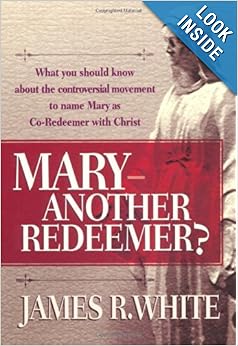
Perpetual Virginity, Immaculate Conception, Sinlessness, and Bodily Assumption of Mary have their beginnings in fictional accounts like the Protoevangelium of James and Gnostic writings like the Odes of Solomon and the Ascension of Isaiah (James White, Mary: Another Redeemer?, Bethany, 1998, p. 33).
Pious beliefs like co-Mediatrix and co-Redemptrix, that could possibly be declared dogmas in the future by a Pope, are even more later innovative corruptions.
_________________________________________________________________________________________________________
Another excellent book, which we have mentioned here many times before, is worth repeating again:
Who is My Mother? by Eric Svendsen, Calvary Press, 2001.
Thursday, January 09, 2014
Luther, Sproul, and Private Interpretation
Here's part of a post and my brief response from the Catholic Answers Non-Catholic Religions forum. I've learned to always keep a record of what I post on Catholic Answers!
Yesterday, 10:42 pm
| |||
| |||
Quote:
It's a fascinating period of time, one that is not well known here on this side of the pond, and what we do know about it is sometimes told differently than how it happened. Finding sources that tell it fairly can be a challenge sometimes. In my last post I documented how Luther is the one who is responsible for unleashing the doctrine of Private Interpretation on modern Christendom. Actually it was not his intention whatsoever, but was rather an ‘Unintended Consequence’ of his revolt against the Church. It got very messy fast, and very bloody. It should also be noted that he taught Private Interpretation of Scripture in spite of the warning of St. Peter. R. C. Sproul also ‘gets it’ regarding Luther and Private Interpretation: “Two of the great legacies of the Reformation were the principal of private interpretation and the sharp focus in the sixteenth century. Hidden beneath the famous response of the Reformer to the ecclesiastical and imperial translation of the Bible into the vernacular……. It was Luther himself who brought the issue of private interpretation of the Bible authorities at the Diet of Worms was the implicit principal of private interpretation. When asked to recant of his writings, Luther replied, “Unless I am convinced by Sacred Scripture or by evident reason, I cannot recant. For my conscience is held captive by the Word of God and to act against conscience is neither right nor safe. Here I stand, I can do no other, God help me.” (of course Luther never said “Here I stand…….” –Topper) Notice that Luther said “unless I am convinced…….” In earlier debates at Leipzig and Augsburg, Luther had dared to presume to interpret Scripture contrary to interpretations rendered by Popes and by church councils. That he would be so presumptuous led to the repeated charge of arrogance by church officials. Luther did not take these charges lightly but agonized over them. He believed that he could be wrong but maintained that the Pope and councils could also err. For him only one source of truth was free from error. He said, “The Scriptures never err.” Thus, unless the leaders of the church could convince him of his error, he felt duty-bound to follow what his own conscience was convinced Scripture taught. With this controversy the principal of private interpretation was born and baptized with fire.” R.C. Sproul, Knowing Scripture, pg. 33-4 Luther demonstrated that he placed his own personal, independent, private understanding and his conscience above those of all the popes and Councils with all of their thousands of Theologians, On the face of it it seems pretty foolish doesn't it? |
Today, 3:28 pm
| |||
| |||
Quote:
I found the section from Sproul you quoted so intriguing that I wanted to read more of what Dr. Sproul said. As I read pages 33 and following, Sproul contrasts Luther's embracing private interpretation with the notion of an infallible interpreter of sacred scripture (p. 34). Luther was holding that the only infallible voice of God on earth is that recorded in sacred Scripture. On page 35 Sproul points out that Trent responded by saying "it is the responsibility of the teaching office of the... Catholic Church to expound the Scriptures and to declare the meaning of the Scriptures." In other words, Luther was challenging the infallibility of the church of his day. When Luther was fighting for the right to interpret, he was basically saying that the church certainly can have a collected wisdom and understanding of what the Scriptures are saying, but it isn't an infallible understanding because only God and His word are infallible. Sproul then goes on to say:
Quote:
Quote:
One final related point comes to mind: The Catholic church has had quite a long time since Trent declared that the church has the power to have the true sense and interpretation of scripture, but, as far as I know, the Catholic church has not infallibly interpreted a lot of passages. This leads me to wonder whether or not Catholics likewise are engaging in a fair degree of private interpretation (while in the confines of declared dogma). The issue is not private interpretation (because Catholics and protestants both do it), the issue for the Reformers was whether or not the church has the ability of infallible interpretation. Thanks again for raising such interesting issues. |
Labels:
Catholic Answers,
private interpretation,
RC Sproul
The Case Against Ergun Caner
See over at my other blog, I embedded Dr. White's video on the Case against Ergun Caner, and other links with the documentation; and also another video done by a Muslim, who made a video of news reports about Caner going to Brewton-Parker College in Mount Vernon, Ga.
The discussion in the combox is also interesting so far, as it is with a Muslim concerning the doctrines of the Trinity, the Incarnation, and the Qur'an's mistakes about those doctrines and also the Qur'an's mistkae about the crucifixion and death of Christ as established historical fact, which the Qur'an denies. (Surah 4:157)
Labels:
apologetics,
Articles by Ken T.,
Ergun Caner,
Integrity,
Islam,
Muslims,
repentance
Saturday, January 04, 2014
Luther: Christians Are Allowed to Marry Their Nieces?
Here's one from the Catholic Answers Forums concerning marriage and the degrees of consanguinity:
The simple answer to the above questions is that the Roman church had developed an entire legal system from the preceding centuries, particularly with the development of canon law during the late eleventh through thirteenth centuries. Canon law had determined which people could marry, and often these rules had no scriptural basis. Luther sought to define whom was allowed to marry based on Scripture (i.e., Leviticus 18). The important question to ask is not whether or not Luther was "off base" or engaging in "nuttiness," but rather whether or not (or to what degree) a society should follow Levitical law in defining marriage. If one should not keep Levitical law, isn't that saying that one is allowed to basically marry anyone? Certainly Luther was not in favor of keeping the law of Moses. On the other hand, Luther saw that the laws in Leviticus 18 set up natural law guidelines for marriage. In a letter commenting on Lev. 18:16, Luther states:
The second impediment is affinity or relationship through marriage. Here too they have set up four degrees, so that after my wife’s death I may not marry into her blood relationship, where my marriage extends up to the third and fourth degrees—unless money comes to my rescue! (LW 45:23)
The third impediment is spiritual relationship. If I sponsor a girl at baptism or confirmation, then neither I nor my son may marry her, or her mother, or her sister—unless an appropriate and substantial sum of money is forthcoming! This is nothing but pure farce and foolishness, concocted for the sake of money and to befuddle consciences. Just tell me this: isn’t it a greater thing for me to be baptized myself than merely to act as sponsor to another? Then I must be forbidden to marry any Christian woman, since all baptized women are the spiritual sisters of all baptized men by virtue of their common baptism, sacrament, faith, Spirit, Lord, God, and eternal heritage [Eph. 4:4–6].(LW 45:24)
The fifth impediment is unbelief; that is, I may not marry a Turk, a Jew, or a heretic. I marvel that the blasphemous tyrants are not in their hearts ashamed to place themselves in such direct contradiction to the clear text of Paul in I Corinthians 7[:12–13], where he says, “If a heathen wife or husband consents to live with a Christian spouse, the Christian should not get a divorce.” And St. Peter, in I Peter 3[:1], says that Christian wives should behave so well that they thereby convert their non-Christian husbands; as did Monica, the mother of St. Augustine. (LW 45:26)
The sixth impediment is crime. They are not in agreement as to how many instances of this impediment they should devise. However, there are actually these three: if someone lies with a girl, he may not thereafter marry her sister or her aunt, niece, or cousin; again, whoever commits adultery with a woman may not marry her after her husband’s death; again, if a wife (or husband) should murder her spouse for love of another, she may not subsequently marry the loved one. (LW 45:26)
The seventh impediment they call public decorum, respectability. For example, if my fiancĂ©e should die before we consummate the marriage, I may not marry any relative of hers up to the fourth degree, since the pope thinks and obviously dreams that it is decent and respectable for me to refrain from so doing—unless I put up the money, in which case the impediment of public decorum vanishes. Now you have heard a moment ago that after my wife’s death I may marry her sister or any of her relatives except for her mother and her daughter. You stick to this, and let the fools go their way. (LW 45:27)
The tenth impediment is condition of servitude. When I marry one who is supposed to be free and it turns out later that she is a serf, this marriage too is null and void. (LW 45:27)
There are still four more impediments, such as episcopal prohibition, restricted times, custom, and defective eyesight and hearing. It is needless to discuss them here. It is a dirty rotten business that a bishop should forbid me a wife or specify the times when I may marry, or that a blind and dumb person should not be allowed to enter into wedlock. So much then for this foolishness at present in the first part. (LW 45:30)
...why would Luther feel compelled to write about marriage and challenge/refute so much of what had been considered Christian marriage for centuries? Do we as modern day Christians think he was right about Christians being allowed to marry our nieces, or do we feel that Luther was way off base here? Did this nuttiness have an impact on the culture? You bet it did.These questions were asked along with the posting of Luther's The Persons Related By Consanguinity and Affinity Who Are Forbidden To Marry According To Scriptures, Leviticus 18 (LW 45:3-7) was posted. Marriage in the 16th Century was a complicated topic, and these questions / conclusions appear to be based on Luther writing "From this it follows that with a good conscience before God I may marry the child of my brother or sister, or my stepmother's sister" found in the link above.
The simple answer to the above questions is that the Roman church had developed an entire legal system from the preceding centuries, particularly with the development of canon law during the late eleventh through thirteenth centuries. Canon law had determined which people could marry, and often these rules had no scriptural basis. Luther sought to define whom was allowed to marry based on Scripture (i.e., Leviticus 18). The important question to ask is not whether or not Luther was "off base" or engaging in "nuttiness," but rather whether or not (or to what degree) a society should follow Levitical law in defining marriage. If one should not keep Levitical law, isn't that saying that one is allowed to basically marry anyone? Certainly Luther was not in favor of keeping the law of Moses. On the other hand, Luther saw that the laws in Leviticus 18 set up natural law guidelines for marriage. In a letter commenting on Lev. 18:16, Luther states:
You will reply: If someone continues this argumentation then he will end up teaching that we also are not prevented by any law of God from marrying daughters, sisters, or mothers, since the law of Moses prohibits this, but the law of Moses now no longer binds us Gentiles. I answer that such marriages are prohibited and considered incestuous by natural law. This is sufficiently proven by the fact that in Scripture before, during, and after [the time in which] the law [of Moses was valid,] no example [for the permission of such marriages] can be found, and without example and law nothing may be undertaken. Precisely by this fact God has sufficiently demonstrated that he condemns such marriages. But there are laws and examples for marrying your deceased brother’s wife. (LW 50:37)When Luther says, "From this it follows that with a good conscience before God I may marry the child of my brother or sister, or my stepmother's sister," he's basing his conclusion on an interpretation of Leviticus 18. Luther elsewhere reasons,
The first impediment is blood relationship. Here they have forbidden marriage up to the third and fourth degrees of consanguinity. If in this situation you have no money, then even though God freely permits it you must nevertheless not take in marriage your female relative within the third and fourth degrees, or you must put her away if you have already married her. But if you have the money, such a marriage is permitted. Those hucksters offer for sale women who never have been their own. So that you can defend yourself against this tyranny, I will now list for you the persons whom God has forbidden, Leviticus 18[:6–13], namely, my mother, my stepmother; my sister, my stepsister; my child’s daughter or stepdaughter; my father’s sister; my mother’s sister. I am forbidden to marry any of these persons. From this it follows that first cousins may contract a godly and Christian marriage, and that I may marry my stepmother’s sister, my father’s stepsister, or my mother’s stepsister. Further, I may marry the daughter of my brother or sister, just as Abraham married Sarah. None of these persons is forbidden by God, for God does not calculate according to degrees, as the jurists do, but enumerates directly specific persons. Otherwise, since my father’s sister and my brothers daughter are related to me in the same degree, I would have to say either that I cannot marry my brother’s daughter or that I may also marry my father’s sister. Now God has forbidden my father’s sister, but he has not forbidden my brothers daughter, although both are related to me in the same degree. We also find in Scripture that with respect to various stepsisters there were not such strict prohibitions. For Tamar, Absalom’s sister, thought she could have married her stepbrother Amnon, II Samuel 13[:13] (LW 45:22-23).The first question being asked above is in regard to why Luther engaged the subject of marriage rather than just leaving the established medieval order alone. This question was answered in a thoughtful essay, John Witte, The Reformation of Marriage Law in Martin Luther's Germany: Its significance Then and Now (Journal of Law and Religion, Vol. 4, No. 2 (1986), pp. 293-351.
According to many contemporary observers, Luther's alarm over the decrepit estate of marriage and marriage law was certainly not unfounded. Germany suffered through decades of indiscipline and immorality in the late fifteenth and early sixteenth centuries. Prostitution was rampant. High clerics and officials of government regularly kept concubines and visited the numerous brothels in German cities. The small fines incurred for such activity discouraged few. Drunken orgies were commonplace. Women were raped and ravaged,particularly by robber bands and soldiers. Lewd pamphlets and books exalting sexual liberty and license were published with virtual impunity. Writings by some Roman Catholics extolling celibacy and deprecating marriage and sex dissuaded many couples from marriage and persuaded many parents to send their children to monasteries and cloisters. The number of single men and women, of monasteries and cloisters, of monks and nuns reached new heights in the years shortly before the Reformation. Within the estate of marriage itself, instances of bigamy, incest, and polygamy appeared with alarming frequency. The canon laws governing the formation and dissolution of marriages were flouted or arbitrarily enforced in several parts of Germany. Laws prescribing care and education of children as well as laws proscribing abortion, abuse of family members, adultery, and desertion were regularly violated. Calls such as Luther's for the reformation of marriage and marriage law and for the reinforcement of public morality were therefore received sympathetically by Roman Catholics and Protestants alike.The Roman church had a complex set of these rules as well. The rules were set up in part as a way for the Roman church to nullify a consummated putative marriage:
Unlike the Roman Catholics, however, Luther and other German Protestant reformers attributed much of the decay of marriage not only to the negligence and arbitrariness of authority and the moral laxness of society but also to the canon laws of marriage and the Roman Catholic theological concepts of marriage underlying these laws. For the reformers the canon law of marriage yielded paradoxical results. It discouraged and prevented mature persons from marrying by its celebration of celibacy, its proscriptions against the breach of vows to celibacy, its permission to breach oaths of betrothal, and its numerous impediments. Yet it encouraged marriages between the immature by declaring valid secret unions consummated without parental permission as well as oaths of betrothal followed by sexual intercourse. It highlighted the sanctity and solemnity of marriage by deeming it a sacrament. Yet it permitted a couple to enter this holy union without clerical or parental witness, instruction, or participation. Celibate and impeded persons were thus driven by their sinful passion to incontinence and all manner of sexual deviance. Married couples, not taught the Scriptural norms for marriage, adopted numerous immoral practices. Such paradoxical results, the reformers averred, were rooted in tensions within the Roman Catholic theology of marriage. Although Roman Catholic theologians emphasized the sanctity and sanctifying purpose of the marriage sacrament, they nevertheless subordinated it to celibacy and monasticism. Although they taught that marriage is a duty mandated for all persons by divine natural law, they excused many from this duty through the restrictions of canon law. Both the Roman Catholic theology and the canon law of marriage thus met with sharp criticism on the part of the reformers.
First, many of the cardinal issues of the Lutheran Reformation were implicated by this doctrine and law. The Roman Catholic Church's exclusive legal authority over marriage was, for the reformers, a particularly flagrant example of the church's usurpation of civil legal authority. The Roman Catholic sacramental concept of marriage,on which the church had founded this authority, raised questions of sacramental theology and Scriptural interpretation. The numerous canon law impediments to marriage and prohibitions against complete divorce were in tension with the reformers' understanding of Scriptural norms for marriage. That a child could enter marriage without instruction or permission raised questions about the responsibilities of the family, church, and state to children. Issues of marriage doctrine and law implicated and epitomized the broader theological, political, and social issues of the Reformation. Thus it is not surprising that such a large number of German reformers-Luther, Melanchthon, Bucer, Brenz, Osiander, and numerous other theologians as well as Schiirpf, Monner, Kling, Lagus, Beust, Schneidewin, and many other jurists -debated these questions with such vigor(pp.293-296).
Far more important were the diriment impediments used by the ecclesiastical courts to nullify even fully consummated putative marriages. One group of these impediments sought to preserve the freedom of consent of both parties. Thus a mistake about the identity of the other party nullified the marriage; mistakes about the social, financial, or civil status of the other were generally no longer considered to be grounds for nullification by the early sixteenth century. Extreme duress, fear, compulsion or fraud (by parents, spouses, or third parties) also impinged on consent and invalidated the marriage contract.Luther expounded on his earlier rules of marriage in his treatise, The Estate of Marriage (1522) (LW 45). Here Luther directly comments on the rules of the church as they functioned in his day. Here are a few examples:
The canon law not only defined free consent but also specified which parties were free to give their mutual consent. Those who had made religious vows of celibacy or chastity in one of the sacred orders of the Church were eternally bound to God and thus could not bind themselves to another in marriage. Christians could not contract marriage with infidels, Jews, or pagans since the sacrament of baptism was a prerequisite for marriage; furthermore, such marriages could not symbolize the union of Christ with his faithful Church. Thus if a party departed from the faith after consummation and remained incorrigible, the Church could declare the marriage void. Persons related up to the fourth degree either to a common ancestor or to a couple (whether or not married) who had engaged in sexual relations were prohibited from marrying. These were called the impediments of consanguinity and affinity. Parents could not marry their adopted children or grandchildren, nor the spouses of their adopted children. One who baptized or confirmed a party or who became a godparent could not marry him or her; for these persons were considered to be the "spiritual fathers or mothers" of the party who received the sacrament.
The canon law also developed a group of impediments to protect the ultimate sanctity and function of the sacrament of marriage. First, conditions attached to marriage promises which were illegal or which were repugnant to the sacrament or harmful to the offspring automatically rendered the marriage contract void. Thus a promise with the condition "that we abstain for a season" was valid; but a condition "that we abort our offspring" or "that we permit each other sexual liberty with others" nullified the marriage contract. For such conditions vitiated the entire purpose of marriage: to unite together in love and to raise children in the service of God. Second, permanent impotence, insanity, or bewitchment of either party were generally grounds for nullification as well, provided that such a condition was latent before marriage, but unknown to the parties; if the parties knew of the condition before marriage or if it arose after consummation, they had no action for nullification. Third, the church annulled all bigamous and polygamous relations as contrary to the Gospel and to the purpose of marriage. Fourth, an unconsummated marriage could be annulled if one party severely abused or consistently threatened another with death, contracted a permanent contagious disease, or committed adultery. Where the marriage was consummated, however, the church permitted only a divorce, i.e., a judicial separation from bed and board. Divorce in the modern sense was not permitted; the sacramental bond, once consummated, remained indissoluble till the physical or civil death of one of the parties.(Witte, 305-306)
The second impediment is affinity or relationship through marriage. Here too they have set up four degrees, so that after my wife’s death I may not marry into her blood relationship, where my marriage extends up to the third and fourth degrees—unless money comes to my rescue! (LW 45:23)
The third impediment is spiritual relationship. If I sponsor a girl at baptism or confirmation, then neither I nor my son may marry her, or her mother, or her sister—unless an appropriate and substantial sum of money is forthcoming! This is nothing but pure farce and foolishness, concocted for the sake of money and to befuddle consciences. Just tell me this: isn’t it a greater thing for me to be baptized myself than merely to act as sponsor to another? Then I must be forbidden to marry any Christian woman, since all baptized women are the spiritual sisters of all baptized men by virtue of their common baptism, sacrament, faith, Spirit, Lord, God, and eternal heritage [Eph. 4:4–6].(LW 45:24)
The fifth impediment is unbelief; that is, I may not marry a Turk, a Jew, or a heretic. I marvel that the blasphemous tyrants are not in their hearts ashamed to place themselves in such direct contradiction to the clear text of Paul in I Corinthians 7[:12–13], where he says, “If a heathen wife or husband consents to live with a Christian spouse, the Christian should not get a divorce.” And St. Peter, in I Peter 3[:1], says that Christian wives should behave so well that they thereby convert their non-Christian husbands; as did Monica, the mother of St. Augustine. (LW 45:26)
The sixth impediment is crime. They are not in agreement as to how many instances of this impediment they should devise. However, there are actually these three: if someone lies with a girl, he may not thereafter marry her sister or her aunt, niece, or cousin; again, whoever commits adultery with a woman may not marry her after her husband’s death; again, if a wife (or husband) should murder her spouse for love of another, she may not subsequently marry the loved one. (LW 45:26)
The seventh impediment they call public decorum, respectability. For example, if my fiancĂ©e should die before we consummate the marriage, I may not marry any relative of hers up to the fourth degree, since the pope thinks and obviously dreams that it is decent and respectable for me to refrain from so doing—unless I put up the money, in which case the impediment of public decorum vanishes. Now you have heard a moment ago that after my wife’s death I may marry her sister or any of her relatives except for her mother and her daughter. You stick to this, and let the fools go their way. (LW 45:27)
The tenth impediment is condition of servitude. When I marry one who is supposed to be free and it turns out later that she is a serf, this marriage too is null and void. (LW 45:27)
There are still four more impediments, such as episcopal prohibition, restricted times, custom, and defective eyesight and hearing. It is needless to discuss them here. It is a dirty rotten business that a bishop should forbid me a wife or specify the times when I may marry, or that a blind and dumb person should not be allowed to enter into wedlock. So much then for this foolishness at present in the first part. (LW 45:30)
Friday, January 03, 2014
Wednesday, January 01, 2014
Discussion With Catholic Apologist Art Sippo on Luther Biographies
Discussion With Catholic Apologist Art Sippo on Luther Biographies: Back in 2006, Roman defender Art Sippo and I discussed which were the best and worst biographies on Luther to read. Dr. Sippo and I agreed on nothing. From my perspective. the conversation shows that Sippo begins with Luther as an arch-villain, and any book that says otherwise is propaganda.
I. On Dialoging With Catholic apologist Art Sippo on Luther Scholarship
II. Catholic Apologist Art Sippo on Father O’Hare’s “Facts About Luther”
III. Catholic Apologist Art Sippo on Luther Scholarship and Research (Part 1)
IV. Art Sippo on Catholic Historians Grisar and Denifle and Luther’s Demon Possession (part 2)
V. Using Psychohistory To Interpret Luther (A Response To Catholic Apologist Art Sippo (part3)
VI. Catholic Apologist Art Sippo Takes The Time To Thank Me For My Luther Research
VII. Luther Between God and the Devil: Catholic Apologist Art Sippo on Heiko Oberman
VIII. Catholic Apologist Art Sippo on Roland Bainton's "Here I Stand"
IX. Catholic Apologist Art Sippo on Richard Marius
X. Catholic Apologist Art Sippo on Catholic Historian Joseph Lortz
XI. A Last Look At Catholic Apologist Art's Sippo's View Of Luther Biographies
XII. Art Sippo on Luther Biographies Revisited: Marius on Denifle
Sippo vs Lortz Revisted: Cardinal Ratzinger help Dr. Sippo understand Joseph Lortz
Sippo, Lortz, Ratzinger, and Luther
I. On Dialoging With Catholic apologist Art Sippo on Luther Scholarship
II. Catholic Apologist Art Sippo on Father O’Hare’s “Facts About Luther”
III. Catholic Apologist Art Sippo on Luther Scholarship and Research (Part 1)
IV. Art Sippo on Catholic Historians Grisar and Denifle and Luther’s Demon Possession (part 2)
V. Using Psychohistory To Interpret Luther (A Response To Catholic Apologist Art Sippo (part3)
VI. Catholic Apologist Art Sippo Takes The Time To Thank Me For My Luther Research
VII. Luther Between God and the Devil: Catholic Apologist Art Sippo on Heiko Oberman
VIII. Catholic Apologist Art Sippo on Roland Bainton's "Here I Stand"
IX. Catholic Apologist Art Sippo on Richard Marius
X. Catholic Apologist Art Sippo on Catholic Historian Joseph Lortz
XI. A Last Look At Catholic Apologist Art's Sippo's View Of Luther Biographies
XII. Art Sippo on Luther Biographies Revisited: Marius on Denifle
Sippo vs Lortz Revisted: Cardinal Ratzinger help Dr. Sippo understand Joseph Lortz
Sippo, Lortz, Ratzinger, and Luther
Sunday, December 29, 2013
Against Rome's Apostolic Succession Argument by Bullinger (Part 1)
Heinrich Bullinger (1504-1575) was a Swiss Reformer and author of a popular writing entitled The Decades. This particular writing was influential in England, highly esteemed and used as a textbook of sorts for training English clergy. Included in The Decades is a section entitled Of The Holy Catholic Church, and included therein is Bullinger's refutation of Rome's apostolic succession argument (that Rome is the true church because of an historical succession of church authority that began with Peter). Here is the first part of Bullinger's argument:
Second, the succession of doctors or pastors of the Church does not prove anything of itself without the Word of God. The champions and defenders of the papistical church boast that they have a most certain mark of the apostolic Church, that is, in the continual succession of bishops which derives from Peter by Clement the First, and so to Clement the Seventh, and to Paul the Third who died recently, and so continuing to Julius the Third, who has only just been created pope. Moreover they add that all those members are cut off which separate themselves from that church in which alone that apostolic succession is found. And we do not deny that the right succession of pastors was of great weight in the primitive Church. For those who were then called pastors were pastors indeed, and executed the office of pastors. But what kind of pastors those have been for some time who out of the rabble of cardinals, mitred bishops and sophisters have been called pastors of the church of Rome, only those are ignorant who are altogether without understanding. The prophet Zechariah heard these words spoken to him by the Lord: "Take to thee yet the instruments of a foolish shepherd; for lo, I will raise up a shepherd in the land, which shall not look for the thing that is lost, nor seek the tender lambs, nor heal that that is hurt, nor.feed that that standeth up: but he shall eat the flesh of the fat, and tear their hoofs in pieces. Woe be to the idol shepherd that forsaketh the flock," etc. Therefore by their continual succession of bishops who do not teach the Word of God sincerely or execute the office and duty of pastors, these men do not prove any more than if they were to set before the eyes of the world a company, of idols. For who dare deny that many, indeed the majority of bishops of Rome since Gregory the Great were idols and wolves and devourers like those described by the prophet Zechariah? I ask then, what can the continual succession,cf such false pastors prove? indeed, did not the later ones fill almost the whole Church with the traditions of men, and partly oppress the Church of God, and partly persecute it? In the ancient church of the Israelites there was a continual order of succession of bishops, without any interruption from Aaron to Urias, who lived under Ahaz, and to other wicked high priests who also fell away from the Word of God: to the traditions of men, and indeed to idolatry. But for all that, that succession did not prove the idolatrous high-priests, with the church which adhered to them, to be the true high-priests of God and the true Church of God. For the true prophets of God, the sound and catholic fathers, who preached the Word of God alone apart from and indeed clean against all the traditions of men, were not able to reckon up any succession of priests to whom they themselves succeeded. Yet in spite of that, they were most excellent lights, and worthy members of the Church of God, and those who believed their doctrine were neither schismatics nor heretics, but even to this day are acknowledged to be the true Church of Christ. When Christ our Lord, the blessed Son of God, taught here on earth and gathered together his Church, the succession of high_priests ranged itself with his adversaries: but that did not mean that they were the rulers of the true Church of God, and Christ of the heretical church. The apostles of our Lord could not allege for themselves and their doctrine an unbroken succession of high-priests: for they were ordained by the Lord, who was also himself created of God the High Priest for ever after the order of Melchisedek, outside the succession of the order of Levi. Yet the Church which was gathered by them is acknowledged by all to be the true and holy Church. The apostles themselves would not allow any to be counted their true followers and successors but those who walked uprightly in the doctrine and way of Christ: for the saying of Paul is notable. and manifest: "Be ye followers of me, even as I am of Christ." And though he speaks these words to all the faithful, and not only to the ministers of God's Word, yet he would have the latter his followers like all other Christians, that is to say, every man in his vocation and calling. The same apostle, speaking at Miletum to the bishops of Asia, says amongst other things: "I know this, that after my departing shall grievous wolves enter in among you, not sparing the flock. Moreover, of your own selves shall men arise speaking perverse things, to draw disciples after them." It is from the apostolic Church itself, indeed from the company or assembly of apostolic bishops and pastors, that Paul the apostle fetches out the wolves and devourers of the Church. But do you not think that these could have alleged the apostolic succession for themselves and their most corrupt cause, that is, that, they were descended from apostolic pastors? But since forsaking the truth they have fallen from the faith and doctrine of the apostles, their derivation and apostolic succession does not in any way help them. Therefore we conclude that of itself the continual succession of bishops does not prove anything, but on the contrary that succession which lacks the purity of evangelical and apostolic doctrine is not valid.
Source: Library of Christian Classics Vol. XXIV: Zwingli and Bullinger (Philadelphia: The Westminster Press, 1953), pp. 309-311
Second, the succession of doctors or pastors of the Church does not prove anything of itself without the Word of God. The champions and defenders of the papistical church boast that they have a most certain mark of the apostolic Church, that is, in the continual succession of bishops which derives from Peter by Clement the First, and so to Clement the Seventh, and to Paul the Third who died recently, and so continuing to Julius the Third, who has only just been created pope. Moreover they add that all those members are cut off which separate themselves from that church in which alone that apostolic succession is found. And we do not deny that the right succession of pastors was of great weight in the primitive Church. For those who were then called pastors were pastors indeed, and executed the office of pastors. But what kind of pastors those have been for some time who out of the rabble of cardinals, mitred bishops and sophisters have been called pastors of the church of Rome, only those are ignorant who are altogether without understanding. The prophet Zechariah heard these words spoken to him by the Lord: "Take to thee yet the instruments of a foolish shepherd; for lo, I will raise up a shepherd in the land, which shall not look for the thing that is lost, nor seek the tender lambs, nor heal that that is hurt, nor.feed that that standeth up: but he shall eat the flesh of the fat, and tear their hoofs in pieces. Woe be to the idol shepherd that forsaketh the flock," etc. Therefore by their continual succession of bishops who do not teach the Word of God sincerely or execute the office and duty of pastors, these men do not prove any more than if they were to set before the eyes of the world a company, of idols. For who dare deny that many, indeed the majority of bishops of Rome since Gregory the Great were idols and wolves and devourers like those described by the prophet Zechariah? I ask then, what can the continual succession,cf such false pastors prove? indeed, did not the later ones fill almost the whole Church with the traditions of men, and partly oppress the Church of God, and partly persecute it? In the ancient church of the Israelites there was a continual order of succession of bishops, without any interruption from Aaron to Urias, who lived under Ahaz, and to other wicked high priests who also fell away from the Word of God: to the traditions of men, and indeed to idolatry. But for all that, that succession did not prove the idolatrous high-priests, with the church which adhered to them, to be the true high-priests of God and the true Church of God. For the true prophets of God, the sound and catholic fathers, who preached the Word of God alone apart from and indeed clean against all the traditions of men, were not able to reckon up any succession of priests to whom they themselves succeeded. Yet in spite of that, they were most excellent lights, and worthy members of the Church of God, and those who believed their doctrine were neither schismatics nor heretics, but even to this day are acknowledged to be the true Church of Christ. When Christ our Lord, the blessed Son of God, taught here on earth and gathered together his Church, the succession of high_priests ranged itself with his adversaries: but that did not mean that they were the rulers of the true Church of God, and Christ of the heretical church. The apostles of our Lord could not allege for themselves and their doctrine an unbroken succession of high-priests: for they were ordained by the Lord, who was also himself created of God the High Priest for ever after the order of Melchisedek, outside the succession of the order of Levi. Yet the Church which was gathered by them is acknowledged by all to be the true and holy Church. The apostles themselves would not allow any to be counted their true followers and successors but those who walked uprightly in the doctrine and way of Christ: for the saying of Paul is notable. and manifest: "Be ye followers of me, even as I am of Christ." And though he speaks these words to all the faithful, and not only to the ministers of God's Word, yet he would have the latter his followers like all other Christians, that is to say, every man in his vocation and calling. The same apostle, speaking at Miletum to the bishops of Asia, says amongst other things: "I know this, that after my departing shall grievous wolves enter in among you, not sparing the flock. Moreover, of your own selves shall men arise speaking perverse things, to draw disciples after them." It is from the apostolic Church itself, indeed from the company or assembly of apostolic bishops and pastors, that Paul the apostle fetches out the wolves and devourers of the Church. But do you not think that these could have alleged the apostolic succession for themselves and their most corrupt cause, that is, that, they were descended from apostolic pastors? But since forsaking the truth they have fallen from the faith and doctrine of the apostles, their derivation and apostolic succession does not in any way help them. Therefore we conclude that of itself the continual succession of bishops does not prove anything, but on the contrary that succession which lacks the purity of evangelical and apostolic doctrine is not valid.
Source: Library of Christian Classics Vol. XXIV: Zwingli and Bullinger (Philadelphia: The Westminster Press, 1953), pp. 309-311
Thursday, December 26, 2013
Christ Versus Luther
I came across a number of webpages using the same Luther quotes and then comparing those quotes to particular Bible passages. The layout was very similar to the popular Luther, Exposing the Myth webpage, but relying on a different source: Christ Versus Luther (Bellarmine Publishing Co., 1953) (or sometimes referred to as, "Christ vs. Luther edited by R. A. Short, copyright 1953 by the Bellarmine Publishing Company, Mound, Minn."). This book appears to be merely a 21 page pamphlet rather than a full-length treatment. Here's a typical example of how this pamphlet is being used by Roman polemicists. I've left the typos intact. This excerpt appears all over the Internet with the same typos (like "hook" rather than "book" in the first paragraph):
Following are some significant excerpts from Luther's writings and lectures, as compared with the teachings of our Lord Jesus Christ. (Taken from the hook CHRIST VS. LUTHER, edited by R. A. Short, copyright 1953 by the Bellarmine Publishing Company, Mound, Minn)
-On Sin -
Christ: "Now the works of the flesh are manifest, which are fornication . . . murder . . . and suchlike. And concerning these I warn you, they who do such things will not attain the Kingdom of God" (Galatians 5:19-21).
Luther: "Sin boldly but believe more boldly. Let your faith be greater than your sin. . . Sin will not destroy us in the reign of the Lamb, although we were to commit fornication a thousand times in one day" (Letter to Melanchton, August 1, 1521, Audin p.178).
Christ: "And do not be drunk with wine, for in that is debauchery" (Eph. 5:18). "Keep thyself chaste" (I Tim. 5:22).
Luther: "Why do I sit soaked in wine? ... To be continent and chaste is not in me" (Luther's diary).
- On Good Works -
Christ: "What will it profit, my brethren, if a man says he has faith, but does not have works? As the body without the spirit is dead, so faith without works is dead also" (James 2:14,26).
Luther: "He that says the Gospel requires works for salvation, I say, flat and plain, is a liar" ("able Talk, WeimerEdition, II, p.137).
-On Truth -
Christ: "Do not be liars against the truth. This is not the wisdom that descends from above. It is earthly, sensual,devilish" (James 3:1~15). "Do not lie to one another" (Col. 3:9). "The Lord hateth... a lying tongue... a deceitful witness that uttereth lies. . . "(Proverbs 6:1&17). "A thief is worse than a liar, but both of them shall inherit destruction" (Ecclus. 20:27).
Luther: "To lie in case of necessity, or for convenience, or in excuse, would not offend God, who is ready to take such lies on Himself" (Enserch Conference, July 17, 1540).
- On Marriage -
Christ: "Whosoever shall put away his wife and marry another, committeth adultery against her. And if the wife shall put away her husband, and be married to another, she committeth adultery" ~ark 10:11-12).
Luther: "As to divorce, it is still a moot question whether it is allowable. For my part, I prefer bigamy" (DeWette,Vol.2, p.459).
- On Free Will-
Christ: "Woe to that man by whom the Son of Man is betrayed! It were better for that man if he had not been born" (Matt. 26:24). "Let no man say when he is tempted, that he is tempted by God; for God is no tempter to evil"(James 1:13).
Luther: "Judas' will was the work of God; God by His almighty power moved his will as He does all that is in this world" (De Servo Arbitro - Against man's free will). Accosted on all sides by charges of heresy, even by many of his former associates in the Protestant movement, Luther found refuge in this, the strangest of all his beliefs. No man is accountable for his actions, Luther taught, no matter how evil. Not even Judas!
Such are the teachings of the first so-called "reformer" of Christ's Church! If Luther was a man divinely inspired or called in an extraordinary manner, why did God permit him to fall into so many absurdities in points of doctrine?
"Luther finally brought himself to indulge the pleasing delusion that the Catholic Church was the detestable kingdom of Antichrist . . . that he himself was John the Evangelist... "(From the book LUTHER, P.65).
I wasn't able to actually track down the pamphlet, but I did find it interesting that it does appear to have been granted the imprimatur by the Archbishop of St. Paul Minnesota.
I've worked through these quotes before:
Sin boldly but believe more boldly
To be continent and chaste is not in me
He that says the Gospel requires works for salvation, I say, flat and plain, is a liar
To lie in case of necessity, or for convenience, or in excuse, would not offend God
For my part, I prefer bigamy
Judas' will was the work of God
The final quote referring to "from the book LUTHER, P.65" may refer to an edition of The Manual of Universal Church History by John Alzog. The quote can be found on page 42. Alzog, a Roman polemicist, is simply giving his opinion about Luther's self perception while hidden in the Wartburg castle. Alzog contends that Luther was "habitually yielding" to demonic influences, and this brought him "to indulge the pleasing delusion that the Catholic Church was the detestable kingdom of Antichrist . . . that he himself was John the Evangelist... ". such a comment needs no refutation other than pointing out that the author is preaching to convinced Romanists perpetuating pre-Vatican II sentiment.
The only quote above that I've not searched out in-depth is the snippet "Why do I sit soaked in wine?" This quote is attached to "To be continent and chaste is not in me" but isn't from the same source. A few years back I mentioned the quote can be found in Rumble's and Carty's Radio Replies series. They say:
269. Do you know of any good in Luther?
Intellectually, not much. He declared that reason was of the devil, and that the Christian must regard it as his greatest enemy. Morally, less still. St. Paul says that those who are Christ's have crucified their flesh with its vices and concupiscences. Gal 5:24. That Luther indulged his vices and concupiscences is clear from his writings, where he gives disgraceful descriptions of his own indulgence in everything passionate. His diaries record shocking excesses of sensuality, which could not be printed in any decent book today. A true Apostle of Christ does not give vent to such expressions as, "To be continent and chaste is not in me," or, "Why do I sit soaked in wine." I do not say these things merely to detract from the memory of Luther. But it is not right that people should be duped by the thought that Luther was a well-balanced and saintly reformer. He was not entirely devoid of good qualities. He was endowed with a certain kindness and generosity. But this does not compensate for his vices. He should have controlled his sentimentality and emotional nature in the light of Christian principles. He did not, but gave free rein to his lower passions, calmly saying that a man has to do so, and will not be responsible for such conduct.
I have no idea what the authors are referring to by "Luther's diaries." It's probably a reference to the Tabletalk. I've yet to find any sort of reliable reference to "Why do I sit soaked in wine," and I doubt any Roman polemicist using this snippet cares to locate the context before cut-and-pasting.
Following are some significant excerpts from Luther's writings and lectures, as compared with the teachings of our Lord Jesus Christ. (Taken from the hook CHRIST VS. LUTHER, edited by R. A. Short, copyright 1953 by the Bellarmine Publishing Company, Mound, Minn)
-On Sin -
Christ: "Now the works of the flesh are manifest, which are fornication . . . murder . . . and suchlike. And concerning these I warn you, they who do such things will not attain the Kingdom of God" (Galatians 5:19-21).
Luther: "Sin boldly but believe more boldly. Let your faith be greater than your sin. . . Sin will not destroy us in the reign of the Lamb, although we were to commit fornication a thousand times in one day" (Letter to Melanchton, August 1, 1521, Audin p.178).
Christ: "And do not be drunk with wine, for in that is debauchery" (Eph. 5:18). "Keep thyself chaste" (I Tim. 5:22).
Luther: "Why do I sit soaked in wine? ... To be continent and chaste is not in me" (Luther's diary).
- On Good Works -
Christ: "What will it profit, my brethren, if a man says he has faith, but does not have works? As the body without the spirit is dead, so faith without works is dead also" (James 2:14,26).
Luther: "He that says the Gospel requires works for salvation, I say, flat and plain, is a liar" ("able Talk, WeimerEdition, II, p.137).
-On Truth -
Christ: "Do not be liars against the truth. This is not the wisdom that descends from above. It is earthly, sensual,devilish" (James 3:1~15). "Do not lie to one another" (Col. 3:9). "The Lord hateth... a lying tongue... a deceitful witness that uttereth lies. . . "(Proverbs 6:1&17). "A thief is worse than a liar, but both of them shall inherit destruction" (Ecclus. 20:27).
Luther: "To lie in case of necessity, or for convenience, or in excuse, would not offend God, who is ready to take such lies on Himself" (Enserch Conference, July 17, 1540).
- On Marriage -
Christ: "Whosoever shall put away his wife and marry another, committeth adultery against her. And if the wife shall put away her husband, and be married to another, she committeth adultery" ~ark 10:11-12).
Luther: "As to divorce, it is still a moot question whether it is allowable. For my part, I prefer bigamy" (DeWette,Vol.2, p.459).
- On Free Will-
Christ: "Woe to that man by whom the Son of Man is betrayed! It were better for that man if he had not been born" (Matt. 26:24). "Let no man say when he is tempted, that he is tempted by God; for God is no tempter to evil"(James 1:13).
Luther: "Judas' will was the work of God; God by His almighty power moved his will as He does all that is in this world" (De Servo Arbitro - Against man's free will). Accosted on all sides by charges of heresy, even by many of his former associates in the Protestant movement, Luther found refuge in this, the strangest of all his beliefs. No man is accountable for his actions, Luther taught, no matter how evil. Not even Judas!
Such are the teachings of the first so-called "reformer" of Christ's Church! If Luther was a man divinely inspired or called in an extraordinary manner, why did God permit him to fall into so many absurdities in points of doctrine?
"Luther finally brought himself to indulge the pleasing delusion that the Catholic Church was the detestable kingdom of Antichrist . . . that he himself was John the Evangelist... "(From the book LUTHER, P.65).
I wasn't able to actually track down the pamphlet, but I did find it interesting that it does appear to have been granted the imprimatur by the Archbishop of St. Paul Minnesota.
I've worked through these quotes before:
Sin boldly but believe more boldly
To be continent and chaste is not in me
He that says the Gospel requires works for salvation, I say, flat and plain, is a liar
To lie in case of necessity, or for convenience, or in excuse, would not offend God
For my part, I prefer bigamy
Judas' will was the work of God
The final quote referring to "from the book LUTHER, P.65" may refer to an edition of The Manual of Universal Church History by John Alzog. The quote can be found on page 42. Alzog, a Roman polemicist, is simply giving his opinion about Luther's self perception while hidden in the Wartburg castle. Alzog contends that Luther was "habitually yielding" to demonic influences, and this brought him "to indulge the pleasing delusion that the Catholic Church was the detestable kingdom of Antichrist . . . that he himself was John the Evangelist... ". such a comment needs no refutation other than pointing out that the author is preaching to convinced Romanists perpetuating pre-Vatican II sentiment.
The only quote above that I've not searched out in-depth is the snippet "Why do I sit soaked in wine?" This quote is attached to "To be continent and chaste is not in me" but isn't from the same source. A few years back I mentioned the quote can be found in Rumble's and Carty's Radio Replies series. They say:
269. Do you know of any good in Luther?
Intellectually, not much. He declared that reason was of the devil, and that the Christian must regard it as his greatest enemy. Morally, less still. St. Paul says that those who are Christ's have crucified their flesh with its vices and concupiscences. Gal 5:24. That Luther indulged his vices and concupiscences is clear from his writings, where he gives disgraceful descriptions of his own indulgence in everything passionate. His diaries record shocking excesses of sensuality, which could not be printed in any decent book today. A true Apostle of Christ does not give vent to such expressions as, "To be continent and chaste is not in me," or, "Why do I sit soaked in wine." I do not say these things merely to detract from the memory of Luther. But it is not right that people should be duped by the thought that Luther was a well-balanced and saintly reformer. He was not entirely devoid of good qualities. He was endowed with a certain kindness and generosity. But this does not compensate for his vices. He should have controlled his sentimentality and emotional nature in the light of Christian principles. He did not, but gave free rein to his lower passions, calmly saying that a man has to do so, and will not be responsible for such conduct.
I have no idea what the authors are referring to by "Luther's diaries." It's probably a reference to the Tabletalk. I've yet to find any sort of reliable reference to "Why do I sit soaked in wine," and I doubt any Roman polemicist using this snippet cares to locate the context before cut-and-pasting.
Saturday, December 14, 2013
Recent Research into Luther's Anti-Semitism
I hadn't realized two recent full-length books came out exploring Luther's attitude toward the Jews. I recently received both of them.
The first one (of which I'm halfway through) is Eric Gritsch, Martin Luther's Anti-Semitism: Against His Better Judgment (Grand Rapids: Eerdmans, 2012). Gritsch is a good Luther scholar. So far, the book helpfully begins by defining terms, especially what the term "antisemitism" means. the term isn't as easy to define as some may think.
What I found interesting so far is that back in 1993 Gritsch wrote, “Luther was not an anti-Semite in the racist sense. His arguments against the Jews were theological, not biological” [Eric Gritsch, “Was Luther Anti-Semitic? ” [Christian History, 39 (vol. XII, No. 3),39]. In an earlier book Gritch says, “And yet it must be said that Luther forged a theological ‘anti-Judaism’ rather than a biological ‘anti-Semetism.’ The biological, ethnic designation was disseminated in Germany during the financial panic following the Franco-Prussian War of 1870-71. Luther was not therefore the real father of German anti-Semitism, with its mass murder of Jews efficiently executed by Hitler’s bureaucratic henchmen” [Eric Gritsch, Martin- God’s Court Jester: Luther in Retrospect (Philadelphia: Fortress Press, 1983), 145].
In this recent book, Gritsch states, Luther is not simply "anti-Judaic" but rather "genuinely anti-Semetic" "in accordance with the broad, contemporary definition of anti-Semitism." It appears to me his position on Luther has shifted a bit from his earlier conclusions. One tangential point about Gritsch that I did not know was that he mentions in his recent book that he had been "a member of the Hitler Youth during the final days of World War II" (p. xiii).
The second book (which arrived today) is Christopher J. Probst, Demonizing the Jews, Luther and the Protestant Church in Nazi Germany (Bloomington: Indiana University Press, 2012). I thumbed through this one briefly, and there was a fascinating section on Luther scholar Paul Althaus, the author of one of the best systematic approaches to Luther's theology. Probst documents the association that Althaus had with the Nazis, and then after the war being part of the denazification at Erlangen University, and then being suspended from this for being "pro-Hitler," and then being found not guilty by the denazification board.
I look forward to reading both books over the holiday.
The first one (of which I'm halfway through) is Eric Gritsch, Martin Luther's Anti-Semitism: Against His Better Judgment (Grand Rapids: Eerdmans, 2012). Gritsch is a good Luther scholar. So far, the book helpfully begins by defining terms, especially what the term "antisemitism" means. the term isn't as easy to define as some may think.
What I found interesting so far is that back in 1993 Gritsch wrote, “Luther was not an anti-Semite in the racist sense. His arguments against the Jews were theological, not biological” [Eric Gritsch, “Was Luther Anti-Semitic? ” [Christian History, 39 (vol. XII, No. 3),39]. In an earlier book Gritch says, “And yet it must be said that Luther forged a theological ‘anti-Judaism’ rather than a biological ‘anti-Semetism.’ The biological, ethnic designation was disseminated in Germany during the financial panic following the Franco-Prussian War of 1870-71. Luther was not therefore the real father of German anti-Semitism, with its mass murder of Jews efficiently executed by Hitler’s bureaucratic henchmen” [Eric Gritsch, Martin- God’s Court Jester: Luther in Retrospect (Philadelphia: Fortress Press, 1983), 145].
In this recent book, Gritsch states, Luther is not simply "anti-Judaic" but rather "genuinely anti-Semetic" "in accordance with the broad, contemporary definition of anti-Semitism." It appears to me his position on Luther has shifted a bit from his earlier conclusions. One tangential point about Gritsch that I did not know was that he mentions in his recent book that he had been "a member of the Hitler Youth during the final days of World War II" (p. xiii).
The second book (which arrived today) is Christopher J. Probst, Demonizing the Jews, Luther and the Protestant Church in Nazi Germany (Bloomington: Indiana University Press, 2012). I thumbed through this one briefly, and there was a fascinating section on Luther scholar Paul Althaus, the author of one of the best systematic approaches to Luther's theology. Probst documents the association that Althaus had with the Nazis, and then after the war being part of the denazification at Erlangen University, and then being suspended from this for being "pro-Hitler," and then being found not guilty by the denazification board.
I look forward to reading both books over the holiday.
Sunday, December 08, 2013
Do Roman Catholics Believe in Ghosts?
"Some visions of ghosts could actually be souls in purgatory that are seeking prayers. We must never forget to pray for our brothers and sisters in purgatory. We should offer our mass to them every time we attend." [source]
When in Rome, make sure to visit the Museum of the Souls of Purgatory. "Located in a small room next to a church, this eerie museum displays objects and photos of objects said to show traces of apparitions who reside in Purgatory."
Saturday, December 07, 2013
Who Owns Church History?
I recently skimmed through this post on the CARM boards: What was the Protestant Reformation? As the discussion moved on, one finds a fruitless exchange on church history and Luther, so I left the following comment:
After skimming through this discussion, I’d like to offer some general comments about church history and Luther.
In regard to the use of the “Fathers,” I recommend, A Treatise on the Right Use of the Fathers in the Decision of Controversies Existing at This Day in Religion by John DaillĂ© (Philadelphia: Presbyterian Board of Publication, 1856). I have not come across any of today’s Roman apologists dealing with the content of this book (if someone knows of any current defender of Rome dealing with DaillĂ©’s argumentation, please PM me). The book is an eye opener in terms of assumptions about the existing record of church history and the use of the Fathers in establishing doctrine. After reading DaillĂ© carefully, one comes to realize the danger in using any historical period as an historical norm. The Roman church today does not believe the same things that the church of the early centuries did. Simply look for some of the key teachings of the current Roman church in the early church: indulgences, purgatory, the absolute primacy of the Roman papacy, Mary’s bodily assumption, and even such a thing taken for granted as the correct number of sacraments, and one quickly realizes that something isn't quite right when one of Rome’s apologists presumes that the early church is the property of Rome. Some of Rome’s best scholars realize the lack of unanimous consent among the fathers in regard to basic scriptural interpretation:
When one hears today the call for a return to a patristic interpretation of Scripture, there is often latent in it a recollection of Church documents that spoke at times of the ‘unanimous consent of the Fathers’ as the guide for biblical interpretation. But just what this would entail is far from clear. For, as already mentioned, there were Church Fathers who did use a form of the historical-critical method, suited to their own day, and advocated a literal interpretation of Scripture, not the allegorical. But not all did so. Yet there was no uniform or monolithic patristic interpretation, either in the Greek Church of the East, Alexandrian or Antiochene, or in the Latin Church of the West. No one can ever tell us where such a “unanimous consent of the fathers” is to be found, and Pius XII finally thought it pertinent to call attention to the fact that there are but few texts whose sense has been defined by the authority of the Church, “nor are those more numerous about which the teaching of the Holy Fathers is unanimous.” Joseph A. Fitzmyer, Scripture, The Soul of Theology (New York: Paulist Press, 1994), p. 70.
All periods of church history show continuity and discontinuity of periods that came before it. Of course there is an historical development in church doctrine and church practice… but how does one determine what has correctly… developed? History (and development) therefore is not an infallible standard by which to determine doctrine. More cautious Roman apologists realize this, which is why they typically argue that some sort of infallible sifter and determiner is required (which they claim to have). There is though a severe problem of double standards when Rome’s defenders pontificate. A Roman apologist will simply assume for instance that Trent was following the tradition of the church that there was no teaching of “faith alone” previous to Luther. Such an apologist will usually argue that Luther invented it. It didn't exist until Luther. It can’t be verified in church history. It can’t be true. On the other hand, when the same historical standard is applied to certain Roman Catholic dogmas, like Mary’s Bodily Assumption, Purgatory, Indulgences, etc., this same historical standard is swept under the rug and hidden. One has to seriously question why a standard that Roman apologists hold Protestants to is not likewise applied to their own beliefs. Wade through the corridors of church history and search for the threads of all Roman Catholic dogma. One falls flat of linking many of them back to the early church, or in some instances, even the Bible.
As I've read Luther, he likewise doesn't appear to me to think any period of church history should function as infallibly normative either. Since history is a beast in flux, Luther strove to direct the church to an infallible standard by which to evaluate doctrine, practice, and development. Lo and behold, the Christian faith has just that: the infallible words of God recorded in Sacred Scripture.
If one studies the early period of Luther’s conflicts with Rome’s defenders, it becomes quite comical: They quote this or that father or council and Luther responds back with Sacred infallible Scripture. David Bagchi showed quite convincingly that Luther's earliest Roman opponents failed in their efforts against him because while Luther argued primarily with Scripture, his detractors used a different approach:
...[T]hey relied excessively on the early fathers and lacked any doctrine of doctrinal development that would have helped them explain the accretions in practice and belief of the medieval church. They were too ready to contradict the reformers on the basis of established authorities rather than engaging the issues with any seriousness" (Luther's Earliest Opponents, p. 9-10).
Now Augustine in relation to Luther has been mentioned many times throughout this discussion. Certainly Luther held Augustine in high regard, but anyone taking the time to actually read Luther notices that his appeal to him is only occasional and qualified. In fact Augustine is treated like many of the other voices from earlier church history by Luther: he held his opinion could not be unquestionably followed, thus he commends him at times, and criticizes him as well. Since Luther’s infallible standard was Sacred Scripture, he did not cite or refer to Augustine or anyone to establish any doctrine. Certainly he would appeal to church history at times for polemical purposes, like when someone agreed with some particular point he was arguing, but for Luther, the church must always appeal to Scripture to determine truth.
“I cannot tolerate their [read: Roman apologists] slandering and blaspheming Scripture and the holy fathers. They accuse Scripture of being obscure, although all the fathers attribute the brightest light to it and draw from it, as David says in Psalm 119[:105], “Your word is my light.” Again, they attribute to the fathers the light with which to illumine Scripture, even though all the fathers confess their own obscurity and only illumine Scripture with Scripture. That is the real art, to gather Scripture correctly. The father who can do this best is the best father. One should read the books of all the fathers with caution, not believing them but rather watching out whether they also cite clear passages and illumine Scripture with clear Scripture. How could they have overcome the heretics if they had fought with their own glosses? They would have been regarded as fools and senseless people. But since they cited such clear passages, which did not need glosses, that all reason was captivated by them, the evil spirit himself, along with all the heresies, had to retreat before them.” [LW 39:164]
“Indeed, the writings of all the holy fathers should be read only for a time so that through them we may be led into the Scriptures. As it is, however, we only read them these days to avoid going any further and getting into the Bible. We are like men who read the sign posts and never travel the road they indicate. Our dear fathers wanted to lead us to the Scriptures by their writings, but we use their works to get away from the Scriptures. Nevertheless, the Scripture alone is our vineyard in which we must all labor and toil.” [LW 44:205]
JS
After skimming through this discussion, I’d like to offer some general comments about church history and Luther.
In regard to the use of the “Fathers,” I recommend, A Treatise on the Right Use of the Fathers in the Decision of Controversies Existing at This Day in Religion by John DaillĂ© (Philadelphia: Presbyterian Board of Publication, 1856). I have not come across any of today’s Roman apologists dealing with the content of this book (if someone knows of any current defender of Rome dealing with DaillĂ©’s argumentation, please PM me). The book is an eye opener in terms of assumptions about the existing record of church history and the use of the Fathers in establishing doctrine. After reading DaillĂ© carefully, one comes to realize the danger in using any historical period as an historical norm. The Roman church today does not believe the same things that the church of the early centuries did. Simply look for some of the key teachings of the current Roman church in the early church: indulgences, purgatory, the absolute primacy of the Roman papacy, Mary’s bodily assumption, and even such a thing taken for granted as the correct number of sacraments, and one quickly realizes that something isn't quite right when one of Rome’s apologists presumes that the early church is the property of Rome. Some of Rome’s best scholars realize the lack of unanimous consent among the fathers in regard to basic scriptural interpretation:
As I've read Luther, he likewise doesn't appear to me to think any period of church history should function as infallibly normative either. Since history is a beast in flux, Luther strove to direct the church to an infallible standard by which to evaluate doctrine, practice, and development. Lo and behold, the Christian faith has just that: the infallible words of God recorded in Sacred Scripture.
If one studies the early period of Luther’s conflicts with Rome’s defenders, it becomes quite comical: They quote this or that father or council and Luther responds back with Sacred infallible Scripture. David Bagchi showed quite convincingly that Luther's earliest Roman opponents failed in their efforts against him because while Luther argued primarily with Scripture, his detractors used a different approach:
Wednesday, December 04, 2013
The Cross Conference, December 27-30, 2013
In a missions conference in the 1960s, John Piper tells of when he heard someone ask a veteran missionary this question, "If you believe in Predestination, why would you want to be a missionary?" The veteran missionary answered, something like this,"I would not persevere as a missionary for 20 years in minsitry without the Biblical doctrine of predestination!"
For some answers to that question, see 1. here; and 2. here; and 3. here.
The Cross Conference website.
Scroll down to see Speakers, Schedule, Registration, Pray, Blog articles
Frequently asked questions.
_________________________________
About the Conference: Many college aged and young adult Christians are seeking guidance as to what God's purpose/vocation/career for their life will be. A great way to explore possibilities in missions is to go to the Cross Conference. (December 27-30) It will be in Louisville, Kentucky. It is especially designed for young people/ college and University Students, who are wrestling with the questions of what kind of career and purpose and vocation should they pursue and asking the question, "what are my gifts and how does my personality and giftedness fit into God purpose to glorify Himself in this world?" Even if you are not going to be a missionary who goes oversees or to another culture; the Biblical and spiritual atmosphere will be equipping you to glorify God better and walk with Him no matter what vocation or career God leads you to. The whole conference would also be very helpful for missions pastors and missions committee members and elders and pastors of local churches, in building their missions vision and motivation for their church. There will be many key missions speakers and pastors and workshops/break-out sessions. All of the "break-out" sessions explore issues that people, churches, and missionaries face, and some issues that non-missionaries are facing in our modern world, for example, issues of Islam, Islamic terrorism; and contextualization and how to understand those issues from a Biblical point of view.
http://crosscon.com
See some of the key speakers: D. A. Carson; Conrad Mbewe; John Piper; Thabiti Anyabwile; Mark Dever; Al Mohler; Missionaries and nationals from the field; Kevin DeYoung; Mack Stiles http://crosscon.com/speakers/
Pray for workers/laborers for the field: (Matthew 9:36-38)
http://crosscon.com/prayforworkers/
Praying for God to raise up more laborers for His harvest -
Please be praying for these students who come to the conference to keep on abiding in Jesus (John 15:1-16) and go and serve in their local home church, just as Paul and Barnabas did (Acts 11:26) for an extended period of time; and then as they were submissive to the elders/leaders/teachers as they worshiped the Lord and fasted and prayed, the Holy Spirit spoke and said, "Set apart for Me Barnabas and Saul to the work for which I have called them". See Acts 13:1-4 As they followed the Lord and the local church authority, when the church sent them out (verse 3), the Holy Spirit was sending them out. (verse 4) When a Biblical church sends out workers, the Holy Spirit sends out workers.
For some answers to that question, see 1. here; and 2. here; and 3. here.
The Cross Conference website.
Scroll down to see Speakers, Schedule, Registration, Pray, Blog articles
Frequently asked questions.
_________________________________
I know some of my friends are upset with Dr. Piper for inviting Rick Warren (and Mark Driscoll earlier) [I agree that those were unwise decisions.] to speak at one of his "Desiring God" conferences (and never directly dealing with the problems and red-flags that Warren generates by his pragmatism, etc.); and also Piper's continualism of the miracle-sign gifts seems out of place with Reformed theology and there are a few other issues that we would disgree him on; but his passion for God and sound doctrine and missions is just so good, and so right; that I forgive him for his other mistakes.
About the Conference: Many college aged and young adult Christians are seeking guidance as to what God's purpose/vocation/career for their life will be. A great way to explore possibilities in missions is to go to the Cross Conference. (December 27-30) It will be in Louisville, Kentucky. It is especially designed for young people/ college and University Students, who are wrestling with the questions of what kind of career and purpose and vocation should they pursue and asking the question, "what are my gifts and how does my personality and giftedness fit into God purpose to glorify Himself in this world?" Even if you are not going to be a missionary who goes oversees or to another culture; the Biblical and spiritual atmosphere will be equipping you to glorify God better and walk with Him no matter what vocation or career God leads you to. The whole conference would also be very helpful for missions pastors and missions committee members and elders and pastors of local churches, in building their missions vision and motivation for their church. There will be many key missions speakers and pastors and workshops/break-out sessions. All of the "break-out" sessions explore issues that people, churches, and missionaries face, and some issues that non-missionaries are facing in our modern world, for example, issues of Islam, Islamic terrorism; and contextualization and how to understand those issues from a Biblical point of view.
http://crosscon.com
See some of the key speakers: D. A. Carson; Conrad Mbewe; John Piper; Thabiti Anyabwile; Mark Dever; Al Mohler; Missionaries and nationals from the field; Kevin DeYoung; Mack Stiles http://crosscon.com/speakers/
Pray for workers/laborers for the field: (Matthew 9:36-38)
http://crosscon.com/prayforworkers/
Praying for God to raise up more laborers for His harvest -
Please be praying for these students who come to the conference to keep on abiding in Jesus (John 15:1-16) and go and serve in their local home church, just as Paul and Barnabas did (Acts 11:26) for an extended period of time; and then as they were submissive to the elders/leaders/teachers as they worshiped the Lord and fasted and prayed, the Holy Spirit spoke and said, "Set apart for Me Barnabas and Saul to the work for which I have called them". See Acts 13:1-4 As they followed the Lord and the local church authority, when the church sent them out (verse 3), the Holy Spirit was sending them out. (verse 4) When a Biblical church sends out workers, the Holy Spirit sends out workers.
Tuesday, December 03, 2013
The Ninety-five Theses, Nailed or Mailed?... Revisited
A few years ago I put up a basic overview post of the controversy as to whether Luther nailed or mailed the Ninety-five Theses. Recently this topic came up on the Catholic Answers "Non-Catholic Religions" forum: Help from Lutherans. It was questioned as to whether or not Luther was the sole author of the document and stated that one "cannot find any historical reference to the events in Wittenberg until over 100 years after they are supposed to happen." Oddly, a Catholic Answers moderator shut the discussion down (and the person who originally posted the topic has been suspended).
I never recall reading anyone arguing that Luther was not the sole author of the Ninety-five Theses. The notion that the Theses has no historical pedigree until one hundred years later appears to be some sort of variation of the argument put forth by Erwin Iserloh: The Theses Were Not Posted: Luther Between Reform and Reformation. Iserloh held the Ninety-five Theses weren't nailed to the Wittenberg church door, but rather mailed to particular ecclesiastical superiors. "Luther did not post the Theses but only sent them to Archbishop Albert of Mainz and Bishop Jerome Schulz of Brandenburg, the appropriate representatives of the church, for their approval" [LW 31:23]. Iserloh was responded to by Kurt Aland, Martin Luther’s 95 Theses (St. Louis: Concordia, 1967).
The discussion got a little more interesting when a new CA member joined in. I responded to some of the charges made. In essence, the position of Iserloh was being put forth as historical fact (via Richard Marius). I responded that basically the nailed or mailed controversy comes down to whether or not Melanchthon can be trusted as presenting reliable history. Roman Catholic scholar Franz Posset has recently written quite convincingly that Melanchthon's memoirs of Luther are to be trusted more or less, but yet states, "Did Rorer and Melanchthon concoct the Posting in good faith? It looks like it" [The Real Luther, p. 23]. I'm not so sure though that "it looks like it" settles anything. I find it curious how Posset painstakingly argues for the credibility of Melanchthon, but then decides he can't be trusted on this issue.
In response to this, Melanchthon was villainized and his entire career was presented as completely untrustworthy. Now, anytime someone from church history is completely villainized, that should send up a red flag that a caricature is being put forth. People from church history are usually a mixture of successes and failures, sins and virtuous acts, good and bad theology, etc.
In regard though to the issue of nailed or mailed, the following argument was made:
It has been stated here on this thread that the matter of whether Luther ever did any “nailing” rests on the honesty (or dishonesty) of Luther’s right hand man, Philip Melanchthon. I disagree. This ignores the point made by Marius which I included in my last post. Marius made it clear that the only way for Luther’s writings to be consistent with history would be if that history didn’t include any kind of ‘nailing’. Why would Luther suggest (in early November) that he didn’t want the Elector to become aware of the 95 Theses when he himself had (supposedly) affixed them to the doors of the Wittenberg Church, at least several days earlier, where they would certainly be brought to the attention of the Elector? Furthermore, if the issue is to be determined by Melanchthon’s honesty, then would actual evidence of his dishonesty on a very important matter mean that there was never really any nailing?
I responded again, pointing this person to the fact that it looks like Marius was simply parroting Iserloh's arguments and appears to not have even considered the argumentation of Kurt Aland. Now what bothers me the most about the position of Marius is he seems completely ignorant of Aland's counter-argumentation. If one is going to present scholarship, shouldn't one be at least be familiar with the counter arguments as well?
Aland states,
I never recall reading anyone arguing that Luther was not the sole author of the Ninety-five Theses. The notion that the Theses has no historical pedigree until one hundred years later appears to be some sort of variation of the argument put forth by Erwin Iserloh: The Theses Were Not Posted: Luther Between Reform and Reformation. Iserloh held the Ninety-five Theses weren't nailed to the Wittenberg church door, but rather mailed to particular ecclesiastical superiors. "Luther did not post the Theses but only sent them to Archbishop Albert of Mainz and Bishop Jerome Schulz of Brandenburg, the appropriate representatives of the church, for their approval" [LW 31:23]. Iserloh was responded to by Kurt Aland, Martin Luther’s 95 Theses (St. Louis: Concordia, 1967).
The discussion got a little more interesting when a new CA member joined in. I responded to some of the charges made. In essence, the position of Iserloh was being put forth as historical fact (via Richard Marius). I responded that basically the nailed or mailed controversy comes down to whether or not Melanchthon can be trusted as presenting reliable history. Roman Catholic scholar Franz Posset has recently written quite convincingly that Melanchthon's memoirs of Luther are to be trusted more or less, but yet states, "Did Rorer and Melanchthon concoct the Posting in good faith? It looks like it" [The Real Luther, p. 23]. I'm not so sure though that "it looks like it" settles anything. I find it curious how Posset painstakingly argues for the credibility of Melanchthon, but then decides he can't be trusted on this issue.
In response to this, Melanchthon was villainized and his entire career was presented as completely untrustworthy. Now, anytime someone from church history is completely villainized, that should send up a red flag that a caricature is being put forth. People from church history are usually a mixture of successes and failures, sins and virtuous acts, good and bad theology, etc.
In regard though to the issue of nailed or mailed, the following argument was made:
It has been stated here on this thread that the matter of whether Luther ever did any “nailing” rests on the honesty (or dishonesty) of Luther’s right hand man, Philip Melanchthon. I disagree. This ignores the point made by Marius which I included in my last post. Marius made it clear that the only way for Luther’s writings to be consistent with history would be if that history didn’t include any kind of ‘nailing’. Why would Luther suggest (in early November) that he didn’t want the Elector to become aware of the 95 Theses when he himself had (supposedly) affixed them to the doors of the Wittenberg Church, at least several days earlier, where they would certainly be brought to the attention of the Elector? Furthermore, if the issue is to be determined by Melanchthon’s honesty, then would actual evidence of his dishonesty on a very important matter mean that there was never really any nailing?
I responded again, pointing this person to the fact that it looks like Marius was simply parroting Iserloh's arguments and appears to not have even considered the argumentation of Kurt Aland. Now what bothers me the most about the position of Marius is he seems completely ignorant of Aland's counter-argumentation. If one is going to present scholarship, shouldn't one be at least be familiar with the counter arguments as well?
Aland states,
The letter to Spalatin, which is from the early part of November 1517, is of special importance. Definite conclusions can be drawn from it: Luther answers Spalatin's inquiry why he did not send the Ninety-five Theses to the court. Spalatin therefore at least must have heard about the theses by that time and perhaps was already in possession of a copy. Moreover, the theses were already known to a somewhat large circle, since Luther speaks of "the many" who assumed that the elector was behind them. If this was the case in the very early part of November, there can be no other explanation than that "the many," just as Spalatin and the court, knew the theses from the posting on the door of the castle chapel from which copies were circulated. In the early days of November - the letter was written, at the latest, on 5 November - such an echo could not have been caused by Luther's private circulation of the theses, even if he had begun this immediately after 31 October. We have no information concerning this. At any rate Spalatin did not receive a copy; it is precisely because of this that he complains [Kurt Aland, Martin Luther's 95 Theses, with Pertinent Documents from the History of the Reformation (St. Louis: Concordia Publishing House, 1967), p.18].If it turns out the Wittenberg door story is factually inaccurate, well, so be it. There are number of Luther myths, some perpetuated by Protestants, some perpetuated by Catholics. For Reformation Day, I actually gave a lecture on the Reformers to a group of Protestants favorable to the Reformation, and I spent the first 15 minutes or so pointing out that the major Reformers were men with failures, faults, and sins, and also that some Protestants had gone (or do go) too far in honoring their memory (while on the other hand, some go to far in vilifying their memory). For me, the nailed of mailed controversy is a silly debate. If it were determined that Iserloh's argument was the actual historical situation, so be it. It doesn't change the fact the the Ninety-five Theses was, as some consider, the first mass-media event. The Theses caused quite a controversy whether they were nailed or mailed.
Monday, December 02, 2013
What Does George Fox Say? Fun With Quaker Theology
For those of you who have been infected by one of the most insidious pop songs in decades, here's a spoof of the song based on Quaker theology:
Sunday, December 01, 2013
Saturday, November 16, 2013
Luther, Contraception, and Onan's Sin
Over on the CARM boards a Roman Catholic posted the following:
Context
Luther's comments are in regard to the law in which compelled a brother-in-law to take the childless widow of his deceased brother as his wife in order to carry on the lineage and name of the deceased brother (Duet. 25:5-10). Luther went through the story of the brothers Onan and Er, and Er's wife Tamar. Er was executed by God for being "wicked in the Lord's sight" (Gen 38:7). The father of Er and Onan (Judah) requests Onan fulfill his duty by taking Tamar as his wife and producing offspring. Onan though engaging in sexual activity with Tamar, "spilled his seed on the ground" to avoid pregnancy.
Of this situation and the law in question Luther states:
Conclusion
I've always been puzzled why Roman Catholic polemicists use this proof text from Luther as in basic agreement with the tenets of Romanism. Romanism actually endorses a method of birth control (natural family planning). That is, Rome has said that contraception is wrong and contraception is right. This is typical of Romanism.
I find this double standard fascinating. While Rome's defenders will cite Luther as being against birth control, Rome herself teaches that a method of birth control is allowed (NFP). If Roman Catholics really wanted to be consistent in their argument against Protestants on this issue, Roman Catholics would embrace "Quiverfull" ideology.
I'll certainly grant the following:
1. Previous generations of those people falling under the general heading of "Christianity" (including Romanism and Martin Luther) were typically against birth control.
2. A large number of people today falling under the general heading of "Christianity" practice birth control. One Roman apologist notes 90% of Protestants use it, and 80% of Roman Catholics use it. The Washington Post controversially claimed 98% of Roman Catholic women use contraception. One Gallup Poll concluded "Eighty-two percent of U.S. Catholics say birth control is morally acceptable, nearing the 89% of all Americans and 90% of non-Catholics who agree." Statistics probably will never provide absolute certainty on how many Roman Catholics use contraception, but they certainly do suggest that the majority of Roman Catholics practice methods of birth control outlawed by the church. An article from Catholic Answers sums this up well by stating, "And I’ve discovered, sadly, that many Catholics disagree with the teachings of the Church on the issue of contraceptives."
Factor in that the minority of Roman Catholics attempting to be faithful to their church follow the prescribed method of birth control (NFP), couldn't one conclude that the majority of Roman Catholics today are probably at odds with the beliefs of Roman Catholics during Luther's day and Martin Luther as well?
Council or Protestant Reformer? Here's a little quiz for your Thursday afternoon. Please identify the author of the following doctrinal quotations. Is it from a Catholic Council or a Protestant Father?What followed were a series of quotes with two choices: a Roman choice, or a Protestant choice (all the quotes though were from Protestants). The goal appears to be to demonstrate that certain historically important Protestants held to particular Roman beliefs. This sort argument really is, in essence, futile. Protestants don't follow earlier Protestants as infallible interpreters. Nor is it surprising to find that the earliest generation of Protestant reformers may have still held to particular Roman beliefs on various things. Roman Catholics are quick to point to an infallible "development of doctrine" to explain their inconsistencies with earlier periods of church history. It's a double standard then to demand that Protestant doctrine did not (or could not)"develop" further away from Romanism as history progressed. So, while some of the quotes accurately reflected the beliefs of the Protestants being cited, some of them were historically misleading, and when placed back in context said something much different than what the Roman church believes. Here's another quote and choices:
6. Contracepting as a violation of the natural law
“Onan must have been a malicious and incorrigible scoundrel. This is a most disgraceful sin. It is far more atrocious than incest or adultery. We call it unchastity, yes, a Sodomitic sin. For Onan goes into her; that is, he lies with her and copulates, and when it comes to the point of insemination, spills the semen, lest the woman conceive. Surely at such a time the order of nature established by God in procreation should be followed.”
a. First Vatican Council
b. Martin LutherThis quote is a favorite of Roman polemicists. To my knowledge, it's one of the few quotes (if not the only explicit quote, or rather from the only explicit context in Luther's writings) from Luther on the subject of contraception. The quote does indeed accurately reflect the fact that Luther was not an advocate of contraception. On the other hand, the use of it by Roman polemicists displays a double standard.
Context
Luther's comments are in regard to the law in which compelled a brother-in-law to take the childless widow of his deceased brother as his wife in order to carry on the lineage and name of the deceased brother (Duet. 25:5-10). Luther went through the story of the brothers Onan and Er, and Er's wife Tamar. Er was executed by God for being "wicked in the Lord's sight" (Gen 38:7). The father of Er and Onan (Judah) requests Onan fulfill his duty by taking Tamar as his wife and producing offspring. Onan though engaging in sexual activity with Tamar, "spilled his seed on the ground" to avoid pregnancy.
Of this situation and the law in question Luther states:
This is one of those laws; it was preserved and handed down from one to another by the very great patriarchs, a law truly difficult and troublesome beyond measure. For even if you are unwilling, it compels you to marry a wife left by a brother without offspring, although you may have no love or desire for her. Indeed, it seems impossible to love with chaste and conjugal love a woman whom you yourself do not choose or desire, unless this is done in mad lust. And what if she is sterile, like the woman of whom mention is made in Matt. 22:25? Therefore it was a very harsh law. But even in these ceremonial matters there is consideration of Christ, who must be sought in them. (LW 7:19)
Judah directs his son Onan to marry his brother’s wife. Onan does this unwillingly and for this reason seems to have treated the poor woman rather unkindly; or, since he was forced to join her to himself, he still refused to sleep with her. For he was not able to bear the vexation of this law. Therefore Tamar, who is by nature very fertile, does not conceive from these two brothers, Er and Onan. Perhaps other sins played an additional role. The end of both men testifies that their evildoing was outstanding. For the Lord killed both of them in the same year, unless we are to say that Onan, the second one, was killed at the beginning of the second year, when he was 12 years old and was being pressed by his father to marry Tamar. (LW 7:19-20)
Therefore Judah says to Onan: “Go in to your brother’s wife”—for this is the force of the Hebrew word, namely, to join a close relative to yourself, not simply to contract matrimony—“that you may raise up offspring for your brother.” This was the purpose of the law. The brothers or surviving relatives had to be concerned that the name of the dead brother was not destroyed in the land. For everyone in Israel was obliged to leave sons. But the exceedingly foul deed of Onan, the basest of wretches, follows. (LW 7:20)Luther then states:
Onan must have been a malicious and incorrigible scoundrel. This is a most disgraceful sin. It is far more atrocious than incest and adultery. We call it unchastity, yes, a Sodomitic sin. For Onan goes in to her; that is, he lies with her and copulates, and when it comes to the point of insemination, spills the semen, lest the woman conceive. Surely at such a time the order of nature established by God in procreation should be followed. Accordingly, it was a most disgraceful crime to produce semen and excite the woman, and to frustrate her at that very moment. He was inflamed with the basest spite and hatred. Therefore he did not allow himself to be compelled to bear that intolerable slavery. Consequently, he deserved to be killed by God. He committed an evil deed. Therefore God punished him.
And this is what I meant when I said that the probity of those who kept this law was outstanding. For it is a great burden to serve another by raising up and preserving descendants and heirs, to beget children for others, to rear and nourish them, and to leave them a patrimony—and all this in the name of a dead brother. The world knows nothing at all of such love. It is a great annoyance to be only a guardian and tutor of wards, which customarily takes place nowadays according to Roman law. How many complaints and what perfidy are found there throughout the whole world! For it is a difficult task and a mark of outstanding love to be faithful and diligent in protecting the goods of others. Accordingly, this law includes the most ardent love. That worthless fellow refused to exercise it. He preferred polluting himself with a most disgraceful sin to raising up offspring for his brother. But Judah also sins. Therefore a horrible punishment will soon follow. (LW 7:20-21)The context certainly demonstrates that Luther was against the means of blocking pregnancy even while he considered the law demanding the pregnancy as "truly difficult and troublesome beyond measure" and harsh. Those who were able to fulfill it Luther describes as fulfilling a great love. Luther elsewhere comments that under normal marital circumstances, "Be fruitful and multiply" is more than a command from God; it's actually a divine ordinance (LW 45:18).
Conclusion
I've always been puzzled why Roman Catholic polemicists use this proof text from Luther as in basic agreement with the tenets of Romanism. Romanism actually endorses a method of birth control (natural family planning). That is, Rome has said that contraception is wrong and contraception is right. This is typical of Romanism.
I find this double standard fascinating. While Rome's defenders will cite Luther as being against birth control, Rome herself teaches that a method of birth control is allowed (NFP). If Roman Catholics really wanted to be consistent in their argument against Protestants on this issue, Roman Catholics would embrace "Quiverfull" ideology.
1. Previous generations of those people falling under the general heading of "Christianity" (including Romanism and Martin Luther) were typically against birth control.
2. A large number of people today falling under the general heading of "Christianity" practice birth control. One Roman apologist notes 90% of Protestants use it, and 80% of Roman Catholics use it. The Washington Post controversially claimed 98% of Roman Catholic women use contraception. One Gallup Poll concluded "Eighty-two percent of U.S. Catholics say birth control is morally acceptable, nearing the 89% of all Americans and 90% of non-Catholics who agree." Statistics probably will never provide absolute certainty on how many Roman Catholics use contraception, but they certainly do suggest that the majority of Roman Catholics practice methods of birth control outlawed by the church. An article from Catholic Answers sums this up well by stating, "And I’ve discovered, sadly, that many Catholics disagree with the teachings of the Church on the issue of contraceptives."
Factor in that the minority of Roman Catholics attempting to be faithful to their church follow the prescribed method of birth control (NFP), couldn't one conclude that the majority of Roman Catholics today are probably at odds with the beliefs of Roman Catholics during Luther's day and Martin Luther as well?
Subscribe to:
Posts (Atom)
