Showing posts with label Feminism. Show all posts

Monday, February 08, 2021

Luther: “Men have broad and large chests, and small narrow hips, and more understanding than women..."

On the web page, Twenty Vile Quotes Against Women By Church Leaders from St. Augustine to Pat Robertson, the following Martin Luther quote is mentioned:

Men have broad and large chests, and small narrow hips, and more understanding than women, who have but small and narrow breasts, and broad hips, to the end they should remain at home, sit still, keep house, and bear and bring up children. –Martin Luther, Reformer (1483-1546), Table Talk 

This quote is one of a number proving "Christianity produced a steady diet of misogyny for over 2000 years," put forth by a "former evangelical," now a "psychologist and writer." Her biography can be found here. She appears to still embrace some form of spirituality, but rallies against conservative Christianity. It's interesting that while her entry spans the entirety of church history, she chose a big picture of Martin Luther to head her blog post (pictured here also).

Let's take a closer look at the quote. It's easy to cherry-pick quotes from church history, especially with an agenda and self-imposed blinders. While Luther was not in any sense a modern-day feminist, he was not the simplicity of a few quotes strung together to make him "vile."  

Documentation

The quote has traveled far, found not only in a number of webpages, but published books as well. The webpage simply says, "Table Talk," while correct, isn't a helpful reference. Which Table Talk? There are multiple versions of the Table Talk, both in their original languages and later English translations. 

The bulk of this Table Talk comment was recorded by Luther's associate Veit Dietrich sometime in 1531. LW 54 states Dietrich "had a gift for getting the substance of Luther's remarks on paper" but was not always interested "in reporting the particular situation to which the Reformer was addressing himself" (LW 54:5). Such is the case with this remark. There is no context, at all. 

The comment can be found in WA, TR 1:19,


The original transcription was in a Latin / German mix (with the word "home" being in Greek, oikouros). "Keep house, and bear and bring up children" was not recorded by Dietrich, but appears to be an addition by John Aurifaber. Aurifaber did record some of Luther's comments, but only in the last year of his life, so he did not personally witness this remark. He relied on the notes of others, becoming, in essence, an editor of the primary sources. "Keep house, and bear and bring up children" appears to be an example of Aurifaber smoothing over the original text. In Dietrich's version, Luther is recorded as ending by saying women should stay home because they have big hips and wide buttocks to sit on. What was perhaps Luther making a crude comment in jest was smoothed over with the addition of "being homemakers and raising children." 

Aurifaber's popular German version  was the means by which the comment made it's way into English.  Aurifaber's German text reads 


This German version was translated into English in the seventeenth-century, but further complicated things by combined two different Table Talk utterances together (80, 81):


Then the English was eventually revised in the eighteenth-century (similarly combining two different Table Talk entries). Eventually, some later English versions of the Table Talk separated the comment back to its isolated form. It appears the version being utilized by the feminist blogger actually wasn't taken from any of these, but rather a secondary source because of the uniqueness of the phrase "more understanding than women," The actual English versions of the Table Talk typically read, "more understanding than the women."

This particular Table Talk statement was included in Luther's Works (LW 54:8), combining Dietrich with Aurifaber's ending denoted by brackets. Notice also LW's smoothing over "latum podicem" with the obscure English rendering, "fundament."

Context
No. 55: The Difference Between Men and Women Summer or Fall, 1531
“Men have broad shoulders and narrow hips, and accordingly they possess intelligence. Women have narrow shoulders and broad hips. Women ought to stay at home; the way they were created indicates this, for they have broad hips and a wide fundament to sit upon [keep house and bear and raise children].”

Conclusion
Luther didn't write the Table Talk. Since the statements contained therein are purported to have been made by Luther, they should serve more as corroborating second-hand testimony to something Luther is certain to have written. The "former evangelical" using the quote would've given herself more credibility had she first documented the quote correctly, then, secondly, not used it at all, but rather utilized a quote with a context and a better pedigree (something actually written by Luther). From our current western pro-feminist zeitgeist, she would've certainly found some actual Luther quotes. 

The basic problem with the feminist using this quote is that it's selective in leaving out all the other positive things Luther said about women that don't fall in the category of "vile." Factor in also the comments Luther made about his wife (which would double the size of this entry). Did the "former evangelical" consider any of this evidence? I have my doubts. It's simply human nature, be it male or female, to vilify that which we're against, to treat people unfairly, especially if they've been dead for many centuries, lived in a different time period and in a different culture... that's the way discrimination works.  

From my contemporary perspective, I suspect the original source reveals Luther was probably making a crude joke. This though is only speculation. Regardless, it's not the sort of comment I approve of, even in jest.  Was it a "vile" quote against women? That depends. If one has a modernist sensitivity to anything that speaks negatively of women, even in jest, then, yes. If Luther was simply making a joke, humorists have made fun of the social and physical differences between men and women for centuries, relying on broad stereotypes.  

Monday, December 28, 2020

Luther: No gown worse becomes a woman than the desire to be wise

On the web page, Twenty Vile Quotes Against Women By Church Leaders from St. Augustine to Pat Robertson, the following Martin Luther quote is mentioned:
No gown worse becomes a woman than the desire to be wise. –Martin Luther, Reformer (1483-1546), Table Talk

This quote is one of a number proving "Christianity produced a steady diet of misogyny for over 2000 years," put forth by a "former evangelical," now a "psychologist and writer." Her biography can be found here. She appears to still embrace some form of spirituality, but rallies against conservative Christianity. It's interesting that while her entry spans the entirety of church history, she chose a big picture of Martin Luther to head her blog post (pictured here also). 

Let's take a closer look at the quote. It's easy to cherry-pick quotes from church history, especially with an agenda and self-imposed blinders. While Luther was not in any sense a modern-day feminist, he was not the simplicity of a few quotes strung together to make him "vile."  

Documentation

The quote has traveled far, found not only in a number of webpages, but published books as well. The webpage simply says, "Table Talk," which in essence, isn't a helpful reference, but the majority of uses I found either don't provide a reference or similarly mention the Table Talk

The quote does come from the Table Talk.  It's from the recollection of Luther's associate, John Schlaginhaufen, who recorded Luther's' remarks from 1531-32. The comment probably dates from May 1532. The comment can be found in WA TR 2:130 (#1555):


The comment made it into English via the German version of the Table Talk put together by John Aurifaber (FB. 1, 208 above). The text reads


This German version was translated into English in the seventeenth-century:


Then the English was eventually revised in the eighteenth-century:

What ill becomes the Women.
There is no gown nor garment that becomes a woman worse (said Luther), than when she will be wise.
There are also subtle English variations: 
"There is no gown or garment becomes a woman worse" (said Luther), "than when she will be wise." (1832)
There is no gown or garment that worse becomes a woman than when she will be wise.  (1848)
 Examples of the English version that began this entry can be found in the early twentieth-century.  

An interesting contemporary English rendering comes from Susan C. Karant-Nunn and Merry E. Wiesner-Hanks, Luther on Women: A Sourcebook: "There is no dress that suits a woman or maiden so badly as wanting to be clever." In their rendering, "wanting to be clever" has a different spin than wanting "to be wise."


Context

As with many Table Talk comments, there is not a context provided.  The Table Talk is a collection of second hand comments written down by Luther's friends and students, published after his death.


Conclusion

Luther didn't write the Table Talk. Since the statements contained therein are purported to have been made by Luther, they should serve more as corroborating second-hand testimony to something Luther is certain to have written. The "former evangelical" using the quote would've given herself more credibility had she first documented the quote correctly, then, secondly, not used it at all, but rather utilized a quote with a context and a better pedigree (something actually written by Luther).  From our current western pro-feminist zeitgeist, she would've certainly found some Luther quotes. 

Here's an opportunity to point out to Rome's defenders how wonderful "tradition" is (yes, that's sarcasm). Luther inherited his views on women from that which preceded him (as do we also). The basic overview from Luther on Women: A Sourcebook is helpful: "Luther's view of women's nature is continuous with that of earlier thinkers and compatible with the opinions of many other sixteenth-century theologians." They go on to mention an interesting historical tidbit: 


Luther was not an abject misogynist, nor a consistent misogynist. Another blogger examining the quote made an interesting observation.  If one were to follow the method of citing the Table Talk for Luther's positions, the entry that comes before the quote in question says, 
I have oftentimes noted, when women receive the doctrine of the gospel, they are far more fervent in faith, they hold to it more stiff and fast, than men do; as we see in the loving Magdalen, who was more hearty and bold than Peter.
Factor in also the comments Luther made about his wife (which would double the size of this entry). Did the "former evangelical" consider any of this evidence? I have my doubts. It's simply human nature, be it male or female, to vilify that which we're against, to treat people unfairly, especially if they've been dead for many centuries, lived in a different time period and in a different culture... that's the way discrimination works.

Thursday, February 08, 2007

Goddess Lutherans: The Sifting of Christianity Through Feminism

"The Lutheran Feminist Movement exists to celebrate the feminine persona of God/dess and dimensions of the sacred as expressed in worship, learning, mutual care, and acts of justice."

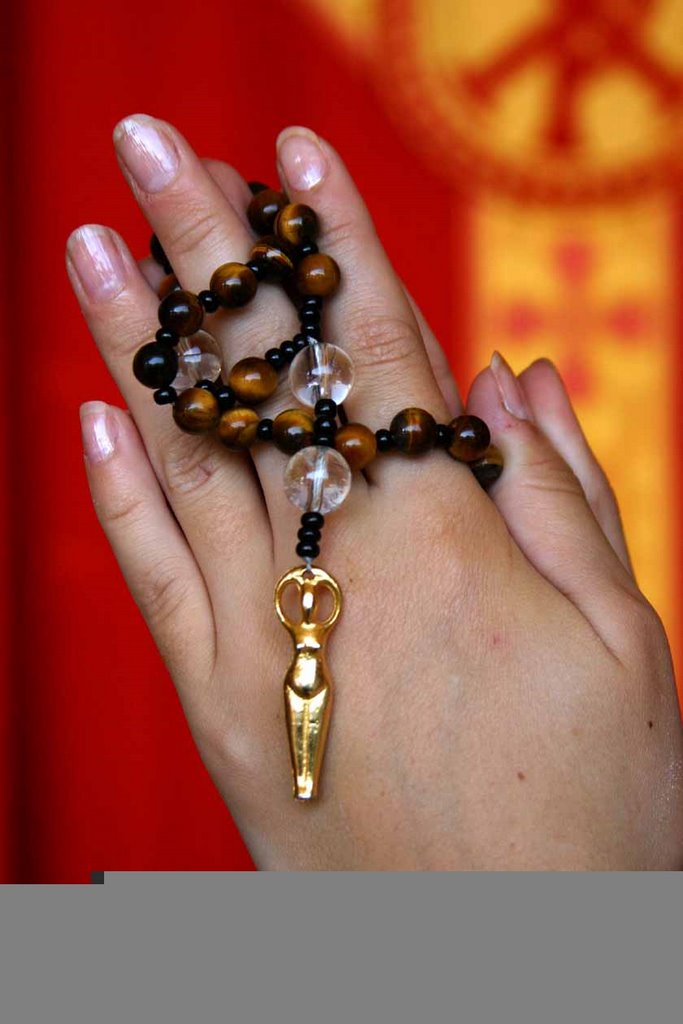
Now here’s a Lutheran church that I found interesting (for lack of a better word): Ebenezer Lutheran Church, San Francisco - ELCA. Particularly, you may be interested in attending the Christian Goddess Rosary every Wednesday at 7:00 PM. Now before the Roman Catholic crowd starts up with a mantra about how Protestants are a disorganized blueprint for anarchy, you might want to visit Junia's Daughter:Reflections of a Catholic Woman Priest.

Here's my 2 cents: CS Lewis once said, "God himself has taught us how to speak of Him." I would add, the male imagery found in Scripture does not depreciate women- anymore than the examples of feminine images depreciate masculinity. The Goddess Lutherans pray, "Our Mother who is within us we celebrate your many names." When Jesus taught His disciples to pray, "Our Father", I would not have stopped him to point out His use of a masculine image. I'm the type of person who just does what an almighty God tells him to do. Since Jesus spoke infallibly, I can rest assured that however he taught me to pray is the right way to pray. This is but another aspect of sola scriptura. We must continually conform ourselves to its clear teaching, regardless of our agendas. I would challenge these ladies to examine their feminist tradition in light of sacred scripture. One cannot sift Christianity through feminism. Christianity comes with a particular vocabulary.

Friday, January 27, 2006