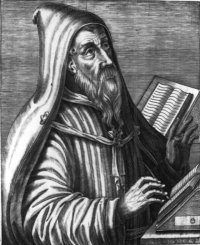
Tuesday, October 10, 2006

Father O'Hare's "Facts About Luther" Revisited

Father O’Hare presents a Luther who is not only mad, but morally depraved and corrupt. He asserts that Luther was in close touch with Satan. He lived indecently, condemned celibacy and virginity, endorsed adultery, dishonored marriage, authorized prostitution and polygamy, was a drunkard and frequenter of taverns, preaching his theology drunk around his fellow Reformation revolutionaries. Luther was a blasphemer, a libertine, a revolutionary, a hater of religious vows, a disgrace to the religious calling, an enemy of domestic felicity, the father of divorce, the advocate of polygamy, and the propagator of immorality and open licentiousness [James Atkinson, Martin Luther Prophet to the Church Catholic (Grand Rapids: Eerdmans, 1983), 4].

I've had a fascination with Father Patrick O'Hare's book, The Facts About Luther for quite a few years now. I came across this book via its use in Roman Catholic apologetics. I would visit Roman Catholic websites or discussion boards finding it quoted as a definitive historical reference on Luther.

After reading this book, in 2002 I determined to have a web page resource available documenting the numerous errors and slander found in this book  (finally completed July 2003 originally hosted on Eric Svendsen’s NTRmin Website: The Roman Catholic Understanding of Luther (Part One). I arrived at this determination while participating on the CARM discussion boards. A defender of Rome posted a thread entitled, “Luther the "Super-Pope" and Protestant Tradition” (posted November 5, 2002).  A quote from Father O’Hare’s book was put forth, and I had had enough of the defenders of Rome referring to this book as if it was somehow a relevant and credible historical source for Luther’s life.

I said to this defender of Rome in part:
That piece of nonsense by Patrick O’Hare has NO footnotes. None. Zip. Nada. How can one interact with him? I don’t have thousands of dollars to track down the out of print secondary sources he cites, nor do I speak German. Maybe I could learn German, but it would still take me half a lifetime to check O’Hare’s work... And you quote him all the time on your web site. This type of secondary source research gets me a little agitated. I want to know what Luther said, and where, and how I as an English speaking person can check the facts. Case in point: I had to contact Concordia Seminary to track down one of the quotes you cite on your web page. You gave no references whatsoever other than a sermon title and a date (and the date, I learned was very disputable). Fact is, the sermon wasn’t even available in English, but yet you had a quote from it in English.…
You should then, be exhorted to perform the apologetic task better. Your website is geared toward laymen. Help us all out a little bit and do primary research. Put the Grisar down and get your hands into the actual texts.

... I might sound a little hostile, but it’s more frustration. I like your website, but your Luther research has puzzled me for a long time. More than one occasion I have spent a an hour or two looking for one of the contexts for your Luther quotes.
Yes, I was definitely heated up.  I had reached a point of frustration with citations from Father Patrick O’Hare. I had become annoyed by the defenders of Rome quoting someone else quoting Martin Luther rather than actually reading and quoting Luther. Kudos’ to this defender of Rome for his response back in 2002:
“I am fed up with him, too, for the same reason. But in his defense, I believe that when he wrote his work (1915) there was no readily available edition of Luther's works in English (I might be wrong on that). Pelikan was still 40 years away, and even the older set I have (partial set) was 15 years away. So he did a service of providing quotes from Luther himself, at that time…. You'll be pleased to know that I was planning on adbridging some of the old papers on Protestantism and Luther. That was the first research I did upon converting and I think I would do it a bit differently today. And I was gonna change precisely what annoyed you: the O'Hare stuff that only referred to German editions. perhaps I can find some stuff in English from my library.”
And then he documented his deletion of Patrick O’Hare quotes:
“#96, O'Hare Purge Now Underway / Lortz as God Posted by ** on Nov-11-02 at 01:56 AM In response to message #78 First paper to undergo severe editing (32K worth!): Martin Luther: Beyond Mythology to Historical Fact Not a single citation from O'Hare remains.
114, O'Hare Purge #2 Posted by ** on Nov-11-02 at 11:53 AMIn response to message #96 THE PROTESTANT REVOLT: Its Pernicious & Tragic Initial Impact Not as much O'Hare in this one, though, to take out.
#119, O'Hare Purge #3 Posted by ** on Nov-11-02 at 12:53 PMIn response to message #114 And this one: The Protestant Inquisition ("Reformation" Intolerance and Persecution)
And then there was my interaction with Rome's defender, Dr. Art Sippo. In my discussion with him about O'Hare's book, Dr. Sippo said: “The book needs to be taken with a grain of salt” and “Some of the things it says about Luther are not accurate.” And also, “Fr. O'Hare also imputed to Luther certain base motives that I don't think he had.”

But O’Hare is still quoted as the definitive guide to Luther. For instance, here's an example from Patrick Madrid's Envoy boards:
“For Luther I recommend THE FACTS ABOUT LUTHER by Msgr. Patrick F. O’Hare, LL.D…As an ex-Lutheran the book was more than a little interesting to me. Much of what Msgr. O'Hare writes about Luther are difficult to read. It is well referenced. I looked up much of those references, here in Southern California Concordia University is not far from me. I looked up enough to satisfy myself that the author told the truth….”
"Hi Mr. Swan ....I’m an ex-Lutheran (LCMS) and am the one who recommended THE FACTS ABOUT LUTHER. I did think that the book was quite hard on M. L. so I did some checking of the facts. All of the references that I checked turned out to be true. I plan to try to check out Ch.9 It won’t be too difficult as I live not to far from Concordia University in California."
To which I responded:
I'm very curious as to how you check O'Hare's "Facts". The reason why, is because checking O'Hare's "Facts" has many obstacles: -Many of O'Hare's citations are incomplete. -Many of O'Hare's citations are missing completely. -Many of O'Hare's citations are references to Luther's Works in German and Latin- and these are often editions which aren't even available in many instances, or even available to the public (some date back to the 16th Century). - None of O'Hare's references are to the standard 55 volume English edition of Luther Works. This set had not been compiled yet at the time he wrote. - Many of O'Hare's secondary sources have the same characteristics of his Luther citations: incomplete, missing, or referring to works not readily available (he cites works from the 1800's, some in non-English languages as well). It can take me hours to check a single O'Hare quote. At present, I have 3 different sets of Luther's Works, and quite a few secondary sources, as well as access to 5 good college libraries. I also have a small collection of the secondary sources O'Hare used. For instance, I recently tracked down a copy of Trevern's Amicable Discussion which O'Hare cites on pages 200-201. How would you check these citations, from O'Hare's book: -Tischereden, Frankfurt, 1567, fol. 314 a; -DeWette, Dr. Martin Luther's Briefe, II Berlin, 1825, 101; -Werke, Weim. Ed. I, 1883, p. 69; -Martin Luther - Wittenb. ed. 2,171.6; -Martin Luther - Jena. ed. 1.318 b; -Walch ed. -Sammtliche Werke [Collected Works], 63, 169-170; -Lauterb. 91; -Advice To All Christians, 1522 -El. ed. 15, 276; -'Schlaginhaufen,' 'Aufzeichnungen,' p. 118; -Alts Aberdmahlsehre, 2, 118. This is just a small sampling of References found in O'Hare's Facts About Luther. Now, I haven't done anything sneaky here like only give the hard ones- no, almost all of O'Hare's citations are similar to these (if he gives them at all).
Now, the discussion never continued after I wrote that. I didn't expect it to. I never heard back from that Roman defender again on Father O'Hare's book. And finally, recently on the CARM boards, a Roman Catholic quoted the following from O’Hare:
The great reformer’s new program of salvation in which the living, vital, efficacious faith that manifests itself in good works, and without which it is impossible to please God, must be discarded. All the old teachings, practices and observances of piety, so useful and helpful for man’s justification and his deliverance from divine vengeance, must now be forgotten and abandoned. The priesthood, sacraments, indulgences, intercessory prayer, fasts, pilgrimages, all spiritual works must be displaced to make way for his miserable, degrading, and colorless invention of faith without works." ------Msgr. O'Hare
This snippet comes from the top of page 99 in the TAN edition from 1987. The ironic thing is this guy actually mis-quotes O’Hare. O’Hare doesn't say, "...must be discarded"; rather, he says, "and without which it is impossible to please God, must no longer prevail in the minds of men." Well, I challenged this guy also to defend O’Hare’s book. Not a peep of response... I’m the last one left in the room, so I might as well turn the light out and shut the door.

So why bring all this up? Since I still come across O’Hare being recommended as the definitive work on Luther, I thought it would be interesting to document some of my interactions with Roman Catholics on this book. See also:

The Facts About Luther (Part One) A quick overview of the worst book on Luther ever written by Father Patrick O’Hare.

The Facts About Luther (Part Two) A brief response to a Roman apologist who felt I did not understand one of Father O'Hare's arguments against Luther, nor did I treat Father O'Hare fairly.

O'Hare's Facts About Luther: Master Index of Outrageous Quotes  A list of quotes I’ve either found in cyber-space or my own study of The Facts About Luther. Its one thing to read Luther and critique him- this is perfectly acceptable- and I challenge all to do this. It is quite another thing to read a book that slanders Luther, and then use out of context quotes to prove how awful he was- without ever actually reading a page from Luther's actual writings.

Defending O'Hare's Facts About Luther: A Roman defender attempts to give credence to one of the worst books on Luther ever written.

Defending O'Hare's Facts About Luther (Continued)- A Roman defender gives up defending one of the worst books on Luther ever written.

Roman Apologist Art Sippo on Father O’Hare’s “Facts About Luther”- Catholic apologist Art Sippo says do not read The Facts About Luther.

Monday, October 09, 2006

Cyril of Jerusalem on the Canon

My last entry took a brief look at Cyril, Bishop of Jerusalem and some of his statements on sola scriptura. I wanted to mention one other interesting aspect of the CARM board discussion on Cyril. A Roman Catholic, responding to me said:

“…[Y]ou seem to be dismissing and not interacting directly with Cyril's explicit statements that Eucharist is the literal Body and Blood. He explicitly describes a church service that is just like today's mass. And he explicitly talks about the communion of saints. The center of worship was the mass, not 45 minutes of sermon. That is one of the reasons I converted. When I see worship as described by the earliest Christians, it is consistently strikingly similar to a catholic mass, not a "contemporary" worship service held in an evangelical church.”

The main problem is Cyril only allows his doctrine to be substantiated from Scripture. Scripture served as his sole objective authority. Modern-day Catholics would argue Scripture is not the sole authority, rather "Tradition" also can be used as an objective authority.

But one wonders if this person really checked out Cyril's writings. If he did, what did he do when he came across Cyril's writing on the Canon? Check out which Canon of Scripture Cyril was reading, particularly the Old Testament:

33. Now these the divinely-inspired Scriptures of both the Old and the New Testament teach us. For the God of the two Testaments is One, Who in the Old Testament foretold the Christ Who appeared in the New; Who by the Law and the Prophets led us to Christ's school. For before faith came, we were kept in ward under the law, and, the law hath been our tutor to bring us unto Christ. And if ever thou hear any of the heretics speaking evil of the Law or the Prophets, answer in the sound of the Saviour's voice, saying, Jesus came not to destroy the Law, but to fulfil it. Learn also diligently, and from the Church, what are the books of the Old Testament, and what those of the New. And, pray, read none of the apocryphal writings: for why dose thou, who knowest not those which are acknowledged among all, trouble thyself in vain about those which are disputed? Read the Divine Scriptures, the twenty-two books of the Old Testament, these that have been translated by the Seventy-two Interpreters.

35. Of these read the two and twenty books, but have nothing to do with the apocryphal writings. Study earnestly these only which we read openly in the Church. Far wiser and more pious than thyself were the Apostles, and the bishops of old time, the presidents of the Church who handed down these books. Being therefore a child of the Church, trench thou not upon its statutes. And of the Old Testament, as we have said, study the two and twenty books, which, if thou art desirous of learning, strive to remember by name, as I recite them. For of the Law the books of Moses are the first five, Genesis, Exodus, Leviticus, Numbers, Deuteronomy. And next, Joshua the son of Nave, and the book of Judges, including Ruth, counted as seventh. And of the other historical books, the first and second books of the Kings are among the Hebrews one book; also the third and fourth one book. And in like manner, the first and second of Chronicles are with them one book; and the first and second of Esdras are counted one. Esther is the twelfth book; and these are the Historical writings. But those which are written in verses are five, Job, and the book of Psalms, and Proverbs, and Ecclesiastes, and the Song of Songs, which is the seventeenth book. And after these come the five Prophetic books: of the Twelve Prophets one book, of Isaiah one, of Jeremiah one, including Baruch and Lamentations and the Epistle; then Ezekiel, and the Book of Daniel, the twenty-second of the Old Testament.


36. Then of the New Testament there are the four Gospels only, for the rest have false titles and are mischievous. The Manichaeans also wrote a Gospel according to Thomas, which being tinctured with the fragrance of the evangelic title corrupts the souls of the simple sort. Receive also the Acts of the Twelve Apostles; and in addition to these the seven Catholic Epistles of James, Peter, John, and Jude; and as a seal upon them all, and the last work of the disciples, the fourteen Epistles of Paul. But let all the rest be put aside in a secondary rank. And whatever books are not read in Churches, these read not even by thyself, as thou hast heard me say. Thus much of these subjects.


Obviously, Cyril's view of the canon is not the Roman Catholic view, nor is it exactly the Protestant view either, but it is much closer to the Protestant view.

Was Cyril's view of the canon taken into consideration in this Catholic’s "conversion"? Was Cyril's view of the ultimate authority of Scripture taken into consideration when he "converted"? I'm doubtful he took into consideration those aspects of the Early Church Fathers that don't "fit" into the modern day Roman sect (By the way, his response can be found here). This is one of the big problems I have with zealous defenders of Rome- they seem to only look at the facts they want to.

Sunday, October 08, 2006

Cyril of Jerusalem and Sola Scriptura

A discussion on the CARM boards recently caught my attention concerning Cyril, Bishop of Jerusalem from 348 A.D. to 386 A.D. Cyril is an interesting Early Church Father due to his lengthy catechetical treatise for the early church.

It was brought up that Cyril made statements that advocate sola scriptura. For Cyril, the ultimate issue with respect to authority was not the ecclesiastical position (sola ecclesia), but rather conformity to the truth of Scripture:

"Even to me, who tell thee these things, give not absolute credence, unless thou receive the proof of the things which I announce from the Divine Scriptures. For this salvation which we believe depends not on ingenious reasoning, but on demonstration of the Holy Scriptures."

There is no way to subsume Cyril's understanding of the authority of Scripture into the Roman Catholic paradigm. The Roman Catholic Church holds that a doctrine can be defined, but the scriptural proofs used to support it utilized by the Church’s theologians might not actually support it. In other words, one can have (alleged) certainty for a doctrine, but not have certainty in the scriptural proof texts for that doctrine. The infallibleness is in the decree, not in the reasoning to that decree. Cyril would probably run far away from such reasoning. In describing his argumentation, Cyril says at one point:

"Now mind not my argumentations, for perhaps thou mayest be misled but unless thou receive testimony of the Prophets on each matter, believe not what I say: unless thou learn from the Holy Scriptures concerning the Virgin, and the place, the time, and the manner, receive not testimony from man."

In the CARM discussion, Cyril had to be reinterpreted by Catholics to make him into a modern-day Roman Catholic. It was pointed out that Cyril appears to have believed in such things like “prayers for the dead” and held to a position on the Eucharist similar to modern day Catholics. Thus, Cyril could not have been an advocate of sola scriptura, because those who advocate sola scriptura do not find these teaching in the Bible.

This type of defense have misses a key point: the distinction between the principle of sola scriptura and the principle of interpretation. Every doctrine Cyril proclaimed he declared to be based on proof furnished from the Scriptures. While I don't agree with his conclusions in some instances, I agree with his underlying presupposition of sola scriptura.

One thing appears certain with Cyril- he doesn't agree with the underlying presuppositions of the Roman Catholic Church, that certain doctrines find their certainty outside of Scripture, proclaimed to be true by unwritten extra-Biblical tradition or papal pronouncement.

In the CARM discussion, I found a distinct desire to make Cyril a modern day Roman Catholic- believing all the doctrines they would. Rather, I wish they would simply let Cyril be Cyril. I saw a strong attempt to dismiss his quotes which imply sola scriptura or not interact directly with them. Why not Just accept what Cyril says? He's not the Pope, nor his he an infallible council. He's just an Early Church Father.

The early church fathers said a lot of things that a modern day Roman Catholic would disagree with. Also, the writings of the early church fathers have not avoided corruption. I'm reading a book currently that points out how the early church father's had passages deleted, or even added too, as well as translated incorrectly, either by maliciousness or accident. I point this out to note what Cyril does: his writings prove nothing. Only the Scriptures can be trusted.

Cyril did not hold to the modern-day authority structure of the Roman sect. some try to prove he did by citing him from book 18:23 that he held the church teaches infallibly, but in actuality a proper translation renders the sentence that the church teaches "completely" or "precisely".

If Roman Catholics want to believe in the ultimate authority of the Roman Catholic Church, that's unfortunate, but they are entitled to do so. But they should try to at least just let the Early Church Fathers say what they said. Many of them contradict the modern Roman Catholic position on various issues, as well as contradict each other

You know what's ironic- I'd much rather discuss doctrine with Cyril than modern day Romanists. Cyril and I would have a fruitful discussion, rather than quibbling about philosophical sophistry. At least we would agree on the basic foundation of objective truth.

Monday, October 02, 2006

PBS Quiz: Martin Luther Vs. Martin Luther King

As a follow up to my last entry, PBS also hosts a Martin Luther quiz on their site. The quiz has a simple premise: it lists ten small context-less quotations and one is asked to determine if the words were uttered by Martin Luther or Martin Luther King. Go ahead and try it for yourself:

Quiz: Who Said What? Martin Luther or Martin Luther King?

Do the quiz the way I did- Half awake with no coffee without really spending too much time analyzing every question. Just go with your gut feeling. You may want to read the PBS link comparing Luther and Luther King (I skipped it).

****If you plan on taking this quiz, take it now, and then read on.****


Some of you may wonder how I did on this quiz. Now, I’ve never read anything Martin Luther King has written, so that added a little difficulty. No, I didn’t get them all, but I got 8 out of 10, which I guess isn’t too bad. The two I got wrong were #8 and #10. So much for going with one's "gut" feeling.

I haven’t looked up any of the purported Martin Luther quotes, but I must point out that PBS has once again presented a historical blunder. Question #6 asks, “6. Who said... Who loves not woman, wine, and song remains a fool his whole life long?” This was one of the few Luther quotes I actually recognized, because it has a history of being used against Luther (particularly by Roman Catholics). Consider this explanation from biographer Heinrich Boehmer:

There remains the " notorious verse," "Who loves not woman, wine and song, is but a fool his whole life long." This couplet may indeed be the most quoted of all the expressions ascribed to Luther, but it is not his ; it is probably a very old student's rhyme, which in Italy has penetrated even among the peasant class, and which appears to have been imputed to Luther by German students only in the eighteenth century. Why ?

Because they felt it necessary to connect it with some famous man, and because it seemed to fit so excellently well into the picture of " Father Luther" which the Enlightenment imagined. In any case, it first appears in the Wandsbecker Boten of 1775 (No. 75), in a poem which is proved to be the work of Johann Heinrich Voss. For Voss had this poem reprinted in the Musenalmanach for 1777 (Hamburg, p. 107), under the title "Gesundheit von Vater Luther. When Voss, in December 1776, was applying for the post of Konrektor at Hamburg, he was immediately approached on the subject by the Senior, Herrnschmidt, and as he naturally could not prove Luther's authorship of the phrase, his candidature was rejected " by the whole swarm," i.e. by the whole clergy. He took his revenge on the " parsons," not by an historical study of the origin of the rhyme, but by a new "Song to Doctor Luther," in which he used the verses quoted above as the concluding couplet. Nevertheless Herder incorporated the new Lutherwort in his Volkslieder (i., 12), Muchler used it in his " Drinking-Song " in 1797, and Langbein in 1801 in his “Road to Heaven." Since then the couplet has ranked as a proverb.

Grisar, however, thinks that it may be ascribed at least indirectly to Luther. As proof he quotes a conversation of November 1536: "We must allow every country its vice. The Bohemians are gluttons, the Wends are thieves, the Germans can find consolation in being drunkards. For, my dear Cordatus, who can equal a German in drinking, even one who does not love music or women?" Here, as so often, the reformer regards drunkenness as the national vice of the Germans. This is demonstrated earlier by the commencement of the talk, in which he describes drinking as an evil thing, and even more clearly by the passage in the Commentary on Genesis ix. 20 ff., to which he expressly refers. That he shared the attitude revealed by the rhyme is therefore simply not true. That the rhyme was later on attributed to him is no longer surprising. For how prompt people have always been, and still are, to provide these much-quoted expressions and songs with famous fathers, is universally known, and has been proved often enough, for instance by the poet Hoffman von Fallersleben, himself a great maker of aphorisms, in his book In Duici Jubelo
.” [Source: Heinrich Boehmer, Luther and the Reformation in the Light of Modern Research (London: G. Bell and Sons LTD, 1930), 202-203].

Sunday, October 01, 2006

PBS Presents “Facts” That Luther Advocated Drunkenness and Promiscuity

"Luther thoroughly approved of drinking and sex."- PBS

In 2003 PBS ran a documentary on Martin Luther. To coincide with this documentary, PBS also added a webpage on Martin Luther. They included a weblink entitled, Luther Trivia: Ten Things you didn’t Know About Martin Luther from the PBS website. While not all of their trivia facts are wrong, the first two are not accurate: Luther's views on drinking and sex.  Let's take a look.

Documentation
The first thing to realize about these trivia facts is that PBS provides no documentation for any of them, nor do they mention who wrote the webpage. Neither do they appear to provide a contact e-mail address for someone to inquire into the lack of documentation. 

Drinking
Let's work through their "facts" about Luther and drinking alcohol:
1. Alcohol cures all evils. Luther thoroughly approved even advocated drinking heavily. When a young man wrote to him complaining of despair at the prospect of going to hell, Luther wrote back advising him to go and get drunk. That, he said, was what he did when he felt despair.
The historical record nowhere documents Martin Luther ever being drunk or advising someone to go drunk. It does provide evidence that he did drink alcohol and that he enjoyed drinking. One needs only survey the massive output of work that Luther physically did (preaching, teaching, social and political Involvement etc.) to settle the matter that Martin Luther did not have a drinking problem.

Luther preached and wrote against drunkenness throughout his entire life with vigor and force. As biographer Heinrich Boehmer notes,
Luther attacked the craving for drink with word and pen more vigorously than any German of his time. He told even princes his opinion of it, in private and public, blamed the elector himself publicly for this vice, and read the elector’s courtiers an astonishingly drastic lecture (Heinrich Boehmer, Luther and the Reformation in the Light of Modern Research (London: G. Bell and Sons LTD, 1930), 198). 
One example among many is Luther’s Sermon on Soberness and Moderation against Gluttony and Drunkenness (1539). Luther complaining about excessive drinking states:
What, therefore, shall we do? The secular government does not forbid it, the princes do nothing about it, and the rulers in the cities do nothing at all but wink at it and do the same themselves. We preach and the Holy Scriptures teach us otherwise; but you want to evade what is taught. Eating and drinking are not forbidden, but rather all food is a matter of freedom, even a modest drink for one’s pleasure. If you do not wish to conduct yourself this way, if you are going to go beyond this and be a born pig and guzzle beer and wine, then, if this cannot be stopped by the rulers, you must know that you cannot be saved. For God will not admit such piggish drinkers into the kingdom of heaven [cf. Gal. 5:19–21]. It is no wonder that all of you are beggars. How much money might not be saved [if excessive drinking were stopped]. [LW 51:293].

Original text: The English translation utilizes three different accounts of Luther's sermon: Quid ergo faciemus? Magistratus politicus non vetat, sed connivet et idem facit. (WA 47:762-763). Principes thun nichts dazu, regenten in stedten nihil. Nos praedicamus et scriptura sacra aliter dicit (WA 47:763) Ist dir doch wol vergünnet von Got und yederman, das du nicht allain nzür notdurft, sondern auch zür lust und freüde essest und trinckest und gütter dinge seyest, und du kanst an solchem nicht begnüget sein, du seyest dann auch ain solche Saw und unlust, als werestu dazü geborn (WA 47:762-763). Sic faciemus. Concedimus tibi ad gaudium potationem modestam, ein truncklin zur freuden, Si hoc non facere volueris, scias te non salvatum iri. Nam Deus huiusmodi potatores porcinos non intromittit in Regnum coelorum (WA 47:763). Non mirum, quod omnes Bettler, wie viel künde man ersparen (WA 47:763).

And also:
“Listen to the Word of God, which says, “Keep sane and sober,” that it may not be said to you in vain. You must not be pigs; neither do such belong among Christians. So also in I Cor. 6 [:9–10]: No drunkard, whoremonger, or adulterer can be saved. Do not think that you are saved if you are a drunken pig day and night. This is a great sin, and everybody should know that this is such a great iniquity, that it makes you guilty and excludes you from eternal life. Everybody should know that such a sin is contrary to his baptism and hinders his faith and his salvation. Therefore, if you wish to be a Christian, take care that you control yourself. If you do not wish to be saved, go ahead and steal, rob, profiteer as long as you can…. But if you do want to be saved, then listen to this: just as adultery and idolatry close up heaven, so does gluttony; for Christ says very clearly: Take heed “lest your hearts be weighed down with dissipation and drunkenness and cares of this life, and that day come upon you suddenly” [Luke 21:34], “as the lightning comes from the east and shines as far as the west” [Matt. 24:27]. Therefore be watchful and sober. That is what is preached to us, who want to be Christians” (LW 51:293-294).

Original text:  Ideo erschreckt mich schier des HERRn wort, quod fressen. Ideo audite verbum Dei, quod frustra non locutus, quod dicit, sollen messig [etc.]. Das nicht sollen sew sein vel gehorn nicht unter die Christen. Sie 1. Corint. 6. Ein trunckenbold [etc.] kan ein hurentreiber, Ehebrecher nicht selig werden, ne cogita te salvandum, si bist ein volle Saw tag und nacht. Sciat quisque tale peccatum, quod hindert an deiner Tauff, Glauben et ewiger seligkeit.Ideo si vis Christianus esse, cogita, ut te messigest. Si vero non vis salvari, still, raub, wucher, so lang du kanst... (WA 47:764-765) Si autem vis salvari, audi sicut adulterio, idolatriae claudit coelum, sie vollerey, quia Christus clare dicit: Videte, ne corda und kome uber euch, Sicut blix auff ꝛc. Sie dies, ideo vigilate et sobrii estote (WA 47:765).

In regard to the PBS statement about Luther writing to a young man and telling him to “go get drunk,”The reference can only be speculated. It’s probably Luther’s letter to Jerome Weller from July [?] 1530. Here is the letter in its entirety:
Grace and peace in Christ. My dear Jerome: you must believe that this temptation of yours is of the devil, who vexes you so because you believe in Christ. You see how contented and happy he permits the worst enemies of the gospel to be. Just think of Eck, Zwingli, and others. It is necessary for all of us who are Christians to have the devil as an adversary and enemy; as Saint Peter says, “Your adversary, the devil, walketh about.”
Excellent Jerome, you ought to rejoice in this temptation of the devil because it is a certain sign that God is propitious and merciful to you. You say that the temptation is heavier than you can bear, and that you fear that it will so break and beat you down as to drive you to despair and blasphemy. I know this wile of the devil. If he cannot break a person with his first attack, he tries by persevering to wear him out and weaken him until the person falls and confesses himself beaten. Whenever this temptation comes to you, avoid entering upon a disputation with the devil and do not allow yourself to dwell on those deadly thoughts, for to do so is nothing short of yielding to the devil and letting him have his way. Try as hard as you can to despise those thoughts which are induced by the devil. In this sort of temptation and struggle, contempt is the best and easiest method of winning over the devil. Laugh your adversary to scorn and ask who it is with whom you are talking. By all means flee solitude, for the devil watches and lies in wait for you most of all when you are alone. This devil is conquered by mocking and despising him, not by resisting and arguing with him. Therefore, Jerome, joke and play games with my wife and others. In this way you will drive out your diabolical thoughts and take courage.
This temptation is more necessary to you than food and drink. Let me remind you what happened to me when I was about your age. When I first entered the monastery it came to pass that I was sad and downcast, nor could I lay aside my melancholy. On this account I made confession to and took counsel with Dr. Staupitz (a man I gladly remember) and opened to him what horrible and terrible thoughts I had. Then said he: “Don't you know, Martin, that this temptation is useful and necessary to you? God does not exercise you thus without reason. You will see that he intends to use you as his servant to accomplish great things." And so it turned out. I was made a great doctor (for I may with propriety say this of myself) although at the time when I suffered this temptation I never would have believed it possible. I have no doubt that this will happen to you too. You will become a great man. Just see to it that you are of good courage in the meantime, and be persuaded that such utterances, especially those which fall from the lips of learned and great men, are not without prophetic quality.
I remember that a certain man whom I once comforted on the loss of his son said to me, "Wait and see, Martin, you will become a great man." I have often thought of these words, for, as I have said, such utterances have something of a prophetic quality. Be of good courage, therefore, and cast these dreadful thoughts out of your mind. Whenever the devil pesters you with these thoughts, at once seek out the company of men, drink more, joke and jest, or engage in some other form of merriment. Sometimes it is necessary to drink a little more, play, jest, or even commit some sin in defiance and contempt of the devil in order not to give him an opportunity to make us scrupulous about trifles. We shall be overcome if we worry too much about falling into some sin.
Accordingly if the devil should say, "Do not drink," you should reply to him, "On this very account, because you forbid it, I shall drink, and what is more, I shall drink a generous amount." Thus one must always do the opposite of that which Satan prohibits. What do you think is my reason for drinking wine undiluted, talking freely, and eating more often if it is not to torment and vex the devil who made up his mind to torment and vex me? Would that I could commit some token sin simply for the sake of mocking the devil, so that he might understand that I acknowledge no sin and am conscious of no sin. When the devil attacks and torments us, we must completely set aside the whole Decalogue. When the devil throws our sins up to us and declares that we deserve death and hell, we ought to speak thus: "I admit that I deserve death and hell. What of it? Does this mean that I shall be sentenced to eternal damnation? By no means. For I know One who suffered and made satisfaction in my behalf. His name is Jesus Christ, the Son of God. Where he is, there I shall be also.” Yours, Martin Luther (Tappert, Luther's Letters of Spiritual Counsel, pp. 84-87).

Original text: Gratiam et pacem in Christo. Mi charissime Hieronyme, statuere debes, hanc tentationem tuam esse a diabolo, et ideo te vexari sic, quia credis in Christum. Vides enim, quam securos et laetos esse sinit hostes infensissimos euangelii, ut puta Eccium, Zwinglium et alios. Oportet nos diabolum habere adversarium et hostem, omnes qui sumus christiani, quemadmodum Petrus inquit¹: "Adversarius vester Diabolus circuit" etc. Optime Hieronyme, debes gaudere ista tentatione diaboli, quia certum signum est, te propitium et misericordem habere Deum. Dices: tentatio illa gravior est, quam ut ferre possis, et vereris, ne te sic frangat et opprimat, ut in desperationem et blasphemiam incidas. Novi hanc technam diaboli: si quem primo impetu tentationis non potest frangere, eum assiduitate conatur fatigare et debilitare, ut cedat² et se victum esse fateatur. Proinde quoties tibi tentatio ista acciderit, caveas, ne disputationem cum diabolo instituas aut cogitationibus istis mortiferis indulgeas. Hoc enim nihil est aliud, quam cedere diabolo et succumbere. Sed operam dabis, ut fortissime istas cogitationes immissas a diabolo contemnas. Contemptus in hoc genere tentationis et pugnae est optima et facillima ratio vincendi diabolum, et fac rideas adversarium et quaeras, quocum confabuleris. Solitudinem modis omnibus fugito, tum enim potissimum te captat et insidiatur, cum es solus. Ludendo et contemnendo hic diabolus vincitur, non resistendo et disputando. Miscebis igitur ioca et ludos cum uxore mea et caeteris, quo cogitationes illas diabolicas fallas et bono fac sis animo, mi Hieronyme. Haec tentatio magis tibi est necessaria quam cibus et potus. Volo tibi commemorare, quid mihi olim, cum essem hac aetate fere, qua tu nunc es, acciderit. Cum primum in monasterium essem profectus, evenit, ut semper tristis et moestus incederem, nec poteram tristitiam illam deponere. Quapropter consulebam et confitebar Doctori Staupitio, cuius viri libenter facio mentionem², eique aperiebam, quam horrendas et terriferasᵇ cogitationes haberem. Tum ille: Nescis, Martine, quam tibi illa tentatio sit utilis et necessaria; non enim temere te sic exercet Deus, videbis, quod ad res magnas gerendas te ministro utetur.³ Atque ᶜ ita accidit. Nam ego magnus (licet enim hoc mihi de me iure praedicare) factus sum doctor, quod quidem tum, cum hanc tentationem patiebar, nunquam credidissem futurum. Sic et tibi procul dubio eveniet: tu vir magnus evades; videbis modo, ut interim bono et forti sis animo, et fac tibi persuadeas, istiusmodi voces, quae sic doctis praesertim et magnis hominibus excidunt, non carere oraculo et divinatione. Memini olim virum quendam, quem consolabar, eo quod amiserat filium, mihi dicere: videbis, Martine, quod vir magnus evades.⁴ Huius dicti saepissime memini, habent enim huiusmodi voces, ut dixi, aliquid divinationis et oraculi. Proinde bono ac forti fac sis animo, et cogitationes istas immanissimas prorsus eiice. Et quoties istis cogitationibus te vexaverit diabolus, illico quaere confabulationem hominum, aut largius bibe, aut iocare, nugare, aut aliquid aliud hilarius facito. Est nonnunquam largius bibendum, ludendum, nugandum, atque adeo peccatum aliquod faciendum in odium et contemptum diaboli, ne quid loci relinquamus illi, ut conscientiam nobis faciat de rebus levissimis; alioqui vincimus, si nimis anxie curaverimus, ne quid peccemus. Proinde si quando dixerit diabolus: noli bibere, tu sic illi respondeas: atqui ob eam causam maxime bibam, quod tu prohibes, atque adeo largius bibam. Sic semper contraria facienda sunt eorum, quae Satan vetat. Quid causae aliud esse censes, quod ego sic meracius bibam, liberius confabuler, comesser saepius, quam ut ludam diabolum ac vexem, qui me vexare et ludere paraverat? Utinam possem aliquid insigne peccati designare modo ad eludendum diabolum, ut intelligeret, me nullum peccatum agnoscere ac me nullius peccati mihi esse conscium! Omnino totus decalogus amovendus est nobis ex oculis et animo, nobis, inquam, quos sic petit ac vexat diabolus.⁵ Quodsi quando diabolus nobis obiecerit nostra peccata, ac reos egerit mortis et inferni, tunc sic debemus dicere: fateor quidem, me reum esse mortis ac inferni, quid tum postea? Ergoᵈ in aeternum condemnaberis? minime, novi enim quendam, qui passus est pro me ac satisfecit, et vocatur Iesus Christus, Dei filius. Ubi is manebit, manebo et ego. T. Martinus Luther (WA Br 5:518-520). 

Biographer W.H.T Dau comments on this letter:
When Luther advises Weller to drink somewhat more liberally, that does not mean that Luther advises Weller to get drunk. This, however, is exactly what Luther is made to say by his Catholic critics. They make no effort to understand the situation as it confronted Luther, but pounce upon a remark that can easily be understood to convey an offensive meaning. Neither does what Luther says about his own drinking mean that he ever got drunk… Luther's remarks about jesting, merry plays, and jolly pranks in which he would have Weller engage are likewise vitiated by the Catholic insinuation that he advises indecent frivolities, yea, immoralities. Why, all the merriment which he urges upon Weller is to take place in Luther's home and family circle, in the presence of Luther's wife and children, in the presence of Weller's little pupil Hans, who at that time was about four years old. The friends of the family members of the Faculty at the University, ministers, students who either stayed at Luther's home, like Weller, or frequently visited there, are also included in this circle whose company Weller is urged to seek. Imagine a young man coming into this circle drunk, or half drunk, and disporting himself hilariously before the company! We believe that not even all Catholics can be made to believe the insinuations of their writers against Luther when all the facts in the case are presented to them (W.H.T Dau, Luther Examined and Reexamined: A Review of Catholic Criticism and a Plea for Reevaluation, p. 123).

SEX
2. Let's talk about sex “Luther also thoroughly approved of sex; he said that a woman had the right to take on a lover, if her husband wasn't able to satisfy her in bed - and the husband should look on this with equanimity.
This is an outrageous trivia fact, very reminiscent of the negative pre-20th Century Roman Catholic invective hurled at Luther. With PBS though, the slant is probably not that Luther was sexually immoral (as Roman Catholics have argued), but rather that his views are not those of contemporary conservative Christians that frown upon sexual promiscuity and promote monogamous marriage.

It is true that Martin Luther “approved of sex,” but he did so while at the same time always strongly advocating marriage. Luther often spoke out against promiscuity and adultery in his writings and sermons. 

Like the previous statement about Luther advise getting drunk, it can only be speculated as to where PBS got this fact from. It is possible this mysterious PBS researcher got a hold of a negative Luther biography that referenced Luther’s 1522 treatise, On the Estate of Marriage.

In this treatise, Luther first exhorts a Christian to remain faithful to a sick spouse who is unable the “render the conjugal due.” Even in the case of severe sickness, the healthy spouse must remain faithful. Luther says to the spouse who tries to rationalize adultery because of a sick partner: “If you say: I cannot contain myself, then you are lying.” What Luther goes onto say is a little more curious. In commenting on reasons for divorce, Luther notes the situation is different when a wife simply refuses to give her husband his “conjugal due”:
The third case for divorce is that in which one of the parties deprives and avoids the other, refusing to fulfil the conjugal duty or to live with the other person. For example, one finds many a stubborn wife like that who will not give in, and who cares not a whit whether her husband falls into the sin of unchastity ten times over. Here it is time for the husband to say, “If you will not, another will; the maid will come if the wife will not.” Only first the husband should admonish and warn his wife two or three times, and let the situation be known to others so that her stubbornness becomes a matter of common knowledge and is rebuked before the congregation. If she still refuses, get rid of her; take an Esther and let Vashti go, as King Ahasuerus did [Esther 1:12–2:17] (LW 45:33).
Original text: Die dritte sache ist, wenn sich eyns dem andern selbs beraubt unnd entzeucht, das es die ehliche pflicht nicht halten, noch bey yhm seyn will. Als man wol findt so eyn halsstarrig weyb, das seynen kopff auff setzt, und sollt der man zehen mal ynn unkeuscheyt fallen, so fragt sie nicht darnach. Hie ists zeytt, das der man sage: "wiltu nicht, so wil eyn andere, wil fraw nicht, so kum die magd." So doch, das der man yhr zuvor zwey oder drey mal sage und warne sie und lasses fur ander leutt komen, das man offentlich yhre halsstarrickeyt wisse und fur der gemeyne straffe, will sie dann nicht, so laß sie von dyr und laß dyr eyne Esther geben unnd die Vasthi faren, wie der konig Assuerus thett (WA 10.2:290).

A tedious detail worth mentioning arises in the context above. Notice the phrase "If you will not, another will; the maid will come if the wife will not" (Wiltu nicht, szo will eyn andere, wil fraw nicht, szo kum die magd) is placed between quotation marks (" "). This indicates the phrase did not originate with Luther. LW 45 states it was a popular proverbial expression [LW 45:33, fn. 34]. 

Biographer Ewald Plass notes of this quote, 
The words, "If the wife is not willing, bring on the maid" have been notoriously misconstrued by having been quoted out of context. As the following words clearly show, Luther is thinking of a separation and a remarriage, not a sort of concubinage” [Ewald Plass, What Luther Says vol 2, p.901, footnote 20]. 
Luther outlines three reasons for divorce: the first a physical disability preventing the ability to have children, the second adultery, and thirdly, the reason quoted above. Luther goes on to explain,
Here you should be guided by the words of St. Paul, 1 Corinthians 7[:4–5], “The husband does not rule over his own body, but the wife does; likewise the wife does not rule over her own body, but the husband does. Do not deprive each other, except by agreement,” etc. Notice that St. Paul forbids either party to deprive the other, for by the marriage vow each submits his body to the other in conjugal duty. When one resists the other and refuses the conjugal duty she is robbing the other of the body she had bestowed upon him. This is really contrary to marriage, and dissolves the marriage. For this reason the civil government must compel the wife, or put her to death. If the government fails to act, the husband must reason that his wife has been stolen away and slain by robbers; he must seek another. We would certainly have to accept it if someone’s life were taken from him. Why then should we not also accept it if a wife steals herself away from her husband, or is stolen away by others? (LW 45:33-34).

Original text: Hie solltu dich grunden auff S. Paulus wort 1. Corin. 7.: "Der man ist seyns leybs nicht mechtig sondern das weyb, und das weyb ist seyns leybs nicht mechtig sondern der man. Beraubt eyns das ander nicht, es sey denn auß beyder bewilligung" ꝛc. Sihe, da verbeutt S. Paulus, sich unternander berauben, denn die verlobniß gibt eyns dem andern seynen leyb zum ehlichen dienst. Wo nu eyns sich sperret und nicht wil, da nympt und raubet es seynen leyb, den es geben hatt dem andern, das ist denn eygentlich widder die ehe unnd die ehe zuryssen. Darumb muß hie weltliche ubirkeyt das weyb kwingen oder umb bringen. Wo sie das nicht thutt, muß der man dencken, seyn weyb sey yhm genomen von reubern und umb bracht und nach eyner andern trachten. Müssen wyr doch leyden, ob yhemand seyn leyb genomen wirt, Warumb sollt man denn nicht leyden, das eyn weyb sich selb dem man raubete odder von andern geraubt wurde? (WA 10.2:290-291).

These were words written by an unmarried monk. Yes, they come across as shocking, but keep the comparison in mind to what PBS has stated: “Luther also thoroughly approved of sex; he said that a woman had the right to take on a lover, if her husband wasn't able to satisfy her in bed - and the husband should look on this with equanimity.” Do a compare and contrast. Is the PBS version of Luther more reminiscent of a modern view of sexuality, or a medieval view? Biographer W.H.T Dau notes of Luther:
Moral cleanness is indelibly stamped upon hundreds of pages of Luther's writings. The Sixth Commandment in its wider application to the mutual relation of the sexes and the sexual condition of the individual was to Luther the solemn voice of God by which the holy and wise Creator guards and protects the fountains whence springs human life. "Because there is among us," he says, "such a shameful mixture and the very dregs of all kinds of vice and lewdness, this commandment is also directed against all manner of impurity, whatever it may be called; and not only is the external act forbidden, but every kind of cause, incitement, and means, so that the heart, the lips, and the whole body may be chaste and afford no opportunity, help, or persuasion for impurity. And not only this, but that we may also defend, protect, and rescue wherever there is danger and need; and give help and counsel, so as to maintain our neighbor's honor. For wherever you allow such a thing when you could prevent it, or connive at it as if it did not concern you, you are as truly guilty as the one perpetrating the deed. Thus it is required, in short, that every one both live chastely himself and help his neighbor do the same." (Large Catechism, p. 419.) The reason why God in the Sixth Commandment refers to only one form of sexual impurity Luther states correctly thus: "He expressly mentions adultery, because among the Jews it was a command and appointment that every one must be married. Therefore also the young were early married, so that the state of celibacy was held in small esteem, neither were public prostitution and lewdness tolerated as now. Therefore adultery was the most common form of unchastity among them [Luther Examined and Reexamined: A Review of Catholic Criticism and a Plea for Reevaluation (St Louis: Concordia Publishing House, 1917), p. 210-211].

Something also to notice about the context above is to look beyond the shock value of the quote and understand the severity of the situation Luther is describing. In context, first, it's not only adamant denial of conjugal duty, but a spouse that possibly refuses to live under one roof with her husband. Second, the spouse is described as someone that does not care if her husband has repeated extra-marital sex. Luther recommends the husband seek to first keep this dysfunctional marriage intact by warning the wife of potential dissolution and also involving the church as a third-party arbiter. 

Revised, April 2026

Thursday, September 28, 2006

A Look at Justification By Faith Alone and Good Works in Luther’s Theology

An excerpt from: *Did Luther Say: Be A Sinner And Sin Boldly?*

More than a few Catholic authors have accused Luther of teaching a wanton lawlessness of sinning boldly. It is a common charge against him. Some argue, if justification is by faith alone, aren’t Christians free to sin as much they want? People need not concern themselves with how they live their lives; God has forgiven all their sins. It is probably the case that Luther simply invented the doctrine of justification by faith alone in order to justify his immoral life.

Does justification by faith alone provide a license for sin? Luther was acutely aware of this allegation. In a sermon, he summarized the charge leveled against him: “Where the Gospel begins to loose the conscience of its own works, it seems to forbid good works and the keeping of the law. It is the common speech of all the teachers of the law, and of the scribes and doctors, to say: If all our works amount to nothing and if the works done under the law are evil, we will never do good. You forbid good works and throw away God's law; you heretic, you…wish to make bad people free.”

Luther understood that even our best efforts were tainted with sin. If God demands perfection in order for one to be justified before Him, no one would ever be justified. For Luther, justification was actually totally of works, but those works were perfect and performed by the perfect savior, Jesus Christ. These works are acquired by faith, imputed to the sinner. Luther says, “[I]f you desire to believe rightly and to possess Christ truly, then you must reject all works that you intend to place before and in the way of God. They are only stumbling blocks, leading you away from Christ and from God. Before God no works are acceptable but Christ's own works. Let these plead for you before God, and do no other work before him than to believe that Christ is doing his works for you and is placing them before God in your behalf.”

For Luther grace, faith, and the work of Christ are essential ingredients that justify, and that justification is a gift as well as the very faith involved. As Paul says in Ephesians 2:8-9, “For by grace have ye been saved through faith; and that not of yourselves, it is the gift of God; not of works, that no man should glory.” But isn’t the Roman Catholic charge against Luther valid? If God judges a man by Christ’s perfect works, why should any Christian ever care about leading a righteous life? If grace, faith, and justification are God’s gifts, what is left for us to do? Eat, drink, and be merry, for tomorrow we die.

Paul answers for Luther in Ephesians 2:10, “For we are His workmanship, created in Christ Jesus for good works, which God afore prepared that we should walk in them.” Faith performs good works, not to keep one justified, but out of heartfelt gratitude to God graciousness. Salvation is unto good works. Note what this means: good works are not unto eventual salvation. We are saved in order to perform good works, not by performing them.

"Faith,” wrote Luther, “is a living, restless thing. It cannot be inoperative. We are not saved by works; but if there be no works, there must be something amiss with faith.” Luther scholar Paul Althaus notes: “[Luther] also agrees with James that if no works follow it is certain that true faith in Christ does not live in the heart but a dead, imagined, and self-fabricated faith." The book of James describes a real true faith in Christ: a real saving faith is a living faith. If no works are found in a person, that faith is a dead faith (c.f. James 2:17). James then describes a dead faith: the faith of a demon. A demon has faith that God exists, that Christ rose from the dead- I would dare say a demon knows theology better than you or I. But is the faith of this demon a saving faith? Absolutely not. Luther says, “Accordingly, if good works do not follow, it is certain that this faith in Christ does not dwell in our heart, but dead faith…”

But what are good works then? Luther abhorred the pseudo-works perpetuated by “devout” Roman Catholics. Pilgrimages, idolatry, monkery, self-denials, etc., which were considered “good works” one does for oneself on the road to eventual salvation. These works take one down a completely opposite road. Luther said of these alleged works:

How they mislead people with their good works! They call good works what God has not commanded, as pilgrimages, fasting, building and decorating their churches in honor of the saints, saying mass, paying for vigils, praying with rosaries, much prattling and bawling in churches, turning nun, monk, priest, using special food, raiment or dwelling,-who can enumerate all the horrible abominations and deceptions? This is the pope's government and holiness.”

Luther defines good works as those “works that flow from faith and from the joy of heart that has come to us because we have forgiveness of sins through Christ.” Only what God commands is a good work: “Everybody should consider precious and glorious whatever God commands, even though it were no more than picking a wisp of straw from the ground.” Works aren’t done because we want salvation and fear damnation. Luther says, “…[W]e are not to do them merely because we fear death or hell, or because we love heaven, but because our spirit goes out freely in love of, and delight in, righteousness.” Luther plainly teaches that saving faith is a living faith.

Luther taught a life under the cross, which is a life of discipleship of following after Christ. Our crosses though, do not save. They serve the neighbor. We are called to be neighbor to those around us. Luther says,

We receive Christ not only as a gift by faith, but also as an example of love toward our neighbor, whom we are to serve as Christ serves us. Faith brings and gives Christ to you with all his possessions. Love gives you to your neighbor with all your possessions. These two things constitute a true and complete Christian life; then follow suffering and persecution for such faith and love, and out of these grows hope and patience.”

Tuesday, September 26, 2006

On The Sacraments and "Reason": Differences Between Lutherans and the Reformed

I was sent an e-mail last week asking me about Luther's view of baptism, the Lord's Supper, and the Lutheran distinctive of the paradox of faith. I thought i'd share part of my response:

I realize there is chasm between Lutherans and the Reformed on Baptism and the Lord's Supper. I have had Lutherans in the past really tear me to shreds for not agreeing with their view, even telling me it wasn't too late for me to repent and be saved. My church does baptize infants, but we do not understand the meaning of that sacrament in the same way as Lutherans (I realize that the Lutheran view is not the Roman Catholic view-I wish Roman Catholics would grip this fact as well).

The Lord's Supper
In regard to the Lord's Supper, my view would be that of Calvin's. Some are probably familiar with Calvin's view, and know that it isn't a "memorial" like Zwingli's position. I did try to cover this on the blog a few months ago, albeit, with some over-simplicity:

Understanding Luther, Zwingli, and Calvin on the Lord’s Supper (Part One)

Understand Luther, Zwingli, and Calvin on the Lord's Supper (Part Two)

Understanding Luther, Zwingli and Calvin on the Lord’s Supper (Part 3)

John Calvin's View of the Lord's Supper


Paradox vs. Reason
One thing I both admire and scratch my head over is the notion of paradox vs. reason in Lutheran theology. I admire Luther and his disdain for Aristotelian logic being applied to the Scriptures- and I have reached a similar disdain as well when I see writers or ministers attempting to make God "make sense" rather than simply "letting God be God." In my own Bible, I have little notes pointing out "Glory vs. Cross" or paradox when I find them in Scripture. Often I find something that seems "rational" in the Bible, is only so because i've read it so often that it has lost its depth of profoundness. One needs to step back at times and attempt to read the Biblical text with freshness. A good understanding of Luther's disdain for "reason" and his theological paradoxes can be a big aid for reading the Bible with freshness.

I also realize that the Bible teaches things like the Trinity, which no matter how human reason tries to figure it out, it never will. Same thing with the Deity and humanity of Christ. A great Lutheran book on this that I have is by Seigbert Becker, The foolishness of God: The Place of Reason in the Theology of Martin Luther. If you don't have this book, it is one of the best treatments of the subject I've ever read.

On the other hand, I use the notion of paradox, or "beyond reason" only when Scripture demands it. Saying something is "beyond reason" or saying a biblical concept "does not fit into a logical system of theology" sometimes overlooks the fact that one must use reason to arrive at this point, and one also has to actually have an underlying logical system of theology by which to classify a particular biblical concept in such a way. I don't mean to caricature Luther or Lutheran theology- I realize that neither Luther or Lutheranism denies the correct use of reason or systematic theology. I often have to point this out to Roman Catholics when they attack Luther's comments on the "whore of reason".

Probably whatever differences I would have with the Lutherans would be on “what” characterizes a particular doctrine being “beyond reason”. Further, the differences would probably be on the interpretation of particular doctrines we would both find to be "beyond reason". for instance, I find certain aspects of the atonement "beyond reason", and most Lutherans do as well. But, given my discussions with Lutherans in the past, we would not agree as to what nuances of the atonement are "beyond reason". In many instances, simply by comparing Scripture with Scripture, and using the paradigm that the clearer texts interpret the "less-clear", one can come to an understanding of a Biblical concept, without stripping a doctrine of its mystery and paradox.

BaptismIn regard to Luther's view of baptism, I haven't done a lot of work in this area, but I have a cursory familiarity with his view, and the following comes from my seminary notes. Lutherans are welcome to correct me if I have not stated Luther's view correctly.

Luther held the sacraments are a form of the Word. Luther believed that the Word of God was oral, written, and sacramental. The Word comes to change our hearts, minds, reason, and will.

Luther said:

We shall now return to the Gospel, which offers council and help against sin in more than one way, for God is surpassingly rich in his grace: First, through the spoken word, by which the forgiveness of sin (the peculiar function of the Gospel) is preached to the whole world; second, through Baptism; third, through the holy Sacrament of the Altar; fourth, through the power of the keys; and finally, through the mutual conversation and consolation of brethren expression of God’s love.”

Luther said,

He who believes and is baptized will be saved,” he was calling forth the faith of those who were to be baptized, so that by this word of promise a man might be certain of his salvation if he was baptized in faith.”

What this means is that if one is baptized in faith, they have received one of the promises that God will be their savior. It is His promise to us that he will save those with faith. Luther is showing that Word of promise is the power of God unto salvation, not works of penance. Baptism establishes that we are children of God.

Luther argued that the validity of the promise does not rest on faith. Faith is simply the response. It grasps and makes use of the benefits, but the promise of God is there. Christ saves, not faith. Faith only receives the salvation Christ gives. Luther believed that God, through the power of His Word, establishes the relationship with His people.

Luther also believed in infant faith. It is a mystery. The Word of God changes the hearts of adults who are ungodly, resisting His grace. If that Word can change the heart of conscious rejecting adults, then surely in can change the heart of an infant.

Luther believed there were historical arguments in favor of infant baptism. First, He cited examples from the early church. God therefore had used infant baptism in every age to sanctify his people. If God had done this in every age, he was certain He would continue.

Secondly, Luther admitted to no specific biblical command to baptize children, but he noted there was no specific prohibition to baptize infants (the biblical command to baptize “all nations, and “all households” factored into his thinking).

Thirdly, he also took the passage that said “we must be like little children in order to enter the kingdom of God” very seriously. This is the model of entrance into the kingdom of God that Christ chose. To enter the kingdom of God like a little child is to receive the kingdom of God simply as a gift.

As an aside, I recently read Luther's comments on baptism and his use of Mark 16 as a strong prooftext. I would argue that the last verses of Mark 16 are probably not Scripture, hence I would not base any theological opinion on them.

Monday, September 25, 2006

Did Augustine Really Affirm Purgatory in “The City Of God” Book 21?

I’ve been reading a book from the 17th Century by John Daill’e, A Treatise on the Right Use of the Fathers in the Decision of Controversies Existing at This Day in Religion [Philadelphia: Presbyterian Board of Publication, 1856].

In Chapter IV, Daill’e posits that many of the writings of the Early Church Fathers have been corrupted: “The writings of the Fathers, which are considered legitimate, have been in many places corrupted by time, ignorance, and fraud, pious and malicious, both in the early and later ages” (p.61).

One example Daill’e gives is from St. Augustine’s City Of God:

“…[T]hat which is observed by Vives upon the twenty-first Book of Augustine de Civitate Dei; namely, that ten or twelve lines, which we find at this day in the twenty-fourth chapter of that Book, containing a positive assertion of purgatory, were not to be found in the ancient manuscripts of Bruges, and of Cologne; no, nor yet in that of Paris, as noted by those that printed Augustine, anno 1531” (p.69-70).

I haven’t had time to investigate Daille’s claim, and I only mention it in the hope that someone else is familiar with this issue. It is certain that Catholic apologists cite Augustine on Purgatory from book 21. For instance, these quotes seem to be popular on Catholic websites:

"Temporal punishments are suffered by some in this life only, by some after death, by some both here and hereafter; but all of them before that last and strictest judgment [-ante iudicium illud severissimum novissimumque-]. But not all who suffer temporal punishments after death will come to eternal punishments, which are to follow after that judgment." (The City of God 21:13 c. 413-426 A.D.)

"The prayer either of the Church herself or of pious individuals is heard on behalf of certain of the dead; but it is heard for those who, having been regenerated in Christ, did not for the rest of their life in the body do such wickedness that they might be judged unworthy of such mercy, nor who yet lived so well that it might be supposed they have no need of such mercy." (The City of God 21:24:2)

Catholic Apologist Patrick Madrid states:

"In Matthew 12:32, the Lord mentions a sin that cannot be forgiven even “in the world to come,” implying that there are some sins that will be forgiven after death (St. Augustine interpreted this passage this way, with regard to purgatory, in City of God 21:24:2). [Source]

Can anyone either verify or refute Daille’s claim? Keep in mind, I’m not arguing at this point that Augustine either affirmed or denied purgatory. I’m simply curious if anyone can verify that the early copies of The City Of God are missing inferences or references to Purgatory.

On a secondary issue, Daill'e really does raise a good point on the unreliability of the transmission of the Early Church Fathers' writings. That there have been corruptions of the texts is really beyond dispute. Daill'e spends a lot of time documenting this, and I must say that his work will have a profound influence on the weight I give the Early Church Fathers. By comparison with the text of the New Testament, the New Testament wins hands down in reliability, as one would expect it to, it being the very words of God.

Sunday, September 24, 2006

Blogback discussion

For Frank, Kevin, (and Apolonio),

Your discussion can be found here for quick reference:

Blogback Discussion

Thanks for your comments.

Guest Blog: Properly Dividing Law And gospel

by Frank Marron (Lutheran)

While many sermons on Sunday may teach the orthodox Christian faith, most are not proper because they do apply the Gospel of Jesus Christ to the lives of believers. Sure, you may leave church after hearing the truth concerning both the Divinity and humanity of Jesus Christ – that He is both man and God, but most likely you will not have heard the Gospel applied to your everyday life. Here is a case study illustrating this fact, based on a recent broadcast of Law & Gospel by Pastor Tom Baker. All names are fictitious.

Ann is a middle-aged woman who recently lost her husband in an automobile accident, where a drunk driver was responsible. She is a member of a mainstream Christian church denomination where her fellow members and pastor all encourage her to forget and forgive because the bible tells her she must do so. After all, we read such commands in the bible. Under inspiration of the Holy Spirit, St Paul writes:

Ephes. 4:32
Be kind to one another, tenderhearted, forgiving one another, as God in Christ forgave you.

Jesus Himself states:
Matthew 6:14-15
For if you forgive others their trespasses, your heavenly Father will also forgive you, [15] but if you do not forgive others their trespasses, neither will your Father forgive your trespasses.

Grieving over the loss of her life’s companion, Ann is naturally confused. When asked, she forcefully testifies she is not angry with God, but instead angry with the drunk driver who caused her pain and suffering. Her pastor and church friends are uncomfortable being around Ann and continue to encourage her to forgive the drunk driver and get on with her life. But Ann cannot simply do this. She thinks she is in a good church home and has heard the truth of the Gospel of Jesus Christ. But has she really?

Most Christian denominations believe that “if the bible says it, then that settles it - I believe it”. Sadly, such a viewpoint is prominent throughout Christianity and demonstrates a profound ignorance of the Word of God. There are two methods God speaks in His Word: Law and Gospel. “Law” is shorthand for the will of God, usually understood in the context of the ten commandments. In the above Scripture quotations, these verses are definitely Law. It is the will of God that we forgive one another, just as stated in the Lord’s Prayer(e.g. Matthew 6:12). All religions of the world are Law based, believing that the way a person gets right with God is by doing the will of God. Such people are referred to as those who live under the Law. Although Ann’s denomination professes belief in Jesus Christ, this church is not really different from all other religions of the world because it encourages it’s members to live under the Law. Ann is terribly burdened by her loss and under condemnation for failing to forgive the drunk driver who killed her husband. Instead of comforting Ann, her church burdens her with the full weight of the Law: Ann must forgive. This is a classic example of the failure to properly distinguish between Law and Gospel.

The bible is riddled with passages of Scripture that are either Law or Gospel. In fact, many verses can be understood as either one, depending upon whether one lives under Law or under the Gospel. Most denominations fail to understand that the primary purpose of the Law is to reveal and magnify sin, not to present a challenge for a man to keep the will of God(Romans 3:20;5:20). The Law of God is good in that it reveals the will of God, but it only condemns a person and does not enable him to keep it. The Law is a mirror showing us how imperfect and sinful we really are and is a tutor pointing to Christ(Galatians 3:24). Most denominations know the Law well and rather than emphasize the scriptural purpose for it, they encourage members to try to keep it, often believing that the Holy Spirit will empower people to do this, thus pleasing God. Such encouragement is a confusion of Law and Gospel and even attempts to use the cross of Christ as Law rather than Gospel! Such denominations believe that the purpose of the bible is to present “right rules for living”. Unfortunately, this is not Christianity, but rather exactly what all other man made religions of the world teach, such as Buddhism, Mormonism, or Islam.

Romans chapters 7 and 8 illustrate the apostle Paul’s understanding of Law and Gospel, sin and Grace. Romans 7:9 shows how the Law created awareness of sin for Paul and the inner turmoil over failure to keep it. Paul says that even though the Law is good, it caused death for him. In verse 15 Paul states that he does the exact opposite of the will of God, despite his desire to do otherwise! Verse 24 shows Paul exclaiming what a wretched man he is, finally realizing that the only solution to his dilemma is Jesus Christ. Paul is no different than any other man: All have sinned and fallen short of the will of God(Romans 3:23). The good news is that there is now no condemnation for those in Christ Jesus(Romans 8:1). Most denominations don’t seem to understand why there is no condemnation of believers such as Ann, who professes belief in Jesus Christ. Instead, such churches place Ann on another guilt trip for failure to keep the Law completely. Such denominations read Romans 8:1-6 as those who live under the Law, believing that walking according to the flesh refers to continuing to sin and walking according to the Spirit as ceasing from sinning. But this is not the Gospel of Jesus Christ! Such churches should be embarrassed and ashamed at failing their members. Ann’s denomination does not heed the Scriptures, which plainly state that the Law reveals sin to those secure in their sins, as shown above, but that the Gospel is to be given to those terrified of their trespasses. Jesus came to fulfill the Law perfectly for all men, including Ann(Matthew 5:17). Jesus did what no other man was capable of – He was the Representative Man. Jesus came not for the righteous, but sinners(Matthew 9:13), including Ann. As a believer, Ann is concerned over her failure to forgive, which is a sin of omission, not commission(e.g. James 4:17). The Gospel is that Jesus Christ died for the sins of the entire world, which includes Ann(John 3:16). Jesus did not die for y those who kept the will of God perfectly throughout their entire lives, but for sinners. Only Christ lived the perfect, sinless life. This is the GOOD NEWS, the Gospel, which is rarely preached from the pulpits of most denominations. The Gospel is not that God forgives your sins and sends the Holy Spirit to enable you to keep the Law of God. The Gospel is 100 percent gift: God forgives your sins because the Son of God took the punishment for your sins. God gives you the gift of Faith in which to receive this blessing and also the seal of the Holy Sirit(Ephesians 1:13-14). Jesus Christ exchanges His Righteousness for your sins so that we become adopted children of God through absolutely no merit of our own. Being aware of her sins and failure to forgive the person who killed her husband, instead of being burdened with more Law, Ann should have been comforted with the Gospel of Jesus Christ. Ann should be encouraged to continue to walk by the Spirit, confessing her sins and receiving the forgiveness of sins and the peace of God through Jesus Christ her Savior, which is living under the Gospel. Jesus Christ lived the perfect life of obedience under the Law for Ann. Jesus Christ received the full wrath of God for Ann’s sins. In the eyes of God, through faith in Jesus Christ, Ann is considered perfect, sinless, and righteous(2Cor 5:21). This is the Gospel. This is the comfort and peace which is sorely lacking in Christian preaching today.

Friday, September 22, 2006

The Church As An Infallible Norm

How quickly did error seek to enter the Church? In his History of the Christian Church, Eusebius refers to a now non-existent writing of Hegesippus. Hegesippus seems to have described what happened when the Apostles died:

In describing the situation at that time Hegesippus goes on to say that until then the Church has remained a virgin, pure and uncorrupted since those who were trying to corrupt the wholesome standard of the saving message, if such there were, lurked somewhere under cover of darkness. But when the sacred band of the apostles had in various way reached the end of their life, and the generation of those privileged to listen with their own ears to the divine wisdom had passed on, then godless error began to take shape, though the deceit of false teachers, who now that none of the apostles was left threw off the mask and attempted to counter the preaching of the truth by preaching the knowledge falsely so called.” [Source: Eusebius, The History of the Christian Church From Christ To Constantine (Minneapolis: Augsburg Publishing House, 1975), 143 (online link to this section)].

But from the beginning, it appears error was always at the doorstep of the Church, waiting to come in:

2 Corinthians 11:13-15 (False apostles claiming apostolic ties)
For such are false apostles, deceitful workers, transforming themselves into apostles of Christ. And no wonder! For Satan himself transforms himself into an angel of light. Therefore it is no great thing if his ministers also transform themselves into ministers of righteousness, whose end will be according to their works.

Acts 20: 28-31 (Paul warns of those false teachers immediately coming into the church after his departure)
“For I know this, that after my departure savage wolves will come in among you, not sparing the flock. “Also from among yourselves men will rise up, speaking perverse things, to draw away the disciples after themselves. “Therefore watch, and remember that for three years I did not cease to warn everyone night and day with tears."

Galatians 1:8-9 (Even genuine apostles may be prone to error)
But even if we, or an angel from heaven, preach any other gospel to you than what we have preached to you, let him be accursed. As we have said before, so now I say again, if anyone preaches any other gospel to you than what you have received, let him be accursed.

The apostle Peter himself falls into error concerning the gospel:

But when I saw that they were not straightforward about the truth of the gospel, I said to Peter before them all, “If you, being a Jew, live in the manner of Gentiles and not as the Jews, why do you compel Gentiles to live as Jews? (Galatians 2:14)

The Churches Mentioned in Revelation:

The Church of Pergamos: there were those who had absorbed the doctrine of Balaam, and the doctrine of the Nicolaitans (Rev. 2:14, 15).

The Church of Thyatira: Allowed the prophetess Jezebel 'to teach and seduce My servants to commit sexual immorality and eat things sacrificed to idols' (Rev. 2:20).

The Church of Sardis: Christ declares them “dead.” Only a few people “remembered what they received and heard and obeyed it.”

The point:
The history of the Church subsequent to the apostolic age demonstrates that succession is no guarantee against heresy. Bishops from all the major sees of Christendom, including that of Rome and those of innumerable lesser sees, have, at one time or another, been infected with heresy. The Church fathers cautioned believers repeatedly that bishops were to be followed only if their teachings conformed to Scripture and rejected if they did not. No Church father believed the Church as a whole to be infallible. The opinion was that individual bishops, as well as bishops in Council, could err. It is our contention that the early Church fathers, with unanimous voice, point us back to holy Scripture as the only infallible norm. The Church is not infallible. The Scriptures alone, being God—breathed and therefore inspired, are the only infallible norm for the Church.” [Source: David T. King, Holy Scripture: The Ground And Pillar of Our Faith, Volume 1 (WA: Christian Resources Inc., 2001), 138-139].

Wednesday, September 20, 2006

Luther Spoke In tongues?

You know Martin Luther spoke in tongues? Yes, sir, sure did. And he had great signs and wonders. But when Luther died, what taken place? The church organized and there she went.” link

"Martin Luther (1483-1546) is reported to have spoke in tongues. “Souer’s work in German, A History of the Christian Church, on page 406 of volume 3, describes Luther as a prophet, evangelist, speaker in tongues and interpreter, in one person, endowed with all the gift of the Holy Spirit.” link

"Read your Bible! You have been deceived! Also, I know of a web page that shows many cases through church history in which people spoke in tongues. D.L. Moody spoke in tongues. The Quakers spoke in tongues. Martin Luther spoke in tongues. Tongues never did stop.]" link

Previously I looked at Pentecostals trying to claim Luther spoke in tongues. Recently I came across an excellent overview of Luther’s interpretation of “speaking in tongues” in the book The Charismatic Movement (Grand Rapids: W.B. Eerdmans Publishing company, 1975).

Luther did not have direct contact with the more unusual gifts of the Spirit catalogued by Paul in I Corinthians 12, notably glossolalia, interpretation thereof, and healing. However, as an exegete and preacher using the lectionary, he occasionally had to advert to our charismatic passages. He was also familiar with the Zwickau Prophets, who derived something of their charism from the Hussite tradition.
Luther believed that in apostolic times, people had spoken "new tongues" as a sign and "witness to the Jews." In his own day, however, Christianity no longer required the confirmation of such signs. Although they had ceased, each justified believer might expect to receive one or several other gifts of the Holy Spirit. There would always be a diversity of gifts in the true church, and these would operate in harmony, whereas among "fanatical spirits and sectarians," everyone "want[ed] to be everything."
Luther's clearest exposition of the meaning of the Corinthian texts for his day was in a treatise he published in 1525 against Andreas Bodenstein von Carlstadt. Drawing on Paul's first letter of advice to the troubled Corinthian church, Luther accused Carlstadt of misunderstanding the expression "speaking with tongues. Paul, he declared, had been concerned primarily with the office of preaching and the listening and learning of the congregation. With this as his premise, he used the passage on tongues to develop his case for preaching in the vernacular:
‘Whoever comes forward, and wants to read, teach, or preach, and yet speaks with tongues, that is, speaks Latin instead of German, or some unknown language, he is to be silent and preach to himself alone. For no one can hear it or understand it, and no one can get any benefit from it. Or if he should speak with tongues, he ought, in addition, to put what he says into German, or interpret it in one way or another, so that the congregation may understand it.’
Carlstadt had used Paul's directives to the Corinthians to prove that all speaking in tongues (i.e., preaching in Latin) was wrong. Luther, on the other hand, demanded only that the "tongues" be interpreted into the appropriate vernacular, and used Paul's writings to defend his position: "St. Paul is not as stubborn in forbidding speaking with tongues as this 'sin-spirit' [Carlstadt] is, but says it is not to be forbidden when along with it interpretation takes place."
Carlstadt also rejected Luther's contention that physicians were "our Lord God's menders of the body," with a mission analogous to that of theologians—the restoration of "what the devil has damaged." To Carlstadt's opposition to the use of medicine, Luther responded: "Do you eat when you're hungry?"

Luther believed that the outpouring of the Holy Spirit on the day of Pentecost had wrought a fundamental change in the meaning of prayer. A "Spirit of supplication" had been "outpoured," and it was possible, in a new and more significant way, "to call upon God from the heart in My [Christ's] name." The Spirit was not restricted in his activity, but had been promised to "all flesh" accompanied by prophecy, visions, and dreams. In a sermon in 1531 on the Pentecostal text of Acts 2:4, Luther expressly affirms the ministry of "ordinary" people, called to preach by the Spirit, over against the official preachers of the Apostles' days, like those of the Sadducean or Pharisaic classes and the comparably highborn and highly educated Catholic preachers of his own day. Yet haughtily he even used the word fanatic (Schwarmer), his special term for Anabaptists and other simple evangelists: it never occurred to him to carry the logic of his thought further. In any case, such New Testament phenomena anticipated by Joel, such as prophecy (or inspiration), typified for Luther his new doctrine; the "sacraments as external ceremonies" (including Baptism, the Lord's Supper, and Absolution) he equated with visions. Dreams were used of God in the new dispensation as well as in the old: given by the Father, they were interpreted by the Son and carried out by the Holy Spirit."
Source: George H. Williams and Edith Waldvogel, “A History of speaking in Tongues and Related Gifts” found in Michael P. Hamilton (editor), The Charismatic Movement (Grand Rapids: W.B. Eerdmans Publishing company, 1975) 71-73.